Dialogo e Solstizio


Oct 20, 2026
Prayer and witness: not easy tasks, but of the pillars
Written by don Giuseppe Nespeca Published in Angolo dell'apripista
"Prayer and witness" are the "two tasks of the bishops" who are "pillars of the Church". But if they weaken, the whole people of God suffers. That is why, Pope…
10
Do Christians 'really believe' in the 'power of the Holy Spirit' within them? And do they have the courage to "sow the seed", to get involved, or do they take…
36
Oct 18, 2026
Closeness: touching the flesh of others
Written by don Giuseppe Nespeca Published in Angolo dell'apripista
There are five verbs of "closeness" that Jesus lives firsthand and which indicate the criteria of the "final protocol": seeing, calling, speaking, touching, and healing. Not only pastors, who are…
35
Oct 17, 2026
The fundamental principle
Written by don Giuseppe Nespeca Published in Angolo dell'apripista
Today’s Gospel Reading reminds us that the whole of Divine Law can be summed up in our love for God and neighbour. Matthew the Evangelist recounts that several Pharisees colluded…
42
Oct 16, 2026
Warnings that affect everyone
Written by don Giuseppe Nespeca Published in Angolo dell'apripista
Unfortunately, every day the press reports bad news: homicides, accidents, catastrophes.... In today’s Gospel passage, Jesus refers to two tragic events which had caused a stir: a cruel suppression carried…
42
Oct 15, 2026
Knowing the different times, knowing the signs of the times
Written by don Giuseppe Nespeca Published in Angolo dell'apripista
"Times change, and we Christians must continually change." Pope Francis repeated this invitation to change several times during the Mass celebrated Friday morning, Oct. 23, in the chapel of Casa…
50
The Gospel for this Sunday (Lk 12:49-53) is part of Jesus’ teachings to the disciples during his journey to Jerusalem, where death on the cross awaits him. To explain the…
50
Oct 13, 2026
Bliss of waiting, for a more habitable world
Written by don Giuseppe Nespeca Published in Angolo dell'apripista
In the text of today’s Gospel (Lk 12:32-48), Jesus speaks to his disciples about the attitude to assume in view of the final encounter with him, and explains that the…
67
Oct 12, 2026
Nostalgics of Heaven
Written by don Giuseppe Nespeca Published in Angolo dell'apripista
In today’s Gospel passage (cf. Lk 12:32-48), Jesus calls his disciples to be continually vigilant. Why? In order to understand God’s transition in one’s life because God continually passes through…
72
Oct 11, 2026
Certainties that pass away
Written by don Giuseppe Nespeca Published in Angolo dell'apripista
Today’s Gospel passage (cf. Lk 12:13-21) begins with the narrative of a man who stands up among the multitude and asks Jesus to settle a legal matter concerning a family…
63
Oct 10, 2026
To whom do I belong?
Written by don Giuseppe Nespeca Published in Angolo dell'apripista
This Sunday’s Gospel (Mt 22:15-21) presents to us a new face-to-face encounter between Jesus and his adversaries. The theme addressed is that of the tribute to Caesar: a “thorny” issue…
64
Jesus reacted with firm and clear words; he did not tolerate this, because those scribes, perhaps without realizing it, were falling into the gravest sin: denying and blaspheming against God’s…
67
Oct 8, 2026
Feeling that the Father may abandon them
Written by don Giuseppe Nespeca Published in Angolo dell'apripista
Jesus indicates as the third type of test that the Apostles will have to face, the sensation, which some may feel, that God himself has abandoned them, remaining distant and…
67
Oct 7, 2026
Style that points to Woe
Written by don Giuseppe Nespeca Published in Angolo dell'apripista
One can never close the door in the face of parents who ask for baptism for their child, even if they are not married in church: the Christian, and especially…
68
Oct 6, 2026
Double life, ability to be moved, being close
Written by don Giuseppe Nespeca Published in Angolo dell'apripista
When it is said of someone that they are a person with a double life, it is not to pay them a compliment. On the contrary. It is those people…
62
Oct 5, 2026
Badass faces, religion of make-up
Written by don Giuseppe Nespeca Published in Angolo dell'apripista
"Religion of make-up" or "path of humility"? In the homily of the Mass celebrated at Santa Marta on Tuesday 11 October, Pope Francis pointed out a decisive choice for the…
57
Oct 4, 2026
Jonah: Sign or syndrome?
Written by don Giuseppe Nespeca Published in Angolo dell'apripista
Here is the syndrome of Jonah, which "strikes those who do not have the zeal for the conversion of the people, they seek a holiness - allow me the word…
61
Oct 3, 2026
Freeness, Generosity, Universality: not our tiny little church
Written by don Giuseppe Nespeca Published in Angolo dell'apripista
In this Sunday’s Gospel, Jesus speaks to us about the response given to the invitation from God — who is represented by a king — to participate in a wedding…
66
Jesus’ words enkindled great scandal: he was saying that God decided to manifest himself and accomplish salvation in the weakness of human flesh. It is the mystery of the incarnation.…
81
Oct 1, 2026
Falling with anaesthesia, slow apostasy
Written by don Giuseppe Nespeca Published in Angolo dell'apripista
Letting oneself slip slowly into sin, relativising things and entering "into negotiation" with the gods of money, vanity and pride: from what he called a "fall with anaesthesia" the Pope…
77
Jesus’ teaching on prayer continues with two parables, which he modelled on the behaviour of a friend towards another friend, and that of a father towards his son (cf. vv.…
84
The Gospel this Sunday (Lk 11:1-13) opens with the scene of Jesus who is praying alone, apart from the others; when he finishes, the disciples ask him: “Lord, teach us…
83
Sep 28, 2026
Guest, not of stone. In the family, not in a temporary shelter. Time to listen, root of peace
Written by don Giuseppe Nespeca Published in Angolo dell'apripista
In today’s Gospel the Evangelist Luke writes about Jesus who, on the way to Jerusalem, enters a village and is welcomed into the home of two sisters: Martha and Mary…
77
Sep 27, 2026
Different interpretations of "neighbour"?
Written by don Giuseppe Nespeca Published in Angolo dell'apripista
Today the Gospel presents the well-known parable of the “Good Samaritan” (cf. Lk 10:25-37). When questioned by a doctor of the law on what is necessary to inherit eternal life,…
80
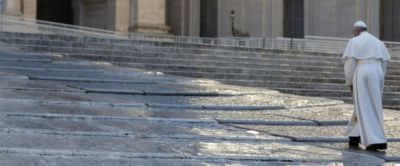
In today’s Gospel passage (cf. Mt 21:33-43) Jesus, foreseeing his passion and death, tells the parable of the murderous vintners, to admonish the chief priests and elders of the people…
84
Sep 25, 2026
Written in the heavens
Written by don Giuseppe Nespeca Published in Angolo dell'apripista
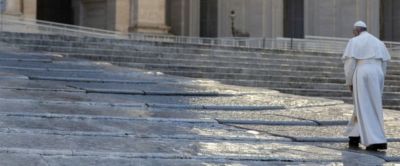
Today’s Gospel passage (cf. Lk 10:1-12, 17-20) presents Jesus who sends 72 disciples on mission, in addition to the 12 Apostles. The number 72 likely refers to all the nations.…
92
Sep 24, 2026
To avoid the walk of life "in the square", trapped there like in a labyrinth
Written by don Giuseppe Nespeca Published in Angolo dell'apripista
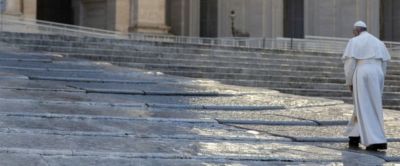
The Pope's reflection took its starting point from the first reading of the day, taken from the book of Exodus (23:20-23), in which "the Lord promises a very special help…
78
Sep 23, 2026
He immediately trains them for the Mission
Written by don Giuseppe Nespeca Published in Angolo dell'apripista
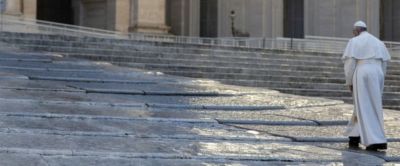
The Gospel […] speaks to us about this: the fact that Jesus is not a lone missionary, he does not want to fulfil his mission alone, but involves his disciples.…
78
Sep 22, 2026
Go straight ahead, freely. In conscience
Written by don Giuseppe Nespeca Published in Angolo dell'apripista
This Sunday’s Gospel Reading (Lk 9:51-62) shows a very important step in Christ’s life: the moment when, as St Luke writes: “He [Jesus] set his face to go to Jerusalem”…
92
Sep 21, 2026
Same Vocation, Brethren in Vocation
Written by don Giuseppe Nespeca Published in Angolo dell'apripista
A true act of entrustment to the archangels Michael, Raphael and Gabriel, asking them to help us in the fight against the temptations of the devil, to bring us the…
78
There are also serious, dangerous omissions and we have to recognize with healthy realism that in this way things are not all right, it is not all right when errors are made. However, we must also be certain at the same time that if, here and there, the Church is dying because of the sins of men and women, because of their non-belief, at the same time she is reborn (Pope Benedict)
Ci sono anche cadute gravi, pericolose, e dobbiamo riconoscere con sano realismo che così non va, non va dove si fanno cose sbagliate. Ma anche essere sicuri, allo stesso tempo, che se qua e là la Chiesa muore a causa dei peccati degli uomini, a causa della loro non credenza, nello stesso tempo, nasce di nuovo (Papa Benedetto)
The question makes apparent the concern, present in ancient Jewish tradition, over finding a unifying principle in the various formulations of God's will […] Emphasis is placed on the totality of this dedication to God, listing the three faculties that define man in his deep psychological structures: heart, soul and mind. The word mind, diánoia, contains the rational element (Pope Benedict)
La domanda lascia trasparire la preoccupazione, presente nell’antica tradizione giudaica, di trovare un principio unificatore delle varie formulazioni della volontà di Dio […] L’accento è posto sulla totalità di questa dedizione a Dio, elencando le tre facoltà che definiscono l’uomo nelle sue strutture psicologiche profonde: cuore, anima e mente. Il termine mente, diánoia, contiene l’elemento razionale (Papa Benedetto)
A “year” of grace: the period of Christ’s ministry, the time of the Church before his glorious return, an interval of our life (Pope Francis)
Un “anno” di grazia: il tempo del ministero di Cristo, il tempo della Chiesa prima del suo ritorno glorioso, il tempo della nostra vita (Papa Francesco)
The Church, having before her eyes the picture of the generation to which we belong, shares the uneasiness of so many of the people of our time (Dives in Misericordia n.12)
Avendo davanti agli occhi l'immagine della generazione a cui apparteniamo, la Chiesa condivide l'inquietudine di tanti uomini contemporanei (Dives in Misericordia n.12)
Addressing this state of mind, the Church testifies to her hope, based on the conviction that evil, the mysterium iniquitatis, does not have the final word in human affairs (Pope John Paul II)
Di fronte a questi stati d'animo la Chiesa desidera testimoniare la sua speranza, basata sulla convinzione che il male, il mysterium iniquitatis, non ha l'ultima parola nelle vicende umane (Papa Giovanni Paolo II)
Jesus reminds us today that the expectation of the eternal beatitude does not relieve us of the duty to render the world more just and more liveable (Pope Francis)
Let us look at them together, not only because they are always placed next to each other in the lists of the Twelve (cf. Mt 10: 3, 4; Mk 3: 18; Lk 6: 15; Acts 1: 13), but also because there is very little information about them, apart from the fact that the New Testament Canon preserves one Letter attributed to Jude Thaddaeus [Pope Benedict]
Li consideriamo insieme, non solo perché nelle liste dei Dodici sono sempre riportati l'uno accanto all'altro (cfr Mt 10,4; Mc 3,18; Lc 6,15; At 1,13), ma anche perché le notizie che li riguardano non sono molte, a parte il fatto che il Canone neotestamentario conserva una lettera attribuita a Giuda Taddeo [Papa Benedetto]








duevie.art
don Giuseppe Nespeca
Tel. 333-1329741
Disclaimer
Questo blog non rappresenta una testata giornalistica in quanto viene aggiornato senza alcuna periodicità. Non può pertanto considerarsi un prodotto editoriale ai sensi della legge N°62 del 07/03/2001.
Le immagini sono tratte da internet, ma se il loro uso violasse diritti d'autore, lo si comunichi all'autore del blog che provvederà alla loro pronta rimozione.
L'autore dichiara di non essere responsabile dei commenti lasciati nei post. Eventuali commenti dei lettori, lesivi dell'immagine o dell'onorabilità di persone terze, il cui contenuto fosse ritenuto non idoneo alla pubblicazione verranno insindacabilmente rimossi.