Dialogo e Solstizio


Oct 18, 2026
Jesus and humanity bent over
Written by don Giuseppe Nespeca Published in Croce e Vuoto
Theatre actors and neutrality (Luke 13:10-17) Our passion for a full existence would like to guide us who knows where, but sometimes there is an external force that holds us…
55
Oct 14, 2026
Functional Church? Discernment of Fire
Written by don Giuseppe Nespeca Published in Croce e Vuoto
Flame and Peace, Immersion and Division. Not tactical quietism (Lk 12:49-53) "I have come to cast a fire on the earth, and how I wish it had already blazed!" (Lk…
72
Oct 7, 2026
Alas for the blood of the Witnesses
Written by don Giuseppe Nespeca Published in Croce e Vuoto
The true higher dimension (Lk 11:47-54) "I will send them prophets and apostles, and they will kill and persecute them" (v. 49). A living word for all times, Jesus laments…
108
Oct 4, 2026
The manifestations of God's power on earth
Written by don Giuseppe Nespeca Published in Croce e Vuoto
Nothing external (Lk 11:29-32) Jesus comes up against unbelief. It comes from various blinders and parties taken, or (especially in the disciples) arises from carelessness. The Lord turns away from…
104
Sep 30, 2026
Continuous Prayer: a condition of grace and strength, which does not deviate
Written by don Giuseppe Nespeca Published in Croce e Vuoto
(Lk 11:5-13) Failing without failing. Struggle: unceasing, effective, with ourselves and with God Sometimes we put the Father in the dock, because he seems to let things go as our…
115
Sep 26, 2026
Murderous vineyard-keepers, and God’s true enemy
Written by don Giuseppe Nespeca Published in Croce e Vuoto
(Mt 21:33–43, 45–46) This is a continuous metaphor rather than a parable; it is therefore the fruit of post-Easter reflection – let us see why. Christ leads us all on…
107
Sep 24, 2026
Servants and little ones, from the great Vocation and flourishing
Written by don Giuseppe Nespeca Published in Croce e Vuoto
Face to face, Father in relationship (Mt 18:1-5.10.12-14) The Gospel passage dictates the line of the entire ecclesial discourse of Mt (18:1-35). The key term of vv.1-5 is paidìon -…
112
Initiates, circles, prejudices, and different paths - from "emptiness" (Lk 9:46-50) According to the Tao Tê Ching (LXXXI) "The saint does not accumulate; the more he has done for others,…
100
Who is Jesus: a question that judges (Lk 9:7-9) Jesus, who is he? No answer can be given except in the light of his story and his condemnation: nothing to…
129
Sep 10, 2026
Women, Action of the Risen One
Written by don Giuseppe Nespeca Published in Croce e Vuoto
(Lk 8:1-3) The rabbis did not accept women in their schools, because they were considered not up to the task. But Jesus does not come to teach laws or philosophies,…
127
Sep 6, 2026
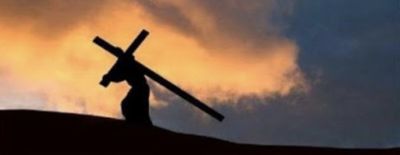
Lifting the Cross goes far beyond resilience
Written by don Giuseppe Nespeca Published in Croce e Vuoto
To go up and to go down, to go further or to go backwards (Jn 3:13-17) Nothing doing, despite two millennia of Christian symbols, formulas and rituals, especially in Italy…
133
Sep 3, 2026
For a transparent Coexistence
Written by don Giuseppe Nespeca Published in Croce e Vuoto
Jesus and the mania for ruling Lk 6:39-42 (39-45) "How much our human family needs to learn to live together in harmony and peace without all being equal!" (Pope Francis…
148
Aug 29, 2026
Fraternal Correction and Prayer in common, everywhere
Written by don Giuseppe Nespeca Published in Croce e Vuoto
Amongst the Reconciled: a change of course and of fate in the Kingdom (Mt 18:15–20) «The verb the evangelist uses for “they will be in harmony” is synphōnēsōsin: there is…
151
Aug 25, 2026
Coming out of the place of worship: the Power of the Word
Written by don Giuseppe Nespeca Published in Croce e Vuoto
(Female Creativity) (Lk 4:38-44) "The essential thing is to listen to what is rising from within. Our actions are often nothing more than imitation, hypothetical duty or misrepresentation of what…
154
Aug 21, 2026
Struggle for Liberation from the corrupt, and court life
Written by don Giuseppe Nespeca Published in Croce e Vuoto
(Mk 6:17-29) The question "Jesus, Who is He?" grows throughout the Gospel of Mark, up to the centurion's answer under the Cross (Mk 15:39). The balance of people's opinions (Mt…
167
There are also serious, dangerous omissions and we have to recognize with healthy realism that in this way things are not all right, it is not all right when errors are made. However, we must also be certain at the same time that if, here and there, the Church is dying because of the sins of men and women, because of their non-belief, at the same time she is reborn (Pope Benedict)
Ci sono anche cadute gravi, pericolose, e dobbiamo riconoscere con sano realismo che così non va, non va dove si fanno cose sbagliate. Ma anche essere sicuri, allo stesso tempo, che se qua e là la Chiesa muore a causa dei peccati degli uomini, a causa della loro non credenza, nello stesso tempo, nasce di nuovo (Papa Benedetto)
The question makes apparent the concern, present in ancient Jewish tradition, over finding a unifying principle in the various formulations of God's will […] Emphasis is placed on the totality of this dedication to God, listing the three faculties that define man in his deep psychological structures: heart, soul and mind. The word mind, diánoia, contains the rational element (Pope Benedict)
La domanda lascia trasparire la preoccupazione, presente nell’antica tradizione giudaica, di trovare un principio unificatore delle varie formulazioni della volontà di Dio […] L’accento è posto sulla totalità di questa dedizione a Dio, elencando le tre facoltà che definiscono l’uomo nelle sue strutture psicologiche profonde: cuore, anima e mente. Il termine mente, diánoia, contiene l’elemento razionale (Papa Benedetto)
A “year” of grace: the period of Christ’s ministry, the time of the Church before his glorious return, an interval of our life (Pope Francis)
Un “anno” di grazia: il tempo del ministero di Cristo, il tempo della Chiesa prima del suo ritorno glorioso, il tempo della nostra vita (Papa Francesco)
The Church, having before her eyes the picture of the generation to which we belong, shares the uneasiness of so many of the people of our time (Dives in Misericordia n.12)
Avendo davanti agli occhi l'immagine della generazione a cui apparteniamo, la Chiesa condivide l'inquietudine di tanti uomini contemporanei (Dives in Misericordia n.12)
Addressing this state of mind, the Church testifies to her hope, based on the conviction that evil, the mysterium iniquitatis, does not have the final word in human affairs (Pope John Paul II)
Di fronte a questi stati d'animo la Chiesa desidera testimoniare la sua speranza, basata sulla convinzione che il male, il mysterium iniquitatis, non ha l'ultima parola nelle vicende umane (Papa Giovanni Paolo II)
Jesus reminds us today that the expectation of the eternal beatitude does not relieve us of the duty to render the world more just and more liveable (Pope Francis)
Let us look at them together, not only because they are always placed next to each other in the lists of the Twelve (cf. Mt 10: 3, 4; Mk 3: 18; Lk 6: 15; Acts 1: 13), but also because there is very little information about them, apart from the fact that the New Testament Canon preserves one Letter attributed to Jude Thaddaeus [Pope Benedict]
Li consideriamo insieme, non solo perché nelle liste dei Dodici sono sempre riportati l'uno accanto all'altro (cfr Mt 10,4; Mc 3,18; Lc 6,15; At 1,13), ma anche perché le notizie che li riguardano non sono molte, a parte il fatto che il Canone neotestamentario conserva una lettera attribuita a Giuda Taddeo [Papa Benedetto]








duevie.art
don Giuseppe Nespeca
Tel. 333-1329741
Disclaimer
Questo blog non rappresenta una testata giornalistica in quanto viene aggiornato senza alcuna periodicità. Non può pertanto considerarsi un prodotto editoriale ai sensi della legge N°62 del 07/03/2001.
Le immagini sono tratte da internet, ma se il loro uso violasse diritti d'autore, lo si comunichi all'autore del blog che provvederà alla loro pronta rimozione.
L'autore dichiara di non essere responsabile dei commenti lasciati nei post. Eventuali commenti dei lettori, lesivi dell'immagine o dell'onorabilità di persone terze, il cui contenuto fosse ritenuto non idoneo alla pubblicazione verranno insindacabilmente rimossi.