Dialogo e Solstizio



Oct 20, 2026
He called to Himself: emergency by Name, before that around
Written by don Giuseppe Nespeca Published in Preghiera critica
The double address of worship, but the Axis is to be with Him (Lk 6:12-19) "He went out to the mountain to pray and spent the night in prayer to…
25
Oct 19, 2026
Modest beginnings, Prodigy that does not stun
Written by don Giuseppe Nespeca Published in Rivoluzione della Tenerezza
From within and in the domestic (Lk 13:18-21) The two parables were expounded at a time of doubt about the Master's proposal and the mission of his people. Could a…
43
Oct 18, 2026
Jesus and humanity bent over
Written by don Giuseppe Nespeca Published in Croce e Vuoto
Theatre actors and neutrality (Luke 13:10-17) Our passion for a full existence would like to guide us who knows where, but sometimes there is an external force that holds us…
54
Only Quality is binding. No forced compliance (Mt 22:34–40) Jesus turns what was the most trivial of catechism questions into a crucial issue: what is the ‘great’ commandment? Despite the…
60
Oct 16, 2026
Faith of the fourth year
Written by don Giuseppe Nespeca Published in Rivoluzione della Tenerezza
Conversion and Times (Luke 13:1-9) Conversion refers to a process that shakes the soul, because of an Encounter. A rediscovery that opens to self-knowledge. A dialogue that projects mind and…
65

Oct 15, 2026
Signs of time and motivation (Person) present
Written by don Giuseppe Nespeca Published in Preghiera critica
The room of Happiness, in the decisive horizon (Lk 12:54-59) "Now why do you not also judge for yourselves what is right?" (v.57). From nature and happenings we need to…
67
Oct 14, 2026
Functional Church? Discernment of Fire
Written by don Giuseppe Nespeca Published in Croce e Vuoto
Flame and Peace, Immersion and Division. Not tactical quietism (Lk 12:49-53) "I have come to cast a fire on the earth, and how I wish it had already blazed!" (Lk…
71
Oct 13, 2026
Presence and Coming without contention, not «return»
Written by don Giuseppe Nespeca Published in il Mistero
(Lk 12:39-48) «You also be ready, for in the hour you do not believe the Son of Man is coming» (Lk 12:40). Jesus pulls the ears of those in the…
71
Oct 12, 2026
Lamps lit, start now
Written by don Giuseppe Nespeca Published in Rivoluzione della Tenerezza
Parishes: strive for Heaven, without burden or hindrance (Lk 12:35-38) In order to make us understand what it means to be prepared to set out immediately, Jesus urges our awareness,…
76

Oct 9, 2026
The only unforgivable sin
Written by don Giuseppe Nespeca Published in Preghiera critica
"Blaspheming against the Holy Spirit" (Lk 12:8-12) "And whosoever shall speak a word against the Son of man, it shall be forgiven him; but he that shall blaspheme against the…
77
Oct 8, 2026
The Hereafter is not an unspecified reality
Written by don Giuseppe Nespeca Published in il Mistero
Snubbing for consent? No, there is a great destiny of Oneness (Lk 12:1-7)) "Meanwhile, as the crowd had gathered in myriads, to trample on one another"... the Lord's criticism of…
84
Oct 7, 2026
Alas for the blood of the Witnesses
Written by don Giuseppe Nespeca Published in Croce e Vuoto
The true higher dimension (Lk 11:47-54) "I will send them prophets and apostles, and they will kill and persecute them" (v. 49). A living word for all times, Jesus laments…
105
Oct 6, 2026
Hidden burials: monuments and trifles
Written by don Giuseppe Nespeca Published in Rivoluzione della Tenerezza
Serving oneself and "the public” (Lk 11:42-46) The conflict between Jesus and the religious authorities takes on violent overtones, as the poltronists get hung up on the details and neglect…
97
The interior and the society of the exterior (Lk 11:37-41) "Now you Pharisees clean the outside of the cup and tray, but your inside is full of robbery and wickedness"…
117
Oct 4, 2026
The manifestations of God's power on earth
Written by don Giuseppe Nespeca Published in Croce e Vuoto
Nothing external (Lk 11:29-32) Jesus comes up against unbelief. It comes from various blinders and parties taken, or (especially in the disciples) arises from carelessness. The Lord turns away from…
103

All are called, but with what attire? Without pretence Mt 22:1–14 (1–21) The ‘wedding garment’ (vv. 11–12) is a symbol of what is essential – that which is indispensable, even…
105
Oct 2, 2026
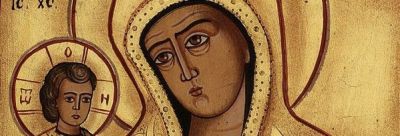
«Blessed rather»: new devotion to Mary
Written by don Giuseppe Nespeca Published in Rivoluzione della Tenerezza
Brothers all and ourselves (Lk 11:27-28) "At first attachment may look like love, but as it develops it becomes more and more clearly the opposite, characterised by clinging, holding back,…
85
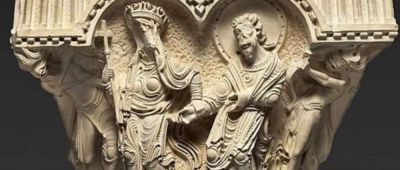
Pros and cons, and the Finger of God (Lk 11:15-26) Prejudice undermines unity, and no one can put Jesus under hijacking, holding him hostage. He is the fortress that no…
115
Sep 30, 2026
Continuous Prayer: a condition of grace and strength, which does not deviate
Written by don Giuseppe Nespeca Published in Croce e Vuoto
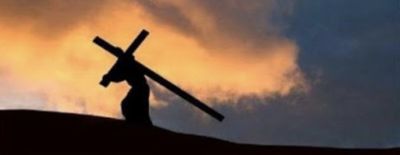
(Lk 11:5-13) Failing without failing. Struggle: unceasing, effective, with ourselves and with God Sometimes we put the Father in the dock, because he seems to let things go as our…
114
Sep 29, 2026
Teach us to pray: the Cross within
Written by don Giuseppe Nespeca Published in il Mistero
No longer looking outward (Lk 11:1-4) In the communities of Matthew and Luke, the "prayer" of the sons - the «Our Father» - does not arise as an oration, but…
115

Sep 28, 2026
Empty minutes? Understanding action in the spirit of contemplation
Written by don Giuseppe Nespeca Published in Preghiera critica
Two realities of the faithful: Listeners or distracted wanderers (Lk 10:38-42) Bethany is only a few kilometres from the holy city of Jerusalem: an ideal community of only brothers and…
107
Sep 27, 2026
Where is the center of gravity? Where does Love come from?
Written by don Giuseppe Nespeca Published in Rivoluzione della Tenerezza
Not from the precept, but from the overthrow (Lk 10:25-37) "You are a fool and a Samaritan!" - accused the Jewish leaders (Jn 8:48). "No, I am not mad...": this…
106
Sep 26, 2026
Murderous vineyard-keepers, and God’s true enemy
Written by don Giuseppe Nespeca Published in Croce e Vuoto
(Mt 21:33–43, 45–46) This is a continuous metaphor rather than a parable; it is therefore the fruit of post-Easter reflection – let us see why. Christ leads us all on…
107
Sep 24, 2026
Servants and little ones, from the great Vocation and flourishing
Written by don Giuseppe Nespeca Published in Croce e Vuoto
Face to face, Father in relationship (Mt 18:1-5.10.12-14) The Gospel passage dictates the line of the entire ecclesial discourse of Mt (18:1-35). The key term of vv.1-5 is paidìon -…
112
Sep 23, 2026
Two by two, including opposite polarities
Written by don Giuseppe Nespeca Published in Rivoluzione della Tenerezza
And move the neighbours (Lk 10:1-12) And I and You "Truth is not at all what I have. It is not at all what you have. It is what unites…
111

Sep 22, 2026
Faith, caricatures and Discipleship
Written by don Giuseppe Nespeca Published in Preghiera critica
Lk 9:57-62 [cf. Mk 5:18-20] For Semites, parental figures indicate a connection with ethnicity, tradition, the past and the cultural environment. Jesus seems to exclude any correlation with such figures,…
98
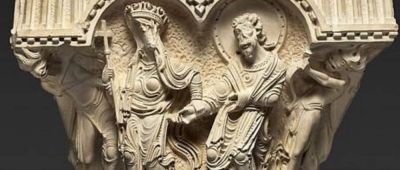
From the ancient dream to the incarnate relationship (Jn 1:47-51) Today's liturgy presents Nathanael's first encounter with the Lord, whom some traditions identify as the apostle Bartholomew. The purpose of…
105
Initiates, circles, prejudices, and different paths - from "emptiness" (Lk 9:46-50) According to the Tao Tê Ching (LXXXI) "The saint does not accumulate; the more he has done for others,…
100
Sep 19, 2026
The "stars" set aside
Written by don Giuseppe Nespeca Published in Rivoluzione della Tenerezza
Two sons: «No» and «Me!» (Mt 21:28-32) Matthew writes half a century after the death of the Master and notes that the majority of Abraham's children - his people -…
106

Creating abundance where there is none (Lk 9:43b-45) 'Son of God' is Christ who manifests God in the human condition. 'Son of man' is Jesus manifesting man in the divine…
115
There are also serious, dangerous omissions and we have to recognize with healthy realism that in this way things are not all right, it is not all right when errors are made. However, we must also be certain at the same time that if, here and there, the Church is dying because of the sins of men and women, because of their non-belief, at the same time she is reborn (Pope Benedict)
Ci sono anche cadute gravi, pericolose, e dobbiamo riconoscere con sano realismo che così non va, non va dove si fanno cose sbagliate. Ma anche essere sicuri, allo stesso tempo, che se qua e là la Chiesa muore a causa dei peccati degli uomini, a causa della loro non credenza, nello stesso tempo, nasce di nuovo (Papa Benedetto)
The question makes apparent the concern, present in ancient Jewish tradition, over finding a unifying principle in the various formulations of God's will […] Emphasis is placed on the totality of this dedication to God, listing the three faculties that define man in his deep psychological structures: heart, soul and mind. The word mind, diánoia, contains the rational element (Pope Benedict)
La domanda lascia trasparire la preoccupazione, presente nell’antica tradizione giudaica, di trovare un principio unificatore delle varie formulazioni della volontà di Dio […] L’accento è posto sulla totalità di questa dedizione a Dio, elencando le tre facoltà che definiscono l’uomo nelle sue strutture psicologiche profonde: cuore, anima e mente. Il termine mente, diánoia, contiene l’elemento razionale (Papa Benedetto)
A “year” of grace: the period of Christ’s ministry, the time of the Church before his glorious return, an interval of our life (Pope Francis)
Un “anno” di grazia: il tempo del ministero di Cristo, il tempo della Chiesa prima del suo ritorno glorioso, il tempo della nostra vita (Papa Francesco)
The Church, having before her eyes the picture of the generation to which we belong, shares the uneasiness of so many of the people of our time (Dives in Misericordia n.12)
Avendo davanti agli occhi l'immagine della generazione a cui apparteniamo, la Chiesa condivide l'inquietudine di tanti uomini contemporanei (Dives in Misericordia n.12)
Addressing this state of mind, the Church testifies to her hope, based on the conviction that evil, the mysterium iniquitatis, does not have the final word in human affairs (Pope John Paul II)
Di fronte a questi stati d'animo la Chiesa desidera testimoniare la sua speranza, basata sulla convinzione che il male, il mysterium iniquitatis, non ha l'ultima parola nelle vicende umane (Papa Giovanni Paolo II)
Jesus reminds us today that the expectation of the eternal beatitude does not relieve us of the duty to render the world more just and more liveable (Pope Francis)
Let us look at them together, not only because they are always placed next to each other in the lists of the Twelve (cf. Mt 10: 3, 4; Mk 3: 18; Lk 6: 15; Acts 1: 13), but also because there is very little information about them, apart from the fact that the New Testament Canon preserves one Letter attributed to Jude Thaddaeus [Pope Benedict]
Li consideriamo insieme, non solo perché nelle liste dei Dodici sono sempre riportati l'uno accanto all'altro (cfr Mt 10,4; Mc 3,18; Lc 6,15; At 1,13), ma anche perché le notizie che li riguardano non sono molte, a parte il fatto che il Canone neotestamentario conserva una lettera attribuita a Giuda Taddeo [Papa Benedetto]








duevie.art
don Giuseppe Nespeca
Tel. 333-1329741
Disclaimer
Questo blog non rappresenta una testata giornalistica in quanto viene aggiornato senza alcuna periodicità. Non può pertanto considerarsi un prodotto editoriale ai sensi della legge N°62 del 07/03/2001.
Le immagini sono tratte da internet, ma se il loro uso violasse diritti d'autore, lo si comunichi all'autore del blog che provvederà alla loro pronta rimozione.
L'autore dichiara di non essere responsabile dei commenti lasciati nei post. Eventuali commenti dei lettori, lesivi dell'immagine o dell'onorabilità di persone terze, il cui contenuto fosse ritenuto non idoneo alla pubblicazione verranno insindacabilmente rimossi.