


don Giuseppe Nespeca
Giuseppe Nespeca è architetto e sacerdote. Cultore della Sacra scrittura è autore della raccolta "Due Fuochi due Vie - Religione e Fede, Vangeli e Tao"; coautore del libro "Dialogo e Solstizio".
Different views
This Sunday’s Gospel reading (cf. Mt 16:13-20) presents the moment in which Peter professes his faith in Jesus as Messiah and Son of God. This Apostle’s confession is provoked by Jesus himself, who wishes to lead his disciples to take the decisive step in their relationship with him. Indeed, Jesus’ entire journey with those who follow him, especially with the Twelve, is a journey of educating their faith. First of all, he asks: “Who do men say that the Son of man is?” (v. 13). The Apostles liked to talk about people, as we all do. We like to gossip. Speaking about others is not so demanding; this is why we like it; even ‘flaying’ others. In this case the perspective of faith rather than gossip is already required, and so he asks, ‘What do the people say that I am?’. And the disciples seem to compete in reporting the different opinions, which perhaps, to a large extent, they themselves shared. They too shared them. In essence, Jesus of Nazareth was considered a prophet (v. 14).
With the second question, Jesus touches them to the core: “But who do you say that I am?” (v. 15). At this point, we seem to perceive a moment of silence, as each one of those present is called to put themselves on the line, manifesting the reason why they follow Jesus; therefore a certain hesitation is more than legitimate. Even if I were to ask you now, ‘For you, who is Jesus?’, there would be a little hesitation. Simon takes them off the hook by declaring forthrightly, “You are the Christ, the Son of the living God” (v. 16). This answer, so complete and luminous, does not come from an impulse of his own, however generous — Peter was generous — but rather it is the fruit of a particular grace of the heavenly Father. Indeed, Jesus himself says to him: “flesh and blood has not revealed this to you” — that is, culture, what you have studied, no, this has not revealed it to you. It was revealed to you by “my Father who is in heaven” (v. 17). To confess Jesus is a grace of the Father. To say that Jesus is the Son of the living God, that he is the Redeemer, is a grace that we must ask for: “Father, give me the grace to confess Jesus”.
At the same time, the Lord acknowledges Simon’s prompt response to the inspiration of grace and therefore adds, in a solemn tone, “you are Peter, and on this rock I will build my church, and the powers of death shall not prevail against it” (v. 18). With this affirmation, Jesus makes Simon understand the meaning of the new name He has given him, ‘Peter’: the faith he has just shown is the unshakeable ‘rock’ on which the Son of God wishes to build his Church, that is, the Community. And the Church goes forward always on the basis of Peter’s faith, that faith that Jesus recognizes [in Peter] and which makes him the head of the Church.
Today, we hear Jesus’ question directed to each one of us: ‘And you, who do you say I am?’. To each one of us. And each one of us must give not a theoretical answer, but one that involves faith, that is, life, because faith is life! ‘For me you are …’ and then to confess Jesus. An answer that demands from us too, as from the first disciples, inward listening to the voice of the Father and consonance with what the Church, gathered around Peter, continues to proclaim. It is a matter of understanding who Christ is for us: whether he is the centre of our life, whether he is the goal of our commitment in the Church, of our commitment in society. Who is Jesus Christ for me? Who is Jesus Christ for you, for you, for you …? An answer that we should give every day.
But beware: it is indispensable and praiseworthy that the pastoral care of our communities be open to the many forms of poverty and plights that are everywhere. Charity is always the high road of the journey of faith, of the perfection of faith. But it is necessary that works of solidarity, the works of charity that we carry out, not divert us from contact with the Lord Jesus. Christian charity is not simple philanthropy but, on the one hand, it is looking at others through the very eyes of Jesus and, on the other hand, it is seeing Jesus in the face of the poor. This is the true path of Christian charity, with Jesus at the centre, always. May Mary Most Holy, blessed because she believed, be our guide and model on the path of faith in Christ, and make us aware that trust in him gives full meaning to our charity and to all our existence.
[Pope Francis, Angelus, 23 August 2020]
Rabbi, Father and tutors? At the mercy of approval
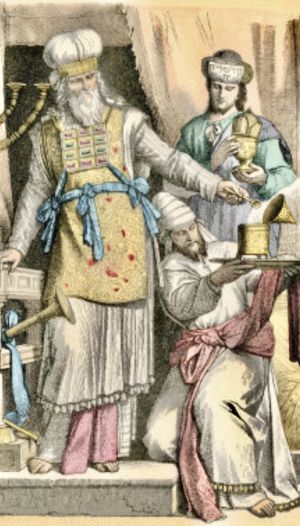
Being present to oneself: do not replace love with flakes and bows
(Mt 23:1-12)
New Relationship between God and man could not be contained within the detailed rules of the First Covenant and its heavy customs.
At the time of Jesus, such sick obsessions of snooty verticism dominated, therefore only epidermal; incapable of providing breath, freedom, propulsive motivation.
The pyramidal conception of the world and the exterior idea of the plot of the spiritual life do not correspond to Revelation.
Our reality is interwoven with opposing states, which innervate and complete; even making move forward. Sometime turning into a torrent in flood.
Rejection, abandonment, failure, limitations, illness, and the contempt of others – even a crisis – can bring us back to the dormant energies of life and give birth to a new Person.
How to contact our new ways of being? What precautions should be taken to enter a regeneration dynamism that helps to develop a lively climate - and where to start?
Jesus proposes Faith: a founding Relationship, that is, a new way of placing oneself before the Father and the world... with a trusting, spousal and creative attitude; in the initiative of another point of view.
Multifaceted love, Eros coming to us in a palpable dialogue - not without inner struggles.
This in the time of a path (singular, not at all traced or external). Even on the spur of the moment, annoying, because it goes against the tide.
The religious authorities, on the other hand, sought their security in the rigorous and conspicuous observance of the written and oral Law.
Without risk or mind-boggling customizations.
Faced with such an accommodating mentality, free from vertigo, the young Master insists on the practice of Friendship [much stronger than willpower] which relativizes the obligations.
He thus gives its true sense to the profound Tradition, rediscovering the authentic meaning of the Torah and the rules of behavior.
After all, it was precisely the spiritual leaders of the official religion who were the first to disbelieve what they preached to others... or felt exempt from it, because they were used to thinking of themselves as elective, recognised, selected, chosen models - almost cast from above.
Exaggerated spirit of control is a false attitude in itself – it causes excessive strain and is deaf to the inner core.
But it is also detrimental to the building of a family atmosphere, or a culture of encounter; to the synodal journey, even... and so on.
On the other hand, by insisting on the attitude [which is indeed infallible] of mutual service, there will be no time left to be caught up in vanity, disputes over precedence, superficial discussions, friction, or even the gap between saying and doing.
Where can the theatre of indifference, which depresses rather than invigorates God's people, start again?
From the everlasting scribes and pharisees (v.2). Self-proclaimed superiors, with limited and reductive criteria of judgement.
Well, according to the Gospels, those who take on ecclesiastical leadership roles are not entitled to any “ribbon”: they are simply «deacons» (v. 11) of their sisters and brothers.
They have no positions, but tasks. They have no titles, but duties. They have no rank; rather, they have a mission and many obligations.
To internalize and live the message:
Do you like ribbons? What does your soul say about peacocks?
[Saturday 20th wk. in O.T. August 22, 2026]
Replace Love... with ribbons?
Rabbi, Father and teachers? Be present to yourselves, not at the mercy of approval
(Mt 23:1-12)
The New Relationship between God and man could not be contained within the meticulous rules of the First Covenant and its heavy customs.
At the time of Jesus, such obsessions dominated, with their sickening arrogance, and were therefore only superficial, incapable of giving breath, freedom, or motivating force.
The pyramidal conception of the world and the external idea of the fabric of spiritual life never correspond to Revelation, nor to the simple criteria of natural wisdom.
In fact, the Tao Te Ching (iv) says: 'The Tao mitigates its splendour, makes itself like its dust. What depth! It seems to have always existed'.
Master Wang Pi comments: '[That which has no origin], by blunting its points, does not hurt creatures; by unravelling its knots, it does not tire them; by mitigating its light, it does not debase their bodies; by making itself like its dust, it does not disturb their authenticity'.
Master Ho-shang Kung adds: 'Even though you have extraordinary splendour, you must know how to remain in darkness and gloom [...], make yourself like dirt and dust, together with the crowds: you must not differentiate yourself from them'.
Our reality is woven with contrasting states, which innervate and complete it, even making it advance. Even transforming it into a raging torrent.
Rejection, abandonment, an experience of failure, limitation, illness or lack of self-esteem - even a setback - can bring us back to the dormant energies of life and give birth to the new Person.
In this way:
How can we get in touch with our new ways of being? What steps can we take to enter into a dynamic of regeneration that helps to develop a lively atmosphere - and where do we start?
Jesus proposes Faith: a fundamental relationship, that is, a new way of standing before the Father and the world... with a trusting, spousal and creative attitude; in the initiative of another point of view.
Multifaceted love, Eros that comes to us in a palpable dialogue - not without inner struggles.
This takes place over the course of a journey (unique, not copied or external). Even on the spot, it can be annoying because it goes against the grain.
The religious authorities, on the other hand, sought their security in the strict and ostentatious observance of the written and oral Law.
Without risk, without dizzying personalisation.
Faced with this accommodating, unadventurous mentality, the young Master insists on the practice of Friendship [much stronger than voluntarism], which relativises fulfilments.
He thus gave deep Tradition its true meaning, rediscovering the authentic sense of the Torah and the rules of behaviour.
After all, it was precisely the spiritual leaders of the official religion who were the first not to believe what they preached to others... or rather, they felt exempt because they were accustomed to thinking of themselves as elected, recognised, selected, chosen models - almost as if they had been sent from above.
A recurring vice that the Risen One seems to see in the spiritual leaders of his own new people, where those in charge - while proclaiming Christ himself - began to become lovers of obsequiousness.
Just like the ancient professionals of religion, who pushed for conformism, legalism and moralism; accustomed to showing off, dictating judgement, and conditioning the very course of the Law.
Then, as skilled specialists, they always found any excuse to say and not do - and pass themselves off as 'impeccable believers':
'They tie up heavy burdens, hard to bear, and lay them on men's shoulders, but they themselves are not willing to move them with their finger' (v. 4).
Even today, true experts in communication always act in public, to be acclaimed.
But in their conduct they have no intimate, determining and rooted principle, remaining prey to situations; light as butterflies.
Driven by ambition, they are all show and vanity - even for the self-love aroused by the social influence they willingly desire and exercise.
A spirit of elitism and empty exaltation that Matthew notes winding its way even among his veterans of the community in Galilee and Syria.
Small assemblies were then besieged by an influx of pagans, from whom the Judaizing elders demanded hierarchical respect above all else.
Hypocritically dethroning Christ and the Father, these veterans of ancient religiosity also aspired to be called rabbis, fathers, preceptors (vv. 7-10).
Self-proclaimed superiors, with limited and reductive standards of judgement.
In terms of the experience of faith, the Lord commands us instead to be all brothers and sisters - that is, equals - in the certainty of one Father.
This also applies to us, especially in this time of rebirth from the global crisis.
In Deus Caritas est (n. 35):
"This right way of serving makes the servant humble. He does not assume a position of superiority over others, however poor their situation may be at the moment. Christ took the last place in the world — the cross — and it is precisely through this radical humility that he redeemed us and constantly helps us. Those who are in a position to help recognise that it is precisely in this way that they themselves are helped; it is not their merit or a source of pride that they are able to help. This task is a grace. The more one works for others, the more one will understand and make one's own the words of Christ: "We are useless servants" (Lk 17:10). For one recognises that one is acting not on the basis of personal superiority or greater efficiency, but because the Lord has given one this gift. At times, excessive need and the limits of one's own work may expose one to the temptation of discouragement. But then he will be helped by the knowledge that, ultimately, he is only an instrument in the Lord's hands; he will thus be freed from the presumption of having to achieve, on his own and by himself, the necessary improvement of the world. In humility, he will do what he can and in humility he will entrust the rest to the Lord. It is God who rules the world, not us. We serve him only as we can and as long as he gives us the strength to do so. However, doing what we can with the strength we have is the task that keeps the good servant of Jesus Christ always on the move: 'The love of Christ impels us' (2 Cor 5:14).
How much we need a bath of humility in the soul of everyone who wants to be present in their actions!
We can start, for example, by avoiding using devotion and the Church as means of promotion, to appear important and emphasise some 'spiritual' rank higher than others.
This attitude is false in itself - it causes excessive forcing, deaf to the inner core. But it is also detrimental to the building of a family atmosphere, or a culture of encounter, a synodal journey, and so on.
On the contrary, by insisting on the attitude [which is indeed infallible] of mutual service, there will be no more time to be caught up in vanity, disputes over precedence, arguments, or the gap between words and deeds.
Where can the theatre of disaffection, which depresses rather than invigorates the people of God, start again?
From the everlasting scribes and Pharisees (v. 2), who are always exaggerated in their spirit of control.
Well, according to the Gospels, those who take on leadership roles in the Church are not entitled to any 'ribbons': they are simply 'deacons' (v. 11) of their brothers and sisters.
To internalise and live the message:
Do you like ribbons? What does your soul say about peacocks?
Conduct in open contrast

Dear Brothers and Sisters,
In this Sunday’s Liturgy, the Apostle Paul invites us to draw near to the Gospel “not as the word of men but as what it really is, the word of God” (1 Thess 2:13). Thus we can accept with faith the warning that Jesus offers to our conscience, in order to conform our way of living to it. In today’s passage he rebukes the scribes and the Pharisees, who were the teachers of the community, because their own conduct was openly in conflict with the teaching they rigorously taught others. Jesus underlines that they “preach, but do not practise” (Mt 23:3); rather “they bind heavy burdens, hard to bear, and lay them on men’s shoulders; but they themselves will not move them with their finger” (Mt 23:4). Good teaching must be received but it risks being contradicted by inconsistent behaviour. Thus Jesus says: “practise and observe whatever they tell you, but not what they do” (Mt 23:3). Jesus’ attitude is exactly the opposite: he is the first to practise the commandment of love, which he teaches to everyone, and he can say the burden is light and easy because he helps us carry it (cf. Mt 11:29-30).
Thinking of teachers who oppress the freedom of others in the name of authority, St Bonaventure points out who the authentic teacher is, affirming that, “No one can teach or practise, or reach knowable truths unless the Son of God is present” (Sermo I de Tempore, Dom. XXII post Pentecosten, Opera omnia, IX, Quaracchi, 1901, 442). “Jesus sits on the cathedra of Moses... as the greater Moses, who broadens the Covenant to include all nations” (cf. Jesus of Nazareth, Doubleday, New York, 2007, p. 66). He is our true and only Teacher! We are, therefore, called to follow the Son of God, the Word Incarnate, who expresses the truth of his teaching through his faithfulness to the will of the Father, through the gift of himself. Bl. Antonio Rosmini writes: “The first teacher trains all the other teachers, as he also trains the same disciples themselves, because they exist only in virtue of that first tacit, but very powerful Magisterium” (Idea della Sapienza, 82, in: Introduzione alla filosofia, vol. II, Rome, 1934, 143). Jesus also firmly condemns vanity and observes that “deeds to be seen by men” (Mt 23:5), places them at the mercy of human approval, undermining the values that found the authenticity of the person.
Dear friends, the Lord Jesus presented himself to the world as a servant, completely stripping himself and lowering himself to give on the Cross the most eloquent lesson of humility and love. His example gives rise to a proposal of life: “He who is greatest among you shall be your servant” (Mt 23:11). We invoke the intercession of Mary Most Holy and we ask especially for those in Christian communities, who are called to the ministry of teaching, that they may always witness by their works to the truths that they communicate by their words.
[Pope Benedict, Angelus, 30 October 2011]
Humble appearances, complete discipleship (against the ephemeral and dissipation)
1. With my gaze turned to the Shroud, I would like to extend a cordial greeting to you all, the faithful of the Church of Turin. I greet the pilgrims who have come from every part of the world at the time of this public exposition to look at one of the most unsettling signs of the Redeemer's suffering love.
As I entered the cathedral, which still shows the scars of last year's terrible fire, I paused in adoration before the Eucharist, the sacrament which is the focus of the Church's attention and, under humble appearances, contains the true, real and substantial presence of Christ. In the light of Christ's presence in our midst, I then stopped before the Shroud, the precious Linen that can help us better to understand the mystery of the love of God's Son for us. Before the Shroud, the intense and agonizing image of an unspeakable torment, I wish to thank the Lord for this unique gift, which asks for the believer's loving attention and complete willingness to follow the Lord.
3. For the believer, what counts above all is that the Shroud is a mirror of the Gospel. In fact, if we reflect on the sacred Linen, we cannot escape the idea that the image it presents has such a profound relationship with what the Gospels tell of Jesus' passion and death, that every sensitive person feels inwardly touched and moved at beholding it. Whoever approaches it is also aware that the Shroud does not hold people's hearts to itself, but turns them to him, at whose service the Father's loving providence has put it. Therefore, it is right to foster an awareness of the precious value of this image, which everyone sees and no one at present can explain. For every thoughtful person it is a reason for deep reflection, which can even involve one's life. The Shroud is thus a truly unique sign that points to Jesus, the true Word of the Father, and invites us to pattern our lives on the life of the One who gave himself for us.
7. The Shroud is an image of silence. There is a tragic silence of incommunicability, which finds its greatest expression in death, and there is the silence of fruitfulness, which belongs to whoever refrains from being heard outwardly in order to delve to the roots of truth and life. The Shroud expresses not only the silence of death but also the courageous and fruitful silence of triumph over the transitory, through total immersion in God's eternal present. It thus offers a moving confirmation of the fact that the merciful omnipotence of our God is not restrained by any power of evil, but knows instead how to make the very power of evil contribute to good. Our age needs to rediscover the fruitfulness of silence, in order to overcome the dissipation of sounds, images and chatter that too often prevent the voice of God from being heard.
[Pope John Paul II, veneration of the Shroud, Turin, 24 May 1998]
They lead a double life
Today’s Gospel passage (cf. Mt 23:1-12) is set in the final days of Jesus’ life, in Jerusalem; days filled with expectations and also tension. On the one hand, Jesus directs harsh criticism at the scribes and Pharisees, and on the other, he entrusts important mandates to Christians of all times, thus also to us.
He says to the crowd: “The scribes and the Pharisees sit on Moses’ seat; so practice and observe whatever they tell you”. Meaning that they have the authority to teach what is in conformity with the Law of God. However, immediately after, Jesus adds: “but do not do ‘what they do; for they preach, but do not practice’” (vv. 2-3). Brothers and sisters, a frequent flaw of those in authority, whether civil or ecclesiastic authority, is that of demanding of others things — even righteous things — that they do not, however, put into practise in the first person. They live a double life. Jesus says: “They bind heavy burdens, hard to bear, and lay them on men’s shoulders; but they themselves will not move them with their finger (v. 4). This attitude sets a bad example of authority, which should instead derive its primary strength precisely from setting a good example. Authority arises from a good example, so as to help others to practise what is right and proper, sustaining them in the trials that they meet on the right path. Authority is a help, but if it is wrongly exercised, it becomes oppressive; it does not allow people to grow, and creates a climate of distrust and hostility, and also leads to corruption.
Jesus openly denounces some of the negative conduct of the scribes and of some Pharisees: “they love the place of honor at feasts and the best seats in the synagogues, and salutations in the market places” (vv. 6-7). This is a temptation that corresponds to human pride and that is not always easy to overcome. It is the attitude of living only for appearances.
Then Jesus entrusts the mandates to his disciples: “you are not to be called rabbi, for you have one teacher, and you are all brethren. [...] Neither be called masters, for you have one master, the Christ. He who is greatest among you shall be your servant” (vv. 8-11).
We disciples of Jesus must not seek titles of honour, of authority or supremacy. I tell you, it pains me personally to see people who, psychologically, live in pursuit of vain accolades. We disciples of Jesus must not do this, because among ourselves there must be a simple and fraternal attitude. We are all brothers and sisters and in no way must we abuse others or look down on them. No. We are all brothers and sisters. If we have received talents from the heavenly Father, we must place them at the service of our brothers and sisters, and not exploit them for our own satisfaction and personal interests. We must not consider ourselves superior to others; modesty is essential for an existence that seeks to conform to the teaching of Jesus, who is meek and humble of heart and came not to be served but to serve.
May the Virgin Mary, “humble and exalted more than any creature” (Dante, Paradiso, xxxiii:2), help us, with her motherly intercession, to spurn pride and vanity, and to be meek and docile to the love that comes from God, for the service of our brothers and sisters and for their joy, which will also be our own.
[Pope Francis, Angelus, 5 November 2017]
No forced surrendering
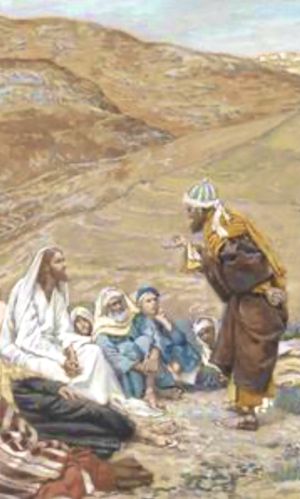
The Great Commandment: only profound Quality obliges
(Mt 22:34-40)
That of the ‘Great commandment’ was the most familiar catechism rule, even to infants.
Jesus is questioned to retort: and why do you not keep the one commandment that even God fulfils - the Sabbath rest?
The unique disposition in which the Father recognizes himself is Love, not some particular precept - because only profound Quality obliges.
The spiritual proposal of the Master makes the narrative of God's people and the practice of the Prophets its own: all heart, feet, hands - and intelligence.
Complete Love for God envelops the creature in every decision [heart], every moment and aspect of its concrete 'life', all its resources [strength].
Mt does not explicitly mention this last aspect, perhaps to emphasize that the Father does not absorb energies in any way, but transmits them.
And Jesus adds to the nuances of authentic understanding with God enumerated in the First Testament an unexpected side to those who think of love as a feeling only emotional.
The Lord suggests study, discernment and understanding of our perceptions (v.37) - the mental and deep intelligence aspect that complements Dt 6.
At first glance, it appears to be a secondary facet or even a frill for the qualitative leap from a common religious sense to the wisely and personally configured existence of Faith.
The exact opposite is true: we are children of a Father who does not supplant us, nor absorb our forces or potential, depersonalising us; not even from the mental point of view.
Practicality alone makes us fragile, not very aware; and when we are not convinced, we will not be reliable either, always at the mercy of changing situations and the conformist, fashionable, other people’s opinion.
Jesus does not speak of love for God in terms of intimacy and feeling, but of a totally involving affinity, made less oscillating precisely by the development of our sapiential measure on issues.
Here is a decisive appointment, of the Love in the round.
It would be unnatural to recognise a Lord of Heaven who does not come to meet us and instead towers over us with an objective of his own, which is extrinsic to us and makes us marginal.
Loving «How [and Because] yourself»: it is a new Genesis in the spirit of Giving.
The paradox suggested by Jesus is that we love for the care to meet - and because we love ourselves - by expanding the I into the You.
God’s «great command» affects real life and concerns not only the quality of relationship with the world and neighbour, but the reflexive global with oneself.
We should not be afraid of other doctrines and disciplines, neglecting the challenges even intellectual ones that call into question beliefs, works, one’s worldview, language, style, and thought itself.
All added values.
Needless to complain, if the ecclesial realities that do not update or deepen, and remain in the inherited commonplaces [or vogues] slowly decay, then disappear.
Therefore to the ancient notes of true love, the Son of God adds the ‘quality of mind’: we are not gullible, clueless, one-sided.
Our outstretched hands are the result of free and conscious choice. No forced surrender.
«Faith that does not become culture is a faith that is not fully accepted, not entirely thought out, not faithfully lived» [John Paul II].
To internalize and live the message:
What is Great for you? Do you document and update yourself in order to better correspond to God’s Call?
[Friday 20th wk. in O.T. August 21, 2026]
The great commandment: Love
Only Quality obliges. No forced surrender
(Mt 22:34-40)
Jesus turns what was the most banal of catechism questions into a crucial question: what is the 'great' commandment?
Despite the different theological schools, the answer was known to all: the Sabbath rest, the only prescription observed (even) by God.
The question put to the Master by the expert in the Law was not so innocent, but "to test him" (Mt 22:35; Lk 10:25) - i.e. to retort: how then do you not fulfil the Sabbath precept?
Christ simplifies the tangle of disputes, about widening or narrowing theoretical cases, and gets to the point.
Always allergic to bickering over doctrines, He makes a proposal of life as a unifying moment of the demands of the Covenant.
All norms have an essence, otherwise they remain a dispersive jumble. They find their spontaneous foundation and natural meaning in the gift of self - but motivated.
But what is the solid point and context of such an invitation? A vague feeling, one emotion among many, a passing motion? Philanthropy? Or an experience?
We are thirsty for affection and grant friendship in an alternating current, so much so that love becomes a source of misunderstandings, rooted in the need to complete each other.
This is why the second commandment appears as an explanation of the first, not a reduction of it [Mt 22:39; Mk 12:31; Lk 10:27].
In the ancient world it made no sense to speak of love towards God, the ineffable Mystery.
It was the Most High who favoured someone by giving him material fortune, and he acknowledged to him a duty of worship, and sacrifices.
Ditto for the unfortunate, at least to avoid retaliation (and keep him good).
With Jesus, one speaks openly of gratuitousness - not simple gratitude - as the unifying core, both of the person and of salvation history.
Gone is the idea of the exchange of favours.
The Father does not need anything; he does not enjoy seeing us submissive and feeling recognised [the pattern of pagan religiosity] as a sovereign would towards his subjects.
The relationship with the Eternal One remains concrete, but honour towards the Most High is manifested by making His plan of good and growth towards man our own, and recognising ourselves in it.
God's plan unfolds ... with a living demand. But there is a Departure, a Centre and an Arrival. In reality, a new Genesis.
In any case, only God's initiative brings out the best in us: more talent, more desire, more interests, more unexpressed capacities, more unseen - instead of soul-denying torments.
It is the difference between religiosity that weakens the personality, and Faith.
Through Faith a special creative relationship is triggered: that of the one who accepts the Calling by Name, as well as the proposals of the Source of being itself - wave upon wave.
They anticipate our initiatives and infallibly guide us to the perfect blossoming of our own and others' Seeds.
Especially in Mt (22:38-39) and Mk (12:29-31) it is clear that love for one's neighbour derives from the experience and awareness of being loved first and unconditionally by God - looked upon, accepted, valued, promoted, gladdened, completed.
One loves not by effort [force is a dirigiste lever: it produces episodes that make life worse] but on the basis of how much we feel loved - and with immediacy, repeatedly, unconditionally.
One loves on the argument of the 'forfeit' already experienced in one's favour by Providence, which gives meaning and value to human acts.
Not out of infatuation with external, induced, however other people's expectations.
Even in the spiritual field, not a few behaviours believed to be able to solve problems, often chronicle them.
In this way, they rely on an idea of permanence - not on the dynamic of vocational gratuitousness, on the unimaginable Gift, to be received.
So the point is to adjust according to resources that come, or the distortion of models, typical of the moralist mentality.
In fact, the scheme of omnipotence in the good, paradoxically, folds the ego and its forces, and distorts its gaze.
But beyond all nuances, we are glad that the first and second commandments are about Love: what we most desire to do and receive. It is an urgency of life.
Yet we must be wise, so that the pattern of paradigms or the urges of natural affection and precipitation do not overwhelm and drag away - overturning - every good intention.
Love does not tolerate the excess of expectations, because it springs from an experience of Perfection that arrives; offered, unexpected, unpredictable. Not already set up according to concatenated and normal intentions.
If authentic, in time we will experience blossoming; not in the expectation of a return, but first and foremost in a Gift outside of time. Because it has already satiated and convinced us - with contemplative amazement - and made us rejoice.Thus the vocational and foundational Eros will continue to mould us, with its perennially explorative virtue capable of activating new Births.
Personal energy - without the usual baggage of torment, reservations, outwardness... and (again) wrath.
Great Commandment: only Deep Quality obliges
The only disposition in which the Father recognises Himself is Love, all-round and all-round; not some particular precept.
For Jesus there are no rankings in the things of God and man - in fact He showed a marked tendency to summarise the many dispositions - because only the profound Quality obliges.
The spiritual proposition of the Master appropriated the narrative of God's people and the practice of the Prophets: all heart, feet, hands - and intelligence.
Complete Love for God must envelop the creature in every decision [heart].
Likewise, in every moment and aspect of its concrete 'life', and involve all its resources [strength: cf. Mk 12:30; Lk 10:27].
Deut 6:5 (Hebrew text) reads in fact: "with all your 'much'", meaning a concrete participation in both cultic life and material fraternity - providing and helping with one's possessions.
Matthew 22:37 does not explicitly mention the latter, perhaps to emphasise that the Father does not absorb energies in any way, but transmits them.
But Jesus adds to the nuances of the authentic understanding with God enumerated in the First Testament an unexpected side to those who think of love as a delicate emotional feeling only.
The Lord suggests the study, discernment and understanding of our perceptions [Mt 22:37; Mk 12:30; Lk 10:27] accompanied by the mental aspect and deep intelligence (excluded in Deut 6).
At first glance, this seems a secondary facet or even a frill for the qualitative leap from a common religious sense to the existence of wisely and personally configured Faith.
The exact opposite is true: we are children of a Father who does not supplant us, nor does he absorb our potential or energy, depersonalising us.
It is a capital implication of our dignity and promotion - even human - and a specific discriminator in the discernment of Faith in Christ, as opposed to all devotional solutions in search of the Absolute (whatever).
Practicality alone makes us fragile, not very aware; and when we are not convinced, we will not be reliable either, always at the mercy of changing situations and the conformist, fashionable opinion of others.
We not infrequently flee the all-round confrontation that would enrich everyone - precisely because of incompetence.
But we are not one-sided gullible. Being attentive and up-to-date, having the ability to think even critically is a required expansion in the development of one's human, moral, cultural and spiritual vocation.
Trivialities, identifications, impersonal scopiazzature and half-hearted assembly repetitions get in the way of the tide of life, this divine cascade of perennial energy that pulses and does not die down.
On the contrary, it comes with stirring appeals: it calls to open us up to new relationship attractions and other interests, even intellectual; even denominational.
Jesus does not speak of love for God in terms of intimism and sentiment, but of a totally engaging affinity, made less uncertain precisely by the development of our sapiential measure, regarding matters.
Devotion swallows up everything. Faith, on the other hand, does not allow itself to be plagiarised by local or external civilisation: it presupposes an ability to competently enter into personal evaluations or those inherent in the community and overall debate - historical and up-to-date.
The testimony of our Hope does not disdain to allow itself to be enriched by dialogue with those who have greater psychological or biblical expertise, specialised pastoral and social, as well as archaeological, bioethical, economic, scientific and so on.
A commitment that shows true interest in the Sacred [of course, all aspects to be evaluated not as school options].
But it must be admitted that one of the most organic expressions of great Catholic theology is what was once called the 'doctrine' of the seven Gifts of the Holy Spirit.
In the existence of Love, the primacy (also relational) of the Gift of the Spirit was recognised, which completed the possibilities of 'natural' expression of the cardinal and theological virtues, bringing them to fullness.
As many as four of the seven Gifts were related to a character of profound knowledge: Wisdom, Intellect, Counsel and Science.
In short: there is still a decisive appointment here for all-round Love.
To indulge in a few jokes along the lines of belief is everyone's domain [individualist or circle], but the ability to enter into it is only of those who have been willing to sift through and experience the issues - because they are more interested in understanding the Face of God and His Design on humanity than in reiterating false narrative certainties.
It would be unnatural to recognise a Master of Heaven who does not come to meet us; as if he towers over us with "his" (to us extrinsic) objective and thus makes everyone marginal.
[In sects - even those with a good-natured appearance - it is forbidden to delve deeper, to understand: the position is already there, the candidate must "only" adapt].
"As (and because) thou art thyself" [sense of the Greek text: Mt 22:39; Mk 12:31; Lk 10:27]: it is a new Birth of life, new Genesis in the spirit of Gift.
The paradox suggested by Jesus surpasses the ancient norm of Lev 19:18.
We love not only the children of our people, "by the fact that" we care to meet and want to enrich ourselves together, expanding the I into the Thou.
God's "Great Command" invests real life and concerns not only the quality of our relationship with the world and our neighbour, but the reflexive global with self.
One should not be afraid of other doctrines and disciplines, neglecting analytical challenges beyond the 'organic' ones - the long-term ones.
They all challenge beliefs, works, one's worldview; language, style, and thought itself.
We still have a great need to broaden our minds and become as vast as a panorama. And reharmonise the opposites we drag in.
Hidden Sides and Pearls to which we have not yet given breath, or visibility - and perhaps never considered Allies.
The troubled fate of the prophets remains unique, but it is not the certainties (ancient, or sophisticated, fashionable, à la page) that are the added value of the adventure of Faith in Love - but rather the risk of putting oneself in the balance and the all-round reworking.
It is then useless to complain, if the ecclesial realities that do not update, and remain in the inherited commonplaces, slowly decay, then disappear.
In spite of their resounding heritage and fabulous events.
In this way, the "doctor of the law" may already be close [Mk 12:34; Lk 10:28] but he still has to keep an eye on Jesus, to understand in Him the more dilated sense of the total gift, in the specifically personalising, which is not naive.
The Lord brings back the sense of the norms to their profound and original function: to become the viaticum of every encounter that raises events, people of all backgrounds, and creation.
In conclusion, experience and ritual have their fulcrum in the reciprocity of love.
Life in all its facets becomes Liturgy more meaningful than the accredited gesture of worship; its truly broken Bread becomes a convincing call to Communion and Mission.
Even if it does not make the headlines, the authentic thermometer of our journey will not be the volume or the pile of important things we do, but a pulsing of regenerated heart and mind.
That is why to the ancient notes of true Love the Son of God adds the quality of thought: we are not gullible, uninformed, one-sided.
Our outstretched hands are the fruit of free and conscious choice. No forced surrender.
"A faith that does not become culture is a faith that is not fully accepted, not entirely thought out, not faithfully lived" [John Paul II].
To internalise and live the message:
What is Great for you? Titles? Having, power, appearing?
What in your experience of Love is the Starting Point, the Centre and the Arrival?
Do you document and update yourself to better correspond to God's Call?
It contains the rational element!

The Word of the Lord, resounding a short while ago in the Gospel, reminded us that the whole divine law is summarized in love. The Evangelist Matthew narrates that after Jesus had answered the Sadducees, silencing them, the Pharisees met to put him to the test (cf. 22: 34-35). One of them, a doctor of law, asked him: "Teacher, which is the greatest commandment in the law?" (22: 36). The question makes apparent the concern, present in ancient Jewish tradition, over finding a unifying principle in the various formulations of God's will. This was not an easy question, considering that in the law of Moses, a good 613 precepts and prohibitions are contemplated. How does one discern, among all of these, which is the most important? But Jesus does not hesitate, and readily responds: "You shall love the Lord your God with your all your heart, and with all your soul, and with all your mind. This is the great and first commandment" (22: 37-38). Jesus quotes the Shemà in his answer, the prayer the pious Israelite recites several times a day, especially in the morning and in the evening (cf. Dt 6: 4-9; 11: 13-21; Nm 15: 37-41): the proclamation of the integral and total love due to God, as the only Lord. Emphasis is placed on the totality of this dedication to God, listing the three faculties that define man in his deep psychological structures: heart, soul and mind. The word mind, diánoia, contains the rational element. God is not only the object of love, commitment, will and sentiment, but also of the intellect, which should not be excluded from this milieu. Then, however, Jesus adds something which, in truth, had not been asked by the doctor of law: "And a second is like it, You must love your neighbour as yourself" (22: 39). The surprising aspect of Jesus' answer consists in the fact that he establishes a similarity between the first and the second commandments, defined this time too with a biblical formula drawn from the Levitical code of holiness (cf. Lv 19: 18). And thus by the end of the passage the two commandments become connected in the role of a fundamental union upon which all of biblical Revelation rests: "On these two commandments the whole law is based, and the prophets as well" (Mt 22: 40).
The Gospel passage on which we are focusing makes clear that being disciples of Christ means practicing his teachings, which can be summarized in the first and greatest commandment of the divine law, the commandment of love. Even the First Reading, taken from the Book of Exodus, insists on the duty of love; a love witnessed concretely in relationships between persons, which must be relationships of respect, collaboration, generous help. The neighbour to be loved is the stranger, the orphan, the widow and the needy, in other words, those citizens who have no "defender". The holy author goes into details, as in the case of the object pawned by one of these poor persons (cf. Ex 22: 25-26). In this case God himself is the one to vouch for the neighbour's position.
In the Second Reading, we can find a concrete application of the supreme commandment of love in one of the first Christian communities. St Paul writes to the Thessalonians, leading them to understand that, while having known them for such a short time, he appreciates them and holds them dear in his heart. Because of this, he pinpoints them as "a model for all the believers of Macedonia and Achaia" (1 Thes 1: 7). Weaknesses and difficulties are not lacking in this recently founded community, but it is love that surpasses all, renews all, conquers all: the love of those who, knowing their own limits, docilely follow the words of Christ, the divine Teacher, passed down through one of his faithful disciples. "You, in turn, became imitators of us and of the Lord, receiving the word despite great trials, with the joy that comes from the Holy Spirit", the Apostle wrote. He continued: "For not only has the word of the Lord sounded forth from you in Macedonia and Achaia, but your faith in God has gone forth everywhere" (1 Thes 1: 6, 8). The lesson that we can draw from the Thessalonians' experience, an experience that is truly common in every authentic Christian community, is that neighbourly love is born from docile listening to the divine Word. It is a love that will even withstand difficult trials for the truth of the divine Word, and in this way true love grows and truth shines in all its splendour. How important it is to listen to the Word and incarnate it in personal and community life!
[Pope Benedict, Synod of Bishops 26 October 2008]
Two Loves, ultimate meaning. Scale of inner possibilities
2. Christ says: "If anyone loves me, he will keep my word, and my Father will love him, and we will come to him..." (Jn 14:23). In the very centre of Christ's teaching lies the great commandment of love. This commandment was already inscribed in the Old Testament tradition, as today's first reading from the book of Deuteronomy testifies.
When the Lord Jesus answers the question of one of the scribes, he goes back to this writing of the divine Law, revealed in the Old Covenant: "Which is the first of all the commandments!" "The first is... You shall love ... the Lord your God with all your heart, with all your mind, and with all your strength." "And the second is this. Thou shalt love thy neighbour as thyself." "There is no other commandment more important than these" (Mk 12:29-31).
3. That interlocutor, who was evoked by St. Mark, accepted Christ's answer with reflection. He accepted it with profound approval. It is necessary for us too, today, to reflect briefly on this 'greatest commandment', in order to accept it again with full approval and deep conviction. First of all, Christ propagates the primacy of love in man's life and vocation. Man's greatest vocation is the call to love. Love also gives the ultimate meaning to human life. It is the essential condition of man's dignity, the proof of the nobility of his soul. St Paul will say that it is "the bond of perfection" (Col 3:14). It is the greatest thing in man's life, because true love carries within itself the dimension of eternity. It is immortal: "charity will never end" we read in the First Letter to the Corinthians (1 Cor 13:8). Man dies as far as the body is concerned, because such is the destiny of everyone on earth, but this death does not harm the love that has matured in his life. Of course, it remains above all to bear witness to man before God, who is love. It designates man's place in the Kingdom of God; in the order of the Communion of Saints. The Lord Jesus to his interlocutor in today's Gospel - seeing that he understands the primacy of love among the commandments - says: "You are not far from the kingdom of God) (Mk 12:34).
4. There are two commandments of love - as the Master expressly states in his reply - but love is one. One and identical embraces God and neighbour. God: above all things, for he is above all things. The neighbour: with the measure of man, and therefore 'as himself'.
These 'two loves' are so closely connected that one cannot exist without the other. St John says it elsewhere: 'For whoever does not love his brother whom he sees, cannot love God whom he does not see' (1 John 4:20). Therefore, one love cannot be separated from the other. True love of man, of one's neighbour, therefore, which is true love, is at the same time love of God. This may astonish some. It certainly astonishes. When the Lord Jesus presents his listeners with the vision of the last judgement, reported in St Matthew's Gospel, he says: "I was hungry and you gave me food, I was thirsty and you gave me drink; I was a stranger and you welcomed me, naked and you clothed me, sick and you visited me, in prison and you came to visit me" (Matthew 25:35-36).
Then those who hear these words are amazed, for we hear them ask: "Lord, when did we ever do all this to you?". And the answer: 'Truly I say to you, whenever you have done these things to one of the least of these brothers - that is, to your neighbour: to one of men - you have done it to me' (cf. Mt 25:37, 40).
5. This truth is very important for our whole life and behaviour. It is especially important for those who try to love men, but "do not know whether they love God" or even claim not to "know" how to love Him.
This difficulty is easy to explain when one takes into consideration man's entire nature, his entire psychology. It is, in a way, easier for man to love what he sees than what he does not see (cf. 1Jn 4:20).
6. Yet man is called and is called with great firmness, the words of the Lord Jesus testify to this, to love God, to the love that is above all things. If we reflect on this commandment, on the meaning of the words already written in the Old Testament and repeated with such determination by Christ, we must recognise that they tell us much about man himself. They reveal the deepest and, at the same time, definitive perspective of his being, of his humanity. If Christ assigns to man as a task such love, that is, the love of God that he, man, does not see, this means that the human heart conceals within itself the capacity for this love, that the human heart is created 'to measure this love'. Is this not the first truth about man, that he is the image and likeness of God himself? Does not St Augustine speak of the human heart remaining restless until it rests in God? So then, the commandment to love God above all things reveals a scale of man's inner possibilities. This is not an abstract scale. It has been reconfirmed and is constantly being confirmed by all men who take their faith, the fact that they are Christians, seriously. Yet there is no shortage of men who have heroically confirmed this scale of man's inner possibilities.
[Pope John Paul II, homily 4 November 1979]
The sower is Jesus. With this image, we can see that he presents himself as one who does not impose himself, but rather offers himself. He does not attract us by conquering us, but by donating himself: he casts seeds. With patience and generosity, he spreads his Word, which is not a cage or a trap, but a seed which can bear fruit (Pope Francis)
Il seminatore è Gesù. Notiamo che, con questa immagine, Egli si presenta come uno che non si impone, ma si propone; non ci attira conquistandoci, ma donandosi: butta il seme. Egli sparge con pazienza e generosità la sua Parola, che non è una gabbia o una trappola, ma un seme che può portare frutto (Papa Francesco)
The Church desires to give thanks to the Most Holy Trinity for the "mystery of woman" and for every woman - for that which constitutes the eternal measure of her feminine dignity, for the "great works of God", which throughout human history have been accomplished in and through her (Mulieris Dignitatem n.31)
La Chiesa desidera ringraziare la Santissima Trinità per il «mistero della donna», e, per ogni donna - per ciò che costituisce l'eterna misura della sua dignità femminile, per le «grandi opere di Dio» che nella storia delle generazioni umane si sono compiute in lei e per mezzo di lei (Mulieris Dignitatem n.31)
Simon, a Pharisee and rich 'notable' of the city, holds a banquet in his house in honour of Jesus. Unexpectedly from the back of the room enters a guest who was neither invited nor expected […] (Pope Benedict)
Simone, fariseo e ricco “notabile” della città, tiene in casa sua un banchetto in onore di Gesù. Inaspettatamente dal fondo della sala entra un’ospite non invitata né prevista […] (Papa Benedetto)
God excludes no one […] God does not let himself be conditioned by our human prejudices (Pope Benedict)
Dio non esclude nessuno […] Dio non si lascia condizionare dai nostri pregiudizi (Papa Benedetto)
«The Russian mystics of the first centuries of the Church gave advice to their disciples, the young monks: in the moment of spiritual turmoil take refuge under the mantle of the holy Mother of God». Then «the West took this advice and made the first Marian antiphon “Sub tuum Praesidium”: under your cloak, in your custody, O Mother, we are sure there» (Pope Francis)
«I mistici russi dei primi secoli della Chiesa davano un consiglio ai loro discepoli, i giovani monaci: nel momento delle turbolenze spirituali rifugiatevi sotto il manto della santa Madre di Dio». Poi «l’occidente ha preso questo consiglio e ha fatto la prima antifona mariana “Sub tuum praesidium”: sotto il tuo mantello, sotto la tua custodia, o Madre, lì siamo sicuri» (Papa Francesco)
The Cross of Jesus is our one true hope! That is why the Church “exalts” the Holy Cross, and why we Christians bless ourselves with the sign of the cross. That is, we don’t exalt crosses, but the glorious Cross of Christ, the sign of God’s immense love, the sign of our salvation and path toward the Resurrection. This is our hope (Pope Francis)
La Croce di Gesù è la nostra unica vera speranza! Ecco perché la Chiesa “esalta” la santa Croce, ed ecco perché noi cristiani benediciamo con il segno della croce. Cioè, noi non esaltiamo le croci, ma la Croce gloriosa di Gesù, segno dell’amore immenso di Dio, segno della nostra salvezza e cammino verso la Risurrezione. E questa è la nostra speranza (Papa Francesco)
In the divine attitude justice is pervaded with mercy, whereas the human attitude is limited to justice. Jesus exhorts us to open ourselves with courage to the strength of forgiveness, because in life not everything can be resolved with justice. We know this (Pope Francis)








duevie.art
don Giuseppe Nespeca
Tel. 333-1329741
Disclaimer
Questo blog non rappresenta una testata giornalistica in quanto viene aggiornato senza alcuna periodicità. Non può pertanto considerarsi un prodotto editoriale ai sensi della legge N°62 del 07/03/2001.
Le immagini sono tratte da internet, ma se il loro uso violasse diritti d'autore, lo si comunichi all'autore del blog che provvederà alla loro pronta rimozione.
L'autore dichiara di non essere responsabile dei commenti lasciati nei post. Eventuali commenti dei lettori, lesivi dell'immagine o dell'onorabilità di persone terze, il cui contenuto fosse ritenuto non idoneo alla pubblicazione verranno insindacabilmente rimossi.