


don Giuseppe Nespeca
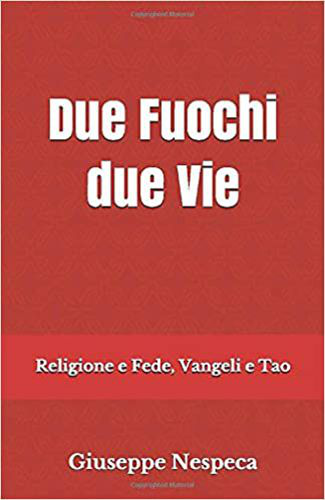
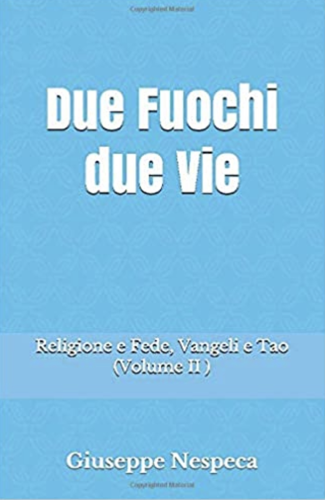
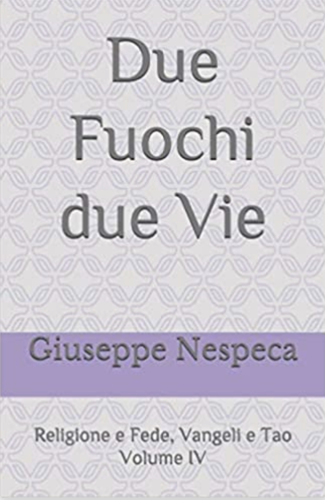
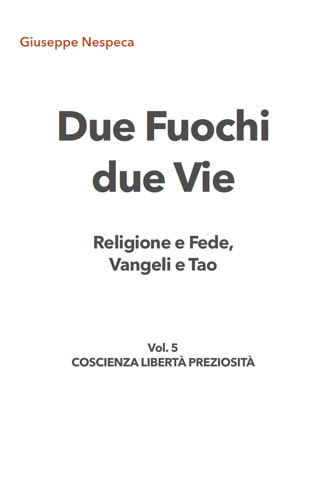
Giuseppe Nespeca è architetto e sacerdote. Cultore della Sacra scrittura è autore della raccolta "Due Fuochi due Vie - Religione e Fede, Vangeli e Tao"; coautore del libro "Dialogo e Solstizio".

In the Gospel passage from St Luke, Jesus himself frankly states the three conditions necessary for being his disciples: to love him more than anyone else and more than life itself; to carry one's cross and to walk after him; to renounce all one's possessions. Jesus sees a great crowd following him with his disciples and wants to make it quite clear to all that following him is demanding and cannot depend on enthusiasm or opportunism. It must be a carefully considered decision taken after asking oneself, in all conscience: who is Jesus for me? Is he truly "Lord", does he take first place, like the sun around which all the planets rotate? And the First Reading from the Book of Wisdom indirectly suggests to us the reason for this absolute primacy of Jesus Christ: in him we find the answers to the questions of human beings in every epoch who seek the truth about God and about themselves. God is out of our reach and his plans are unknown to us. Yet he has chosen to reveal himself, in creation and especially in the history of salvation, while in Christ he fully manifested himself and his will. Although it remains true that "No one has ever seen God" (Jn 1: 18), we now know his "name" and his "face" and even his will, because Jesus, who is the Wisdom of God made man, has revealed them to us. "Thus", writes the sacred author of the First Reading, "men were taught what pleases you, and were saved by wisdom" (Wis 9: 18).
[Pope Benedict, homily in Carpineto Romano 5 September 2010]
Radicality that does not admit of delay or second thoughts.
3. “If anyone wishes to come after me, let him deny himself and take up his cross daily and follow me”(Lk 9:23). These words denote the radicality of a choice that does not allow for hesitation or second thoughts. It is a demanding requirement that unsettled even the disciples and that, throughout the ages, has held back many men and women from following Christ. But precisely this radicality has also produced admirable examples of sanctity and martyrdom that strengthened and confirmed the way of the Church. Even today these words are regarded as a stumbling block and folly (cf. 1 Cor 1: 22-25). Yet they must be faced, because the path outlined by God for his Son is the path to be undertaken by the disciple who has decided to follow Jesus. There are not two paths, but only one: the one trodden by the Master. The disciple cannot invent a different way.
Jesus walks ahead of his followers and asks each one to do as he himself has done. He says: I have not come to be served, but to serve; so, whoever wants to be like me must be the servant of everyone. I have come to you as one who possesses nothing; for this reason, I can ask you to leave all riches behind which prevent you from entering the Kingdom of Heaven. I accept denial and rejection by most of my people; therefore I can ask you to accept denial and opposition from wherever it comes.
In other words, Jesus asks that we courageously choose the same path. We have to choose it from our hearts, because external situations do not depend on us. In so far as it is possible, the will to be as obedient as he was to the Father and to be ready to accept the plan which he has for each person right to the end depends upon each of us.
4. “He must deny himself”. To deny oneself is to give up one’s own plans that are often small and petty in order to accept God’s plan. This is the path of conversion, something indispensable in a Christian life, and that led Saint Paul to say, “it is no longer I who live, but Christ who lives in me” (Gal 2:20).
Jesus does not ask us to give up living, but to accept a newness and a fullness of life that only He can give. The human being has a deep-rooted tendency to “think only of self”, to regard one’s own person as the centre of interest and to see oneself as the standard against which to gauge everything. One who chooses to follow Christ, on the other hand, avoids being wrapped up in himself and does not evaluate things according to self interest. He looks on life in terms of gift and gratuitousness, not in terms of conquest and possession. Life in its fullness is only lived in self-giving, and that is the fruit of the grace of Christ: an existence that is free and in communion with God and neighbour (cf. Gaudium et spes, 24).
If to live as a follower of the Lord becomes the highest value, then all other values are given their rightful rank and importance. Whoever depends solely on worldly goods will end up by losing, even though there might seem to be an appearance of success. Death will find that person with an abundance of possessions but having lived a wasted life (cf. Lk 12:13-21). Therefore, the choice is between being and having, between a full life and an empty existence, between truth and falsehood.
5. “Take up his cross daily and follow me”. As the cross can be reduced to being an ornament, “to carry the cross” can become just a manner of speaking. In the teaching of Jesus, however, it does not imply the pre-eminence of mortification and denial. It does not refer primarily to the need to endure patiently the great and small tribulations of life, or, even less, to the exaltation of pain as a means of pleasing God. It is not suffering for its own sake that a Christian seeks, but love. When the cross is embraced it becomes a sign of love and of total self-giving. To carry it behind Christ means to be united with him in offering the greatest proof of love.
We cannot speak about the cross without considering God’s love for us, the fact that God wishes to shower us with good things. With his invitation “follow me”, Jesus not only says again to his disciples: take me as your model, but also: share my life and my choices, and stake your life for love of God and for neighbour together with me. This is how Jesus opens up before us the “way of life”. Unfortunately, this is constantly being threatened by the “way of death”. Sin is this way that separates a person from God and neighbour and brings about division and undermines society from within.
The “way of life” continues and renews the mind of Christ in us and becomes the way of faith and conversion. It is indeed the way of the cross. It is the way that leads one to trust in him and his plan of salvation, and to believe that He died in order to show God’s love for each one. It is the way to salvation in a society often divided, confused and contradictory. It is the way to the happiness found in following Christ right to the end, in the sometimes dramatic circumstances of daily life. It is the way that does not fear failure, difficulties, isolation, loneliness, because it fills our hearts with the presence of Jesus. It is the path of peace, self-control and a joyful heart.
6. My dear young people, do not think it strange that, at the beginning of the third millennium, the Pope once again directs you towards the Cross of Christ as the path of life and true happiness. The Church has always believed and proclaimed that only in the Cross of Christ is there salvation.
There is a widespread culture of the ephemeral that only attaches value to whatever is pleasing or beautiful, and it would like us to believe that it is necessary to remove the cross in order to be happy. The ideal presented is one of instant success, a fast career, sexuality separated from any sense of responsibility, and ultimately, an existence centred on self affirmation, often bereft of respect for others.
Open your eyes and observe well, my dear young people: this is not the road that leads to true life, but it is the path that sinks into death. Jesus said: “Whoever wishes to save his life will lose it, but whoever loses his life for my sake will save it.” Jesus leaves us under no illusions: “What profit is there for one to gain the whole world yet lose or forfeit himself?” (Lk 9:24-25). With the truth of his words that sound hard but fill the heart with peace, Jesus reveals the secret of how to live a true life (cf. Talk to the young people of Rome, 2 April 1998).
Therefore, do not be afraid to walk the way first trodden by the Lord. With your youthfulness, put your mark of hope and enthusiasm, so typical of your age, on the third millennium that is just beginning. If you allow the grace of God to work in you, and earnestly fulfill this commitment daily, you will make this new century a better time for everyone.
Mary the Mother of the Lord always walks with you. She was the first of the disciples, and she remained faithful at the foot of the Cross where Christ entrusted us to her motherly care. May this Apostolic Blessing that I impart with great affection be with you always.
From the Vatican, 14 February 2001.
[Pope John Paul II, Message for the XVI WYD]
In today’s Gospel Jesus insists on the conditions for being his disciples: preferring nothing to the love of Christ, carrying one’s cross and following him. Many people in fact drew near to Jesus, they wanted to be included among his followers; and this would happen especially after some miraculous sign which accredited him as the Messiah, the King of Israel. However Jesus did not want to disappoint anyone. He knew well what awaited him in Jerusalem and which path the Father was asking him to take: it was the Way of the Cross, the way of sacrificing himself for the forgiveness of our sins. Following Jesus does not mean taking part in a triumphal procession! It means sharing his merciful love, entering his great work of mercy for each and every man and for all men. The work of Jesus is, precisely, a work of mercy, a work of forgiveness and of love! Jesus is so full of mercy! And this universal pardon, this mercy, passes through the Cross. Jesus, however, does not want to do this work alone: he wants to involve us too in the mission that the Father entrusted to him. After the Resurrection he was to say to his disciples: “As the Father has sent me, even so I send you”... if you forgive the sins of any, they are forgiven” (Jn 20:21-22). Jesus’ disciple renounces all his possessions because in Jesus he has found the greatest Good in which every other good receives its full value and meaning: family ties, other relationships, work, cultural and economic goods and so forth.... The Christian detaches him or herself from all things and rediscovers all things in the logic of the Gospel, the logic of love and of service.
To explain this requirement, Jesus uses two parables: that of the tower to be built and that of the king going to war. The latter says: “What king, going to encounter another king in war, will not sit down first and take counsel whether he is able with ten thousand to meet him who comes against him with twenty thousand? And if not, while the other is yet a great way off, he sends an embassy and asks terms of peace” (Lk 14:31-32). Jesus does not wish to address the topic of war here; it is only a parable. Yet at this moment in which we are praying intensely for peace, this word of the Lord touches us to the core, and essentially tells us: there is a more profound war that we must all fight! It is the firm and courageous decision to renounce evil and its enticements and to choose the good, ready to pay in person: this is following Christ, this is what taking up our cross means! This profound war against evil! What is the use of waging war, so many wars, if you aren't capable of waging this profound war against evil? It is pointless! It doesn’t work.... Among other things this war against evil entails saying “no” to the fratricidal hatred and falsehood that are used; saying “no” to violence in all its forms; saying “no” to the proliferation of weapons and to the illegal arms trade. There is so much of it! So much of it! And the doubt always remains: is this war or that war — because wars are everywhere — really a war to solve problems or is it a commercial war for selling weapons in illegal trade? These are the enemies to fight, united and consistent, following no other interests than those of peace and of the common good.
[Pope Francis, Angelus 8 September 2013]
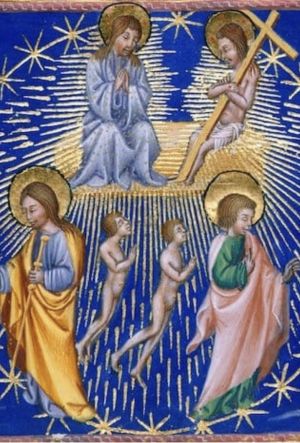
[1–2 November]
First Reading from the Book of Revelation (Rev 7:2–4, 9–14)
1. Saint John recounts and describes a vision: ‘I, John, saw an angel ascending from the east, from where the sun rises, and afterwards I saw a vast multitude, which no one could count.’ Let us contemplate, together with the apostle, a mystical vision – in other words, a symbolic representation which should not, however, be interpreted literally. To understand the message the author intends to convey, we must look beyond the images he describes. John describes a great procession made up of two distinct groups. The first group consists of 144,000 people, whom he calls servants of God. This number is not to be understood literally, but symbolically, and these people bear the seal of the living God, which represents Baptism. They are therefore the baptised, that is, the Christians of that time who were being persecuted, to whom John addresses himself in the Book of Revelation, the final book of the Bible. The second group consists of an immense and innumerable multitude, coming from every nation, tribe, people and language, representing the whole of humanity. The number four, present symbolically in this list, refers to the created world, the cosmos and all human beings, perhaps also through the reference to the four cardinal points. But what is the meaning of these symbols? The immense crowd is dressed in white robes, stands before the throne of God and the Lamb, and holds palm branches in their hands; all these elements have a specific meaning: the white robes signify purity and the wedding garment, a symbol of salvation; standing signifies the state of those who have been raised from the dead and have conquered death; and the palm branches are a symbol of victory; the throne of God and the Lamb depicts the divine presence before which the multitude of the saved gathers. All these symbols prove that these people have attained salvation, and the multitude itself proclaims this, affirming that salvation belongs to God, who sits on the throne, and to the Lamb.
2. But what is the relationship between the baptised and the multitude of the saved? An important point is that the second multitude—that immense crowd drawn from all humanity—does not bear the seal of Baptism described for the first group. This raises a question: who contributed to the salvation of this multitude? According to the interpretation proposed by the text, a fundamental role is played precisely by the 144,000, that is, by John’s contemporary Christians. At the end of the first century, these Christians faced terrible persecution under Emperor Domitian (81–96 AD). Despite their suffering and difficulties, they were called to remain faithful to their faith and to continue bearing witness to the Gospel. Their perseverance was important not only for themselves, but also because it could bear fruit for others. The main message that John wishes to convey to persecuted Christians is a call not to lose faith and to persevere even in the most difficult situations, for the sufferings endured during persecution are not in vain: through their witness, Christians can contribute to the salvation of all humanity.
3. Here the apostle speaks of the ‘great trial’, referring to the persecutions that Christians at that time were forced to endure. It is precisely in this trial that a profound meaning is found: fidelity to God, especially when it involves suffering, becomes a means through which other people are led to salvation. The vision, therefore, is not merely intended to reassure persecuted Christians, but also to show that their witness has universal value. The message is clear: through this image, the Book of Revelation teaches that when Christians remain faithful in the face of persecution, their witness bears fruit that extends far beyond their own community; and by persevering faithfully through trials and often cruel martyrdom, believers contribute to the salvation of all humanity. The vision thus conveys a message of hope: the harsher the trials, the more the Christian becomes an instrument of conversion and salvation for many. Note: the Roman army used to place a mark on the foreheads of recruits; in the same way, the baptised person becomes a soldier of the King of Heaven, and this protective seal was also known in the Old Testament (Ex 12:7; Ez 9:4). Furthermore, in the Book of Revelation, John sees the victory of the poor and the lowly as a revelation of God’s victory over the forces of evil.
Responsorial Psalm (23/24)
1. We find ourselves in the Temple of Jerusalem. A great procession approaches and, upon reaching the gates of the Temple, two choirs begin to sing in turn, engaging in a dialogue: ‘Who shall ascend the mountain of the Lord? Who may stand in his holy place?’ The prophet Isaiah had already compared God, thrice Holy, to a consuming fire and asked this question: ‘Who among us can stand before this consuming fire? Who can stand before these eternal flames?’ (Isaiah 33:14). The meaning is that humankind, on its own, would be unable to bear the sight of God and the splendour of his glory. The psalm expresses the joy and triumph of the chosen people, who are welcomed into God’s presence through no merit of their own.
2. One of the great revelations to the people of Israel is that God is the Holy One, completely distinct from every other reality, yet at the same time draws near to humankind. Despite his holiness and greatness, God allows man to stand in his presence and to live in communion with him. This psalm is linked to the feast of All Saints because the saints are those who have ascended the Lord’s mountain and have been welcomed into his presence, and now join the angels in their song of praise. During Mass, Christians sing the Sanctus, uniting themselves spiritually with the multitude of angels and saints; and today, on the Feast of All Saints, the liturgy commemorates this immense multitude, which no one can count.
3. The psalm then describes the answer to the initial question: namely, the person who may stand before God is ‘one who has innocent hands and a pure heart’ and does not put their trust in idols. The primary meaning of ‘purity’ does not concern moral behaviour, for the people know that they are accepted by God not because of their own merits, but because of His benevolence; and the fundamental requirement is to remain faithful to the one true God by rejecting idols. In the Bible, the word ‘pure’ can be compared to its meaning in chemistry: a substance is pure when it is not mixed with other substances. In the same way, a pure heart is a heart that turns solely to God. Purity of heart, therefore, means above all total fidelity to God, and the psalm teaches that a person may stand in His presence not because they are perfect or have accumulated merits, but because they strive to live in fidelity to the one true God.
Second Reading from the First Letter of Saint John (3:1–3)
1. ‘Beloved, see…’: with these words, Saint John invites us to contemplate, for learning to see is fundamental to our life of faith. The entire history of humanity can be seen as a journey through which humankind learns to see in the right way. Jesus said: ‘They have eyes to see, yet they do not see.’ This is the tragedy of humankind: having eyes yet failing to recognise the truth, failing to see God’s love for humanity. Here, Saint John invites us to learn to see with the eyes of faith. The theme of seeing runs throughout the Bible and always carries the same meaning: knowing how to see and opening our eyes means discovering the true face of God, who is love.
2. Conversely, our way of looking can be distorted and lead us to misinterpret reality. As happened in the Garden of Eden, where everything depended on the way Adam and Eve looked at and interpreted their surroundings. At the centre of the Garden of Eden stand the tree of life and the tree of the knowledge of good and evil. God allows man to eat the fruit of all the trees, including the tree of life, but forbids him to eat the fruit of the tree of the knowledge of good and evil. The serpent asks the woman a seemingly innocent question: ‘Is it true that God has told you not to eat the fruit of any tree in the garden?’ The mere act of listening to the serpent begins to alter her perspective. Eve, in fact, starts to regard the forbidden tree as central, rather than the tree of life. Her attention shifts from the goodness of the gifts received from God to what has been forbidden to her. This detail is important because it shows how, at times, simply listening to a deceitful voice is enough to begin seeing reality in the wrong light. The serpent continues to deceive Eve, promising her that, if she eats the fruit, she will not die, but will become like God, knowing good and evil. The woman then looks at the tree and sees that it is good to eat, a delight to the eyes and desirable for gaining wisdom. The narrative deliberately emphasises words relating to sight and perception. She takes the fruit, eats it and offers it to Adam, who in turn eats it. At that point, the text states that both their eyes are opened and they see their own nakedness. Not only have they not become like God, but they begin to experience their nakedness—that is, their fragility and fundamental poverty—as a source of pain. The story thus shows that a deceived gaze can lead man away from the truth and cause him to lose sight of God’s goodness.
3. What connection exists between the story of Adam and Eve and this Reading? The story of Adam and Eve has always been regarded as a key to understanding humanity’s unhappiness and suffering. Mankind, having been deceived, comes to suspect God and regard him as someone who wishes to prevent them from being happy. St John, on the other hand, invites us to do the opposite: ‘Look!’, that is, learn to see and open your eyes. The message is that we must learn to recognise the true face of God and his love for us. When God sets a limit on humankind, he does not do so to prevent us from being happy; on the contrary, he desires the good of humankind. This is why it is important to learn to look at reality through the lens of faith, without allowing ourselves to be deceived by what leads us to doubt his love. By following the example of the saints we commemorate today, let us learn to look with the eyes of faith, so that we may recognise God’s love and his plan for humanity; let us open our eyes to recognise the true face of God. The message is clear: God does not wish to deprive us of good, but loves us and desires our good. To live our faith authentically, we must therefore learn to look beyond appearances and recognise God’s goodness and love in our lives.
From the Gospel according to Saint Matthew (5:1–12a)
1. “When Jesus saw the crowds, he went up the mountain; he sat down, and his disciples came to him. He began to speak and teach them, saying…” . Jesus ascends the mountain like Moses on Sinai, but whilst Moses came down bearing stone tablets and a Law with prescriptive rules, Jesus ascends the mountain—that is, he takes his place with authority; he sits down, which is the gesture of the Master, of the Rabbi who teaches with authority—and opens his mouth not to command anything, but to proclaim the gospel of holiness: ‘Blessed are…’. He does not, therefore, lay down precepts; rather, he paints a portrait; he does not say ‘you must be like this’, but exhorts: ‘you are already blessed if…’. The Beatitudes are not, therefore, eight new commandments, more difficult than the previous ones. They are, in truth, eight names of Jesus, the portrait of his life and his mission, his identity card which we can recognise in the lives of those who wish to follow him without compromise. And today, in the liturgy that invites us to contemplate all the saints in the glory of Heaven, we recognise holiness in its myriad forms. The saints are not, in fact, supermen, but people in whom the Beatitudes have taken flesh in such a way that their lives become a concrete realisation of them. In the diversity of their charisms, they remind us that it is possible for everyone – absolutely everyone – to become a saint, because Jesus, ‘the Holy One par excellence’, shows us the example and assures us of his constant support. Through Baptism we are all saints; in other words, we belong to God by his free mercy, and life is given to us as a concrete opportunity to embody the divine will within ourselves. And today, in the splendour of Heaven’s triumph, we recognise the myriad faces that holiness takes on in the stories of people with such diverse spiritual experiences. Whilst every day of the year the liturgical calendar presents us with ‘Blessed and Saints’ recognised and proclaimed as such by the Church, today we embrace a vast multitude of simple and humble people—faces and names that are part of everyday life— people who quietly embody the Gospel Beatitudes, in each of which an aspect of God’s holiness shines forth.
2. “Blessed are the poor in spirit, for theirs is the kingdom of heaven.” The poor in spirit are not those who have nothing, but those who know they are not self-sufficient. They are the opposite of the ‘artificial intelligence’ man, who must optimise everything and control everything. The poor person says: ‘Lord, I need You’, and God in Jesus, who ‘though He was rich, became poor’ (2 Cor 8:9), needs to become a beggar for love, and God’s holiness becomes small. How many men and women, whose names we do not know, have lived in simplicity and poverty like St Francis, now known to all; and blessed, then, are those who do not build their lives on image, reputation or success, but entrust themselves to the fatherly hands of God. ‘Blessed are those who mourn, for they shall be comforted.’ Here God reveals himself as the Comforter. Weeping is not weakness; it is the truest form of prayer, for God is not the God who wipes away tears with a quick fix, but the One who weeps with us. Jesus weeps over Jerusalem; he weeps for Lazarus. The believer’s tears are the holiness of God, who shares in the wounds of every human body; and blessed are those who do not flee from pain through endless distractions, but dwell within it and offer it up. “Blessed are the meek, for they shall inherit the earth.” The meek are not the weak who never get angry, but those who have strength and do not use it to crush others. God is meek: “Learn from me, for I am meek and humble of heart” (Mt 11:29). Meekness will conquer the world, and blessed are those who, in their families, at work and on social media, do not expect to win all the time. “Blessed are those who hunger and thirst for righteousness, for they shall be filled.” Righteousness here is not legalism, but tzedekah – that is, the ardent desire for God to reign and for human beings to be respected. God hungers for justice and cannot bear the harm done to the poor; and blessed are those who are not content to say ‘that’s just how everyone is’, but who hunger for a more just world. ‘Blessed are the merciful, for they shall obtain mercy.’ Mercy is the heart of God—or rather, rachamim, his maternal compassion. God, therefore, does not have an algorithm that calculates; He has a heart that is moved, and blessed is the one who forgives seventy times seven, who pours oil—not vinegar—onto the wounds of every person. ‘Blessed are the pure in heart, for they shall see God.’ Pure is not the one who has never sinned, but the one whose heart is undivided. Cor mundum: a simple heart without ulterior motives. God is pure, transparent; He is light without shadow, and the pure-hearted see because they have no filters of self-interest. Blessed, then, are those who are clear-hearted, without masks, and do not live for ‘likes’. “Blessed are the peacemakers, for they shall be called children of God.” Note: it does not say ‘blessed are the peaceful’, those who are calm, but ‘the peacemakers’, the builders of peace. In Hebrew, shalom is not the absence of war; it is the fullness of life. God is a peacemaker because he has broken down the wall between heaven and earth and acts within every heart thirsting for true peace. Blessed are those who do not harbour resentment, those who work for reconciliation, those who switch off their mobile phones at home to foster dialogue and become apostles of listening even where it seems impossible. “Blessed are those who are persecuted for righteousness’ sake, for theirs is the kingdom of heaven.” This is the final seal. God is the one who is persecuted: from the manger to the cross, he has always been opposed and rejected. True holiness is a thorn in the side, for it unmasks the truth; and blessed are those who remain faithful even when it costs them dearly, those who do not sell their conscience for the sake of convenience. Ultimately, every beatitude reiterates: do not lose heart, and listen to Jesus, who points out the concrete path to happiness that not even death can annul. The world proclaims: blessed are the rich, the powerful, those who never weep, the cunning, the heartless, the violent, the victors. Jesus points to the exact opposite, and history shows that he is right. For example, who today remembers or glorifies Herod, Pilate and other figures who, over the centuries, seemed all-powerful? The Gospel, on the other hand, continues to change hearts and to sow saints along the paths of history. The multitude of saints we celebrate today are, as Pope Francis said, ‘the saints next door’: Grandmothers, mothers who pray and often weep in silence, fathers who bear the burden of the family without complaint, young people who choose purity in a world that embraces every kind of perversion, children, young people and sick adults who offer everything to Jesus for the conversion of sinners, priests who continue to bear witness to the joy of the Gospel even when everything seems too arduous and even futile. Ultimately, a saint is someone who, in their heart—despite their frailties and sins—allows themselves to be loved by God and follows Him, seeking to face life’s obstacles with persevering courage.
Commemoration of All the Faithful Departed [2 November]
Today, every priest is permitted to celebrate three Holy Masses, and specific readings are provided for each one. I shall limit myself here simply to commenting on three readings and a responsorial psalm.
First Reading from the Book of Job (19:1–23–27)
1. The sacred author reflects on the meaning of suffering, of faith and of God as liberator, taking as his starting point the biblical figure of Job, the symbol of every person who suffers. Job represents the people of Israel and, more generally, all human beings who face the problem of evil, suffering, pain and death. He is not necessarily a historical figure: rather, he is a symbolic figure in whom billions of people recognise themselves, including ourselves when we suffer. The biblical writer is courageous because he dares to cry out and rebel against suffering in all its forms, but despite the pain, Job remains a man of faith, and his faith is founded on the conviction that God is close to every person who suffers. This certainty has accompanied the people of Israel ever since Moses’ experience before the burning bush (Exodus chapter 3), and Job considers this faith so important that he wishes his words to be engraved forever in stone, with an iron and lead chisel, so that no one may erase them. In ancient times, in fact, lead was poured into the engraved letters to make them more legible.
2. My Redeemer lives. The word ‘Redeemer’ actually means ‘liberator’ and derives from the Hebrew term Go’el, which refers to the next of kin, responsible for freeing a family member who has fallen into slavery because of debt. In ancient Israel, if a person was forced to sell themselves into slavery to pay off debts, the nearest relative had to intervene to redeem them, paying the creditor and restoring their freedom (Leviticus 25:47–49). Similarly, if someone was forced to sell their land, the relative had the right to buy it back in order to preserve the family heritage (Leviticus 25:25). Financial payment was necessary, but it was not the main purpose: the fundamental aim was to free the person from slavery. This institution expresses an important principle: every member of God’s people must be free. For this reason, no Israelite should accept that a member of their family should remain a slave, and the people of Israel apply this idea to God as well, recognising him as their closest kinsman and their liberator. They therefore call him Go’el. God has proved Himself to be the liberator of Israel on several occasions, beginning with the deliverance from slavery in Egypt. Even during the exile in Babylon, the prophet Isaiah upheld the people’s hope by promising their deliverance.
3. In this brief text, which recalls Isaiah’s promise, it is worth recalling a few fundamental concepts. Job represents every person who suffers and questions the nature of evil, pain and death. Faith is trust in a God who is close to those who suffer, even in the most difficult moments. Job’s cry shows that believing does not mean not suffering or not protesting against pain. God the Deliverer shows that Israel recognises God as its Go’el, the one who frees from slavery and restores hope. Freedom is the central value of redemption; money is merely a means to achieve it. The central message is that biblical faith does not deny suffering, but affirms that God is close to those who suffer and acts as a liberator and, according to some manuscripts, even as the ‘avenger of blood’ (Numbers 35:19), offering hope and freedom.
Responsorial Psalm (62/63)
1. The expression ‘I rejoice in the shadow of your wings’ comes from a psalm that describes the intimacy between God and his people. To understand it, one must imagine the Temple in Jerusalem before its destruction in 587 BC by Nebuchadnezzar. In the holiest part of the Temple, the Holy of Holies (literally, ‘Holy of the holy things’), stood the Ark of the Covenant, a chest of precious wood overlaid with gold, which held the tablets of the Law. Above the Ark stood two large statues of cherubim. The cherubim were celestial figures originating from the Mesopotamian tradition, depicted with the body and paws of a lion, a human face and large wings. In Mesopotamia they were worshipped as deities, whilst in Israel they were regarded as mere creatures in the service of God. Their outstretched wings symbolically protected the Ark and were considered the footstool of the divine throne. The priest who prayed in the Temple, beneath those wings, thus felt enveloped by God’s tenderness and protection, from dawn until nightfall. The other images in the psalm also draw on the lives of the Levites, those entrusted with religious service in the Temple. The phrase ‘I have beheld you in the sanctuary’ recalls that only the Levites were permitted to enter the holy part of the Temple. The words ‘All my life I will bless you’ indicate that their existence was consecrated to the praise of God, whilst ‘hands raised in invocation of your name’ describes their posture during prayer. The image of being satisfied as at a banquet recalls the sacrifices followed by communal meals and the portion of the sacrificial meat set aside for the Levites’ sustenance. Finally, the remembrance of God during the night recalls the lives of those who served in the Temple and spent their time there.
2. In reality, the psalm is a metaphor: the Levite represents the whole people of Israel, who from the very beginning of their history until the end of time seek God and long to live in intimacy with him. When the psalm says ‘I seek you from the dawn’, it refers not only to the beginning of the day, but to the dawn of time—that is, to Israel’s search for God throughout its history. The words ‘My soul thirsts for you, my body longs for you, like parched land, thirsty and without water’ profoundly express this longing. The image of the barren land awaiting rain to come back to life was particularly vivid for the people of Israel, who were accustomed to experiencing drought. In the same way, the soul needs God to regain life and hope. The central message is that Israel has thirsted for God from the very beginning of its history, and this thirst becomes even more intense because the people have already experienced his presence and closeness. The most authentic prayer springs precisely from an awareness of our spiritual poverty and our need for God, like the cry of a dehydrated person who pleads: ‘I am thirsty’.
Second Reading from the Letter of Saint Paul the Apostle to the Romans (8:14–23)
1. On the occasion of the commemoration of All Souls’ Day—that is, of those who have already returned to the Father—we are inevitably confronted with the mystery of death. The Church invites us to reflect on God’s great plan, which encompasses our entire lives, our deaths and those of all people. In his Letter to the Romans, Paul describes this plan as a birth: that of a new creation and a new humanity. This is why he states that the whole of creation groans and suffers as if in the pangs of childbirth. This image suggests that God’s plan is being realised gradually, like a birth that requires time and suffering. Creation, therefore, is not merely an event of the past, but a project that is constantly unfolding. The people of Israel lived in expectation of God’s promises; Paul, who shared this hope, came to understand that expectation in a new light after encountering the risen Jesus.
2. Everything depends on the resurrection of Christ: if Christ had not risen, our faith and our hope would collapse; if, however, he has risen, then the world has changed, because love and life have triumphed over hatred and death, and the Kingdom of God has already begun. Through the resurrection of Jesus, we have already entered the new world and can live as new people. In his first letter, John states that we are already children of God, even though what we will be has not yet been fully revealed. When Christ appears, we shall be like him, for we shall see him as he is (1 John 3:2–3). The hope of Christians is that Christ’s resurrection will reach all humanity and transform it, spreading like a contagion. Jesus himself said: ‘I have come to set the earth on fire, and how I wish it were already ablaze!’ (Luke 12:49).
Our mission is therefore to spread the fire of God’s love throughout the world, knowing that the Holy Spirit is always at our side. It is the Holy Spirit who continues to work in the world to draw it towards God. As Paul reminds us, we have already received the Holy Spirit, but we are still awaiting our full adoption as children of God and the redemption of our bodies. Ultimately, the central message of this text is that death is not the end of God’s plan. Thanks to Christ’s resurrection, we are called to live in the hope of a new creation and, whilst awaiting the full realisation of our lives as children of God, to bear witness to love and to spread the fire of the Holy Spirit throughout the world.
From the Gospel according to Matthew (25:31–46).
1. Yesterday we celebrated the multitude of the saved, praising God in the glory of the Trinity. Today we come to the cemetery and pause to pray for our dear departed who are journeying towards that same destination. The Church, as a wise mother, invites us to listen to the most demanding Gospel passage: the final judgement that awaits us at the end of life. Jesus says: ‘When the Son of Man comes in his glory, with all his angels, he will sit on the throne of his glory. And all the nations will be gathered before him.’ This is a truth we sometimes forget: for everyone, with death, the day of judgement will come, and with judgement, eternal destiny—heaven or hell. This is not a judgement reserved for just a few, and there is no way out, for death comes to everyone and that day is known only to God. Foolish, therefore, is the person who lives as if they were never to die: they build houses, careers, bank balances, dreams up all manner of plans, without ever lifting their gaze towards heaven, and does not bother to prepare for the encounter with the One who will examine our lives on our final day, a day unknown to us. Jesus, however, in his mercy, has already revealed to us the content and context of the examination that will mark that encounter. Who will be the judge? Not a cold-hearted official in a court of law, but the Son of Man, the King who reigned from the manger in Bethlehem to the utter abandonment of Golgotha, He who has already paid the price for us by giving His life for our salvation; the Good Samaritan of the parable who became our neighbour. The judgement, therefore, will not be an act of vengeance, but a revelation of the truth that saves, knowing every hidden intention of ours. And He will carry out this judgement like the shepherd who separates the sheep from the goats. He does not separate the good from the bad by judging on the basis of how much they have prayed or fasted, or how many rosaries they have recited. He separates on the basis of a single criterion: whether they have loved in a concrete way by performing the works of mercy: “ ‘I was hungry and you gave me food, thirsty and you gave me drink, a stranger and you welcomed me, naked and you clothed me, sick and you visited me, in prison and you came to see me.’ Not, therefore, a test of theology, but an examination of reality, a true test of love made flesh. ‘Lord, when did we see you hungry and feed you? ’ ‘When did we see you like that and fail to serve you?’ This judgement, in truth, begins right here and now, in every act of love towards our neighbour. Every time we visit an elderly person, feed the hungry, welcome a stranger, forgive, or comfort the despondent, we are already writing, of our own accord, the judgement we will deserve.
2. Just as it is foolish to live without ever realising that one might die at any moment, so too is it foolish to live in anguish at the thought of death. This passage from the Gospel was not written to terrify us, but to encourage us. Let us not forget that the Judge is the very same Jesus who said: ‘I have not come to judge the world, but to save the world’; he is the very same who, on the cross, forgave the thief: ‘Today you will be with me in paradise’; he is the very same who promised: ‘Blessed are the merciful, for they shall obtain mercy’. For the Christian, therefore, death will not be an encounter with a foreign and severe king and judge, but an embrace with divine mercy. If, then, we seek to recognise the face of Christ in the poor and in the people we meet on the streets of this world, at that very moment that same face will reveal itself to us in the splendour of an eternal ‘face-to-face’ encounter. But there remains one truth we must not forget: judgement is serious and true; heaven exists for those who have believed in divine love, and hell will be for those who, in full freedom and awareness, have decided to say ‘no to love’ forever.
3. At this point, a question arises: what do the dead tell us through their silence? When we visit them in cemeteries, we bring flowers and light candles – gestures that are undoubtedly commendable expressions of remembrance and love. But they implore us for a greater gift: to pray for them, for they need our prayers, the Holy Mass and indulgences. At the same time, they remind us that we can honour their memory in a tangible way when we visit the sick, welcome a stranger, help those who ask for support and forgive those who offend us: they remind us that every work of corporal and spiritual mercy is the only way to prepare ourselves for the Last Judgement. Ultimately, they tell us: ‘We have made many mistakes, but we have tried to love, and you must do the same; do not waste time, love today, for today is “the favourable day”’ . Ultimately, they urge us to fill our lives with actions, choices and decisions consistent with our faith; for when death knocks at our door, it will take love – and concrete love – to hear these words: ‘Come, you who are blessed by my Father; take your inheritance, the Kingdom prepared for you since the foundation of the world’.
+Giovanni D’Ercole
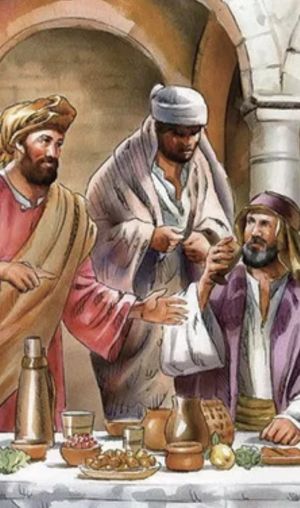
Eucharist, gratuitousness and strangers: the unheard of or marketing
(Lk 14:15-24)
Jesus does not compare the Father's Kingdom to a solemn assembly, but to a great Supper!
However, the proposal of festive novelty is rejected. The self-sufficient ones and experienced have other commitments and interests.
The invitation to take part in the Feast was initially addressed to the sons of Israel, who still likened the Messianic times to a Banquet, characterised by gratitude and [internal] fraternity.
In the first communities, the difficulties in broadening the criteria of communion came precisely from converts from Judaism, who by long practice retained the custom of not sharing food with those far away; thus the breaking of the Eucharistic Bread.
Within the framework of their conventions and the sacred norms attested in the Torah (Deut 20:5-7), the behaviour of those refusing the invitation in the parable of the Banquet (vv.18-20) was legitimate from the point of view of the recognised right - not friendship.
It is to accentuate the meaning of the gesture that the master of the feast orders the servants to gather precisely those who were socially excluded from the ancient religion, because they were considered impure: the pagans, the wobblers. Open ones to waiting for.
Christ continues to draw a dividing line between those who advocate an untouchable order and ideals above human reality, and those who, being on the periphery, are always willing to participate in the Feast.
They are not the “all concerned with ritual”, manners, appearance; but with the life they spread.
They do not let themselves be conditioned by privileges, their things, and laws: they give without double-entry.
They accept with natural readiness; rejoicing in reality and not in the distinction between sacred and profane.
They do not think already have the answer, and do not end up being slaves to it.
Jesus' teaching invites not to limit one's affections and not to let one's heart be cluttered by customs, by the particular or current mentalities, by legalistic blocks - or by the 'many things'.
In the assembly of sons, it is not the well provided for [serious, busy people with no time to waste, with too many possessions and invitations to manage] but the petty people... who come to the fore. Despite their poor aptitude.
All this, because characteristic of the Little and beggar is the readiness to cross fences: that which makes them fit to grasp God's summons.
Those who are far away - even if they are on tight corner - fill the Father's House.
‘In society’ the poor man is one of many, but the invitation to [Eucharistic] canteen conveys to him a sense of values that do not suffocate life with pettiness, and ties.
Indeed, the poor man often has a better understanding of divine-human things.
This ever more conscious resemblance to the Son of God is accentuated in the scarcity of ‘adequate means’: scarcity that makes true, that induces others to reflect - remaining unremarkable, incapable of “make lightning”.
Our solidarity is not a matter of sympathy, common interests and esprit de corps, but rather the result of an extended Calling; of one powerful Life circulating in all, respecting their freedom and reality - as well as their phases of change.
Paraphrasing the encyclical Fratelli Tutti [nos.13-15, passim] according to the passage from Lk we must remain careful not to impoverish the life of Faith, turning it into a detached commitment to «cultural colonisation».
If this were the case, even the universal-Catholic horizon of a conviviality of differences would dissolve into an overly normalised, utterly predictable; ultimately deserted invitation.
The entrenched or self-interested rejection of the Banquet would bring with it - as before our eyes - the «further disintegration» of «critical thinking», of action «for justice», of its «paths to integration».
In fact, even ecclesial society can run the risk of «distorting the great words», «risking impoverishment»; thus «reducing itself to the arrogance of the strongest» and to «merely ephemeral marketing recipes, which find in the destruction of the other the most effective resource».
But God's people cannot live in a parallel, disconnected, double world - as if the One Eternal worshipped was a patchwork of wiles, marketing and convenience.
[Tuesday 31st wk. in O.T. November 3, 2026]

The horizon of friendship to which Jesus introduces us is the whole of humanity: indeed, he wants to be for everyone the Good Shepherd who lays down his own life (cf. Jn 10: 11), and he stresses this strongly in the discourse on the Good Shepherd who came to reunite everyone, not only the Chosen People but all the dispersed children of God.
Our own solicitude, therefore, must be universal. We should certainly first take care of those who, like us, believe and live with the Church - it is very important, even in this dimension of universality, that we first see to those faithful who live their "being Church" every day with humility and love -, and yet we must not tire of going out, as the Lord asks us, "to the highways and hedges" (Lk 14: 23) to invite to the banquet that God has prepared those who are not yet acquainted with him or have perhaps preferred not to know him.
[Pope Benedict, address to the CEI, 18 May 2006]
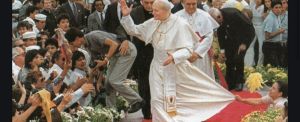
Today more than in the past, the Church's social doctrine must be open to an international outlook, in line with the Second Vatican Council,73 the most recent Encyclicals,74 and particularly in line with the Encyclical which we are commemorating.75 It will not be superfluous therefore to reexamine and further clarify in this light the characteristic themes and guidelines dealt with by the Magisterium in recent years.
Here I would like to indicate one of them: the option or love of preference for the poor. This is an option, or a special form of primacy in the exercise of Christian charity, to which the whole tradition of the Church bears witness. It affects the life of each Christian inasmuch as he or she seeks to imitate the life of Christ, but it applies equally to our social responsibilities and hence to our manner of living, and to the logical decisions to be made concerning the ownership and use of goods.
Today, furthermore, given the worldwide dimension which the social question has assumed,76 this love of preference for the poor, and the decisions which it inspires in us, cannot but embrace the immense multitudes of the hungry, the needy, the homeless, those without medical care and, above all, those without hope of a better future. It is impossible not to take account of the existence of these realities. To ignore them would mean becoming like the "rich man" who pretended not to know the beggar Lazarus lying at his gate (cf. Lk 16:19-31).77
Our daily life as well as our decisions in the political and economic fields must be marked by these realities. Likewise the leaders of nations and the heads of international bodies, while they are obliged always to keep in mind the true human dimension as a priority in their development plans, should not forget to give precedence to the phenomenon of growing poverty. Unfortunately, instead of becoming fewer the poor are becoming more numerous, not only in less developed countries but-and this seems no less scandalous-in the more developed ones too.
It is necessary to state once more the characteristic principle of Christian social doctrine: the goods of this world are originally meant for all.78 The right to private property is valid and necessary, but it does not nullify the value of this principle. Private property, in fact, is under a "social mortgage,"79 which means that it has an intrinsically social function, based upon and justified precisely by the principle of the universal destination of goods. Likewise, in this concern for the poor, one must not overlook that special form of poverty which consists in being deprived of fundamental human rights, in particular the right to religious freedom and also the right to freedom of economic initiative.
[Sollicitudo rei socialis n.42]
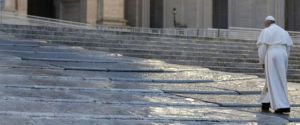
For salvation there is 'one ticket in'. But with a few caveats. First of all, it is free; and then the holders will surely be women and men who are 'in need of care and healing in body and soul'. It is easy to imagine that in the first places are 'sinners, the poor and the sick', the so-called 'last ones' in short. Celebrating Mass at Santa Marta on Tuesday, 7 November, Pope Francis revived the Gospel image - taken from the passage in Luke (14:15-24) - of the banquet to which the master of the house invites "the poor, the crippled, the blind and the lame" after the refusal of the rich who do not understand the value of the gratuitousness of salvation.
"The Gospel texts we have heard this week, these last days, are framed in a banquet," Francis was quick to point out. It is "the Lord who goes to the house of a leader of the Pharisees to dine and there he is rebuked because he does not do his ablutions". Then, the Pope continued, "during the banquet the Lord advises us not to seek the first places because there is the danger that one who is more important will come and the host will say, 'Give way to this one, move over!' That would be a disgrace."
"The passage continues," said the Pontiff, "with the advice the Lord gives to those who are to be invited to a banquet at home". And he points precisely to "those who cannot give you reciprocation, that is, those who have nothing to give you in return". Here is "the gratuitousness of the banquet". So "when he had finished explaining this, one of the diners - this is today's passage - said to Jesus, 'Blessed is he who takes food in the kingdom of God!'" The Lord "answered him with a parable, without explanation, of this man who gave a great dinner and made many guests". But "the first guests did not want to go to dinner, they cared neither about the dinner nor about the people who were there, nor about the Lord who was inviting them: they cared about other things".
And in fact one after the other they began to apologise, So, the Pope pointed out, 'the first one said to him: "I bought a field"; the other: "I bought five pairs of oxen"; another: "I got married"; but each had his own interest and this interest was greater than the invitation'. The fact is, said Francis, that 'these were attached to the interest: what can I gain? So to a free invitation the answer is: 'I don't care, maybe another day, I'm so busy, I can't go'. "Busy" but for his own "interests: busy like that man who wanted, after the harvest of grain, to make stores to enlarge his possessions. Poor man, he died that night".
These people are attached "to interest to such an extent that" they fall into "a slavery of the spirit" and "are incapable of understanding the gratuitousness of the invitation". But "if one does not understand the gratuitousness of God's invitation, one understands nothing," the Pope warned. God's initiative, in fact, "is always gratuitous: what do you have to pay to go to this banquet? The entrance ticket is to be sick, is to be poor, is to be a sinner". Precisely this 'is the ticket of entry: to be needy both in body and soul'. And 'by need', Francis reiterated, is meant 'needing care, needing healing, needing love'.
"Here," the Pontiff explained, "we see the two attitudes". God's "is always gratuitous: to save God does not charge anything, he is free". And also, Francis added, "we say the word, somewhat abstractly, 'universal'", in the sense that to the servant "the 'angry' master" says: "Go out immediately to the squares, to the streets of the city and bring in the poor, the crippled, the blind, the lame". In Matthew's other version, the master says: "good and bad: all, everyone", because "God's gratuitousness has no limits: everyone, he receives everyone".
"Instead, those who have their own interest," the Pope continued, "do not understand gratuitousness. They are like the son who stayed by his father's side when the youngest left and then, after a long time, he came back poor and the father makes feast and this one does not want to enter that feast, he does not want to enter that feast because he does not understand: "He spent all the money, he spent the inheritance, with the vices, with the sins, you make him feast? And I who am a Catholic, practical, I go to mass every Sunday, I fulfil things, nothing to me?".
The fact is that 'he does not understand the gratuitousness of salvation, he thinks that salvation is the fruit of "I pay and you save me": I pay with this, with this'. Instead "no, salvation is gratuitous". And "if you do not enter into this dynamic of gratuitousness you understand nothing".
Salvation in fact, Francis affirmed, "is a gift from God to which one responds with another gift, the gift of my heart". However, there are those 'who have other interests, when they hear about the gifts: "Yes, it is true, yes, but gifts must be given". And they immediately think: 'Here, I will give this gift and he will give me another one tomorrow and the day after'". Thus there is "always reciprocation".
Instead "the Lord asks nothing in return: only love, faithfulness, as he is love and he is faithful". Because "salvation is not bought, one simply enters the banquet: 'Blessed is he who takes food in the kingdom of God!'". And 'this is salvation'.
In fact, the Pope confided, "I ask myself: what do these people who are unwilling to come to this banquet feel? They feel secure, they feel safe, they feel saved in their own way outside the banquet". And 'they have lost the sense of gratuitousness, they have lost the sense of love and they have lost something greater and more beautiful still, and this is very bad: they have lost the capacity to feel loved'. And, he added, 'when you lose - I am not saying the capacity to love, because that can be recovered - the capacity to feel loved, there is no hope: you have lost everything'.
Moreover, the Pontiff concluded, all this 'makes us think of the words written at the door of Dante's inferno "Leave hope": you have lost everything'. On our part, we must instead look at the master of the house who wants his house to be filled: 'he is so loving that in his gratuitousness he wants to fill the house'. And so "we ask the Lord to save us from losing the capacity to feel loved".
[Pope Francis, S. Marta homily, in L'Osservatore Romano 08/11/2017]
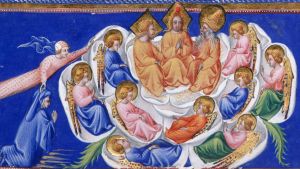
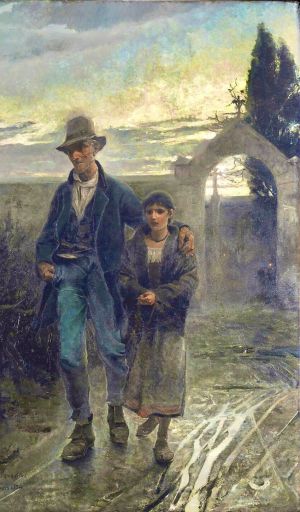
Commemoration of All the Faithful Departed
On the occasion of the recent passing of my parents, to the torment of the illness and the loss of both (soon) was added the annoyance of an environment that continued to give me "condolences".
As for good manners, of course, but who has assimilated the language of the Faith does not mourn anyone, nor does he speak of "dead" but of Deceased ones. They live.
Not as survivors of the blows that life holds, but as ‘dilated’ ones; authentic, adorned - finally fully realized.
Women and men… ‘blossomed’ in everything, experiencing a new kind of being in their own essence; a different existence.
As if in an atmosphere of pure love, where like Jesus, one does not live for oneself, but as one with one another and for one another.
With no more pressing deadlines, nor any abandonment.
The term comes from the Latin verb «defungor» [infinitive «defungi»] which indicates the partial term of a story, not a total fulfillment.
Not a definitive border that would open on the nullifying and cavernous abyss of lost shadows or larvae without momentum, devoid of identity and future - after the transit in time.
The condolences [from the Latin «cum-dolēre»] turned willingly within a purely pagan mentality or linked to an archetypal sense of religiosity.
That kind of conviction led relatives and friends to grieve - a hopeless cry - which Jesus openly rebukes [Jn 11:33 Greek text; some translations are uncertain].
To believe that with death everything ends means to imagine that existence is a progressive decay into the void.
This conviction makes any path of growth, even spiritual, consider absurd. And it postulates the senselessness of getting involved, of committing oneself to the ideal of the lasting Good - for a Beautiful that continues beyond our earthly life and in favor of our neighbour.
“Condolences” therefore indicate in themselves that everything is over.
In the epigraph on the portal of a cemetery of a town not too far from me we read an inscription in large letters: «here over the centuries lay affections vanity hopes».
The cold of the end of all beautiful things, and the "ice" of the neoclassical revisited in early twentieth century style... perfectly matched on whitewashed travertine coating.
Hope, on the other hand, draws us in and lifts our spirits; it overcomes the outrage and gives meaning to our journey.
Already the believers of the first centuries had supplanted the pagan idea of the appointment of our sister death as «dies infaustus», replacing it in its opposite: «dies Natalis».
Day of true Birth, within the same Life now complete, healed.
Life, which precisely proceeds - beyond the temporal or locality parameters.
Without the fatigue of existing that we experience. Immersed in the vastness of being.
Life without the struggles against oneself.
An existence that continues within the fulfilling, blessing Embrace of a Father who does not depersonalise but rather expands the unique character and qualities of his sons.
In this blossoming full of light and warmth we are as if we were refounded on the prototype-Project of the authentic Son.
Alliance Trait that we should and perhaps could have been.
Overwhelmed ones with blissful Happiness, for our shadow-part is now included; devoid of judgments and comments.
[Commemoration of All the Faithful Departed, November 2]
Each time we celebrate the dedication of a church, an essential truth is recalled: the physical temple made of brick and mortar is a sign of the living Church serving in history (Pope Francis)
Ogni volta che celebriamo la dedicazione di una chiesa, ci viene richiamata una verità essenziale: il tempio materiale fatto di mattoni è segno della Chiesa viva e operante nella storia (Papa Francesco)
It is a happy image with which, however, Jesus teaches a truth that calls us into question […] If we remove God, we remove Christ and the world falls back into emptiness and darkness (Pope Benedict)
E’ un’immagine felice, con cui però Gesù insegna una verità che ci mette in discussione […] Se togliamo Dio, se togliamo Cristo, il mondo ripiomba nel vuoto e nel buio (Papa Benedetto)
We would also like to set an example ourself, even if the smallness of our means might prevent anyone from appreciating the practical and quantitative significance of it. We want to see our own charitable institutions undergo a new development in the struggle against hunger and toward meeting the main needs of the world. This is the way and the only way to build peace (Pope Paul VI)
Vorremmo anche Noi dare l'esempio, sebbene l'esiguità dei Nostri mezzi ci impedisca di farne apprezzare la rilevanza pratica e quantitativa: Noi vogliamo dare alle Nostre istituzioni caritative un nuovo sviluppo in favore della fame e dei bisogni del mondo: è in questo modo, e non altrimenti, che si costruisce la pace (Papa Paolo VI)
As St. Ambrose put it: You are not making a gift of what is yours to the poor man, but you are giving him back what is his (Pope Paul VI, Populorum Progressio n.23)
Non è del tuo avere, afferma sant’Ambrogio, che tu fai dono al povero; tu non fai che rendergli ciò che gli appartiene (Papa Paolo VI, Populorum Progressio n.23)
Here is the entire Gospel! Here! The whole Gospel, all of Christianity, is here! But make sure that it is not sentiment, it is not being a “do-gooder”! (Pope Francis)
Qui c’è tutto il Vangelo! Qui! Qui c’è tutto il Vangelo, c’è tutto il Cristianesimo! Ma guardate che non è sentimento, non è “buonismo”! (Papa Francesco)
Christianity cannot be, cannot be exempt from the cross; the Christian life cannot even suppose itself without the strong and great weight of duty [Pope Paul VI]
Il Cristianesimo non può essere, non può essere esonerato dalla croce; la vita cristiana non può nemmeno supporsi senza il peso forte e grande del dovere [Papa Paolo VI]
The horizon of friendship to which Jesus introduces us is the whole of humanity [Pope Benedict]
L’orizzonte dell’amicizia in cui Gesù ci introduce è l’umanità intera [Papa Benedetto]
The Church invites believers to regard the mystery of death not as the "last word" of human destiny but rather as a passage to eternal life (Pope John Paul II)
La Chiesa invita i credenti a guardare al mistero della morte non come all'ultima parola sulla sorte umana, ma come al passaggio verso la vita eterna (Papa Giovanni Paolo II)
The saints: they are our precursors, they are our brothers, they are our friends, they are our examples, they are our lawyers. Let us honour them, let us invoke them and try to imitate them a little (Pope Paul VI)
I santi: sono i precursori nostri, sono i fratelli, sono gli amici, sono gli esempi, sono gli avvocati nostri. Onoriamoli, invochiamoli e cerchiamo di imitarli un po’ (Papa Paolo VI)


duevie.art
don Giuseppe Nespeca
Tel. 333-1329741
Disclaimer
Questo blog non rappresenta una testata giornalistica in quanto viene aggiornato senza alcuna periodicità. Non può pertanto considerarsi un prodotto editoriale ai sensi della legge N°62 del 07/03/2001.
Le immagini sono tratte da internet, ma se il loro uso violasse diritti d'autore, lo si comunichi all'autore del blog che provvederà alla loro pronta rimozione.
L'autore dichiara di non essere responsabile dei commenti lasciati nei post. Eventuali commenti dei lettori, lesivi dell'immagine o dell'onorabilità di persone terze, il cui contenuto fosse ritenuto non idoneo alla pubblicazione verranno insindacabilmente rimossi.