


don Giuseppe Nespeca
Giuseppe Nespeca è architetto e sacerdote. Cultore della Sacra scrittura è autore della raccolta "Due Fuochi due Vie - Religione e Fede, Vangeli e Tao"; coautore del libro "Dialogo e Solstizio".
Corpus Christi
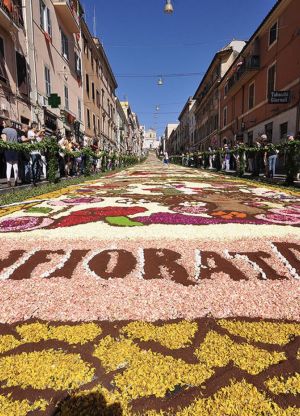
Solemnity of Corpus Christi [7 June 2026]
First reading from the Book of Deuteronomy (8:2–3, 14b–16)
The text calls on the people of Israel to remember their long journey through the desert following their exodus from Egypt under the leadership of Moses. The forty years in the desert were marked by hunger, thirst, poverty, snakes, scorpions and loneliness. But the central point is not the suffering itself: it is God’s faithful presence in the midst of trials. God fed the people with manna; he brought water forth from the rock; he protected Israel during their journey; he concluded the Covenant on Mount Sinai. The trials of the desert are presented as a divine ‘pedagogy’: God educates his people as a father educates his son. Through fragility, Israel learns two truths: its own poverty and dependence, and at the same time God’s constant care. The fundamental message is that man does not live by bread alone, but by everything that comes from God: his Word, his Spirit, his presence. The text also emphasises the duty of remembrance: ‘Remember’, ‘do not forget’. To remember means to remain faithful to one’s roots and to the Covenant. Forgetting God leads to idolatry and enslavement to other powers. When Israel settles in the Promised Land of Canaan, the danger will no longer be the desert, but prosperity and forgetfulness. For this reason, obedience to the commandments becomes essential. The final section offers a significant image: memory is like the roots of a tree; a people without memory dies spiritually; the future depends on fidelity to one’s roots. Finally, the text links everything to Jesus Christ, who in the desert echoes the words of Deuteronomy: ‘Man does not live by bread alone’. On the feast of the Body and Blood of Christ, the believer is invited to welcome God into their heart. The memory of a people (or a community, or a couple) is a bit like the roots of a tree: today we see the tree, we do not see the roots… yet it lives only thanks to them and owes everything to them, in a sense. Imagine a tree saying: ‘I am separating myself from my roots; they prevent me from moving, worse still, they prevent me from flying’. The rest of the story would be the death of the tree. In the truest sense of the word, the tree’s future lies in its roots. When Moses tells his people “Remember” or “do not forget”, it is as if he were saying to them “do not cut yourself off from your roots”, “your future lies in your faithfulness to your roots”. Moses does not look to the past out of sentiment; but it is precisely because he is entirely focused on the future that he is concerned with fidelity to one’s roots. He says something along the lines of: ‘If you want to still be standing tomorrow, do not forget today who you are and to whom you owe it.’ From century to century, Israel has built itself up by remaining faithful to its roots. Jesus, in turn, to resist the tempter, simply echoed the words of Deuteronomy: “Man does not live on bread alone, but on every word that comes from the mouth of the Lord” (Mt 4:4).
Responsorial Psalm Psalm 147/148
Praise the Lord, Jerusalem! Praise your God, O Zion! We must note this parallel: Zion and Jerusalem are one and the same. And, moreover, when we speak of Zion or Jerusalem here, we are referring not so much to the city as to its inhabitants—that is, ultimately, the people of Israel. The expression: ‘Praise the Lord, Jerusalem!’ can be easily dated: we are at the time of the return from the Babylonian exile, that is, at the end of the 6th century, when it was necessary to rebuild the city and restore the Temple. Without God’s help, none of this would have been possible: He has strengthened the bars of Jerusalem’s gates! In the previous psalm, God is called the ‘builder of Jerusalem’ and the ‘gatherer of the scattered of Israel’ (Ps 146/147 A,2). But this is not merely a task of architecture that God has accomplished: this return to the homeland is a true restoration of the people; a new life is about to begin—a life of peace and security: ‘He grants peace within your borders and satisfies you with the finest wheat’. In exile, the people ate the bread of tears and bitterness; the return to the homeland is a time of abundance. The second very strong emphasis of this psalm is the keen awareness of the privilege represented by the election of Israel: the Lord has not done this for any other nation; he has not made his laws known to them. We read in the Book of Deuteronomy: ‘You are a people consecrated to the Lord your God: he has chosen you to be his people, his special possession among all the peoples of the earth (Dt 7:6; 10:15). This is a free and inexplicable choice of God, one that never ceases to amaze us and for which we never cease to give thanks. From a human perspective, this choice cannot be explained; the only explanation Moses found is that because he loved your forefathers, he chose their descendants and brought you out of Egypt by his presence and his great power (cf. Dt 4:37). It is therefore simply a love story with no other explanation. At first, Israel did not feel it was living in an exclusive Covenant with the God of Sinai and thought that other peoples had their own protective gods: Israel was not yet monotheistic, but ‘monolatrous’ (also known as ‘enotheistic’), that is, it worshipped a single God, the God of Sinai, who had delivered it from Egypt. It only truly became “monotheistic” during the Babylonian exile (in the 6th century BC). A new leap in faith then took place alongside the discovery of universalism: if the God of Sinai was the one and only God, then He was also the God of all peoples. However, this did not negate the election of Israel, as can be seen in certain texts of the prophet Isaiah: “You, Israel, my servant whom I have chosen, descendant of Abraham my friend… Fear not, for I am with you… I am your God. I will strengthen you and help you, and uphold you with my victorious right hand” (Isa 41:8–10). Isaiah also helped his contemporaries understand that their election now took on a different form: that of a vocation to serve other peoples, to be witnesses of God among them. “I will make you a light to the nations, so that you may bring my salvation to the ends of the earth” (Is 49:6).
Second Reading from the First Letter of Saint Paul to the Corinthians (10:16–17)
In this text, Paul frames the whole matter with two warnings: ‘Beloved, flee from idolatry’ (v. 14) ‘Do we wish to provoke the Lord to jealousy?’ (v. 22) In the Bible, God’s “jealousy” is always a warning against idolatry. In Corinth, some Christians, converts from paganism, were tempted to continue taking part in the sacred feasts in the temples of idols, offering animal sacrifices. For Paul, there are no half-measures: either one enters into communion with the living God in the Eucharist, or one seeks another communion. One cannot partake “of the Lord’s table and of the table of demons”. Another practical question was whether a Christian could eat the meat from idolatrous sacrifices sold in the market. Paul replies that one may eat it because idols do not exist and therefore there is no sacred meat; nevertheless, one must avoid causing offence to those who are weak in faith.
He then emphasises the Christian meal of the Eucharist, which is, in contrast, true communion with Christ. Paul highlights the significance of the Christian meal and asks: ‘Is not the cup of blessing a communion with the blood of Christ? Is not the bread we break a communion with the body of Christ?’ The Greek word is koinonia: communion, intimate participation, mutual belonging. Christ himself, at the Last Supper, spoke of the ‘New Covenant in my blood’. And in the biblical Covenant there is mutual belonging: ‘You shall be my people and I shall be your God’. The entire Eucharistic Liturgy is the place where the Covenant is fulfilled. The Eucharist is a meal of communion as in ancient cults, but the value of the sacrifice has changed. God no longer asks for the killing of animals, but for the gift of life: ‘You do not desire sacrifice and offering, [...] so I said: “Here I am”’ (Ps 39/40). Christ offered his whole life. And, by participating in the Eucharist, we unite our lives to his to offer them to the Father. Paul dares to say: ‘The bread we break is communion with the body of Christ’, that is, we form one body with him, and for this reason we can live as he did. St Augustine sums it up: ‘You become what you receive; you receive what you are.’ By receiving the Body and Blood of Christ, we in turn become lives offered for the birth of a new humanity; an exclusive choice, for one cannot serve both God and idols, and, in the logic of the gift,
the Christian sacrifice is to offer one’s own life united with that of Christ. We become bread broken for others; thus, in a single sentence: we understand that the Eucharist is the place where the transcendent God draws intimately near to us and transforms us into a gift for the world.
From the Gospel according to John (6:51–58)
Here is a discourse that is hard to accept, yet it is the word of Life. After the discourse on the Bread of Life, many disciples abandon Jesus. His words are, humanly speaking, incomprehensible. Jesus then addresses the Twelve directly: ‘Do you also wish to go away?’ And Peter replies: ‘Lord, to whom shall we go? You have the words of eternal life.’ It is the paradox of faith: these words cannot be explained by strict logic, but only by living them, and the lesson is clear: it is not from books that one understands what the Eucharist is, but by participating in it and allowing oneself to be drawn into the mystery of Christ. The word ‘life’ recurs several times in this discourse: ‘The bread that I will give is my flesh, given for the life of the world’ and, as we read in the Letter to the Hebrews: ‘Entering the world, Christ says: “Behold, I come to do your will.” And God’s will is that the world may have life. It is a free gift, as Isaiah had already announced: ‘All you who are thirsty, come to the water… buy without money, without payment’ (Is 55:1-3), because what gives us life is the gift of Christ’s life, that is, his sacrifice. The biblical teaching on sacrifice reveals a progressive conversion: from the idea of bloody sacrifices, including human ones, to the absolute prohibition of human sacrifice, leading to the acceptance of sacrifice as an offering of bread and wine (Melchizedek, Gen 14:18). The Songs of the Servant also help us understand that the true sacrifice is to give one’s life for others. And Jesus says that his life is given entirely for humanity. The bread that I will give is my flesh, given so that the world may have life. In the Eucharistic sacrifice, by eating his flesh and drinking his blood, Christ remains in us and we in him; in Jesus, therefore, we receive the very life of God: ‘Just as the Father, who has life, sent me and I live for the Father, so whoever eats me will live for me’. The essential conversion is to move from ‘performing the sacred’—that is, offering things to God—to learning to receive the Life that God gives us in Christ, so that we too may become life given to others. In short: the Eucharist cannot be explained but must be lived, for it is the gift of Christ’s life that draws us into Him, transforms us and enables us to give life for the world. A final note: the word ‘flesh’ that Jesus uses here is equivalent to ‘life’, and we can therefore understand that the Eucharist is his life given so that the world may have life. How? Through his passion, death and resurrection. Immersed in the Paschal Mystery through the Eucharist, each of us is called to welcome the life that God gives us so that we, in turn, may be the Eucharist, a gift of life for all.
+Giovanni D’Ercole
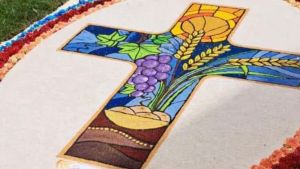
Most Holy Trinity
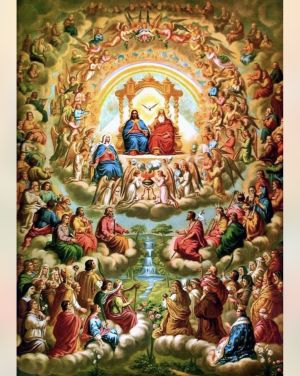
Solemnity of the Most Holy Trinity (year A) [31 May 2026]
First Reading from the Book of Exodus (34:4–6, 8–9)
The text presents one of the most precious moments of biblical revelation: God speaks of himself and proclaims his name before Moses, who prostrates himself in recognition of the greatness of what he hears. God defines himself as ‘the Lord (YHWH), a God who is compassionate and gracious, slow to anger, and abounding in love and faithfulness. This name, already revealed in the burning bush, is the foundation of Israel’s faith. Even then, God had shown his face: he sees the misery of his people in Egypt, hears their cry, knows their sufferings and comes down to set them free, inspiring Moses with the necessary strength. This means that man is never alone in his trials: God is present, accompanying and sustaining him. The Jewish Passover commemorates this liberating intervention every year. In today’s text, however, a further step is taken: God does not merely feel compassion, but loves deeply. His ‘passing’ before Moses recalls the passage during the Exodus: whenever God passes by, he sets free. This second revelation is even more important because it frees man from false images of God. It is not man who has invented a good God: it is God himself who has revealed himself in this way, unexpectedly. Moses fully understands the meaning of ‘slow to anger’ and asks forgiveness for the people, aware of their unfaithfulness. Israel is described as a “stiff-necked people”, an image drawn from the agricultural yoke: just as animals resist the yoke, so the people struggle to walk in step with God in the covenant. Despite this, Moses trusts that God will continue to forgive and keep the people as his inheritance. Finally, God’s faithfulness (“truth”) remains the foundation of hope: He does not abandon His people nor forget the covenant. For this reason, Israel remains the chosen people and, as the New Testament also reminds us, God remains ever faithful, even when man is unfaithful.
Responsorial Psalm: Song of Daniel (3:52–56)
To understand the Book of Daniel, we can use a modern comparison: in the 1980s, during Soviet rule in Czechoslovakia, a young actress staged a play about Joan of Arc. On the surface, it spoke of 15th-century France, but between the lines the message was clear: like Joan, the Czech people too could resist oppression. Similarly, the Book of Daniel, written in the 2nd century BC during the persecution by the Greek king Antiochus IV Epiphanes, is a text of resistance. It tells stories set in an earlier era, under the Babylonian king Nebuchadnezzar, but in reality it speaks of the author’s contemporary situation. Its aim is to encourage the faithful to remain steadfast, even unto martyrdom. A central episode is that of the three young men, Shadrach, Meshach and Abednego, condemned to be burned alive for refusing to worship a statue. Thrown into a blazing furnace, they are miraculously saved: the flames kill their executioners, whilst they walk unharmed through the fire, praising God. The greatest miracle, however, is their faith: they acknowledge the sins of the people and humbly entrust themselves to God’s mercy. In their song they proclaim: “Blessed are you, Lord, God of our fathers”. It is a reference to the covenant with Abraham, Isaac and Israel, to the divine promises and the history of salvation, but also to God’s continual forgiveness despite the people’s unfaithfulness. When speaking of God’s “Name”, God himself is referred to with respect. The reference to the “holy temple” reflects the historical context of persecution: even when worship is desecrated, it is affirmed that God alone is the true Lord. The images of the throne and the cherubim recall the Holy of Holies in the Temple, a sign of God’s presence among his people. This is a message of hope: even in the harshest trials, God is present and evil will not have the last word. The hymn thus becomes a song of trust and victory: despite violence and persecution, faith remains steadfast. This message of resilience and hope remains relevant even today.
Second Reading from the Second Letter of Saint Paul to the Corinthians (13:11–13)
The final sentence: “The grace of the Lord Jesus Christ, the love of God the Father and the fellowship of the Holy Spirit be with you all”, is the formula with which the Eucharistic celebration begins, and this is no coincidence: St Paul concludes his Second Letter to the Corinthians in this way, summarising God’s entire plan. This expression, spoken by the celebrant in the name of God, indicates that God invites humanity to enter into his intimacy, that is, into the communion of love of the Trinity. “Grace”, “love” and “communion” express the same reality: the Trinitarian life of the Father, the Son and the Holy Spirit. The subjunctive verb “may be with you” does not indicate any doubt about God, who is always the source of forgiveness, blessing and presence, but rather points to human freedom: God continually offers his love, but man is free to accept or reject it. This clear expression of the Trinity is rare in the Bible and marks the fulfilment of revelation in Jesus Christ. From this spring Paul’s exhortations, beginning with joy: “Brothers and sisters, rejoice.” In the Bible, joy is linked to the experience of liberation, such as at the end of a war or the return from exile, when the people experience God’s salvation. These liberations that occur in history foreshadow the definitive joy promised by God, that of a new creation. Jesus himself speaks of this full and definitive joy at the end of his discourse at the Last Supper: “Take heart, I have overcome the world”, and promises a joy that no one can take away, even through trials. Paul’s second exhortation concerns unity and peace: “Be of one mind… live in peace”. Unity among believers is essential, for it is God’s witness to the world and echoes Jesus’ prayer: “May they be one.” Paul insists on one faith, one Lord, one baptism, one God and Father of all. This communion is also expressed in the liturgical gesture of the kiss of peace, already present in the early Christian communities. Ancient testimonies, such as those of Saint Justin and Saint Hippolytus, show how this gesture was an integral part of the celebration, a concrete sign of unity and brotherhood.
From the Gospel of John (3:16–18)
‘God so loved the world that he gave his only Son’: this sentence expresses the great transition from the Old to the New Testament. That God loves humanity was already known, and was Israel’s great discovery; the novelty lies in the gift of the Son for the salvation of all. God so loved the world… that whoever believes in him may not perish, but have eternal life. According to the Gospel of John, it is enough to believe to be saved: whoever receives Christ becomes a child of God and already possesses eternal life. This “eternal life” is the life of the Spirit received at Baptism: it is true salvation, that is, living in peace with oneself and with others, as brothers and sisters amongst men and children of God. To be saved, one need only turn to Jesus, allow oneself to be transformed by him, and pass from a heart of stone to a heart of flesh. In biblical language: “to lift one’s gaze towards him”. It is extraordinary news, if taken seriously, for in the face of the Crucified One the true face of God is revealed. In the face of the crucified Christ, who freely gives his life, humanity discovers the true face of God: not a domineering or vengeful God, but a God who is love and mercy. “Whoever has seen me has seen the Father,” says Jesus. All that is required is faith: to believe in God who saves in order to be saved. In the Gospels, in fact, Jesus often repeats: “Your faith has saved you.” The evangelist John links this mystery to Zechariah’s prophecy: looking upon the one who has been pierced leads to conversion and purification. This vision also recurs in Revelation: all will see the one whom they have pierced. The expression ‘only Son’ indicates that Jesus is the fullness of grace and truth, the sole source of eternal life and the head of the new humanity. God’s plan is for all humanity to be united in Christ and to share in the life of the Trinity: this is salvation, true life, already present from this moment onwards. Eternal life is to know you, the one true God, and the one you have sent, Jesus Christ: to know God means to recognise him as mercy and to enter into a profound relationship with him, in accordance with the meaning that ‘to know’ holds in St John. ‘Avoiding judgement’ means avoiding separation from God: it is enough to believe in his forgiveness. As in human relationships, if one believes in forgiveness, one can return and be reconciled; if one does not believe, one remains trapped in one’s own error. So it is with God. God offers salvation, but does not impose it, and man remains always free. Those who believe are saved; those who reject faith exclude themselves. This is shown in an extraordinary way by the good thief when he turns to Jesus, who is crucified alongside him. Despite having lived a life of sin, at the very last moment before dying he entrusts himself to Jesus and receives a surprising promise: ‘Today you will be with me in Paradise.’
+Giovanni D’Ercole
THOUGHTS ON FOOD - (by Francesco Giovannozzi, psychologist and psychotherapist)

Thoughts on food
Several things prompted me to reflect on this.
One was a film broadcast by Rai 1 on 2 April 2026 (Maundy Thursday) on the subject of eating disorders. The film was called “Something Lilac.”
It is the story of a teenager who struggles with eating disorders, although the film focuses mainly on bulimia. The main eating disorders are anorexia and bulimia.
Another inspiration was seeing someone again at the centre who had suffered from these problems in the past and whom I had supported psychologically.
Finally, about a month ago, a lady I had known for years and who had long been troubled by these issues passed away. She wouldn’t listen to anyone; she ‘wasted away to the bone’.
And so, as with all my short articles, I ‘dredged up’ the theoretical knowledge I’d acquired over the years, combined with my observations of cases at work.
The issue of food is important for all living beings. If we do not eat, we do not live.
But here too, as in all situations in life, striking the right balance is not always easy.
The ideal approach is to eat without excesses that could cause metabolic disorders, and in such a way that our body functions well.
Sometimes, for various reasons, human beings alter their relationship with food. Think of the periods when people suffered from food shortages due to wars, epidemics, or other causes.
Cases of self-imposed fasting are also described in the Bible, but it was around 1600 that cases of significant weight loss due to diet began to be observed.
In contrast to the time of the ancient Romans, when they would indulge in huge feasts followed by self-induced vomiting – if I recall correctly, they would tickle their palates with a feather to induce vomiting and then start eating again.
The history of eating disorders is not a modern phenomenon, but has its roots in distant times.
In the Middle Ages, fasting was often associated with demonic possession, or conversely with mystical behaviour.
‘Mystics’ would fast to purify the body, draw as close as possible to God, and sometimes to withdraw from earthly life. Unlike the disorder seen today, the motivation was not beauty, but the aspiration to holiness.
Nowadays, distorted relationships with food are recognised as complex disorders, influenced by cultural and psychological factors.
These are serious disorders, often interlinked, and requiring treatment by various specialists. In short, anorexia involves a profound fear of gaining weight, stemming from a distorted perception of one’s own body.
Bulimia involves overeating followed by vomiting or self-induced purging – to prevent weight gain.
Such issues are more prevalent in industrialised cultures, where there is a higher standard of living and the idea of being attractive is associated with thinness.
Through the media, the idea of physical perfection has also reached less developed cultures, fostering a desire for physical attractiveness; which would not be a bad thing, were it not for the harm it causes to the body.
Nor should we overlook the influence of cultural role models; such as extremely thin models who trigger a desire to be like them – sometimes at any cost. And here I recall that years ago, there was a proposal to make figures such as the Barbie doll ‘put on weight’, to correct the image she unconsciously conveyed.
Until recently, it was mostly young people and women who were affected by such eating disorders. Lately, however, the issue has also come to affect men.
In my professional practice, I have encountered such issues. I have carried out various psychodiagnostic assessments where the main problems were eating disorders, even in very young individuals.
These were mostly female subjects, but I have also encountered a few male adolescents.
In psychotherapeutic treatment, working alongside other professionals, I have dealt with a few cases of anorexia in young girls, whilst the few cases of bulimia I have encountered were in older women.
This is in line with the theoretical principles that situate anorexia in early adolescence and bulimia in late adolescence or early adulthood.
I recall that the thin girls were always restless, worried and tormented, whilst the more ‘full-figured’ women were cheerful, sometimes even friendly. One of them was even able to joke about her considerable weight.
The progression of these conditions can vary; some are severe and can compromise general health – and there is a risk of mortality.
People with anorexia generally tend to be somewhat more stubborn; they may refuse not only food but also new experiences, and adopt a closed-off attitude; people with bulimia mainly exhibit ‘emotional volatility’, moments of anger and emptiness that they unconsciously try to fill with food.
Emotionally, these people may feel anxious, may be impulsive, and may experience shame. Anorexics are ashamed of their bodies, which they always perceive as enormous; bulimics are distressed by their lack of control, which sometimes extends beyond eating habits.
The characteristics of these issues are kept hidden for a long time. In doing so, they make it difficult to form a genuine relationship with others, with sufferers usually appearing more immature and superficial.
These people are united in an exaggerated way by a hunger for care and affection. They have an immense fear of being abandoned, and that other people might stop loving them.
But it is a question of ‘how strong this feeling is’, because everyone wants to be loved; they want to have a healthy relationship based on trust and mutual respect.
Intellectually, those with eating disorders may exhibit rigid thinking and a distorted perception of their body’s condition; in less severe cases, there remains a dissatisfaction with their physical appearance or certain parts of it.
In more severe cases, body image and how it is experienced often impairs their ability to assess reality.
Dr Francesco Giovannozzi Psychologist – Psychotherapist
ANTISOCIAL TRENDS - (by Francesco Giovannozzi, psychologist and psychotherapist)

A few days ago, I read in the newspaper about another case of a 22-year-old girl being stabbed. She was stabbed because she was listening to music at too high a volume, annoying her attacker.
Recently, several similar incidents have been reported in the media, all involving young people and all for trivial reasons. Some were for looking too long at the girl of their dreams, others for a slightly risqué compliment, etc.
Unfortunately, many young people these days attack their peers with knives they carry with them.
It should be noted that, like all objects, knives do not only have a negative value. They are used in the kitchen, for work; in the hands of a skilled chef, they become something precious.
In primitive societies, they were used to defend against animals and enemies.
Today, in the world of young people and beyond, if we think of the numerous cases of femicide where women are killed with unprecedented ferocity, it seems to be becoming a kind of status symbol.
This tool is perceived as a sign of toughness and strength, especially among young people who feel marginalised.
The episodes of violence that occur between two individuals have no valid reasons, but the spark that triggers them is a trivial, sometimes frivolous motive.
Often, the use of knives – weapons that are easy to obtain – is inherent in individuals associated with youth gangs, in order to become part of them and become affiliated. Here, it is as if this object could be a 'magic wand' against feelings of inner malaise and emotional and social disappointments. And this weapon would make us feel invincible, or perhaps just stronger.
Except for professionals, getting used to carrying a weapon with us can have repercussions on our way of being. We get used to it, and we may increasingly tend towards episodes of aggression towards others.
Leaving the house and carrying a knife with us - sooner or later, at the slightest provocation, we are tempted to use it, thus fuelling fear and increasing the likelihood of becoming a victim ourselves. In the long run, our psyche 'brings out' aspects of ourselves that may have been 'dormant' in hidden corners of our unconsciousness.
The individual ends up engaging in antisocial behaviour. And in the many goals they try to achieve, this behaviour can sometimes be harmful to themselves.
These are individuals who have a normal intellectual level, sometimes even above average.
In my experience of similar cases, referred by the Juvenile Court to the Child Neuropsychiatry Service, episodes of knife violence were associated with a low intellectual level.
These individuals often encounter failure in every initiative they take, thus increasing their sense of frustration.
They generally tend to lie and often exploit others, giving little importance to moral values.
They habitually almost never tell the truth, even when they make a promise (which they usually do not keep), showing no distress and coldly maintaining their positions.
They may be influenced by films and ancestral cultures, which can reinforce their inclination to use such weapons, without being aware of the possible consequences and the potential escalation of violence.
We 'young people of the past' were taught and passed on the ability to react constructively to the difficulties and humiliations that life inevitably brings.
Today, however, it seems that everything is owed to us, that deprivation of anything in this excess of well-being is unbearable.
And so, especially in emotionally unstable individuals, something triggers them to do harm; we are moving towards an insane, sick aggression. Not towards that 'healthy determination' that helps us overcome life's obstacles.
I have often heard from people who came before me, and perhaps also from some reading that I now cannot remember, that the most cruel beast is man. Two souls lurk in his heart: one made of sociability and a drive towards others, the other of jealousy and rivalry, of cruelty towards others.
People with these issues tend to be dishonest, to lie and deceive others, to try to exploit them, forgetting the moral principles they have learned.
These people always consider themselves 'the best'. If this is not perceived, anger rises - consciously or unconsciously.
When they cause harm, they feel no remorse and no guilt.
The line between what is legal and what is not becomes blurred. We tend to act impulsively, without considering the effect of our actions on others.
As a result, we sink lower and lower. We believe that others are only there to help us get what we want.
Often, violent or even sadistic behaviour is associated with a certain pleasure.
And here we also tend to participate in clashes with 'power'.
On a collective level, just look at the recent events in Turin, where violence is directed at law enforcement officers, those who represent the rules and seek to restore legality.
Without adhering to any ideology, I am personally convinced, leaving aside party politics, that limits must be restored from childhood. In this way, a child can grow up with a clear distinction between what is good and what is evil.
Dr Francesco Giovannozzi, Psychologist-Psychotherapist.
OBSESSION AND COMPULSION - (by Francesco Giovannozzi, psychologist and psychotherapist)

Obsession and Compulsion
A gentleman confides in me that for some time now he has felt the need to check whether he has locked the front door of his house. A lady, on the other hand, needs to be sure that she has turned off the gas in the kitchen.
After checking, both the gas and the front door were fine and in order.
Another middle-aged man feels the need to see if his car is okay, then he has to go and check it, walk around it, touch it in different places, and only after completing these behavioural sequences can he return home peacefully. Sometimes he feels the need to do this several times a day.
In the Treccani dictionary, the term 'obsession' is defined as: 'a mental representation that the will cannot eliminate, accompanied by anxiety'.
The term 'compulsion' is defined as: 'compulsion, being driven by necessity to do something'.
Many people have thoughts that they have no interest in; these are often ideas that make no sense, but which require considerable mental effort.
Without wanting to, these ideas invade our minds and make our brains 'rack' as if they were fundamental issues.
These may be thoughts or images that cause concern, and are usually followed by compulsions that the person must perform to calm their anxiety.
Between the 'fixed' idea and the need to perform some act or gesture to ensure that nothing bad happens, doubt often arises, undermining our most certain convictions.
This leads to increasing indecision, which limits our freedom of action: even simple choices take a long time to make.
Sometimes it leads us to be unable to make a decision. The doubt may concern a thought, a memory, an action, etc., and may spill over from one content to another.
A person with these problems, when leaving the house, sometimes feels compelled to return to make sure they have not left the light on, and to be sure, they sometimes have to do this several times.
In literature, there are examples of people who, after sending a letter, felt the need to reopen it to check what they had written.
In psychological contexts such as this, we also talk about 'rumination', which is always associated with doubt.
In biology, it refers to the digestive process of certain animals, such as cattle. Food that has been swallowed is brought back into the mouth to be chewed again, more thoroughly, and then swallowed again to complete digestion.
In psychology, 'rumination' describes repetitive and persistent thinking focused on past events, as opposed to 'brooding', which is more concerned with future events.
Ceremonials are also described. In these, the individual must perform a sequence of acts such as washing their hands frequently or cleaning everyday objects many times.
This is where an aspect of the psychological picture described comes into play: 'rupophobia' and contamination. Rupophobia is a morbid fear of dirt and of being infected. It can affect any aspect of our lives: objects, people or public places. It is an aspect that can also harm intimacy.
The Covid period has increased the fear of contagion, but this was a real event. Many years ago, around 1986, there was the Chernobyl phenomenon, and there we really had to be careful about what we ate because food, especially vegetables, could have been contaminated.
Anyone who has these ideas may count the cars in the car park while walking, or touch lampposts, or try to avoid cracks in the pavement, etc.
In severe cases, these people may feel that they are harming someone, so these thoughts make them 'back away'. They need to give themselves a 'shake' to try to dispel these terrifying ideas.
People with these characteristics are generally strict, concerned with details, and meticulous about rules and formalities.
However, by focusing on details, they often overlook the essentials.
How many people in their work environment feel the need to line up their objects in excessive order?
Order and control are closely interlinked, because external order can be a way of achieving internal order, which can reduce stress.
However, we are talking about excessive order. A minimum of order is necessary to avoid confusion and to be able to find our things.
Stuttering is also a speech disorder linked to this psychological condition.
The person who stutters struggles at the beginning, with the first letter or syllable, and repeats it until the word is finished.
As we know, their speech is fluent when they are alone or when they recite or sing.
Otherwise, mortified by their defect, they will tend to isolate themselves and speak as little as possible. Or they will stubbornly insist on speaking with intense physical effort.
Stuttering 'is a conflict between the erotic urethral tendency to expel and the erotic-anal tendency to retain, shifted to the mouth' (Manual of Psychiatry, Arieti, vol. I, p. 353).
Dr Francesco Giovannozzi, Psychologist-Psychotherapist.
TRAUMATIC OR PRECARIOUS EXPERIENCES. «DARKNESS»: APATHY, DEPRESSION, PSYCHOSIS, HOSTILITY - (by Francesco Giovannozzi, psychologist and psychotherapist)

A look into the «darkness».
As I have already mentioned, many poets and writers have described the flow of the human soul.
Eugenio Montale expresses this in one of his poems from 1925, on the pain of living, providing us with the image of a stream that cannot flow, a leaf crumpled by excessive heat, a horse exhausted on the ground.
These are images that linger in our minds, leaving us with food for thought and questions to ponder.
There have been moments of 'darkness' in our lives, and perhaps there will be more.
Feelings of discouragement and not knowing which path to take - each of us has experienced this first-hand.
The intensity and duration of the 'darkness' vary depending on the circumstances and our personal ability to react.
We react differently to defeat or disappointment; what upsets one person may leave another completely indifferent.
An encounter with 'darkness' can be common when faced with serious difficulties such as bereavement, loss of employment, the onset of illness, the end of a relationship, and so on.
This state of mind is temporary and ends spontaneously, without bringing about changes in a person's life.
In other cases, it is important not to underestimate this state of mind, as it could be a sign of psychosomatic or psychological distress.
In these cases, we often experience inexplicable feelings of worry and apathy, and we feel more fatigued.
Let us remember that the reaction to 'darkness' often follows a traumatic experience, which in ordinary circumstances would not have caused any temporary feelings of low mood.
A more severe and prolonged reaction, one that the individual cannot overcome on their own, is an unusual condition.
In older people, emotional shocks can trigger moments of 'darkness' more easily than in younger people.
Sometimes older people are marginalised, have fewer social relationships, and often suffer a loss of prestige, especially when they lose hope.
But even adolescents [with their precariousness] are not immune to these moments of unease.
It is not true that adolescence is a happy time of life; on the contrary, it is perhaps one of the most troubled.
In these moments of 'darkness', which clinicians call «depression», we notice that people going through this phase greatly reduce their activities, have less self-confidence, and take an interest in few things.
They are able to keep their jobs even if they have to work harder. Usually, their memory and relationship with reality are not altered - unless a serious condition («psychosis») has arisen.
Arieti describes the depression we have called 'darkness' here as a combination of sadness and pessimism.
The latter is the essential element of the combination; the unhealthy idea is to believe that what has happened to a person will always happen to them, or that their state of mind will never change.
Defeatism, the illusion of knowing what will happen to us in the future, consolidates sadness into 'darkness'.
Often the 'darkness' of the soul is discharged onto the body.
We may experience weight loss, feelings of oppression in the heart, decreased bodily secretions, insomnia, and frequent headaches.
In our behaviour towards others, 'darkness' makes us tend to exploit and influence others; it makes us unwilling to be persuaded. We find it difficult to satisfy others, and hostility often overwhelms us.
Faber Andrew wrote a poem entitled “To those who are going through their darkness”...
The poet invites the reader to «believe in poetry. In the eyes of those who have already found that road».
Then again: «There is a sky here waiting for you, with a breathtaking panorama of dreams».
For a poet, poetry is the main road, but we who are not poets have something to believe in, and that is the pillar of our reality.
Let us always remember that when the night reaches its darkest point, the dawn of a new day begins.
Francesco Giovannozzi, psychologist and psychotherapist.
AGITATION, RESTLESSNESS, WORRIES, FEAR - (by Francesco Giovannozzi, psychologist and psychotherapist)

In today's society, there are many factors that cause anxiety and restlessness, and strategies to combat them are often difficult to find.
This period is characterised by the 'shaking' of fundamental values, norms and aspirations that drove man towards fulfilment and healthy relationships with others.
The current wars around the world, the memories of them for older people, and the threat of nuclear war add to the list.
In such a hostile climate, human isolation is accentuated.
Each person has their own way of reacting: the most common is a sense of unease, anxiety, feeling in danger without knowing what the danger is; a sense of ruin, or something else.
We often fail to understand the cause of all this. People feel helpless, and if this unease is strong, it can be discharged onto the body.
Muscle stiffness may be noticed, or there may be tremors, a feeling of weakness or tiredness; even the voice may tremble.
At the cardiovascular level, palpitations, fainting, increased heart rate and increased blood pressure may occur.
Nausea, vomiting and stomach ache may also occur in the intestines, which have no organic origin.
There may also be other symptoms typical of each person's history, and there is no organ that cannot be affected by internal tension.
I remember that in my professional life I have met people with psychological problems that were 'discharged' in different parts of the body, sometimes in the most unimaginable places.
I have encountered alopecia (hair loss), locked limbs, visual disturbances, fainting, and more recently, teenagers who cut themselves...
If a person feels overwhelmed by a sudden wave of inner discomfort, they may react inappropriately or even dangerously (alcohol, drugs, speeding, gambling, etc.).
Understanding these disturbances, worries and anxieties is important in determining whether they are normal or not.
Unusual states of anxiety are distinguished from more or less persistent apprehension with acute crises.
These states are to be distinguished from the state of generalised worry that we find common in our daily lives.
Let us remember that in order to define our anxiety and agitation, we must convince ourselves that it is something normal when the individual feels threatened.
Agitation should be distinguished from fear, where the danger is real: the individual can assess the situation and choose whether to face it or flee.
When we talk about agitation in the normal sense, we mean that it is human nature to feel it when faced with danger, illness, etc.
It represents the deepest way of living our human existence.
It makes us face our limits and weaknesses, which are not manifestations of inner discomfort or illness, but expressions of human nature.
The more aware we are of our limits, the better we are able to live with our anxieties.
For our fellow human beings who feel omnipotent, agitation and anxiety are unbearable, as they bring to consciousness the limits that are a wound to their 'feeling of being a superior creature'.
We experience normal unease even when we leave an 'old road for a new one'.
From this point of view, it accompanies us in our changes, in our evolution, and in finding meaning in our lives.
Dr Francesco Giovannozzi, psychologist and psychotherapist
Conversion and Times: Faith of the fourth year
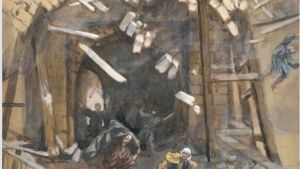
The sower is Jesus. With this image, we can see that he presents himself as one who does not impose himself, but rather offers himself. He does not attract us by conquering us, but by donating himself: he casts seeds. With patience and generosity, he spreads his Word, which is not a cage or a trap, but a seed which can bear fruit (Pope Francis)
Il seminatore è Gesù. Notiamo che, con questa immagine, Egli si presenta come uno che non si impone, ma si propone; non ci attira conquistandoci, ma donandosi: butta il seme. Egli sparge con pazienza e generosità la sua Parola, che non è una gabbia o una trappola, ma un seme che può portare frutto (Papa Francesco)
The Church desires to give thanks to the Most Holy Trinity for the "mystery of woman" and for every woman - for that which constitutes the eternal measure of her feminine dignity, for the "great works of God", which throughout human history have been accomplished in and through her (Mulieris Dignitatem n.31)
La Chiesa desidera ringraziare la Santissima Trinità per il «mistero della donna», e, per ogni donna - per ciò che costituisce l'eterna misura della sua dignità femminile, per le «grandi opere di Dio» che nella storia delle generazioni umane si sono compiute in lei e per mezzo di lei (Mulieris Dignitatem n.31)
Simon, a Pharisee and rich 'notable' of the city, holds a banquet in his house in honour of Jesus. Unexpectedly from the back of the room enters a guest who was neither invited nor expected […] (Pope Benedict)
Simone, fariseo e ricco “notabile” della città, tiene in casa sua un banchetto in onore di Gesù. Inaspettatamente dal fondo della sala entra un’ospite non invitata né prevista […] (Papa Benedetto)
God excludes no one […] God does not let himself be conditioned by our human prejudices (Pope Benedict)
Dio non esclude nessuno […] Dio non si lascia condizionare dai nostri pregiudizi (Papa Benedetto)
«The Russian mystics of the first centuries of the Church gave advice to their disciples, the young monks: in the moment of spiritual turmoil take refuge under the mantle of the holy Mother of God». Then «the West took this advice and made the first Marian antiphon “Sub tuum Praesidium”: under your cloak, in your custody, O Mother, we are sure there» (Pope Francis)
«I mistici russi dei primi secoli della Chiesa davano un consiglio ai loro discepoli, i giovani monaci: nel momento delle turbolenze spirituali rifugiatevi sotto il manto della santa Madre di Dio». Poi «l’occidente ha preso questo consiglio e ha fatto la prima antifona mariana “Sub tuum praesidium”: sotto il tuo mantello, sotto la tua custodia, o Madre, lì siamo sicuri» (Papa Francesco)
The Cross of Jesus is our one true hope! That is why the Church “exalts” the Holy Cross, and why we Christians bless ourselves with the sign of the cross. That is, we don’t exalt crosses, but the glorious Cross of Christ, the sign of God’s immense love, the sign of our salvation and path toward the Resurrection. This is our hope (Pope Francis)
La Croce di Gesù è la nostra unica vera speranza! Ecco perché la Chiesa “esalta” la santa Croce, ed ecco perché noi cristiani benediciamo con il segno della croce. Cioè, noi non esaltiamo le croci, ma la Croce gloriosa di Gesù, segno dell’amore immenso di Dio, segno della nostra salvezza e cammino verso la Risurrezione. E questa è la nostra speranza (Papa Francesco)
In the divine attitude justice is pervaded with mercy, whereas the human attitude is limited to justice. Jesus exhorts us to open ourselves with courage to the strength of forgiveness, because in life not everything can be resolved with justice. We know this (Pope Francis)








duevie.art
don Giuseppe Nespeca
Tel. 333-1329741
Disclaimer
Questo blog non rappresenta una testata giornalistica in quanto viene aggiornato senza alcuna periodicità. Non può pertanto considerarsi un prodotto editoriale ai sensi della legge N°62 del 07/03/2001.
Le immagini sono tratte da internet, ma se il loro uso violasse diritti d'autore, lo si comunichi all'autore del blog che provvederà alla loro pronta rimozione.
L'autore dichiara di non essere responsabile dei commenti lasciati nei post. Eventuali commenti dei lettori, lesivi dell'immagine o dell'onorabilità di persone terze, il cui contenuto fosse ritenuto non idoneo alla pubblicazione verranno insindacabilmente rimossi.