


don Giuseppe Nespeca
Giuseppe Nespeca è architetto e sacerdote. Cultore della Sacra scrittura è autore della raccolta "Due Fuochi due Vie - Religione e Fede, Vangeli e Tao"; coautore del libro "Dialogo e Solstizio".
The Sower: from the captivating Call of Faith to the struggle of withdrawal
14th Sunday in O.T.

14th Sunday in Ordinary Time (year A) [5 July 2026]
First Reading from the Book of the Prophet Zechariah (9:9–10)
This text could be summarised as follows: for the prophet Zechariah, the Messiah is a King of peace, not of war, and humble like the Servant. ‘Rejoice, O Daughter of Zion’ is a message of consolation in times of war. For thus says the Lord: Rejoice, shout for joy, O Daughter of Jerusalem! ‘Daughter of Zion/Jerusalem’ is not a young woman, but the city itself: it is as if to say ‘Jerusalem, rejoice’. The paradox is that whilst the tone is triumphant, in reality it is a time of war because the prophet Zechariah carried out his mission at the beginning of Greek rule (c. 330 BC), following Alexander’s conquests, and it is an ‘oracle of consolation’. This helps us to understand certain expressions such as ‘He will remove the war chariots from Ephraim and the war horses from Jerusalem; he will break the bow of war and proclaim peace to the nations’. At a time when all seems lost, Zechariah leads Israel to hope in God’s intervention. And when Zechariah speaks of the Messiah, he uses the classic terms of the expected Messiah: a king who brings justice and peace: ‘O God, entrust your judgement to the king… May he rule from sea to sea, from the River to the ends of the earth’ (Ps 71/72). The boldness lies in proclaiming this hope precisely when all human hope has collapsed. Here are three statements by Zechariah, the last of which is decisive. First: “He will proclaim peace to the nations”: it was only after the exile to Babylon that Israel realised that God’s plan encompasses all humanity. Second: “He will remove… from Ephraim… from Jerusalem”: mentioning Ephraim (the North) and Jerusalem (the South) together is a subtle way of announcing the restoration and reunification of the ancient kingdom of David. By the time Zechariah was writing, the North and South had long since lost their unity and sovereignty. Third: The real novelty: “poor and riding on a donkey, a colt, the foal of a donkey”. The donkey is a humble mount. Alexander’s conquerors rode on quite different steeds. In Jerusalem, Solomon had introduced the warhorse and the parade horse, and was reproached for his taste for grandeur. A king on a donkey had never been seen before. Jesus presents himself as the Messiah ‘in the manner of Zechariah’. Isaiah had already glimpsed a humble Messiah (Isaiah 50:6; 53:7). The Servant does not bear the title of ‘king’, but carries out the work of the Messiah and is filled with the Spirit of God. Zechariah, on the other hand, immediately presents the Messiah as King: he takes up the traditional expectation of the Messiah-King. The novelty lies in combining this royal expectation with the humility of Isaiah’s Servant. For his king is humble: the dreams of grandeur, war and power come to an end. Only one thing matters: establishing peace for his people. The four Gospels describe Jesus’ triumphal entry into Jerusalem precisely as the coming of this King riding on a donkey. Matthew (Mt 21:5) and John (12:15) quote Zechariah. Perhaps Jesus himself quoted it to the disciples on the road to Emmaus, whilst ‘explaining to them what was written about himself in the Scriptures’ (Lk 24:27).
Responsorial Psalm (144/145)
In this psalm, it is clear that God’s kingship is mercy towards all. Moreover, Psalm 144/145 is the only one entitled ‘Praise’. Whilst it is true that the entire Hebrew Psalter is called ‘praises’, this is the only psalm actually titled ‘praise’. The tone is one of wonder; the theme is the kingship of the God of the Covenant. In a celebration of the renewal of the Covenant, Israel contemplates the King who protects them freely, without merit. Hence the royal language: “I will exalt you, my God, my King… your faithful ones will proclaim the glory of your kingdom; they will speak of your mighty deeds”. We can discern in this psalm an “alphabet” of tenderness because it is an “alphabetical” psalm, and from Aleph to Tav—that is, “all of life, from A to Z, is immersed in the Covenant, in God’s tenderness”. The verse-by-verse parallelism is very marked: it should be read by two alternating choirs. And it is precisely this parallelism that is instructive, because in the liturgy two pairs of verses are joined which, at first glance, are surprising: “The Lord is faithful in all his words and good in all his deeds; the Lord upholds those who falter and lifts up all who have fallen”. “The Lord is faithful in all his words and good in all his deeds / He is close to those who call upon him, to those who call upon him in sincerity.” This means that God’s justice, truth and faithfulness are nothing other than his mercy. The greatest justice in the world is not that of the scales, but that of love. If we live “according to the Spirit of God”, as Paul urges the Romans – Sunday’s second reading – we set out precisely on this path: a justice that is synonymous with mercy. The King spoken of in the psalm is not like the kings of the earth; he is almighty and good: he desires only our happiness. When Israel speaks of the power of this King ‘not like the others’, it knows that his power is nothing but love: ‘The Lord is good; he is full of compassion and mercy, slow to anger and abounding in love.’ This is the finest summary of the entire biblical revelation. Israel speaks from experience: how many times, especially during the exile in Babylon, did it call upon God and plead for forgiveness and a return… Now the people gathered in the rebuilt Temple sing: ‘The Lord is merciful and compassionate.’ ‘May all your works praise you, O Lord, and may your faithful bless you’—may they bless you!... O God, my King, I will exalt you and bless your name for ever and ever.’ The task is to sing it loud enough for everyone to know: the abundance of the Lord’s forgiveness, tenderness and compassion is for everyone, for God loves humanity and his ‘merciful plan’ encompasses all humanity and the whole of creation. It is easy to see why Psalm 144/145 has become the morning prayer of the people who were the first to learn to speak to God as to a father. For the Jewish believer, the morning – the dawn of a new day – irresistibly evokes the dawn of the final Day, of the world to come, of the renewed creation. The rabbinic tradition of the Talmud states that whoever recites this psalm three times a day ‘can be sure of being a child of the world to come’.
Second Reading from the Letter of Saint Paul the Apostle to the Romans (8:9, 11–13)
For Saint Paul, living according to the Spirit means allowing God’s Love to dwell within us.
The difficulty with this text lies in the word ‘flesh’. For Paul, it does not have the same meaning as it does in our 21st-century English. We contrast ‘body’ and ‘soul’ and risk a huge misunderstanding. When Paul says ‘flesh’, he does not mean the body; when he says ‘Spirit’, he does not mean the soul. Nor does he set two words—‘flesh’ against ‘Spirit’—but rather two expressions: ‘living according to the flesh’ and ‘living according to the Spirit’. For him, it is a matter of choosing between two ways of life, two masters, two courses of action. For Paul, to live ‘according to the flesh’ is to live without God, relying solely on our own strength, confined within the limits of human intelligence and strength. Obviously, that doesn’t get us very far! Or rather, it can take us very far, but in the wrong direction. This is the theme of the ‘two paths’ that recurs constantly in Paul’s writing. Living without God always ends up meaning living far from God, in a state of estrangement that can only get worse. He described this in the opening chapters of the Letter to the Romans, using images from Genesis: to live according to the flesh is to live like Adam – he wants to become like God, but without God’s help. He is mistaken. We, too, sometimes seek happiness on our own, without Him or in opposition to Him, without realising that this is the best way to harm ourselves. ‘Living according to the Spirit’ is the great news
because living ‘according to the Spirit’ means allowing oneself to be guided by Him, and thus living by the power of God: it changes everything! The great news of the text is: ‘The Spirit of God dwells in you’, so ‘you are not under the dominion of the flesh, but under the dominion of the Spirit’. The verb ‘to dwell’ appears three times today: whoever dwells in a house is the master; it is he who is in charge. We have literally become the Spirit’s dwelling places: it is He who is now in command. Our freedom lies in opening the door to Him. We must, however, consider what place we leave for Him in our home, for we are free to open the door to a greater or lesser extent. In many passages, Paul emphasises our freedom: ‘you are not under the dominion of the flesh’ means that we are no longer slaves to the forces of evil; we now have the strength to ensure that true values triumph: love, peace, truth and justice. We have the strength, but we are not obliged: the choice must be made anew at every moment. The more space we make for the Holy Spirit in our home – that is, the more we do what he suggests on the path of love, kindness and forgiveness – the more truly alive we will be. Before his conversion, Paul faithfully observed many moral and religious rules, but the Spirit of Christ did not dwell within him; he still lived ‘under the dominion of the flesh’. And this could have led him to violence and murder, in perfect good faith. Now his whole life is inspired by the Spirit of Christ, to the point of saying: ‘It is no longer I who live, but Christ lives in me’ (Gal 2:20). Two consequences can be drawn for us who are baptised: 1) We shall rise with Christ: a promise for the future. ‘The Spirit will exercise his power in us and bring to fulfilment in us what he brought to fulfilment in Jesus’ (Rom 8:11). 2) Even now, our lives are transformed just as Paul’s was, because we are now ‘under the rule of the Spirit’. ‘I will put my Spirit within you, and you shall live,’ proclaimed Ezekiel (37:14). Paul often speaks of the new spiritual life that springs from Baptism: whilst remaining in our mortal bodies, we can already live by the Spirit of Christ. This is what John calls ‘eternal life’. In practical terms: the Spirit is Love. Simply replace ‘Spirit’ with ‘Love’, and to live according to the Spirit is to allow Him to inspire our words and deeds of love. A few chapters earlier, Paul wrote to the Romans: ‘God’s love has been poured into our hearts through the Holy Spirit who has been given to us’ (Rom 5:5). And to the Galatians he explains the fruits of the Spirit: ‘love, joy, peace, patience, kindness, goodness, faithfulness, gentleness, self-control’ (Gal 5:22): in a word, it is love expressed in all the concrete circumstances of life. Paul is the heir to the prophets: they all affirm that our relationship with God is reflected in the quality of our relationship with others. In the Servant Songs, Isaiah affirms that to live according to the Spirit of God is to love and serve one’s brothers and sisters. As John says: ‘Whoever does not love remains in death… We know that we have passed from death to life, because we love our brothers and sisters’ (1 John 3:14).
From the Gospel according to Matthew (11:25–30)
In this text, we find the central theme in Jesus’ ‘gentle yoke and light burden’, which is, in fact, the Law of love that brings rest: ‘ ‘Come to me, all you who are weary and burdened, and I will give you rest.’ What is the ‘yoke’? The yoke is a heavy, solid piece of wood that joins two oxen for ploughing. They join forces, and the stronger one sets the pace. Figuratively speaking, ‘taking up the yoke’ means binding oneself to someone to walk at the same pace, yoked to the same task. In the Old Testament and in Judaism, the expression was commonly used to refer to the Covenant: ‘to take up the yoke of the Torah’, that is, to commit oneself to following God’s Law, knowing that all the strength of the ‘team’ comes from God himself. For a Jew, the service of the Torah is not an unbearable burden; it is the path to true happiness. Ben Sirach said: “You will find your rest in it, and it will become your joy” (Sir 6:28). Jesus takes up this image, linking it to the yoke of the Torah and to rest: “Take my yoke upon you, become my disciples, practise my commandments, and you will find rest for your souls”. And he adds: “Yes, my yoke is easy to bear and my burden is light.” One senses a criticism of certain Pharisees who had turned the Law into a litany of meticulous obligations. Of them, Jesus says: “They tie up heavy burdens, hard to bear, and lay them on people’s shoulders; but they themselves are not willing to move them even with a finger” (Mt 23:4). Meanwhile, the majority of the people struggled to observe all the commandments imposed by the religious authorities and felt the contempt directed at them. Jesus invites his disciples to lay aside these burdens that are too heavy: ‘Take my yoke upon you… my yoke is easy and my burden is light’. His yoke is simply the law of love, and it is He who gives us the strength to bear it. ‘Rest’ was also a familiar word. The Old Testament presented the Promised Land as the place of rest given by God to his people. Conversely, when the people were unfaithful, Psalm 94/95 expressed God’s sorrow: ‘This people’s heart is led astray… they shall not enter my rest’. Taking up that psalm, the Letter to the Hebrews announces a new day when, with Christ, we shall enter God’s rest with confidence: ‘Let us therefore strive to enter that rest’ (Heb 4:11). The absolute novelty is that Jesus identifies himself with God, and he alone can say, ‘I will give you rest. Take my yoke upon you… my yoke is easy…’. The religious leaders were annoyed by this, whilst those who were weary under the weight of their burdens were drawn to the respect and care he showed to each one.
+Giovanni D’Ercole
Little one and Small one: the only ‘titles’ that belong to us and that we can keep
13th Sunday in O.T. and Solemnity of Saints Peter and Paul
13th Sunday in Ordinary Time (year A) [28 June 2026]
First Reading from the Second Book of Kings (4:8–11, 14–16a)
Here is a brief overview of this Sunday’s biblical readings, beginning with this story of a beautiful human friendship. In Shunem, a village in the Northern Kingdom around 850 BC, Elisha, at the start of his ministry, forms a strong and lasting friendship with a wealthy family. The biblical authors do not recount this story merely as an anecdote: they have a theological purpose and show that the covenant between Elisha and the Shunammites is a reflection of the Covenant between God and Israel. This story unfolds in four acts: 1. The promise of a son: Elisha announces to the barren woman: ‘Next year, at this very time, you will be holding a son in your arms.’ She does not believe him and replies: ‘No, my lord, man of God, do not lie to your servant.’ Like Sarah at Mamre, she doubts. But the following year the child is born. 2. The resurrection: Years later, the child dies in the fields, struck down by heatstroke. Without losing faith, the mother lays the body on Elisha’s bed, in the room on the terrace, and runs to find him. She reminds him: ‘I had not asked you for anything; do not take this son from me.’ Elisha prays and raises the child from the dead. 3. The warning of famine: True to this friendship, Elisha warns the Shunammite woman of seven years of famine and advises her to leave for the land of the Philistines. She obeys and goes into exile. 4. The restoration of her property. On her return, her house and fields had been confiscated by the king’s officials. Elisha intervenes once more and restores her lands to her. But what theological lesson does this text offer us? This friendship illustrates five aspects of the Covenant between God and Israel: 1. A permanent covenant and faithfulness: God remains faithful even in the face of unbelief. 2. Constant care: Just as Elisha did for his hostess, God watches over his people without ceasing. 3. God dwells with us: Elisha accepts the room on the terrace: God wishes to dwell amongst his people, as in Solomon’s Temple. 4. God restores: Elisha restores the land; God promises to restore the land to Israel – a key message written during the Babylonian Exile. 5. God is the God of life: A promise of the child’s birth and resurrection, for God gives life. The Shunammite woman becomes a model of faith for us: she welcomes the prophet ‘as a prophet’, as Jesus will say in the Gospel of Matthew (10:41). Her trust is complete: she dares to tell God her needs and even her anger. She recognises Elisha as a ‘holy man of God’. Here is a practical application: God dwells in the heart of every person, and it is important to recognise this.
Responsorial Psalm (88/89)
Here is a clear message: we must never doubt. The first reading recounts the long friendship between a family from Shunem and the prophet Elisha, the ‘man of God’. Through this human relationship, we reflect on the eternal Covenant between God and his people, and with all humanity. Psalm 88/89, which is proclaimed today, seems to be a song written in the midst of trial. Although the few verses of the responsorial psalm seem full of joy, the complete psalm, comprising no fewer than 53 verses, was probably composed during the Babylonian Exile. It is a synthesis of the entire history of Israel: the beginning of the Covenant, the promises to David, the expectation of the Messiah… and then the collapse: no more kings in Jerusalem, no heir, and therefore no Messiah. Hence the anguished question in verse 50: ‘Where, O Lord, is your first love, the one you swore to David concerning your faithfulness?’. What is asserted with such force is, in reality, what one fears to have lost. The psalm is, moreover, the last in the third book of the Psalms and concludes with: ‘Blessed be the Lord for ever! Amen! Amen!’. It therefore has the character of a conclusion. On closer inspection, this psalm presents itself as a skilful composition. The first stanza is very carefully crafted, with parallel structures: I will sing of the Lord’s love without end; I will proclaim your faithfulness from age to age. Love/faithfulness, song/proclamation, without end/from age to age, established/stable, for ever/the heavens: a marvellous parallelism between time and space that invites us to cherish the singing of the Psalms. The heart of the message is Love and faithfulness. In the complete psalm, the pairing ‘love and faithfulness’ occurs seven times, a symbolic number. It is the translation of the revelation to Moses on Mount Sinai: ‘A God merciful and gracious, slow to anger and abounding in love and faithfulness’ (Ex 34:6) . In Hebrew, ‘love’—that is, ‘God’s acts of love’—indicates that God does not love merely in words, but ‘in deed and in truth’, as St John will say in the New Testament. It is precisely during the exile that Israel remembers, more than ever, ‘God’s acts of love’ so as not to fall into the temptation of thinking that God has forgotten them. In short, the psalm presents a group of believers composing hymns to commemorate the faithfulness of God, who has never ceased to be the King of Israel. The phrase “for the Lord is our shield, our King, the Holy One of Israel” is sung precisely at a time when there is no longer a human king. And it is interesting that the psalm uses royal and martial vocabulary: ‘shout of triumph/terouah, power, strength, vigour, shield’ – because the king led the army. These are victorious expressions spoken in a time of defeat. And the psalm concludes by recalling the insults suffered by the Messiah: ‘ Remember, Lord, your servants who have been humiliated… your enemies have humiliated, Lord, your Messiah”. Moral: it is precisely in the night, in the darkness of exile and trial, that we must believe in the light and in the reaffirmation of God’s promises.
Second Reading from the Letter of Saint Paul the Apostle to the Romans (6:3… 11)
St Paul points to a new way of life and responds to the objection of those who reproach him, saying that by placing too much emphasis on the free gift of salvation, he is encouraging sin. He retorts: grace does not render sin irrelevant, but it no longer has power over the believer because, from Baptism, the believer is a ‘new creation’: ‘If anyone is in Christ, they are a new creation’ (2 Cor 5:17). Paul explains the meaning of the key word ‘death’, which is not biological, and uses this word in a theological sense: all of us who have been baptised into Christ Jesus have been baptised into his death… we have therefore died to sin, and now we live for God in Christ Jesus. It is a radical break with the past, one that no longer fears physical death. Paul speaks from experience: on the road to Damascus, he ‘died’ to the old self, to his former way of seeing, acting and believing. The ‘baptism’ of Israel thus serves as a key for Paul to explain Christian Baptism, as he clearly recalls in his First Letter to the Corinthians (cf. 1 Cor 10:1–2) . Israel, ‘baptised’ by Moses in the cloud and the sea during the crossing of the Red Sea, experienced the death of Egyptian slavery: forced labour, massacres, the Pharaoh’s bad faith – and thus a clean break with the machinery of oppression. In this way, Christ brings about the decisive break: the person enslaved by sin, by doubts, by violence, is set free. Jesus, ‘obedient unto death, even death on a cross’ (Phil 2:8), breaks the vicious circle. His death is a triumph: ‘dead to sin once and for all, alive to God’. To live in the manner of Christ is therefore ‘to die to sin’—that is, to die to the old way of life: hatred, violence, the thirst for power and money—in order to ‘live for and in God’, that is, to choose Christ as the one Lord and to enter into a new life made up of love and service to one’s brothers and sisters. Baptism marks the beginning of this radical change: it is true liberation. Paul says to the baptised: “Consider yourselves dead to sin, but alive to God in Christ Jesus”. The gift has already been granted, but it remains to be put into practice every day. And here lies the challenge that arises from it: whilst entering into salvation is simple—for it is enough simply to believe—living it out becomes extremely demanding, as it requires us to model our daily lives on the Spirit of Christ. He repeats this in his letter to the Ephesians: ‘Put off the old self… be renewed in the spirit of your mind, and put on the new self, created according to God in righteousness and true holiness’ (Eph 4:22–24). There is but one secret: to keep our eyes fixed on the cross of Christ. Only his obedience and gentleness break the chain of violence. As Jesus says: ‘Abide in me, and I in you. Just as the branch cannot bear fruit by itself, neither can you unless you remain in me’ (Jn 15:4).
From the Gospel according to Matthew (10:37–42)
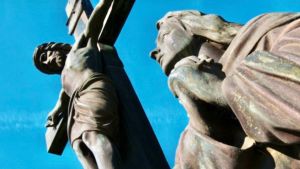
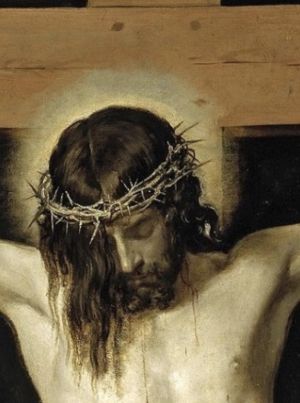
This text helps us to learn how to accept the necessary sacrifices. At first glance, Matthew 10:37–42 seems like a list of unrelated maxims. In reality, it is a single invitation: these are the detachments required by fidelity to the Gospel. After the Sermon on the Mount on love, Jesus speaks here of other demands. We must learn to love God in times of persecution of the Church: ‘Whoever loves father or mother more than me is not worthy of me; whoever loves son or daughter more than me is not worthy of me’. Loving God does not mean ceasing to love one’s family, even though he had warned shortly before: ‘Brother will turn against brother and father against son, and children will rise up against their parents and put them to death’ (cf. Mt 10:21). ‘I have not come to bring peace, but a sword… I will set a man against his father’ (Mt 10:34–35; cf. Micah 7:6). How can this be explained? Every persecution gives rise to personal tragedies because one is forced to choose between faithfulness and death. Even without violence, it is within the family and amongst friends that bearing witness is most difficult and can lead to heart-wrenching conflict. To learn to love is therefore to take up one’s cross: “Whoever does not take up their cross and follow me is not worthy of me. Whoever finds their life will lose it; whoever loses their life for my sake will find it.” For Jesus and his listeners, crucifixion was a humiliating form of mass execution carried out along Roman roads, as it exposed the condemned to horror, disgrace and derision. In Deuteronomy we read that the crucified person is ‘cursed by God’ (Deut 21:22–23). And in Psalm 21/22, Jesus proclaims: ‘I am a worm and not a man, scorned by men, rejected by the people’, although the interpretation of this passage helps us to better understand what Jesus meant (in the footnote, I have taken the liberty of including a text I came across). Jesus knows that he and his disciples will be persecuted, despised and humiliated. “A servant is not greater than his master. If they have persecuted me, they will also persecute you” (John 15:20). “Taking up the cross” means accepting being marginalised, losing one’s reputation for the sake of faithfulness to Christ. Finally, here is the only reward that answers all our objections: “ Whoever welcomes you welcomes me; whoever welcomes me welcomes the One who sent me… Whoever welcomes a prophet because he is a prophet will receive a prophet’s reward; whoever welcomes a righteous person because he is righteous will receive a righteous person’s reward. And whoever gives even a single glass of cool water to one of these little ones because he is my disciple will not lose his reward”. It sounds like a ‘give-and-take’, but it is not. We are not in the realm of ‘having’, but of ‘being’. God does not give quantities of goods, but eternal life: life in his very presence. All the saints bear witness to a quality of happiness, not a quantity. Jesus himself promises: “ ‘Whoever has left houses, brothers, sisters, father, mother, children or fields for my sake will receive a hundredfold and will inherit eternal life’ (Mt 19:29). Paul lived this out: ‘Whatever gains I once had, I have come to regard as a loss for the sake of Christ… so that I may know Christ, share in his sufferings, and become like him in his death’ (Phil 3:7–10). ‘Being seized by Christ’ is what is at stake. If one seeks a common thread running through this text, it can easily be found in the link between all these phrases, precisely in this verb; ‘being seized by Christ’ as an inner fire that makes possible all acts of renunciation out of fidelity to the Gospel: renunciation of affection, of esteem, of possessions, of life itself. The Beatitudes resound powerfully within our hearts: ‘Blessed are you when they revile you… Rejoice and be glad, for your reward in heaven is great! ” (Mt 5:11–12).
Note: Jesus, the “worm” on the cross. On the cross, JESUS COMPARED HIMSELF TO AN INSECT TO REVEAL THE SECRET OF HIS DEATH. THIS IS THE MYSTERY OF PSALM 22… As he was dying on the cross, Jesus recited Psalm 22. It is the quintessential prophetic psalm of the crucifixion. But in verse 6 there is a humiliating and bewildering phrase: ‘Yet I am a worm and not a man, scorned by everyone, despised by the people’ . Why does the King of the universe, at the most glorious moment of redemption, describe himself as a ‘worm’? Middle Eastern zoology reveals one of nature’s most moving portraits of love. The TOLA’ATH SHANI תּוֹלַעַת שָׁנִי, the Hebrew word used by David, is not the common term for ‘earthworm’. He used Tola’ath Shani, meaning ‘crimson worm’, from which a red dye was extracted. When the female of this crimson worm is ready to give birth, she performs an instinctive and radical act: she seeks out a tree trunk and attaches herself to it forever. It clings to it with such force that, if anyone tries to pry it loose, its body is torn apart. There, still attached to the wood, it gives birth to its young. To protect them from predators, the mother secretes a crimson-red fluid that covers her entire body, stains the wood red and completely envelops her young. In this act of giving life and protection, the mother dies.
Here is the extraordinary phenomenon: three days later, the mother’s lifeless body, still attached to the tree, loses its red colour, turns as white as snow and falls gently to the ground (Isaiah 1:18). JESUS NAILED HIMSELF TO THE TREE TO GIVE YOU LIFE: Jesus was not using a metaphor of humiliation, but was proclaiming his mission, and this is a message for us. Jesus was saying to you from the cross: ‘I am the Tola’ath Shani’. He chose to go to the tree of his own free will. He allowed himself to be nailed to the cross, knowing that if he had come down from it, his ‘children’ – us – would have died at the hands of the predator. He shed his crimson fluid – his blood – to cover you, protect you and give you life, by offering up his own. When you feel worthless, when you think that nobody cares about you or that the enemy will devour you, look at the wood of the cross. You have a Saviour who chose to die nailed to a tree rather than lose you. His blood has covered you entirely and, three days later, He rose again to make you as white as snow. You are the fruit of His perfect sacrifice!
+Giovanni D’Ercole
Solemnity of Saints Peter and Paul [29 June 2026]
First Reading from the Acts of the Apostles (12:1–11)
The central theme of this text is: ‘God always delivers for the sake of the mission’. At that time, the young Church was under pressure, and the miracle of Peter’s deliverance must not make us forget the atmosphere of the early Church. Jesus died around AD 30, and at the beginning the disciples were few in number and harmless. The problems began with ‘too spectacular’ healings, which led to Peter being imprisoned twice by the religious authorities: the first time alongside John, involving a trial and threats, whilst the second time alongside other apostles, who were freed at night by an angel: ‘Go, stand in the Temple and proclaim to the people all these words of life’ (Acts 5:17–20). Then came the execution of Stephen and the persecution that drove the ‘Hellenists’ to flee from Jerusalem towards Samaria and the coast. James, Peter and John remained. In the episode in Acts 12, it is the political authorities who take action. We are under Herod Agrippa I, grandson of Herod the Great, who reigned alone from 41 to 44 AD. This is why we can date the episode precisely. Agrippa, ‘a Roman in Caesarea, a Jew in Jerusalem’, sought to curry favour with both Rome and the Jews. In both cases, the Christians were enemies to be eliminated. To please the Jews, he has James, son of Zebedee, put to death and imprisons Peter during the Jewish Passover, the Week of Unleavened Bread. What interests Luke is the mission, not just Peter, who once again escapes miraculously, because for Luke the central point is evangelisation. The angel does not set them free to save them, but because ‘the world needs them’. God does not abandon the apostles: no blind tyranny can halt the proclamation of the Word of life. There is a parallel between Easter, the Exodus and the Passion. In a sense, the story of the Jewish Passover is repeated: Israel, enslaved and threatened with genocide, is miraculously freed by God. From century to century, the people remember that liberation is God’s work. And what of this paradox: can those called to proclaim and carry out God’s liberating work become complicit in a new form of domination? No Church is immune. Jesus died precisely because of the perversion of the religious power of his time: during Easter, the memorial of the liberating God, the Son of God is killed by the ‘defenders of God’. Yet it is the love and forgiveness of the ‘meek and humble of heart’ God that triumphs: Jesus rises from the dead. Now it is the young Church that faces religious and political power, just as Jesus did 10–15 years earlier, again during Passover in Jerusalem. The angel says to Peter: ‘Get up quickly! Put on your belt, fasten your sandals…’. These are the very same words given to Israel on the night of the Exodus: ‘Gird your loins, put sandals on your feet, and take your staff in your hand. You shall eat it in haste’ (Ex 12:11). Luke is saying: God continues the work of liberation. The entire narrative is structured on the model of Christ’s Passion and Resurrection: night, prison, soldiers, the ‘steamroller’ of domination. Peter sleeps passively, like Jesus in the sleep of death. For both of them, light dawns in the night: God is at work. And here is the conclusion: Jesus had said to Peter: ‘The forces of death—that is, of hatred—will not prevail’, and this teaches us that the miraculous is not an end in itself. God sets us free so that the mission may continue through the ages. The deliverance from Egypt, Christ’s Passover, Peter’s imprisonment: it is a single plan of God who saves in order to send us forth to proclaim the life that no one can destroy.
Responsorial Psalm (33/34)
In this psalm, we are guided by this central theme: God hears the cry of the poor and responds with the Spirit and with brothers and sisters. After Peter’s deliverance, the psalm reminds us: ‘The angel of the Lord encamps round those who fear him, to deliver them’. And we realise that, whilst the whole Church was praying fervently for Peter in prison, the Lord set him free: ‘The poor cry out,’ says the psalm, ‘and the Lord hears…’. This is what faith is: daring to cry out to God, knowing that, in every circumstance, He hears our cry. The community cried out, and Peter was set free. Yet one question always remains: what if deliverance does not come? Jesus on the cross did not escape death. Peter himself, years later, would be imprisoned in Rome and executed. So was God no longer listening then? It is the question we keep asking ourselves: where is God when we suffer? What is the point of praying, and if we are not answered as we would like, does that mean we have prayed badly? Too many people say, ‘If you pray properly, everything will work out’, but we know that is not always the case. How many have prayed, made novenas and gone on pilgrimages for a healing that never came? This psalm offers us three answers. 1. God hears our cry. As at the burning bush: ‘I have seen the misery of my people in Egypt; I have heard their cry under their oppressors. I know their sufferings’ (Ex 3:7). The believer knows that the Lord is near in suffering, ‘on our side’. Psalm 33/34 says: ‘I sought the Lord, and he answered me… he delivered me. He listens, he saves; his angel encamps round us, he is a refuge’. 2. God responds by giving us his Spirit. “Ask, and it will be given to you… Which father… would give a snake to a son who asks for a fish?” (Luke 11:9–13). Jesus does not promise that everything will be resolved “as if by magic”. When we pray, God does not remove the problem, but fills us with his Spirit. With the Spirit, we can face our trials. Every prayer offered in faith opens us up to the transforming action of the Spirit. The answer to the desperate cry is therefore the inner strength of the Spirit to change the situation, to overcome the trial. “The poor man cries out; the Lord hears him: he saves him from all his troubles… I sought the Lord, and he answered me: he delivered me from all my fears.” Whatever blow may come, the believer knows they are heard, and their anguish can subside. 3. God raises up brothers and sisters around us. Here is the second lesson from the burning bush: as soon as God says to Moses, ‘I have seen… I have heard the cry… I know their sufferings’, he stirs within Moses the impulse to free the people: “Go, I am sending you to Pharaoh; bring my people out of Egypt” (Ex 3:9–10). Israel has experienced this pattern many times: suffering, a cry, prayer, and God raising up prophets and leaders to take their destiny back into their own hands. This is precisely the historical experience of Israel. 4. Faith is like a double word, a double cry: man cries out his misery to God, like Job. God listens and frees him from his anguish. And man speaks again to give thanks. Israel’s vocation throughout the centuries has been to give voice to this polyphony of suffering, praise and hope, and throughout the course of its history nothing has been able to extinguish Israel’s hope. This is what characterises the believer: ‘I will bless the Lord at all times; his praise shall ever be on my lips. I take pride in the Lord: let the poor hear and rejoice!’
Second Reading from the Second Letter of Saint Paul the Apostle to Timothy (4:6–8, 17–18)
Not everyone agrees that the Letters to Timothy were written by Paul, but these lines are certainly his: indeed, they are his testament, his final farewell as a prisoner in Rome. He knows that he will be released only to be put to death. The ‘time of departure’ has come: he uses the Greek term anàlysis, ‘to cast off the moorings, to weigh anchor’. Viewing life as a marathon, Paul takes stock using the sporting image dear to him: the long-distance runner crossing the finish line. The time of my departure has come. I have fought the good fight, I have finished the race, I have kept the faith. Now all that remains is for me to receive the crown of righteousness. In Rome, the victor did not receive a cup, but a laurel wreath. There is a crown for everyone, so Paul does not boast: he knows that the Lord, the righteous judge, will award it on that day; not only to me, but also to all those who have lovingly awaited his glorious appearing. God, the impartial judge, sees the intentions of the heart, and all the apostles, all the believers who have longed with love for the coming of Christ, will receive the crown. It is therefore not presumption, but unshakeable trust in God’s goodness. For the very strength to run comes from Him: ‘The Lord stood by me and gave me strength, so that I might fulfil the proclamation of the Gospel and all the nations might hear it’. We must learn to expect everything from God: it is He who gives the strength to run, and it is He who gives the reward to all who run, for life is not a competitive race. Each in their own place, at their own pace; it is enough to ‘long with love for the coming of Christ’. Is this not the ‘blessed hope’ we profess at Mass: ‘We await your coming in glory’? For Paul, the definitive ‘manifestation’ of Christ has always been the horizon towards which to run, and he acknowledges that he has been forsaken by men, yet always sustained by the Lord. Like Christ on the cross and later Stephen, Paul forgives because it was precisely in his abandonment by men that he experienced the presence and strength of the Lord. The final sentences are striking: he knows he will die, yet he says, ‘The Lord will deliver me from every evil and bring me safely into his heavenly kingdom’. He is not, therefore, speaking of physical death, which he expects from one day to the next; he is speaking of the worst danger: giving up, abandoning the race, losing faithfulness. The Lord has preserved him from this ‘lion’. His faithfulness is not his own doing, but a strength he has received; and for him, death is merely biological, rather than the passage into glory, for which he is already singing the hymn of joy: ‘To him be glory for ever and ever. Amen’.
From the Gospel according to Matthew (16:13–19)
At Caesarea, a turning point is reached; an important shift takes place in the vision of Christ: from the powerful Jesus to Jesus, the Son of God, crucified. For Matthew, the episode at Caesarea Philippi is a decisive stage: immediately afterwards, Jesus began to explain to the disciples that he had to go to Jerusalem, suffer greatly at the hands of the elders, the chief priests and the scribes, be killed and rise again on the third day. ‘From this moment on’: thus a phase comes to an end, and what is surprising is that nothing new occurs in the titles, but everything is placed in a new light. Nothing unprecedented is said: Jesus gives himself the title ‘Son of Man’, which he has already used nine times in Matthew. Peter proclaims him ‘Son of God’, a title already used before. What is new is the leap in understanding: the ‘Son of Man’ in the Bible is the leader of God’s people, a title taken from the Book of Daniel: ‘Behold, one like a Son of Man was coming with the clouds of heaven… power, glory and a kingdom were given to him; all peoples, nations and languages served him. His power is eternal; his kingdom will never be destroyed’ (Dan 7:13–14). Daniel makes it clear that the ‘Son of Man’ is not merely an individual, but a people: ‘The saints of the Most High shall receive the kingdom and possess it for ever… the kingdom, the power and the greatness of the kingdoms under the whole heaven shall be given to the people of the saints of the Most High’ (Dan 7:18, 27) . When Jesus applies this title to himself, he presents himself as the one who stands at the head of God’s people. ‘Son of God’, on the other hand, is a title that expresses trust, not power. This title has already been used: in chapter 4, when the devil tempts Jesus: ‘If you are the Son of God’. He is right about the title, but wrong about its meaning: he imagines a powerful and invulnerable Son who uses his power for himself. For Jesus, ‘being the Son of God’ means trusting the Father completely and drawing strength from his Word. After Jesus walks on the water, the disciples say to him: ‘Truly, you are the Son of God’. They were struck by his power over the sea. They were still one step away from understanding who Jesus truly is. What is new at Caesarea is that Peter proclaims, ‘You are the Christ, the Son of the living God’, not in response to a miracle; thus the ambiguity is dispelled and the journey towards true faith begins. “Blessed are you, Simon son of Jonah: it was not flesh and blood that revealed this to you, but my Father in heaven.” The novelty lies in the combination of the two titles: “Who is the Son of Man?” asks Jesus, and Peter replies, “He is the Son of God.” Jesus will make the same connection before the high priest: “You have said so. But I tell you: from now on you will see the Son of Man seated at the right hand of Power and coming on the clouds of heaven” (Mt 26:63). Here there is no longer any room for error: God reveals himself not as power and majesty, but as Love entrusted into the hands of humankind. As soon as Peter discovers who Jesus is, Jesus entrusts him with a mission for the Church: ‘You are Peter, and on this rock I will build my Church’. The Son of Man is a people, not an isolated individual. On what does Christ—God made man—build his Church? On Peter, a fragile person whose only virtue is having listened to what the Father revealed to him. The sole pillar of the Church is faith in Jesus Christ. ‘I will give you the keys of the Kingdom of Heaven: whatever you bind on earth shall be bound in heaven, and whatever you loose on earth shall be loosed in heaven’. This does not mean that Peter and his successors are omnipotent. It means that God is committed to them. If we remain in communion with the Church, we are in communion with God. The final reassurance is that Christ builds the Church, and herein lies the ultimate reason for our trust: Jesus says, ‘I will build my Church’. It is not our task to build it, but only to listen to what the living God wishes to reveal to us. And because it is the risen Christ, the Son of the living God, who builds it, we can be certain: “The gates of hell shall not prevail against it”.
+Giovanni D’Ercole
Earthly Faith. Reputation and domestications, or taking up the Cross
THE HAM - (by Francesco Giovannozzi, psychologist and psychotherapist)

The ham.
The Treccani dictionary defines ‘ham’ as: ‘one who acts in theatrical performances’. In common parlance and in a figurative sense: ‘someone who adopts exaggeratedly theatrical behaviour in life; someone who puts on a show in a blatant and undignified manner’.
Many years ago, when I was still a teenager, Charles Aznavour released a beautiful song containing these words: ‘I am a ham. But genius was born with me […] but theatricality flows within me’.
A song which, if I’m not mistaken, was later covered by Massimo Ranieri some time later.
Perhaps those of us who are a bit older will also remember the original version.
A few days ago, I bumped into a young man with a VIP-like air about him, whom I’ve known since he was born.
He stopped, greeted me warmly and began telling me about his life, his work in the world of politics and his travels.
He said that one of his goals is to visit the wonders of the world and that he’d just returned from one such destination. He solemnly declared that he’d already visited several of them.
All this without me having asked anything, partly because he didn’t give me the chance.
He was too caught up in his soliloquy and I was merely a spectator.
At the end of his speech, he tells me that he has completed dental treatment for a tooth that had been causing him a great deal of trouble and that he is still in pain […] he lists the medicines he is taking. Then he looks at me and ironically reiterates that when doctors encounter difficulties in their work, they always say it’s down to the mind.
And here came a thunderous laugh, coupled with all the ‘pathos’ with which he’d woven his narrative.
The only thing missing was the final round of applause, which didn’t come. Just a cordial ‘goodbye’. My professional bias kicked in as I reflected on what had happened.
There are people who, rather than simply connecting with others, need to put on a show and seek the approval of others.
This is something we all do to a certain extent, within acceptable limits, and it gives us pleasure. Such people sometimes go in search of an ‘audience’ where they can express and display their feelings and experiences, without worrying about building a relationship or a genuine connection – and once they have communicated their emotions, they leave quickly, often in search of another ‘audience’.
They must always be the centre of attention and often express their emotions in a theatrical manner. Everything they achieve is something grand; all their actions are ‘a triumph’.
Behind this behaviour, there is usually an enormous fear of being alone, of being abandoned. Of course, we all have these fears to some extent, but we do not resort to compensatory mechanisms of that sort.
Sometimes we are afraid of certain emotions we feel, as if we feared that what we are feeling is unhealthy.
We must always bear in mind that what happens within our psyche is not entirely random or pathological, but purposeful and constructive. There are not only demons; there are angels too.
I can’t recall whether I’ve already expressed this idea, but I’ll reiterate it because I consider it important and because I think we’ll be less frightened if we realise we’re experiencing certain feelings.
Without referring to psychological manuals or classifications… we’ve all probably experienced feelings like those described above at certain times in our lives.
People with these characteristics are ‘theatrical’ and express their experiences in an exaggerated manner.
They can be seductive or even provocative.
They use their physical appearance in an exaggerated way to get noticed and appear interesting.
They rely more on emotion than on reflection, and tend towards superficiality and banality.
They are also easily influenced and idealise the people they admire; sometimes to the point of imitating them.
They dream of ideal love, but often become involved in unsuitable and unattainable relationships.
They exaggerate every physical sensation, even when there is no actual physical pain.
In severe cases, many people channel and project these emotions onto parts of the body that are psychologically significant to the individual and their personal history.
And so, as the young VIP mentioned above humorously put it, the psyche comes into play.
I do not wish to bore readers or come across as melodramatic myself, but many individuals have often expressed their unease through their bodies.
Some do so more visibly, others in a more subtle way – though perhaps more interesting and fascinating to an ‘insider’.
The literature often refers to ‘hysterical blindness’.
These people are unable to see properly – to a greater or lesser degree. I recall a teenager with visual problems being referred to our department’s psychological assessment (sent by the ophthalmology department).
However, it is not always accepted that objective problems may have an ‘internal’ cause, and so often either the psychological assessment – deemed offensive – is abandoned, or other solutions are sought that may give the illusion of a way out.
It also happens that some individuals, having been referred for an ‘internal’ assessment by leading Italian centres of excellence, but subsequently rejecting what was suggested to them, turn to private practitioners who offer solutions that are, unfortunately, sometimes harmful.
Dr Francesco Giovannozzi, Psychologist and Psychotherapist.
12th Sunday in O.T.

12th Sunday in Ordinary Time (year A) [21 June 2026]
First reading from the Book of the Prophet Jeremiah (20:10–13)
This passage is one of what are known as the ‘Confessions of Jeremiah’; we might also call them the ‘Confidences of Jeremiah’. Here the prophet reveals what lies deepest in his heart, and today’s few lines sum up his feelings well. His life is a constant paradox: that which constitutes his deepest joy, his reason for living, his security, is also the source of all his suffering. It is the Word of God. It is not explicitly named in this text, but it is clearly implied. It is because he proclaims the Word of God “in season and out of season” (as St Paul would say) that he is persecuted; yet it is precisely this same Word that gives him the strength to carry on. It is often said that no one is a prophet in his own land, and this applies perfectly to Jeremiah. He was a great prophet, but this was only realised after his death. During his lifetime, his message proved too uncomfortable. He himself specifies the period of his preaching: from the thirteenth year of Josiah’s reign until the deportation from Jerusalem, that is, from 627 to 587 BC. Forty years during which he saw several kings succeed one another in Jerusalem, but very few listened to him. What was he reproached for? Simply the courage to speak the truth. And the truth was by no means reassuring: from the top to the bottom of the social ladder, breaches of the Covenant were multiplying in every sphere. Here is an example of his preaching: “They are all adulterers, a band of traitors” (Jer 9:1)… “From the least to the greatest, all are greedy for gain; from the prophet to the priest, all practise deceit” (Jer 8:10). In other words, corruption and the love of money had corroded the whole of society, and religion was nothing more than a façade. For this reason, he spent much of his life crying out, provoking, and denouncing. At times he even performed unusual acts to warn the king, the court, the priests and all those in authority who were leading the people to ruin. On a political level, he sought to open the eyes of his compatriots and dared to announce what was by now evident: Nebuchadnezzar would soon overrun Jerusalem. To make himself better understood, he performed a spectacular act: he publicly smashed a brand-new jug fresh from the potter’s hands, to announce the fate awaiting Jerusalem, which would be reduced to shards (Jer 19:1–11). But instead of listening to him, they accused him of being an accomplice of the enemy because, as the saying goes, there is none so deaf as those who will not hear.
Nevertheless, nothing and no one could divert him from his mission, and his secret lay simply in the awareness that he had been sent by God. His second secret was knowing that he was too small for the task entrusted to him and therefore did not seek strength in himself, but in God. And he experienced God’s presence at the heart of all his trials. In this regard, his prayer remains striking: “Lord, let me see the vengeance you will take upon them, for to you I have entrusted my cause.” An expression that suggests three observations. First of all, the desire for revenge is deeply human, and the prophet remains a man; his particular mission makes him neither insensitive nor a superman. Secondly, he does not seek revenge, but entrusts everything to God. Finally, beyond personal retribution, what Jeremiah ardently desires is the triumph of truth. Like every true prophet, he already knows that God’s love will be stronger than anything and that one day it will succeed in eliminating all evil from the earth. This is what he calls God’s vengeance: God’s eternal triumph over the forces of evil.
Responsorial Psalm (68/69)
This psalm arises from the cry of a believer persecuted because of his faithfulness to God. The psalmist suffers humiliation, insults and perhaps even imprisonment, yet he continues to trust in the Lord, certain that God hears the humble and does not abandon those who belong to him. His suffering stems precisely from his love for God: “My love for your house consumes me”, and the insults directed at God also fall upon him. This experience recalls the story of the prophets of Israel, often persecuted by their own people. Among them stands out Jeremiah, who, like all true prophets, had the courage to proclaim God’s truth even when it was inconvenient. The prophet is, in fact, the voice of God in the world and, since God’s thoughts do not coincide with those of men, he inevitably goes against the tide. His word calls for justice, holiness, brotherhood and conversion, bringing to light what many would prefer to hide. For this reason, prophets often experience rejection and discouragement. Moses, Elijah and, above all, Jeremiah went through moments of profound suffering. Jeremiah even went so far as to curse the day of his birth, overwhelmed by persecution and humiliation. His experience recalls that of Job and, in a broader sense, that of the entire people of Israel in times of trial. The psalmist describes his condition as that of a man who is drowning: the waters overwhelm him, the mud drags him down, and there seems to be no hope left. Yet, even in the darkest hour, he continues to pray. The very Word of God that causes him suffering is the source of his strength. The imagery of the psalm recalls the story of Jeremiah, thrown into a cistern for denouncing the religious corruption of the people and the Temple. In the same way, Jesus will take up this prophetic tradition when he drives the merchants out of the Temple; and on that occasion, the evangelist John will apply the words of the psalm to Christ: ‘Zeal for your house will consume me’. The psalm concludes, finally, on a note of trust and thanksgiving. In biblical tradition, supplication and thanksgiving are closely linked: the believer praises God even before seeing deliverance realised, because he is certain of God’s faithfulness. For this reason, the psalmist already proclaims God’s victory, the salvation of the poor and the joy of those who seek the Lord. Thus, lamentation is transformed into hope, and the suffering of the righteous becomes a testimony to the certainty that God never abandons his faithful.
Second Reading from the Letter of Saint Paul the Apostle to the Romans (5:12–15)
St Paul contrasts Adam and Jesus Christ, not as two historical figures to be compared, but as two opposing ways of life. Adam represents humanity seeking happiness, power and fulfilment far from God, relying on its own strength. Jesus Christ, on the other hand, represents the man who lives in full communion with God, welcoming his love and his life. According to the account in Genesis, God created man to share in his own life. The ‘breath of life’ received from God indicates that human beings truly live only when they remain united with him. The desire for greatness, happiness and the infinite that dwells in the human heart is therefore good and corresponds to God’s plan. The serpent’s error lies in leading Adam and Eve to believe that they can become “like God” without God, through disobedience. In doing so, they voluntarily sever the vital bond with the Creator and fall into spiritual death. Paul, in fact, speaks of death and life primarily in a spiritual, not a biological, sense.
Adam thus symbolises original sin: the man who seeks to appropriate what belongs to God and ends up turning away from the source of life. Jesus Christ, on the contrary, does not seek to seize equality with God, but lives in total acceptance of the Father’s love. For this reason, He is without sin, ‘full of grace and truth’. Thanks to Christ, humanity can be restored to communion with God. In Him, the bond between God and man is perfectly realised: He draws all to Himself and enables people to receive divine life once more.
Paul thus presents two fundamental choices: to live like Christ, welcoming God’s breath and love, and growing in the spiritual life; Or to live like Adam, seeking happiness independently of God, with the result of spiritual death. Grace is not an object one possesses, but the loving relationship between God and humanity. Jesus Christ has restored this vital relationship, for which we were created. As St Augustine says: ‘You have made us for Yourself, Lord, and our hearts are restless until they rest in You.’ Similarly, for St John, eternal life consists in knowing and loving God and Jesus Christ. True life and true joy are found only in union with God; to seek them elsewhere is an illusion that leads to spiritual death
From the Gospel according to Matthew (10:26–33)
Jesus warns his disciples that the mission of proclaiming the Gospel will not be easy. He sends them “like sheep among wolves” and foretells persecutions, trials, floggings and even the hatred of all because of his Name. For this reason he repeats several times: Do not be afraid. The reason for this encouragement is that the truth of God cannot be stopped. All that was hidden will be revealed, and what Jesus has entrusted to his disciples must be proclaimed openly. In Christ, God’s plan of love is fully revealed, a plan that in the Old Testament had been revealed only gradually through prophets and sages. The disciples, having seen and heard Christ, cannot remain silent about what they have experienced. When Matthew writes his Gospel, Christians are already suffering persecution, especially from certain Jewish circles. This teaching therefore serves to strengthen their faithfulness. If the Church exists today, it is also because those first believers overcame their fear and remained steadfast in the faith. Nothing can separate us from the love of God. Jesus distinguishes between two kinds of danger: physical death, which the disciples may suffer as a result of persecution; and spiritual death, which is far more serious, consisting in separation from God. This is why he says: “Do not fear those who kill the body” but rather those who can cause a person to lose their communion with God. The true fear must be that of abandoning the mission by yielding to the temptation of unfaithfulness. To reassure his disciples, Jesus reminds them that they are constantly under the Father’s protection: not a single sparrow falls to the ground without God knowing it, and even the hairs on their heads are counted. God knows and watches over each one personally. Jesus also promises that whoever acknowledges him before men will be acknowledged by him before the Father. To be a Christian therefore means to declare oneself united to Christ not only in words, but through one’s life, for through Baptism we are grafted into him and share in his relationship with the Father. This is why St Paul can affirm that nothing can separate us from the love of God manifested in Christ. When Jesus says: ‘Whoever denies me before men, I too will deny him before the Father’, he is not pronouncing a definitive condemnation, but reminding us of human freedom. Like Peter, who denied Jesus during the Passion, even those who stray can always return. And Christ, as He did with Peter after the Resurrection, continues to ask but one question: Do you love me? The disciple of Christ may encounter hostility and persecution, but must not fear. The real threat is not losing one’s earthly life, but turning away from God. Those who remain faithful to Christ live in the certainty that nothing can separate them from His love.
+Giovanni D’Ercole
Going against the grain? Believe in that Little Thing inside you
11th Sunday in O.T.
11th Sunday in Ordinary Time (year A) [14 June 2026]
First Reading from the Book of Exodus (19:2–6a)
This passage from Exodus describes the moment when God is about to establish the Covenant with Israel on Mount Sinai. Before giving the commandments, God reminds the people of what he has already done for them: he has freed them from Egypt and has always guided them with love and care. The image of the eagle carrying its young on its wings aptly expresses the way in which God accompanies his people: not to make them dependent, but to teach them freedom, like a parent who teaches their children to walk on their own. Deuteronomy, too, presents God as an eagle that protects, sustains and instructs its young. The Covenant is founded on this experience of love and liberation: the people’s trust arises from the fact that God has already demonstrated his faithfulness. For this reason, in the Bible, liberation always precedes the commandments. God promises Israel: ‘You shall be my special possession among all peoples, for the whole earth belongs to me; you shall be for me a kingdom of priests and a holy nation.’ The election of Israel is therefore not a privilege to boast of, but a mission received in order to learn to love. Israel was chosen not because it was stronger or more numerous, but because it was loved by God. Over time, the people would come to understand more fully that God is not merely the God of Israel, but the Lord of the earth. Israel’s vocation is therefore universal: to be a sign of God’s presence for all peoples. The expression ‘a kingdom of priests, a holy nation’ indicates that the whole people is consecrated to God. This idea will be taken up by Christianity: according to the Apostle Peter, all the baptised share in a ‘royal priesthood’ and are called to proclaim the wonders of God. The central message is that God liberates, educates for freedom and calls his people to live a relationship of trust with him, not as an exclusive privilege, but as service and witness for the good of all.
Responsorial Psalm (99/100)
This Psalm was composed to accompany a thanksgiving sacrifice in the Temple of Jerusalem. A liturgical atmosphere emerges from its very words: the people are invited to praise God, serve him with joy and enter his presence to give him thanks. The central theme of the Psalm is therefore the Covenant between God and Israel. Each verse recalls the memory of the deliverance from Egypt and the faithful love with which God chose and guided his people. For Israel, giving thanks means first and foremost remembering that God delivered them when they were slaves in Egypt and made them a people. He then entered into a covenant of communion with this people. The invocation “Praise the Lord, all you of the earth” proclaims that God is the true King and anticipates the day when all humanity will recognise his lordship. Israel thus understands that its election is not an exclusive privilege, but a mission in the service of all peoples. The expression “Serve the Lord with gladness” thus takes on a special meaning: after having been slaves in Egypt, the Israelites learn that service to God is not slavery, but a free response of love. When the Psalm states “He has made us, and we are his”, it does not refer primarily to the creation of man, but to the birth of Israel as the people of the Covenant. God has given identity and freedom to those who were slaves and scattered. The words “We are his people” recall the fundamental promise of the Covenant: “You shall be my people and I shall be your God”. The Psalm concludes by celebrating two essential characteristics of God: his eternal love and his unfailing faithfulness. In the Bible, in fact, “love and truth or faithfulness” are the expressions that best describe God’s relationship with his people. The believer is called to acknowledge the Lord as the one and only God, remembering with gratitude his work of liberation and trusting in his love and faithfulness that endure forever.
Second Reading from the Letter of Saint Paul the Apostle to the Romans (5:6–11)
For Saint Paul, the coming of Jesus Christ marks a decisive turning point in human history. Before Christ, humanity, enslaved by sin, was unable to find the way back to God on its own and drifted ever further from Him. The great news of the Gospel is that Christ has set us back on the right path. Paul affirms that we have been justified and reconciled with God not because of our own merits, but by pure grace. It is a free gift: God takes the initiative and offers salvation to all through Jesus Christ. The expression ‘Christ died for us’ does not mean that God willed or demanded the violent death of His Son as compensation for humanity’s sins. God is love and does not act according to a logic of debts and payments. Jesus’ death must be understood as the consequence of His total fidelity to the mission He received: to proclaim God’s love, forgiveness, non-violence and mercy. Like a man who risks his life to save others, Jesus accepted the risk of being rejected. He was killed by men, a victim of hatred and violence, not by God’s will. Until the very end, however, he continued to bear witness to forgiveness. Looking at the cross, we then discover the true face of God: not an angry God seeking vengeance, but a God of love and mercy. In Jesus, who forgives even his persecutors, the goodness of the Father is fully revealed. The reconciliation of which Paul speaks consists precisely in overcoming mistrust towards God, that very mistrust represented by Adam. Thanks to the Holy Spirit, humanity can finally live at peace with God and receive his love. This is why Paul affirms that God’s love has been poured into our hearts: through Christ we are once again brought into communion with God and become his children. Salvation, therefore, is a free gift from God. Christ’s death is not a price demanded by God, but the supreme testimony of his love and forgiveness, which reconcile us with the Father and open up a new life for us.
From the Gospel according to Matthew (9:36–10:8)
The people of the Old Testament had already discovered that God is merciful, that is, he bends down to human suffering. Whilst Jesus in the Gospel shows the same compassion, he does not limit himself to feeling pity, but intervenes concretely to heal and set free. This is why the mission of Jesus and his apostles is first and foremost a mission of healing. Jesus proclaims the Kingdom of God and, at the same time, offers visible signs of it: he heals the sick, frees people from evil spirits and restores life and hope. When he sends out his disciples, he entrusts them with the same task: proclaim that the Kingdom is near and fight evil in all its forms. Jesus is moved by compassion not only for individual suffering, but also for the whole people, whom he sees ‘as sheep without a shepherd’. In him are fulfilled the Old Testament promises concerning the Messiah-shepherd who would gather and guide his people. When Jesus asks the apostles to turn first to the lost sheep of the house of Israel, he does not exclude other peoples, but recalls Israel’s particular mission: to be the first recipient of salvation and then to bring it to all nations. “Freely you have received, freely give”: this expression sums up the life of the believer. Everything we receive from God is, in fact, free. His grace cannot be bought or earned; it is a gift of love. Yet we often struggle to accept this gratuitousness and think we must “earn” God’s favour. Just as God gives freely, so too are we called to give freely. This means helping, serving, loving and forgiving without seeking rewards, recognition or personal gain. Indeed, Jesus invites his disciples to love even their enemies unconditionally and not to wait for others to deserve our help. Those who have experienced God’s free forgiveness are called in turn to become instruments of forgiveness and mercy. Finally, Jesus teaches trust: he chose apostles who were very different from one another and entrusted them with a great mission without demanding guarantees. So too today, God continues to call fragile people to collaborate in his work. Ultimately, we understand that the Kingdom of God is realised in spite of our frailties and, at times, our betrayals. It is also manifested through healing, compassion and, above all, in the victory over evil. Those who have received God’s love freely are called to give it to others with the same generosity, trust and mercy, in the certainty that God is the author of all things and we are merely instruments in his hands.
+Giovanni D’Ercole
Birthright: responsibility and mission, not a title or position

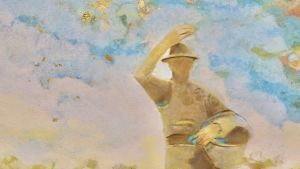
The sower is Jesus. With this image, we can see that he presents himself as one who does not impose himself, but rather offers himself. He does not attract us by conquering us, but by donating himself: he casts seeds. With patience and generosity, he spreads his Word, which is not a cage or a trap, but a seed which can bear fruit (Pope Francis)
Il seminatore è Gesù. Notiamo che, con questa immagine, Egli si presenta come uno che non si impone, ma si propone; non ci attira conquistandoci, ma donandosi: butta il seme. Egli sparge con pazienza e generosità la sua Parola, che non è una gabbia o una trappola, ma un seme che può portare frutto (Papa Francesco)
The Church desires to give thanks to the Most Holy Trinity for the "mystery of woman" and for every woman - for that which constitutes the eternal measure of her feminine dignity, for the "great works of God", which throughout human history have been accomplished in and through her (Mulieris Dignitatem n.31)
La Chiesa desidera ringraziare la Santissima Trinità per il «mistero della donna», e, per ogni donna - per ciò che costituisce l'eterna misura della sua dignità femminile, per le «grandi opere di Dio» che nella storia delle generazioni umane si sono compiute in lei e per mezzo di lei (Mulieris Dignitatem n.31)
Simon, a Pharisee and rich 'notable' of the city, holds a banquet in his house in honour of Jesus. Unexpectedly from the back of the room enters a guest who was neither invited nor expected […] (Pope Benedict)
Simone, fariseo e ricco “notabile” della città, tiene in casa sua un banchetto in onore di Gesù. Inaspettatamente dal fondo della sala entra un’ospite non invitata né prevista […] (Papa Benedetto)
God excludes no one […] God does not let himself be conditioned by our human prejudices (Pope Benedict)
Dio non esclude nessuno […] Dio non si lascia condizionare dai nostri pregiudizi (Papa Benedetto)
«The Russian mystics of the first centuries of the Church gave advice to their disciples, the young monks: in the moment of spiritual turmoil take refuge under the mantle of the holy Mother of God». Then «the West took this advice and made the first Marian antiphon “Sub tuum Praesidium”: under your cloak, in your custody, O Mother, we are sure there» (Pope Francis)
«I mistici russi dei primi secoli della Chiesa davano un consiglio ai loro discepoli, i giovani monaci: nel momento delle turbolenze spirituali rifugiatevi sotto il manto della santa Madre di Dio». Poi «l’occidente ha preso questo consiglio e ha fatto la prima antifona mariana “Sub tuum praesidium”: sotto il tuo mantello, sotto la tua custodia, o Madre, lì siamo sicuri» (Papa Francesco)
The Cross of Jesus is our one true hope! That is why the Church “exalts” the Holy Cross, and why we Christians bless ourselves with the sign of the cross. That is, we don’t exalt crosses, but the glorious Cross of Christ, the sign of God’s immense love, the sign of our salvation and path toward the Resurrection. This is our hope (Pope Francis)
La Croce di Gesù è la nostra unica vera speranza! Ecco perché la Chiesa “esalta” la santa Croce, ed ecco perché noi cristiani benediciamo con il segno della croce. Cioè, noi non esaltiamo le croci, ma la Croce gloriosa di Gesù, segno dell’amore immenso di Dio, segno della nostra salvezza e cammino verso la Risurrezione. E questa è la nostra speranza (Papa Francesco)
In the divine attitude justice is pervaded with mercy, whereas the human attitude is limited to justice. Jesus exhorts us to open ourselves with courage to the strength of forgiveness, because in life not everything can be resolved with justice. We know this (Pope Francis)








duevie.art
don Giuseppe Nespeca
Tel. 333-1329741
Disclaimer
Questo blog non rappresenta una testata giornalistica in quanto viene aggiornato senza alcuna periodicità. Non può pertanto considerarsi un prodotto editoriale ai sensi della legge N°62 del 07/03/2001.
Le immagini sono tratte da internet, ma se il loro uso violasse diritti d'autore, lo si comunichi all'autore del blog che provvederà alla loro pronta rimozione.
L'autore dichiara di non essere responsabile dei commenti lasciati nei post. Eventuali commenti dei lettori, lesivi dell'immagine o dell'onorabilità di persone terze, il cui contenuto fosse ritenuto non idoneo alla pubblicazione verranno insindacabilmente rimossi.