


don Giuseppe Nespeca
Giuseppe Nespeca è architetto e sacerdote. Cultore della Sacra scrittura è autore della raccolta "Due Fuochi due Vie - Religione e Fede, Vangeli e Tao"; coautore del libro "Dialogo e Solstizio".
Deemed an enemy and a danger

Dear Brothers and Sisters,
This Sunday’s Gospel ends with a particularly severe warning from Jesus, addressed to the chief priests and the elders of the people: “The kingdom of God will be taken away from you and given to a nation producing the fruits of it” (Mt 21:43). These are words that call to mind the great responsibility of those in every epoch who are called to work in the Lord’s vineyard, especially in roles of authority, and they press for a renewal of full fidelity to Christ.
He is “the very stone which the builders rejected” (cf. Mt 21:42), because they judged him to be hostile to the law and a danger to public order; but he himself, rejected and crucified, is risen, to become the “corner stone” on which the foundations of every human life and of the whole world may rest in total safety.
The truth of this is the subject of the Parable of the Unfaithful Tenants to whom a man entrusted his vineyard so that they might cultivate and harvest the produce. The owner of the vineyard symbolizes God himself, while the vineyard symbolizes his people, as well as the life he gives, so that with his grace and our hard work, we may do good. St Augustine comments: “God does also cultivate us... as a field, that he may make us better” (cf. Sermo 87, 1, 2: PL 38, 531). God has a project for his friends, but unfortunately the human response is often oriented to infidelity which is expressed in rejection. Pride and selfishness prevent us from recognizing and welcoming even God’s most precious gift: his Only-Begotten Son.
When, in fact, “he sent his son to them”, the Evangelist Matthew wrote, “[the tenants] took him and cast him out of the vineyard, and killed him” (Mt 21:37, 39). God puts himself in our hands, agrees to make himself an unfathomable mystery of weakness and manifests his omnipotence in his faithfulness to a plan of love which, in the end, also provides for the proper punishment of the wicked (cf. Mt 21:41).
Firmly anchored in faith to the cornerstone which is Christ, let us abide in him, like the branch that can bear no fruit unless it remains attached to the vine. The Church, the People of the New Covenant, is built only in him, for him and with him. On this the Servant of God Paul VI wrote: “The first benefit which We trust the Church will reap from a deepened self-awareness, is a renewed discovery of its vital bond of union with Christ. This is something which is perfectly well known, but it is supremely important and absolutely essential. It can never be sufficiently understood, meditated upon and preached” (Encyclical Ecclesiam Suam, 6 August 1964: AAS 56 [1964], 622).
Dear friends, the Lord is ever close and active in humanity’s history and accompanies us with the unique presence of his Angels, whom today the Church venerates as “Guardian Angels”, that is, ministers of the divine care for every human being. From the beginning until the hour of death, human life is surrounded by their constant protection. And the Angels encircle the august Queen of Victories, the Blessed Virgin Mary of the Rosary, who, on the first Sunday of October, at this very moment, receives the fervent supplication from the Shrine of Pompeii and from the whole world that evil may be defeated and God’s goodness revealed in its fullness.
[Pope Benedict, Angelus, 2 October 2011]
The stone rejected by the builders
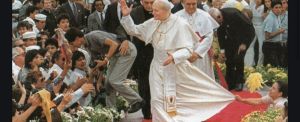
"The stone rejected ... has become cornerstone'
Psalm 117 [118], Lauds on Sunday of the Second Week
1. When a Christian, in unison with the voice of prayer in Israel, sings Psalm 117{118}, that we just heard, he feels within him a special thrill. In fact, he finds in this liturgical hymn two phrases that echo with a new meaning in the NT. The first is verse 22, "The stone rejected by the builders has become the corner-stone". The phrase is quoted by Jesus, who applies it to his mission of death and glory, after having told the parable of the murderous vinedressers (cf. Mt 21,42). The phrase is also recalled by Peter in the Acts of the Apostles: "This Jesus is the stone, rejected by you the builders, which has become the cornerstone. There is no salvation in anyone else nor is there any other name given to men under heaven by which we are to be saved" (Acts 4,11-12). St Cyril of Jerusalem comments: "We say the Lord Jesus Christ is only one because his sonship is one; only one we say so that you do not think that there is another ... In fact he called stone, not inanimate stone nor cut by human hands, but the cornerstone, because he who believes in him will not remain disappointed" (The Catecheses, English title of the Italian version of St Cyril's Catecheses, Le Catechesi, Rome, 1993, p. 312-313).
The second phrase that the NT takes from Psalm 117[118] is proclaimed by the crowd at the solemn Messianic entrance of Christ into Jersualem: "Blessed is he who comes in the name of the Lord!" (Mt 21,9; cf. Ps 117,26). The acclamation is framed by a Hosanna that takes up the Hebrew petition hoshiac na',"please, save us!"
2. The splendid Biblical hymn is placed at the heart of the small collection of psalms, 112[113] to 117[118], called the Passover Hallel, namely, the psalms of praise used in Hebrew worship for the Passover and the major solemnities of the liturgical year. The processional rite can be taken as the theme of Psalm 117[118] articulated with the chants by the soloist or choir, with the Holy City and its Temple as the background. A beautiful antiphon begins and ends the psalm: "Praise the Lord for he is good, his mercy endures forever" (verses 1 and 29).
The word "mercy" translates the Hebrew word hesed, that designates the generous fidelity of God towards the covenanted and friendly people. Three categories of people are told to praise this fidelity: all of Israel, the "house of Aaron", namely the priests, and those "who fear the Lord", a way of speaking that includes the faithful and the proselytes, namely, the members of other nations who desire to follow the law of the Lord (cf. verses 2-4).
3. The procession makes its way through the streets of Jerusalem, because the psalm speaks of the "tents of the righteous" (cf. v. 15). There is, however, a hymn of thanksgiving (cf. vv. 5-18) whose basic message is: Even when we are in anguish, we must keep high the torch of confidence, because the powerful hand of the Lord leads his faithful people to victory over evil and to salvation.
The sacred poet uses strong and vivid images; he compares the cruel adversaries to a swarm of bees or to a column of flames that advances turning everything to ashes (cf. v.12). There is the vehement reaction of the just person, sustained by the Lord. He repeats three times "In the name of the Lord I cut them off" where the Hebrew verb refers to an intervention that destroys evil (cf. vv.10.11.12). Behind all of it, indeed, there is the powerful right hand of God, namely, his effective intervention, and certainly not the weak and uncertain hand of man. For this reason the joy of the victory over evil leads to a vibrant profession of faith: "The Lord is my strength and my song, he has become my salvation" (v. 14).
4. The procession then arrives at the temple, at the "gates of justice" (v. 19), at the Holy Door of Zion. Here a second song of thanksgiving is sung, that begins with a dialogue between the congregation and the priests to be admitted to worship. "Open to me the gates of justice: I will enter to give thanks to the Lord", the soloist says in the name of the congregation in procession: "This is the gate of the Lord, the righteous shall enter through it" (v. 20), and others reply, probably the priests.
Once they enter, they begin the hymn of thanksgiving to the Lord, who in the Temple offers himself as the stable and secure "corner stone" on which to build the house of life (cf. Mt 7,24-25). A priestly blessing descends upon the faithful who have come into the temple to express their faith, to raise their prayer and to celebrate their worship.
5. The last scene that opens before our eyes is constituted by the joyful rite of sacred dances, accompanied by the festive waving of branches: "Bind the festal procession with branches, up to the horns of the altar" (v. 27). The liturgy is a joyful, festive celebration, expression of the entire life that praises the Lord. The rite of the branches brings to mind the Jewish Feast of Booths, observed in memory of the pilgrimage of Israel through the desert, a solemnity in which there was a procession with palm, myrtle and willow branches.
This rite evoked by the Psalm is proposed to the Christian in Jesus' entry into Jerusalem, celebrated in the liturgy of Palm Sunday. Christ is acclaimed as the "Son of David" (cf. Mt 21,9) by the crowd, who, "having come for the feast ... took branches of palms and went out to greet him shouting: Hosanna! Blessed is he who comes in the name of the Lord, the king of Israel" (Jn 12,12-13). At that festive celebration that is, however, the prelude to the hour of the Passion and Death of Jesus, the symbol of the cornerstone, proposed at the beginning, takes its full meaning, a glorious Easter meaning.
Psalm 117[118] encourages Christians to recognize in the Easter event of Jesus "the day that the Lord has made", on which "the stone rejected by the builders has become the cornerstone". With the psalm they can then sing with great thanksgiving: " The Lord is my strength and my song; he has become my salvation" (v. 14); "This is the day the Lord has made, let us rejoice and exult in it" (v. 24).
[Pope John Paul II, General Audience, 5 December 2001]
To warn the leaders
In today’s Gospel passage (cf. Mt 21:33-43) Jesus, foreseeing his passion and death, tells the parable of the murderous vintners, to admonish the chief priests and elders of the people who are about to take the wrong path. Indeed, they have bad intentions towards him and are seeking a way to eliminate him.
The allegorical story describes a landowner who, after having taken great care of his vineyard (cf. v. 33), had to depart and leave it in the hands of farmers. Then, at harvest time, he sends some servants to collect the fruit; but the tenants welcome the servants with a beating, and some even kill them. The householder sends other servants, more numerous, but they receive the same treatment (cf. vv. 34-36). The peak is reached when the landowner decides to send his son: the vinegrowers have no respect for him; on the contrary, they think that by eliminating him they can take over the vineyard, and so they kill him too (cf. vv. 37-39).
The image of the vineyard is clear: it represents the people whom the Lord has chosen and formed with such care; the servants sent by the landowner are the prophets, sent by God, while the son represents Jesus. And just as the prophets were rejected, so too Christ was rejected and killed.
At the end of the story, Jesus asks the leaders of the people: “When the owner of the vineyard comes, what will he do to those tenants?” (v. 40). And, caught up in the logic of the narrative, they deliver their own sentence: the householder, they say, will severely punish those wicked people and “let out the vineyard to other tenants who will give him the fruits in their seasons” (v. 41).
With this very harsh parable, Jesus confronts his interlocutors with their responsibility, and he does so with extreme clarity. But let us not think that this admonition applies only to those who rejected Jesus at that time. It applies to all times, including our own. Even today God awaits the fruits of his vineyard from those he has sent to work in it. All of us.
In any age, those who have authority, any authority, also in the Church, in the People of God, may be tempted to work in their own interests instead of those of God. And Jesus says that true authority is when one performs service; it is in serving, not exploiting others. The vineyard is the Lord’s, not ours. Authority is a service, and as such should be exercised for the good of all and for the dissemination of the Gospel. It is awful to see when people who have authority in the Church seek their own interests.
Saint Paul, in the second reading of today’s liturgy, tells us how to be good workers in the Lord’s vineyard: that which is true, noble, just, pure, lovely and honoured; that which is virtuous and praiseworthy, let all this be the daily object of our commitment (cf. Phil 4:8). I repeat: that which is true, noble, just, pure, lovely and honoured; that which is virtuous and praiseworthy, let all this be the daily object of our commitment. It is the attitude of authority and also of each one of us, because every one of us, even in a small, tiny way, has a certain authority. In this way we shall become a Church ever richer in the fruits of holiness; we shall give glory to the Father who loves us with infinite tenderness, to the Son who continues to give us salvation, and to the Spirit who opens our hearts and impels us towards the fullness of goodness.
Let us now turn to Mary Most Holy, spiritually united with the faithful gathered in the Shrine of Pompeii for the Supplication, and in the month of October let us renew our commitment to pray the Holy Rosary.
[Pope Francis, Angelus, 4 October 2020]
The only little-taught Jesus prayer
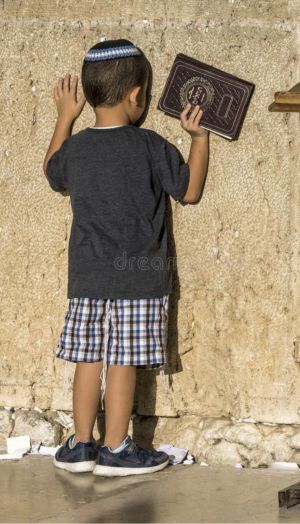
Scientists and Lowlies: abstract world and incarnation
(Lk 10:17-24)
Unlike the fruitless action of the Apostles [Lk 9 passim], the return of the new evangelizers is full of joy and results (vv. 17-20). Why?
The leaders looked at religiosity with purposes of interest. Theology professors were used to evaluating every comma starting from their own knowledge, ridiculous but opinionated - unrelated to events.
What remains tied to customs and usual protagonists does not make us dream, it is not amazing appearance and testimony of Elsewhere; takes away expressive richness from the Announcement and life.
The Lord rejoices in his own experience, which brings a non-epidermal joy and a teaching from the Spirit - about those who are well disposed, and able to understand the depths of the Kingdom, in common things.
In short, after a first moment of enthusiastic crowds, the Christ deepens the issues and finds himself all against, except God and the leasts: the weightlesses, but with a great desire to start from scratch.
Glimpse of the Mystery that lifts history - without making it a possession.
At first even Jesus was amazed by the refusal of those who considered themselves already satisfied and no longer expected anything that could overcome habits.
Then He understands, praises and blesses the Father's plan: the authentic Person is born from below, and possesses «the sense of neighborhood» (FT n.152).
The Creator is Relationship simple: He demystifies the idol of greatness.
The Eternal is not the master of creation: He is Refreshment that reassures us, because makes us feel complete and lovable; He looks for us, pays attention to the language of the heart.
He is the Tutor of the world, even of the uneducated - of the «infants» (v.21) spontaneously empty of arrogant spirit, that is, of those who do not remain closed in their sufficient belonging.
Thus the Father-Son relationship is communicated to the poor of God: those who are endowed with the attitude of Family members (v.22).
Insignificant and invisible without great external capacities, but who abandon themselves to the proposals of the provident life that Comes, like babies in the arms of their parents.
With a pietas’ Spirit that favors those who allow themselves to be filled with innate wisdom. The only reality that corresponds to us and does not present the "account": it does not proceed along the paths of functional thinking, of calculating initiative.
Sapience that transmits freshness in the willingness to personally receive welcome restore the Truth as a Gift, and the spontaneous enthusiasm itself, capable of realizing it.
A simple blessing prayer, for the simple - this one from Jesus (v.21) - which makes us grow in esteem, fits perfectly with our experience, and gets along well with ourselves.
It does not presuppose the energy of 'models', nor the aggressive power of “bigwigs”.
In the perspective of the Peace-Happiness [Shalom] to be announced, what had always seemed imperfections and defects become preparatory energies, which complete and fulfill us also spiritually.
And instead of only living with the “big” and external, one must live in communion even with the 'small' of oneself, or there is no amiability, no authentic life.
To internalize and live the message:
How do you feel when you hear yourself say: «You don't count»? Does it remain a humiliating contempt or do you consider it a great received Light, as Jesus did?
[Saturday 26th wk. in O.T. October 3, 2026]
The “jewel” of the Cry of Exultation

Dear Brothers and Sisters,
The Evangelists Matthew and Luke (cf. Mt 11:25-30 and Lk 10:21-22) have handed down to us a “jewel” of Jesus’ prayer that is often called the Cry of Exultation or the Cry of Messianic Exultation. It is a prayer of thanksgiving and praise, as we have heard. In the original Greek of the Gospels the word with which this jubilation begins and which expresses Jesus’ attitude in addressing the Father is exomologoumai, which is often translated with “I praise” (cf. Mt 11:25 and Lk 10:21). However, in the New Testament writings this term indicates mainly two things: the first is “to confess” fully — for example, John the Baptist asked those who went to him to be baptized to recognize their every sin (cf. Mt 3:6); the second thing is “to be in agreement”. Therefore, the words with which Jesus begins his prayer contain his full recognition of the Father’s action and at the same time, his being in total, conscious and joyful agreement with this way of acting, with the Father’s plan. The “Cry of Exultation” is the apex of a journey of prayer in which Jesus’ profound and close communion with the life of the Father in the Holy Spirit clearly emerges and his divine sonship is revealed.
Jesus addresses God by calling him “Father”. This word expresses Jesus’ awareness and certainty of being “the Son” in intimate and constant communion with him, and this is the central focus and source of every one of Jesus’ prayers. We see it clearly in the last part of the hymn which illuminates the entire text. Jesus said: “All things have been delivered to me by my Father; and no one knows who the Son is except the Father, or who the Father is except the Son and any one to whom the Son chooses to reveal him” (Lk 10:22). Jesus was therefore affirming that only “the Son” truly knows the Father.
All the knowledge that people have of each other — we all experience this in our human relationships — entails involvement, a certain inner bond between the one who knows and the one who is known, at a more or less profound level: we cannot know anyone without a communion of being. In the Cry of Exultation — as in all his prayers — Jesus shows that true knowledge of God presupposes communion with him. Only by being in communion with the other can I begin to know him; and so it is with God: only if I am in true contact, if I am in communion with him, can I also know him. True knowledge, therefore, is reserved to the “Son”, the Only Begotten One who is in the bosom of the Father since eternity (cf. Jn 1:18), in perfect unity with him. The Son alone truly knows God, since he is in an intimate communion of being; only the Son can truly reveal who God is.
The name “Father” is followed by a second title, “Lord of heaven and earth”. With these words, Jesus sums up faith in creation and echoes the first words of Sacred Scripture: “In the beginning God created the heavens and the earth” (Gen 1:1).
In praying, he recalls the great biblical narrative of the history of God’s love for man that begins with the act of creation. Jesus fits into this love story, he is its culmination and its fulfilment. Sacred Scripture is illumined through his experience of prayer and lives again in its fullest breadth: the proclamation of the mystery of God and the response of man transformed. Yet, through the expression: “Lord of heaven and earth”, we can also recognize that in Jesus, the Revealer of the Father, the possibility for man to reach God is reopened.
Let us now ask ourselves: to whom does the Son want to reveal God’s mysteries? At the beginning of the Hymn Jesus expresses his joy because the Father’s will is to keep these things hidden from the learned and the wise and to reveal them to little ones (cf. Lk 10:21). Thus in his prayer, Jesus manifests his communion with the Father’s decision to disclose his mysteries to the simple of heart: the Son’s will is one with the Father’s.
Divine revelation is not brought about in accordance with earthly logic, which holds that cultured and powerful people possess important knowledge and pass it on to simpler people, to little ones. God used a quite different approach: those to whom his communication was addressed were, precisely, “babes”. This is the Father’s will, and the Son shares it with him joyfully. The Catechism of the Catholic Church says: “His exclamation, ‘Yes, Father!’ expresses the depth of his heart, his adherence to the Father’s ‘good pleasure,’ echoing his mother’s ‘Fiat’ at the time of his conception and prefiguring what he will say to the Father in his agony. The whole prayer of Jesus is contained in this loving adherence of his human heart to the ‘mystery of the will’ of the Father (Eph 1:9)” (n. 2603).
The invocation that we address to God in the “Our Father” derives from this: “Thy will be done on earth as it is in heaven”: together with Christ and in Christ we too ask to enter into harmony with the Father’s will, thereby also becoming his children. Thus Jesus, in this “Cry of Exultation”, expresses his will to involve in his own filial knowledge of God all those whom the Father wishes to become sharers in it; and those who welcome this gift are the “little ones”.
But what does “being little” and simple mean? What is the “littleness” that opens man to filial intimacy with God so as to receive his will? What must the fundamental attitude of our prayer be? Let us look at “The Sermon on the Mount”, in which Jesus says: “Blessed are the pure in heart, for they shall see God” (Mt 5:8). It is purity of heart that permits us to recognize the face of God in Jesus Christ; it is having a simple heart like the heart of a child, free from the presumption of those who withdraw into themselves, thinking they have no need of anyone, not even God.
It is also interesting to notice the occasion on which Jesus breaks into this hymn to the Father. In Matthew’s Gospel narrative it is joyful because, in spite of opposition and rejection, there are “little ones” who accept his word and open themselves to the gift of faith in him. The “Cry of Exultation” is in fact preceded by the contrast between the praise of John the Baptist — one of the “little ones” who recognized God’s action in Jesus Christ (cf. Mt 11:2-19) — and the reprimand for the disbelief of the lake cities “where most of his mighty works had been performed” (cf. Mt 11:20-24).
Hence Matthew saw the Exultation in relation to the words with which Jesus noted the effectiveness of his word and action: “Go and tell John what you hear and see: the blind receive their sight and the lame walk, lepers are cleansed and the deaf hear, and the dead are raised up, and the poor have good news of the Gospel preached to them. And blessed is he who takes no offence at me” (Mt 11:4-6).
[Pope Benedict, General Audience 7 December 2011]
Full Revelation
1. In the previous catechesis, we went over, albeit briefly, the Old Testament testimonies that prepared us to welcome the full revelation, announced by Jesus Christ, of the truth of the mystery of the Fatherhood of God.
Indeed, Christ spoke many times of his Father, presenting his providence and merciful love in various ways.
But his teaching goes further. Let us listen again to the particularly solemn words, recorded by the evangelist Matthew (and paralleled by Luke): 'I bless you, O Father, Lord of heaven and earth, because you have kept these things hidden from the wise and the clever and revealed them to the simple . . ." and later: "Everything has been given to me by my Father, no one knows the Son except the Father, and no one knows the Father except the Son and he to whom the Son wishes to reveal him" (Mt 11:25. 27; cf. Lk 10:2. 11).
So for Jesus, God is not only "the Father of Israel, the Father of men", but "my Father"! "Mine": precisely for this reason the Jews wanted to kill Jesus, because "he called God his Father" (Jn 5:18). "His" in the most literal sense: He whom only the Son knows as Father, and by whom alone he is mutually known. We are now on the same ground from which the prologue of John's Gospel will later arise.
2. My Father' is the Father of Jesus Christ, he who is the origin of his being, of his messianic mission, of his teaching. The evangelist John has abundantly reported the messianic teaching that allows us to fathom in depth the mystery of God the Father and Jesus Christ, his only Son.
Jesus says: "Whoever believes in me does not believe in me, but in him who sent me" (John 12: 44). "I did not speak from me, but the Father who sent me, he himself commanded me what I should say and proclaim" (Jn 12:49). "Verily, verily, I say unto you, the Son of himself can do nothing except what he sees the Father do; what he does, the Son also does" (Jn 5:19). "For as the Father has life in himself, so he has granted the Son to have life in himself" (Jn 5:26). And finally: ". . the Father, who has life, has sent me, and I live for the Father" (Jn 6:57).
The Son lives for the Father first of all because he was begotten by him. There is a very close correlation between fatherhood and sonship precisely because of generation: "You are my Son; today I have begotten you" (Heb 1:5). When at Caesarea Philippi Simon Peter confesses: "You are the Christ, the Son of the living God", Jesus answers him: "Blessed are you . . . for neither flesh nor blood has revealed it to you, but my Father . . ." (Mt 16:16-17), for only "the Father knows the Son" just as only the "Son knows the Father" (Mt 11:27). Only the Son makes the Father known: the visible Son makes the invisible Father seen. "He who has seen me has seen the Father" (Jn 14:9).
3. A careful reading of the Gospels shows that Jesus lives and works in constant and fundamental reference to the Father. He often addresses him with the word full of filial love: "Abba"; even during the prayer in Gethsemane this same word returns to his lips (cf. Mk 14:36). When the disciples ask him to teach them to pray, he teaches them the "Our Father" (cf. Mt 6:9-13). After the resurrection, at the moment of leaving the earth he seems to refer once again to this prayer, when he says: "I ascend to my Father and your Father, my God and your God" (Jn 20, 17).
Thus through the Son (cf. Heb 1:2), God revealed Himself in the fullness of the mystery of His fatherhood. Only the Son could reveal this fullness of the mystery, because only "the Son knows the Father" (Mt 11:27). "God no one has ever seen him: it is the only Son, who is in the bosom of the Father, who has revealed him" (Jn 1:18).
4. Who is the Father? In the light of the definitive witness we have received through the Son, Jesus Christ, we have the full knowledge of faith that the Fatherhood of God belongs first of all to the fundamental mystery of God's intimate life, to the Trinitarian mystery. The Father is the one who eternally begets the Word, the Son consubstantial with him. In union with the Son, the Father eternally "breathes forth" the Holy Spirit, who is the love in which the Father and the Son mutually remain united (cf. Jn 14:10).
Thus the Father is in the Trinitarian mystery the "beginning-without-beginning". "The Father by none is made, nor created, nor begotten" (Quicumque symbol). He alone is the beginning of life, which God has in Himself. This life - that is, the very divinity - the Father possesses in absolute communion with the Son and the Holy Spirit, who are consubstantial with him.
Paul, an apostle of the mystery of Christ, falls in adoration and prayer "before the Father from whom all fatherhood in heaven and on earth takes its name" (Eph 3:15), the beginning and model.For there is "one God the Father of all, who is above all, who acts through all and is present in all" (Eph 4:6).
[Pope John Paul II, General Audience 23 October 1985]
Written in the heavens
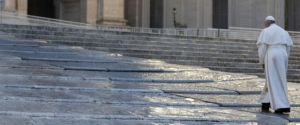
Today’s Gospel passage (cf. Lk 10:1-12, 17-20) presents Jesus who sends 72 disciples on mission, in addition to the 12 Apostles. The number 72 likely refers to all the nations. Indeed, in the Book of Genesis 72 different nations are mentioned (cf. 10:1-32). Thus, this conveyance prefigures the Church’s mission to proclaim the Gospel to all peoples. Jesus says to those disciples: “The harvest is plentiful, but the labourers are few; pray therefore the Lord of the harvest to send out labourers into his harvest!” (Lk 10:2).
This request by Jesus is always valid. We must always pray to the “Lord of the harvest”, namely, God the Father, that he send labourers into his field which is the world. And each of us must do so with an open heart, with a missionary attitude; our prayer must not be limited only to our needs, to our necessities: a prayer is truly Christian if it also has a universal dimension.
In sending out the 72 disciples, Jesus gives them precise instructions which express the characteristics of the mission. The first, as we have already seen, is: pray; the second: go; and then: carry no purse, no bag...; say, ‘Peace be to this house’ ... remain in the same house... do not go from house to house... heal the sick in it and say to them, ‘The kingdom of God has come near to you’”. And if they do not receive you, go out into the streets and take your leave (cf. vv. 2-10). These imperatives show that the mission is based on prayer; that it is itinerant: it is not idle; it is itinerant; that it requires separation and poverty; that it brings peace and healing, signs of the closeness of the Kingdom of God; that it is not proselytism but proclamation and witness; and that it also requires frankness and the evangelical freedom to leave while highlighting the responsibility of having rejected the message of salvation, but without condemnation and cursing.
If lived in these terms, the mission of the Church will be characterized by joy. And how does this passage end? The 72 “returned with joy” (cf. v. 17). It is not an ephemeral joy, which flows from the success of the mission; on the contrary, it is a joy rooted in the promise that — as Jesus says: “your names are written in heaven” (v. 20). With this expression he means inner joy, and the indestructible joy that is born out of the awareness of being called by God to follow his Son. That is, the joy of being his disciples. Today, for example, each of us, here in the Square, can think of the name we received on the day of Baptism: that name is “written in heaven”, in the heart of God the Father. And it is the joy of his gift that makes a missionary of every disciple, those who walk in the company of the Lord Jesus, who learn from him to unsparingly expend themselves for others, free of oneself and of one’s possessions.
Together let us invoke the maternal protection of Mary Most Holy, that she support the mission of Christ’s disciples in every place; the mission to proclaim to all that God loves us, wants to save us, and calls us to join his Kingdom.
[Pope Francis, Angelus 7 July 2019]
Little Servants, Angels and Tiny ones: Vocation and flowering
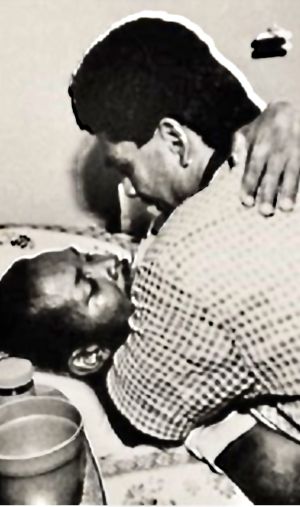
Face to the Person, Father in relationship
(Mt 18:1-5.10.12-14)
The Gospel passage dictates the line of the entire ecclesial discourse of Mt (18:1-35).
The key term in vv.1-5 is «paidìon» - diminutive of «pàis» - which stands for the shop boy, the little one between 9 and 11 years of age, who also at home had to provide immediately, after every command received.
Jesus crushes the ambitions of greatness of his craving disciples, who would like to seize him and put him on a leash.
The model of the Kingdom is not the commander, but the servant; the one who does not act with a common mindset, out of a spirit of self-interest or promotion.
It is not a sin to desire to give meaning to one's life, but there is a reversal: 'greater' is the 'lesser' - he who does not covet pre-eminent places, remains humble in feeling, condition, and position.
The overt importance is a deception: the true “greats” of the church community do not belong to the world of the perfectly installed, who come forward, who know who to lean on, and thus know to impose themselves.
From v.6 the author speaks of «mikròi»: the voiceless. They are those who have no weight.
These “little ones” are «tiny ones» who have heard of the spirit of communion that exists between sisters and brothers of Faith…
They would like to experience the benefit of this new Way without mortifying pretensions, a solicitous way to recovery...
They try to begin, but sometimes they shy away from it, fatigued by improper situations.
Jesus displaces us: the 'outcasts' are the only ones who make us shout for joy, and they are worth more than the whole flock of habituals (vv.12-14).
The Recall also applies to us: it is precisely in the isolated, lost and seemingly most insignificant people that the flowering of large spontaneous content is particularly lively..
In them lurks the Sap that regenerates the world, and the Newness of God is revealed [who also wants to guide us today in our vocational and social exodus].
In short: fixed ideas condition life and do not allow the inner organism - psychic and spiritual - to feed on transparent (unprejudiced) truths and sincere feelings, which would like to give us breath.
Freeing oneself from the usual ways of going about things, dissolving prejudices and schematic beliefs, would allow one to break the chains that hold back the faculties, opening up other views.
In fact, the solution to the complications that suffocate the soul and the experience of the fullness of being we seek is not external, but inherent in our own question.
In biblical language, the figure of the Angel (v.10) expresses God Himself in dialogue with the personal soul; His Presence in us, in situation - and here our paradoxical fruitfulness.
The Angel is our own eminent and total Self, who knows how to retrieve opposites, who grasps secrets, suggests, guides; he knows our unique versatility, and in this way knows where to go.
Thus, authentic life is shrouded in Mystery, even in the step-by-step.
Our existence is not all in the circle of visible achievements, apparent affirmations, and material, trivial things, more or less at hand.
Life if complete introduces us into the Calling by Name that leads to fulfilment and blossoming, opens us to the Relationship that counts.
To internalize and live the message:
Why do you think Jesus speaks of Angels in heaven, and Joy in reference to the one sheep?
[Holy Guardian Angels, October 2]
Servants and little ones, from the great Vocation and flourishing
Face to face, Father in relationship
(Mt 18:1-5.10.12-14)
The Gospel passage dictates the line of the entire ecclesial discourse of Mt (18:1-35). The key term of vv.1-5 is paidìon - diminutive of pàis - which stands for the shop boy, the little boy of about 9-11 years of age, who even at home had to take off after every order received.
Jesus crushes the ambitions of greatness of his covetous apostles, who want to seize him for themselves. Yes, they always tail him, but they do not follow him - on the contrary, they would like to seize him and put him on a leash.
The model of the Kingdom is not the commander, but the servant; the one who does not act with a current mentality, out of a spirit of self-interest or promotion.
It is not a sin to desire to give meaning to one's life, but there is a reversal: greater is the lesser - he who does not covet pre-eminent places, remains humble in feeling, condition and position.
Even in spiritual life, he who wants to get there immediately or does good (not out of gratuitousness but only) to secure future positions, scatters his Pearl. The overt importance is a deception: the true 'greats' of the church community do not belong to the world of the 'best', the perfectly installed in society - the quick-witted who come forward and know how to impose themselves.
From v.6 the author speaks of mikròi: the voiceless. They are those who carry no weight, perhaps those who cannot even get accepted into some exclusive 'spiritual' pressure group or clique.
These 'little ones' are those who sooner or later - despite prior exclusion - find their way to the community of the faithful in Christ. They have heard of the spirit of collaboration, synergy and communion that exists between sisters and brothers of Faith. They would like to experience the benefit of this new way of coexistence without humiliating, recovery-oriented demands...
They try to start, but sometimes they shy away from it. Fatigued by the rigmarole, unable to have a personal relationship with the Lord (because in front of them and on every occasion they find themselves with the usual hedge of managers to whom they should pay duties and submit), often irritated by the empty vanity of those who not infrequently turn out to be unscrupulous and very dangerous people.
Jesus does not go easy on them: the excluded are the only ones who make them shout for joy, and they are worth much more than the whole flock of those included (vv.12-14).
The reminder also applies to us: it is precisely in the isolated, lost and seemingly most insignificant people that the great spontaneous content flourishes.
In them lurks the sap that regenerates the world, and the Newness of God is revealed (who also wants to guide us today in our vocational and social exodus).
Simplicity and upheaval: Rebirth without mortification
It is not a question of finding excuses to justify laziness in the spiritual search and exodus: small, spontaneous and natural - but rich inside - one becomes, lowering oneself (Mt 18:3-4 Greek text) from one's character.
It is the art of making life dense and complex, multifaceted and vast, then simplifying, without dispersing. Often all it takes is to look differently or to look elsewhere, to find a thousand unexpected and self-regenerating outlets.
In fact, the solution to the complications that suffocate the soul and the experience of the fullness of being we seek, is not external, but inherent in our own question. It not infrequently belongs to pre-understandings rather than reality or the tide that comes, which simply wants to drag us into the territory of growth.
We are obnubilated by thoughts. But there is an innate knowledge that watches over our uniqueness and does not intoxicate the soul. There is a secret time and space that inhabits us: they resonate with the Gospels. There is no need to "catch up" with all time.
If we surrender to such a wise instinct, comforted by the Word, the Core of Being will come forth with its primordial energies - recreating the earth like the mythical Child of the World: a little Jesus - within and without us. Thus the disaster of the Coronavirus is also annihilated, and we are resurrected: each in his own way (which is not 'his' in the sense of arbitrariness).
And when, in particular cases, we are able to welcome the happenings as a Call to come out of our cages so that we perceive the elsewhere, we will find an intimate result that unravels and re-launches the personal way and the possibilities of exchanging new, non-stereotypical gifts - without even experiencing the tiredness and subtle dissatisfactions we know.
Projected totally into external problems, we overload our mind and spirit with expectations induced by the (once) in vogue cultural paradigm to which we are accustomed. Thus existence quickly becomes conformist again, stagnant in the usual means and goals, devoid of new peaks, authentic relationships and unimagined vitality.The diktat of the objective induced by the roles we imagined we had acquired exhausts us, and the instituted idea of perfection sterilises the humus - it impoverishes us, putting actual needs in brackets; thus making ways of being prevail, consolidated roles already expressed, drying up relationships (making environments murky again).
Fixed ideas condition life and do not allow the inner organism - psychic and spiritual - to feed on transparent (unprejudiced) truths and sincere feelings, which would like to give us breath.
Freeing ourselves from the usual ways of going about things, from apodictic judgments and convictions, would allow us to break the chains that hold back the luminous and rainbow faculties, as well as the ability to correspond to the unrepeatable vocation, opening up other views.
The 'emptiness' advocated by the Tao resembles only in earshot the 'emptiness' of other (decidedly more depersonalising) Eastern wisdom because the teaching of the Way does not lose the sense of uniqueness and exceptionality of the individual seed. On the contrary, it fully respects its propulsive vocation remaining oneself, not only in spite of - but because of - the obligatory abyss we have experienced.
By minimising, on the other hand, the intentions of re-editing the old maquillage - and all non-epochal conditioning (which does not call us, nor would we like to) - we clear the soul of its ballast. We bring out its exceptional specific weight and unrepeatable character, to lighten it and fill it only with what is needed to activate the new paths that await us.
The slowing down and letting go that Lao Tse advocates does not lead to the insignificant flattening of differences, but to dilating the sacred and natural times of wise action, and appreciating its value.
Stages and goals that do not correspond to us will not provide fulfilment, forcing us to amplify our relationships only to cover the problem with ourselves, or even the couple, group, movement, community and work environment.
While we wish to clothe (and not depose) with a sense of permanence the character of before - a cliché that does not correspond to us - we turn in circles, loading ourselves with outsized expectations and useless stress (which makes no room for the love with which we meet ourselves, things, sisters and brothers, the many events).
Natural Wisdom, even bitter events, and the Bible, remind us that the face... every path, name and rhythm is ours alone. So too is the synthesis: each one is called to write his or her own unrepeatable glad tidings for the benefit of the woman and man of all times (Jn 20:30-31).
Please note: Fraternity is not levelling:
"But there are many other things that Jesus did, which if they were written down one by one, I think that not even the world itself could contain the books that should be written" (Jn 21:25).
That would be Happiness in the new eminent Beauty, from discomfort.
In biblical language, the figure of the Angel (v.10) expresses God Himself in dialogue with the personal soul; His Presence in us, in situation - and here our paradoxical fruitfulness.
The Angel is our own eminent and total Self, who knows how to retrieve opposites, who grasps secrets, suggests, guides; he knows our fruitful versatility, and in this way knows where to go.
In short, authentic life is shrouded in Mystery, even in the step-by-step.
The existence that distinguishes us is not all in the circle of visible achievements, of apparent affirmations, and of material, trivial things, more or less at hand.
Complete Life introduces us into the Calling by Name that leads to fulfilment and blossoming, opens us up to the Relationship that counts.
To internalise and live the message:
Why do you think Jesus speaks of Angels in heaven, and Joy in reference to the one sheep?
Why does Jesus speak of Joy in reference to the one sheep?
Value of imperfect uniqueness
(Mt 18:12-14)
The change of course and destiny of the Kingdom. A God in search of the lost and unequal, to expand our life. Christology of the Pallium, power of caresses, joyful energy (in dissociation).
Says the Tao Tê Ching (x): "Preserve the One by dwelling in the two souls: are you able to keep them apart?"
Even in the spiritual journey, Jesus is careful not to propose a dictated or planned universalism, as if his were an ideal model, "for the purpose of homogenisation" [Fratelli Tutti n.100].
The type of Communion that the Lord proposes to us does not aim at "a one-dimensional uniformity that seeks to eliminate all differences and traditions in a superficial search for unity".
Because "the future is not 'monochromatic' but if we have the courage it is possible to look at it in the variety and diversity of the contributions that each one can make. How much our human family needs to learn to live together in harmony and peace without us all being equal!" [from an Address to Young People in Tokyo, November 2019].Although the piety and hope of the representatives of official religiosity was founded on a structure of human, ethnic, cultural securities and a vision of the Mystery consolidated by a great tradition, Jesus crumbles all predictability.
In the Son, God is revealed no longer as exclusive property, but as the Power of Love that forgives the marginalised and lost: saving and creating, liberating. And through the disciples, he unfolds his Face that recovers, breaks down the usual barriers, calls out to miserable multitudes.
It seems an impossible utopia to realise in concrete terms (today of the health and global crisis), but it is the sense of the handover to the Church, called to become an incessant prod of the Infinite and ferment of an alternative world, for integral human development:
"Let us dream as one humanity, as wayfarers made of the same human flesh, as children of this same earth that hosts us all, each with the richness of his faith or convictions, each with his own voice, all brothers!" [FT No.8].
Through an absurd question (rhetorically formulated) Jesus wants to awaken the conscience of the 'just': there is a counterpart of us that supposes of itself, very dangerous, because it leads to exclusion, to abandonment.
Instead, inexhaustible Love seeks. And it finds the imperfect and restless.
The swamp of stagnant energy that is generated by accentuating boundaries does not make anyone grow: it locks in the usual positions and leaves everyone to make do or lose themselves. Out of self-interested disinterest - that impoverishes everyone.
This causes the creative virtues to fall into despair.
It plunges those outside the circle of the elect - those who had nothing superior - into despair. Indeed, the evangelists portray them as utterly incapable of beaming with human joy at the progress of others.
Calculating, acting and conforming - the fundamentalist or overly sophisticated and disembodied leaders use religion as a weapon.
Instead, God is at the antipodes of the fake sterilised - or disembodied thinking - and seeking one who wanders shakily, easily becomes disoriented, loses his way.
Sinful yet true, therefore more disposed to genuine Love. This is why the Father is searching for the insufficient.
The person who is so limpid and spontaneous - even if weak - hides his best part and vocational richness precisely behind his apparently detestable sides. Perhaps that he himself does not appreciate.
This is the principle of Redemption that astounds and makes interesting our often distracted paths, conducted by trial and error - in Faith, however, generating self-esteem, credit, fullness and joy.
The commitment of the purifier and the impetus of the reformer are 'trades' that seemingly oppose each other, but are easy... and typical of those who think that the things to be challenged and changed are always outside themselves.
For example, in mechanisms, in general rules, in the legal framework, in worldviews, in formal (or histrionic) aspects instead of the craft of the concrete particular good; and so on.
They seem to be excuses not to look inside oneself and get involved, not to meet one's deepest states in all aspects and not only in the guidelines. And to recover or cheer up individuals who are concretely lost, sad, in all dark and difficult sides.
But God is at the antipodes of sterilised mannerists or fake idealists, and in search of the insufficient: he who wanders and loses his way. Sinful yet true, therefore more disposed to genuine Love.
The transparent and spontaneous person - even if weak - hides his best part and vocational richness precisely behind the apparently detestable aspects (perhaps which he himself does not appreciate).
So let us ask for solutions to the mysterious, unpredictable interpersonal energies that come into play; from within things.
Without interfering with or opposing ideas of the past or future that we do not see. Rather by possessing its soul, its spontaneous drug.
This is the principle of Salvation that astounds and makes interesting our paths [often distracted, led by trial and error] - ultimately generating self-esteem, credit and joy.
The idea that the Most High is a notary or prince of a forum, and makes a clear distinction between righteous and transgressors, is caricature.
After all, a life of the saved is not one's own making, nor is it exclusive possession or private ownership - which turns into duplicity.
It is not the squeamish attitude, nor the cerebral attitude, that unites one to Him. The Father does not blandish suppliant friendships, nor does He have outside interests.
He rejoices with everyone, and it is need that draws Him to us. So let us not be afraid to let Him find us and bring us back (cf. Lk 15:5) to His house, which is our house.
If there is a loss, there will be a finding, and this is not a loss for anyone - except for the envious enemies of freedom (v.10).For the LORD is not pleased with marginalisation, nor does he intend to extinguish the smoking lamp.
Jesus does not come to point the finger at the bad times, but to make up for them, by leveraging intimate involvement. Invincible force of faithfulness.
This is the style of a Church with a Sacred Heart, lovable, elevated and blessed.
[What attracts one to participate and express oneself is to feel understood, restored to full dignity - not condemned].
Carlo Carretto said: 'It is by feeling loved, not criticised, that man begins his journey of transformation'.
As the encyclical Fratelli Tutti emphasises again:
Jesus - our Engine and Motive - "had an open heart, which made the dramas of others its own" (n.84).
And he adds as an example of our great Tradition:
"People can develop certain attitudes which they present as moral values: fortitude, sobriety, industriousness and other virtues. But in order to properly direct the acts [...] we must also consider to what extent they realise a dynamism of openness and union [...] Otherwise we will only have appearances'.
"St Bonaventure explained that the other virtues, without charity, strictly speaking do not fulfil the commandments as God intends them" (n.91).
In sects or one-sidedly inspired groups, human and spiritual riches are deposited in a secluded place, so they grow old and debased.
In the assemblies of the sons, on the other hand, they are shared: they grow and communicate; by multiplying, they green up, for universal benefit.
To internalise and live the message:
What attracts you to the Church? In comparisons with the top of the class, do you feel judged or adequate?
Do you feel the Love that saves, even if you remain uncertain?
As Friends

I mentioned earlier that today the liturgy invites us to remember the holy archangels Michael, Gabriel and Raphael. Each of them, as we read in the Bible, carried out a particular mission in the history of salvation. Dear brothers and sisters, let us confidently invoke their help, as well as the protection of the Guardian Angels, whose feast we will celebrate in a few days, on 2 October. The invisible presence of these blessed spirits is of great help and comfort to us: they walk at our side and protect us in all circumstances, they defend us from dangers and we can turn to them at any time. Many saints had a relationship of true friendship with the Angels, and there are numerous episodes that testify to their assistance on particular occasions. Angels are sent by God "to serve those who will inherit salvation", as the Letter to the Hebrews (1:14) reminds us, and are therefore of valuable assistance to us on our earthly pilgrimage to the heavenly homeland.
[Pope Benedict, Castel Gandolfo, greeting 29 September 2008]
However, the king was not discouraged and sent his servants out to seek other guests to fill his banquet hall. Thus the aspect of the refusal of those initially invited caused the invitation to be extended to all [Pope Benedict]
Il re però non si scoraggia e invia i suoi servi a cercare altri commensali per riempire la sala del suo banchetto. Così il rifiuto dei primi ha come effetto l’estensione dell’invito a tutti [Papa Benedetto]
Faith in God opens before us the horizon of a sure hope, one which does not disappoint; it indicates a solid foundation on which to base one’s life without fear; it demands a faith-filled surrender into the hands of the Love which sustains the world (Pope Benedict)
La fede in Dio apre all’uomo l’orizzonte di una speranza certa che non delude; indica un solido fondamento sul quale poggiare, senza paura, la propria vita; richiede l’abbandono, pieno di fiducia, nelle mani dell’Amore che sostiene il mondo (Papa Benedetto)
The "new evangelization" faces this challenge. It must work to ensure that people recover the awareness that in Christ evil can be conquered with good (Pope John Paul II)
La “nuova evangelizzazione” affronta questa sfida. Essa deve impegnarsi perché tutti gli uomini recuperino la consapevolezza che in Cristo è possibile vincere il male con il bene (Papa Giovanni Paolo II)
Many saints experienced the night of faith and God’s silence — when we knock and God does not respond — and these saints were persevering (Pope Francis)
Tanti santi e sante hanno sperimentato la notte della fede e il silenzio di Dio – quando noi bussiamo e Dio non risponde – e questi santi sono stati perseveranti (Papa Francesco)
In some passages of Scripture it seems to be first and foremost Jesus’ prayer, his intimacy with the Father, that governs everything (Pope Francis)
In qualche pagina della Scrittura sembra essere anzitutto la preghiera di Gesù, la sua intimità con il Padre, a governare tutto (Papa Francesco)
It is necessary to know how to be silent, to create spaces of solitude or, better still, of meeting reserved for intimacy with the Lord. It is necessary to know how to contemplate. Today's man feels a great need not to limit himself to pure material concerns, and instead to supplement his technical culture with superior and detoxifying inputs from the world of the spirit [John Paul II]
Occorre saper fare silenzio, creare spazi di solitudine o, meglio, di incontro riservato ad un’intimità col Signore. Occorre saper contemplare. L’uomo d’oggi sente molto il bisogno di non limitarsi alle pure preoccupazioni materiali, e di integrare invece la propria cultura tecnica con superiori e disintossicanti apporti provenienti dal mondo dello spirito [Giovanni Paolo II]
This can only take place on the basis of an intimate encounter with God, an encounter which has become a communion of will, even affecting my feelings (Pope Benedict)
Questo può realizzarsi solo a partire dall'intimo incontro con Dio, un incontro che è diventato comunione di volontà arrivando fino a toccare il sentimento (Papa Benedetto)
He is “the very stone which the builders rejected” (cf. Mt 21:42), because they judged him to be hostile to the law and a danger to public order [Pope Benedict]
Egli è “la pietra che i costruttori hanno scartato” (cfr Mt 21,42), perché l’hanno giudicato nemico della legge e pericoloso per l’ordine pubblico [Papa Benedetto]








duevie.art
don Giuseppe Nespeca
Tel. 333-1329741
Disclaimer
Questo blog non rappresenta una testata giornalistica in quanto viene aggiornato senza alcuna periodicità. Non può pertanto considerarsi un prodotto editoriale ai sensi della legge N°62 del 07/03/2001.
Le immagini sono tratte da internet, ma se il loro uso violasse diritti d'autore, lo si comunichi all'autore del blog che provvederà alla loro pronta rimozione.
L'autore dichiara di non essere responsabile dei commenti lasciati nei post. Eventuali commenti dei lettori, lesivi dell'immagine o dell'onorabilità di persone terze, il cui contenuto fosse ritenuto non idoneo alla pubblicazione verranno insindacabilmente rimossi.