Feb 25, 2026 Written by 

Crumbs

The Gospel proposed by today's liturgy sets before us three important existential dimensions, which Francis held in high regard.

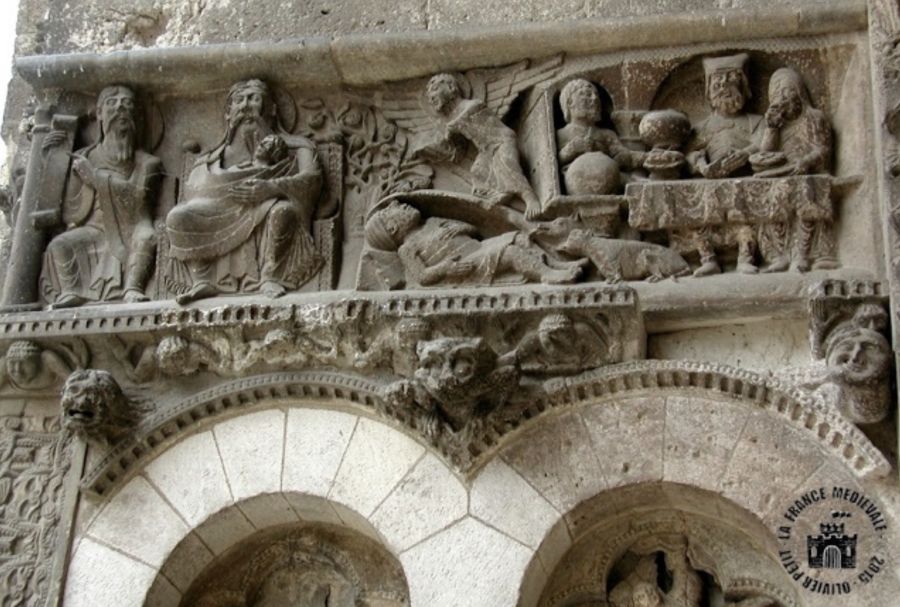
The parable of poor Lazarus and the immoderate rich man evokes the diligent use of riches, care for the needy, and is a call to conversion, since after death, individual judgement will be irreversible.

Francis, the Poor Man of Assisi, always had this Gospel picture before his eyes, which led him to better direct his heart towards God and the poor.

The Sources attest, from the very beginning of his journey:

"(Francis) had always benefited the needy, but from that moment on he firmly resolved never to refuse alms to the poor who asked for them for the love of God, and on the contrary to make spontaneous and generous donations.

To every poor man who asked for charity, when Francis was away from home, he provided with money; if he lacked it, he gave him his hat or belt, so as not to send him back empty-handed.

Or if he lacked these, he would withdraw to the sidelines, take off his shirt and secretly give it to the indigent, begging him to take it for the love of God.

He bought utensils that the churches needed and secretly gave them to poor priests' (FF 1403).

And again, the Legend of the Three Companions informs us:

"Divine Grace had profoundly changed him. Although he did not wear a religious habit, he longed to find himself unknown in some city, where he could barter his clothes for the rags of a beggar and try begging for the love of God himself' (FF 1405).


The Minim knew that what a poor man received was addressed to Christ himself and that a single glass of water given to the small and marginalised was offered to Jesus.

His encounter with the leper in the plain of Assisi had turned bitterness into true sweetness in him.

Francis feared divine judgement and wanted to respond to what the Word of God demanded of him.


Clare herself, from a young age, took food from her body to give to the poor, maintaining this attitude of special care and concern for the needy - all her life.

Both made an evangelical, intelligent use of the goods at their disposal in the service of the Kingdom of God.


«Son, remember that you received your goods in your life, and Lazarus likewise the evils; but now here he is comforted, you on the other hand are tormented» (Lk 16:25).


The Poor Man always exhorted his brothers to be merciful to all forms of indigence, because judgement does not grant full life to those who do not acknowledge it to their brothers.


Thursday 2nd wk. in Lent  (Lk 16:19-31)

520 Last modified on Wednesday, 25 February 2026 05:29
Teresa Girolami

Teresa Girolami è laureata in Materie letterarie e Teologia. Ha pubblicato vari testi, fra cui: "Pellegrinaggio del cuore" (Ed. Piemme); "I Fiammiferi di Maria - La Madre di Dio in prosa e poesia"; "Tenerezza Scalza - Natura di donna"; co-autrice di "Dialogo e Solstizio".

Email This email address is being protected from spambots. You need JavaScript enabled to view it.
"Beloved" of God (cf. Lk 1: 28). Origen observes that no such title had ever been given to a human being, and that it is unparalleled in all of Sacred Scripture (cf. In Lucam 6: 7). It is a title expressed in passive form, but this "passivity" of Mary, who has always been and is for ever "loved" by the Lord, implies her free consent, her personal and original response:  in being loved, in receiving the gift of God, Mary is fully active, because she accepts with personal generosity the wave of God's love poured out upon her [Pope Benedict]
"Amata" da Dio (cfr Lc 1,28). Origene osserva che mai un simile titolo fu rivolto ad essere umano, e che esso non trova riscontro in tutta la Sacra Scrittura (cfr In Lucam 6,7). E’ un titolo espresso in forma passiva, ma questa "passività" di Maria, che da sempre e per sempre è l’"amata" dal Signore, implica il suo libero consenso, la sua personale e originale risposta: nell’essere amata, nel ricevere il dono di Dio, Maria è pienamente attiva, perché accoglie con personale disponibilità l’onda dell’amore di Dio che si riversa in lei [Papa Benedetto]
Jesus seems to say to the accusers: Is not this woman, for all her sin, above all a confirmation of your own transgressions, of your "male" injustice, your misdeeds? (John Paul II, Mulieris Dignitatem n.14)
Gesù sembra dire agli accusatori: questa donna con tutto il suo peccato non è forse anche, e prima di tutto, una conferma delle vostre trasgressioni, della vostra ingiustizia «maschile», dei vostri abusi? (Giovanni Paolo II, Mulieris Dignitatem n.14)
Here we can experience first hand that God is life and gives life, yet takes on the tragedy of death (Pope Francis)
Qui tocchiamo con mano che Dio è vita e dona vita, ma si fa carico del dramma della morte (Papa Francesco)
The people thought that Jesus was a prophet. This was not wrong, but it does not suffice; it is inadequate. In fact, it was a matter of delving deep, of recognizing the uniqueness of the person of Jesus of Nazareth and his newness. This is how it still is today: many people draw near to Jesus, as it were, from the outside (Pope Benedict)
La gente pensa che Gesù sia un profeta. Questo non è falso, ma non basta; è inadeguato. Si tratta, in effetti, di andare in profondità, di riconoscere la singolarità della persona di Gesù di Nazaret, la sua novità. Anche oggi è così: molti accostano Gesù, per così dire, dall’esterno (Papa Benedetto)
Because of this unique understanding, Jesus can present himself as the One who revealsr the Father with a knowledge that is the fruit of an intimate and mysterious reciprocity (John Paul II)
In forza di questa singolare intesa, Gesù può presentarsi come il rivelatore del Padre, con una conoscenza che è frutto di un'intima e misteriosa reciprocità (Giovanni Paolo II)
Yes, all the "miracles, wonders and signs" of Christ are in function of the revelation of him as Messiah, of him as the Son of God: of him who alone has the power to free man from sin and death. Of him who is truly the Savior of the world (John Paul II)
Sì, tutti i “miracoli, prodigi e segni” di Cristo sono in funzione della rivelazione di lui come Messia, di lui come Figlio di Dio: di lui che, solo, ha il potere di liberare l’uomo dal peccato e dalla morte. Di lui che veramente è il Salvatore del mondo (Giovanni Paolo II)

Due Fuochi due Vie - Vol. 1 Due Fuochi due Vie - Vol. 2 Due Fuochi due Vie - Vol. 3 Due Fuochi due Vie - Vol. 4 Due Fuochi due Vie - Vol. 5 Dialogo e Solstizio I fiammiferi di Maria

duevie.art

don Giuseppe Nespeca

Tel. 333-1329741


Disclaimer

Questo blog non rappresenta una testata giornalistica in quanto viene aggiornato senza alcuna periodicità. Non può pertanto considerarsi un prodotto editoriale ai sensi della legge N°62 del 07/03/2001.
Le immagini sono tratte da internet, ma se il loro uso violasse diritti d'autore, lo si comunichi all'autore del blog che provvederà alla loro pronta rimozione.
L'autore dichiara di non essere responsabile dei commenti lasciati nei post. Eventuali commenti dei lettori, lesivi dell'immagine o dell'onorabilità di persone terze, il cui contenuto fosse ritenuto non idoneo alla pubblicazione verranno insindacabilmente rimossi.






