Apr 6, 2026 Written by 

Mirror of rebirth

Today's passage from the Johannine Gospel highlights Jesus' dialogue with Nicodemus.

The latter represented the group of Jews who sensed the value of the novelty of the young Rabbi's teaching - yet did not understand it, because it was distant from tradition.

The theme posed is rebirth from above: "from water and the Spirit" (Jn 3:5). Reminder of Baptism in Christ.

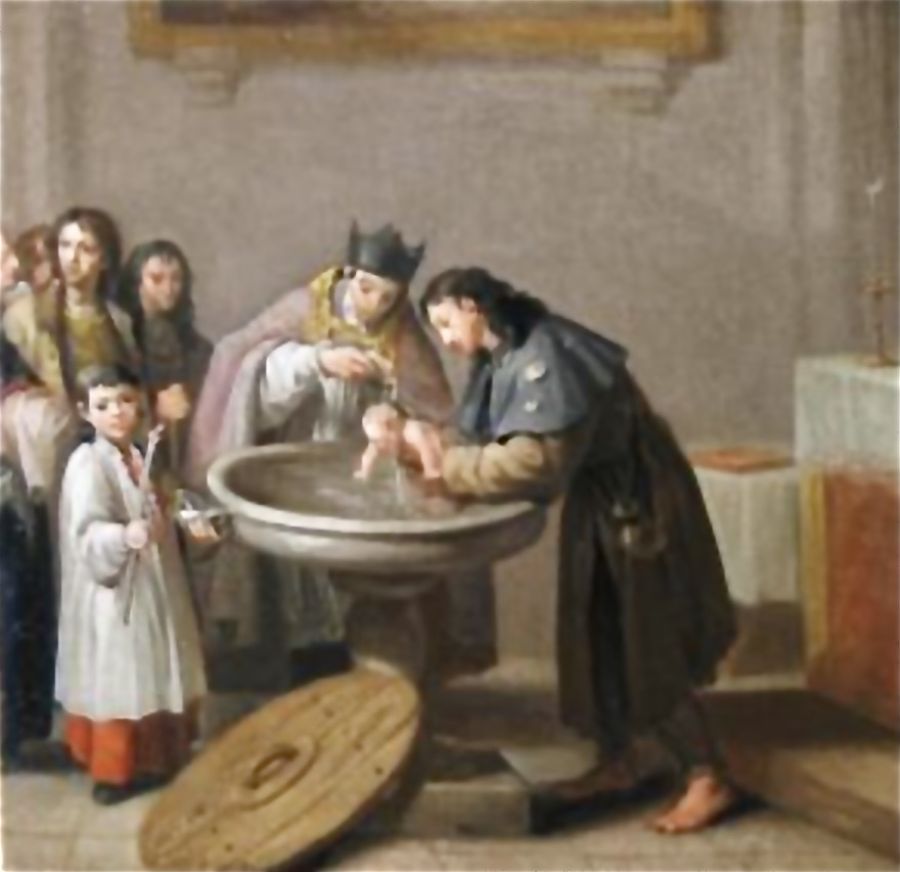
The Sources explain in detail when Francis was brought to the baptismal font:

"His mother had called him John, when he was born again of water and the Holy Spirit, and from a son of wrath he had become a son of Grace" (FF 583).

Francis so loved the Spirit of God, the Source of all transformation, that he appointed him Minister General of the Order: under his aegis he would certainly produce shoots of Grace.

The theme posed in the Gospel is precisely rebirth from Above, from the Holy Spirit.

Clare herself, in the Papal Bull "Clara Claris praeclara" was outlined with a profile of spiritual novelty, of a new Woman reborn from above.

In the document we discern all the traits that distinguished her as a soul invaded by the Holy Spirit.

"O Clare, endowed with so many prerogatives of clarity! You were, indeed, clear before your conversion, clearer in your change of life, luminous in your cloistered life, shining finally with most vivid light after the course of your present existence!

From Clare there sprang forth for the world a clear mirror of example" (FF 3282).

"She truly shone while living in the world, but she shone most vividly in religious life; she shone as a ray in her father's house, but in the cloister she radiated like a sun.

She shone in life, but after death she shines radiantly; she was clear on earth, but in heaven she shines with immense radiance' (FF 3283).

Looking at her story, one understands what it means to be reborn from above!

Indeed, in the Letter to the Faithful written by Francis, we read:

«And as long as they do such things and persevere in them to the end, there shall rest upon them the Spirit of the Lord, and he shall make his habitation and dwelling place. And they will be children of the heavenly Father, whose works they do, and they are spouses, brothers and mothers of our Lord Jesus.

We are spouses, when the faithful soul is united to Jesus Christ through the action of the Holy Spirit.

And we are brothers, when we do the will of his Father, who is in heaven. We are mothers when we carry him in our heart and body through love and a pure and sincere conscience, and generate him through holy activity, which must shine out as an example to others» (FF 200).

Thus, Francis lived what his own 'seedling' embodied: the rebirth from water and the Spirit in an eloquent manner.


«Marvel not, for I said unto thee, Ye must be born from above» (Jn 3:7).


Tuesday, 2nd wk. in Easter  (Jn 3:7-15)

91 Last modified on Monday, 06 April 2026 06:37
Teresa Girolami

Teresa Girolami è laureata in Materie letterarie e Teologia. Ha pubblicato vari testi, fra cui: "Pellegrinaggio del cuore" (Ed. Piemme); "I Fiammiferi di Maria - La Madre di Dio in prosa e poesia"; "Tenerezza Scalza - Natura di donna"; co-autrice di "Dialogo e Solstizio".

Email This email address is being protected from spambots. You need JavaScript enabled to view it.
Thus, paradoxically, from a sign of condemnation, death and failure, the Cross becomes a sign of redemption, life and victory, through faith, the fruits of salvation can be gathered (Pope Benedict)
Così la Croce, paradossalmente, da segno di condanna, di morte, di fallimento, diventa segno di redenzione, di vita, di vittoria, in cui, con sguardo di fede, si possono scorgere i frutti della salvezza (Papa Benedetto)
[Nicodemus] felt the fascination of this Rabbi, so different from the others, but could not manage to rid himself of the conditioning of his environment that was hostile to Jesus, and stood irresolute on the threshold of faith (Pope Benedict)
[Nicodemo] avverte il fascino di questo Rabbì così diverso dagli altri, ma non riesce a sottrarsi ai condizionamenti dell’ambiente contrario a Gesù e resta titubante sulla soglia della fede (Papa Benedetto)
Those wounds that, in the beginning were an obstacle for Thomas’s faith, being a sign of Jesus’ apparent failure, those same wounds have become in his encounter with the Risen One, signs of a victorious love. These wounds that Christ has received for love of us help us to understand who God is and to repeat: “My Lord and my God!” Only a God who loves us to the extent of taking upon himself our wounds and our pain, especially innocent suffering, is worthy of faith (Pope Benedict)
Quelle piaghe, che per Tommaso erano dapprima un ostacolo alla fede, perché segni dell’apparente fallimento di Gesù; quelle stesse piaghe sono diventate, nell’incontro con il Risorto, prove di un amore vittorioso. Queste piaghe che Cristo ha contratto per amore nostro ci aiutano a capire chi è Dio e a ripetere anche noi: “Mio Signore e mio Dio”. Solo un Dio che ci ama fino a prendere su di sé le nostre ferite e il nostro dolore, soprattutto quello innocente, è degno di fede (Papa Benedetto)
We see that the disciples are still closed in their thinking […] How does Jesus answer? He answers by broadening their horizons […] and he confers upon them the task of bearing witness to him all over the world, transcending the cultural and religious confines within which they were accustomed to think and live (Pope Benedict)
Vediamo che i discepoli sono ancora chiusi nella loro visione […] E come risponde Gesù? Risponde aprendo i loro orizzonti […] e conferisce loro l’incarico di testimoniarlo in tutto il mondo oltrepassando i confini culturali e religiosi entro cui erano abituati a pensare e a vivere (Papa Benedetto)
The Fathers made a very significant commentary on this singular task. This is what they say: for a fish, created for water, it is fatal to be taken out of the sea, to be removed from its vital element to serve as human food. But in the mission of a fisher of men, the reverse is true. We are living in alienation, in the salt waters of suffering and death; in a sea of darkness without light. The net of the Gospel pulls us out of the waters of death and brings us into the splendour of God’s light, into true life (Pope Benedict)
I Padri […] dicono così: per il pesce, creato per l’acqua, è mortale essere tirato fuori dal mare. Esso viene sottratto al suo elemento vitale per servire di nutrimento all’uomo. Ma nella missione del pescatore di uomini avviene il contrario. Noi uomini viviamo alienati, nelle acque salate della sofferenza e della morte; in un mare di oscurità senza luce. La rete del Vangelo ci tira fuori dalle acque della morte e ci porta nello splendore della luce di Dio, nella vera vita (Papa Benedetto)

Due Fuochi due Vie - Vol. 1 Due Fuochi due Vie - Vol. 2 Due Fuochi due Vie - Vol. 3 Due Fuochi due Vie - Vol. 4 Due Fuochi due Vie - Vol. 5 Dialogo e Solstizio I fiammiferi di Maria

duevie.art

don Giuseppe Nespeca

Tel. 333-1329741


Disclaimer

Questo blog non rappresenta una testata giornalistica in quanto viene aggiornato senza alcuna periodicità. Non può pertanto considerarsi un prodotto editoriale ai sensi della legge N°62 del 07/03/2001.
Le immagini sono tratte da internet, ma se il loro uso violasse diritti d'autore, lo si comunichi all'autore del blog che provvederà alla loro pronta rimozione.
L'autore dichiara di non essere responsabile dei commenti lasciati nei post. Eventuali commenti dei lettori, lesivi dell'immagine o dell'onorabilità di persone terze, il cui contenuto fosse ritenuto non idoneo alla pubblicazione verranno insindacabilmente rimossi.






