Feb 27, 2026 Written by 

Feast of Compassion. The Great Helper

Chapter fifteen of Luke is known for its parables of Mercy.

Before the Pharisees and scribes who murmur because he is close to publicans and sinners, Jesus responds with effective parables whose foundation is:

do not reject, but go forth to raise up.

Wherever there is pity for man's lost condition, there Christ rises again.


Francis in his young existence had encountered the paternal and maternal compassion of the Lord.

After a life spent in merry bandits and a bit of debauchery, he was thunderstruck by the Father of Mercies or, as he called him, the Great Helmsman.

Touched by Grace, after his evident change of mentality, before the Crucifix of San Damiano his vocation-mission was revealed to him.

He renounced everything, even his earthly father, to be free to go where the Father in heaven sent him.

The waste of his youthful years translated him into boundless generosity towards lepers and the poor.

The Blessing Embrace of the Almighty had imprinted him with a more solid and precious human and spiritual character.

All his life he wept for his sins, thinking of the Passion of Jesus Christ, who died and rose again for all his lost children.

In the Sources ('Vita seconda' by his biographer Celano) we find a moving passage:

"Once he heard that a sick friar wanted to eat some grapes. He accompanied him to a vineyard and, sitting under a vine, to infuse him with courage, he himself began to eat first' (FF 762).

Mercy for the misfortunes of others is the Franciscan foundation of the spiritual journey.

And again:

"He used to say that it is the duty of the superior, a father and not a tyrant, to prevent the occasion of guilt and not to allow those to fall who would then find it difficult to get up again, once they have fallen.

Oh, how worthy of compassion is our foolishness!

Not only do we not lift or support the weak, but we sometimes push them to fall.

We judge it of no importance to take away from the Supreme Shepherd a sheep, for whom on the Cross he uttered a loud cry with tears.

But quite differently didst thou, holy father, prefer to amend the errant and not to lose them!

[...] the oil and the wine, the rod and the staff, the zeal and the indulgence, the burning and the anointing, the prison and the womb, everything has its time.

All these things require the God of vengeance and the Father of mercies: but he prefers mercy to sacrifice' (FF 763).


Clare herself, a loving mother, had received a generous heart full of compassion, especially towards her needy sisters.

The Sources, through the Rule, attest that as the leader of the community, the First Plant of Francis did not allow herself to be imprisoned by the law, but unmistakable Charity reigned over all.

We read in fact:

"[The abbess] console the afflicted. May she still be the last refuge of the afflicted so that, should the remedies of health fail in her, the disease of despair may not prevail in the sick" (FF 2778).


Francis and Clare, transformed by the Father's mercy, treasured the gift they had received and poured it out freely to all creatures. Never caged by the immovability of codes, they were witnesses of that singular welcome that recovers those who have erred and reintroduces them into the new life of the risen.

"Where there is mercy and discretion,

there is neither superfluity nor harshness" (FF 177).


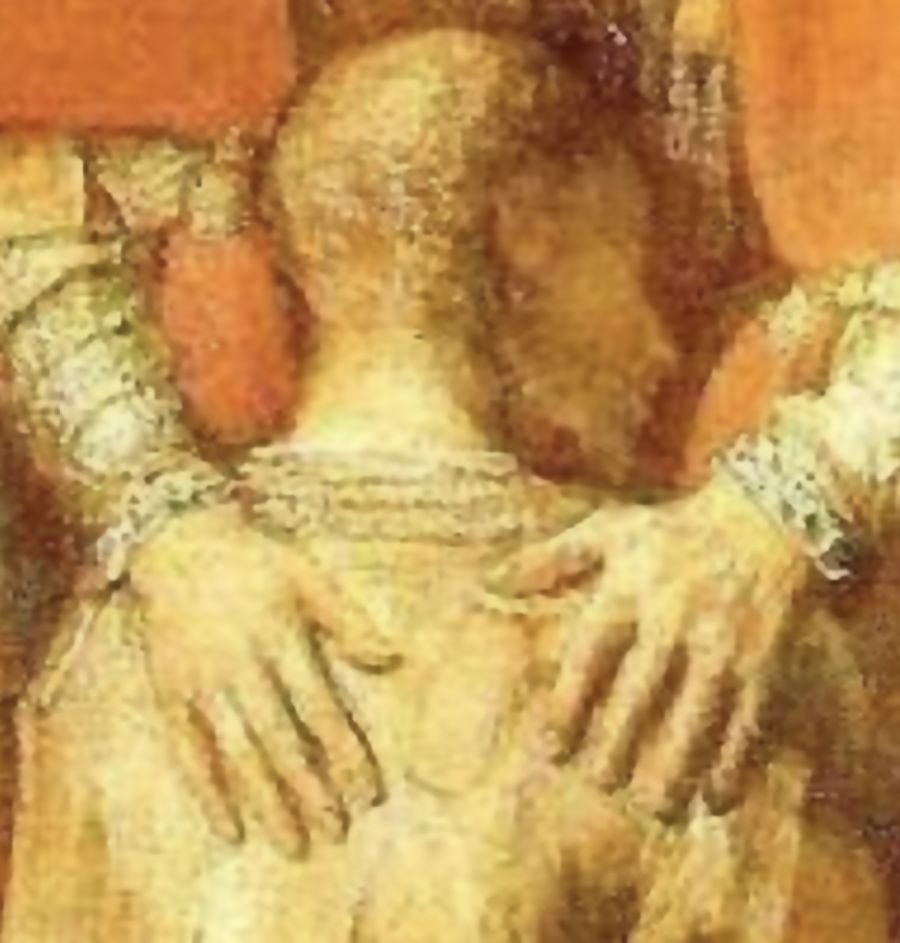
«While he was still a long way off, his father saw him, and had compassion, and ran to his neck and super kissed him» (Lk 15:20)


Saturday 2nd wk. in Lent  (Lk 15:1-3.11-32)

87 Last modified on Friday, 27 February 2026 03:15
Teresa Girolami

Teresa Girolami è laureata in Materie letterarie e Teologia. Ha pubblicato vari testi, fra cui: "Pellegrinaggio del cuore" (Ed. Piemme); "I Fiammiferi di Maria - La Madre di Dio in prosa e poesia"; "Tenerezza Scalza - Natura di donna"; co-autrice di "Dialogo e Solstizio".

Email This email address is being protected from spambots. You need JavaScript enabled to view it.
The mystery of ‘home-coming’ wonderfully expresses the encounter between the Father and humanity, between mercy and misery, in a circle of love that touches not only the son who was lost, but is extended to all (Pope John Paul II)
Il mistero del ‘ritorno-a-casa’ esprime mirabilmente l’incontro tra il Padre e l’umanità, tra la misericordia e la miseria, in un circolo d’amore che non riguarda solo il figlio perduto, ma si estende a tutti (Papa Giovanni Paolo II)
The image of the vineyard is clear: it represents the people whom the Lord has chosen and formed with such care; the servants sent by the landowner are the prophets, sent by God, while the son represents Jesus. And just as the prophets were rejected, so too Christ was rejected and killed (Pope Francis)
L’immagine della vigna è chiara: rappresenta il popolo che il Signore si è scelto e ha formato con tanta cura; i servi mandati dal padrone sono i profeti, inviati da Dio, mentre il figlio è figura di Gesù. E come furono rifiutati i profeti, così anche il Cristo è stato respinto e ucciso (Papa Francesco)
‘Lazarus’ means ‘God helps’. Lazarus, who is lying at the gate, is a living reminder to the rich man to remember God, but the rich man does not receive that reminder. Hence, he will be condemned not because of his wealth, but for being incapable of feeling compassion for Lazarus and for not coming to his aid. In the second part of the parable, we again meet Lazarus and the rich man after their death (vv. 22-31). In the hereafter the situation is reversed [Pope Francis]
“Lazzaro” significa “Dio aiuta”. Lazzaro, che giace davanti alla porta, è un richiamo vivente al ricco per ricordarsi di Dio, ma il ricco non accoglie tale richiamo. Sarà condannato pertanto non per le sue ricchezze, ma per essere stato incapace di sentire compassione per Lazzaro e di soccorrerlo. Nella seconda parte della parabola, ritroviamo Lazzaro e il ricco dopo la loro morte (vv. 22-31). Nell’al di là la situazione si è rovesciata [Papa Francesco]
Brothers and sisters, a frequent flaw of those in authority, whether civil or ecclesiastic authority, is that of demanding of others things — even righteous things — that they do not, however, put into practise in the first person. They live a double life. Jesus says: “They bind heavy burdens, hard to bear, and lay them on men’s shoulders; but they themselves will not move them with their finger (v.4). This attitude sets a bad example of authority, which should instead derive its primary strength precisely from setting a good example. Authority arises from a good example, so as to help others to practise what is right and proper, sustaining them in the trials that they meet on the right path. Authority is a help, but if it is wrongly exercised, it becomes oppressive; it does not allow people to grow, and creates a climate of distrust and hostility, and also leads to corruption (Pope Francis)
Fratelli e sorelle, un difetto frequente in quanti hanno un’autorità, sia autorità civile sia ecclesiastica, è quello di esigere dagli altri cose, anche giuste, che però loro non mettono in pratica in prima persona. Fanno la doppia vita. Dice Gesù: «Legano infatti fardelli pesanti e difficili da portare e li pongono sulle spalle della gente, ma essi non vogliono muoverli neppure con un dito» (v.4). Questo atteggiamento è un cattivo esercizio dell’autorità, che invece dovrebbe avere la sua prima forza proprio dal buon esempio. L’autorità nasce dal buon esempio, per aiutare gli altri a praticare ciò che è giusto e doveroso, sostenendoli nelle prove che si incontrano sulla via del bene. L’autorità è un aiuto, ma se viene esercitata male, diventa oppressiva, non lascia crescere le persone e crea un clima di sfiducia e di ostilità, e porta anche alla corruzione (Papa Francesco)

Due Fuochi due Vie - Vol. 1 Due Fuochi due Vie - Vol. 2 Due Fuochi due Vie - Vol. 3 Due Fuochi due Vie - Vol. 4 Due Fuochi due Vie - Vol. 5 Dialogo e Solstizio I fiammiferi di Maria

duevie.art

don Giuseppe Nespeca

Tel. 333-1329741


Disclaimer

Questo blog non rappresenta una testata giornalistica in quanto viene aggiornato senza alcuna periodicità. Non può pertanto considerarsi un prodotto editoriale ai sensi della legge N°62 del 07/03/2001.
Le immagini sono tratte da internet, ma se il loro uso violasse diritti d'autore, lo si comunichi all'autore del blog che provvederà alla loro pronta rimozione.
L'autore dichiara di non essere responsabile dei commenti lasciati nei post. Eventuali commenti dei lettori, lesivi dell'immagine o dell'onorabilità di persone terze, il cui contenuto fosse ritenuto non idoneo alla pubblicazione verranno insindacabilmente rimossi.






