Dec 21, 2025 Written by 

Contrasting Presentation: scrutinizing what is not being studied

(Mal 3:1-4   Heb 2:14-18   Lk 2:22-40)


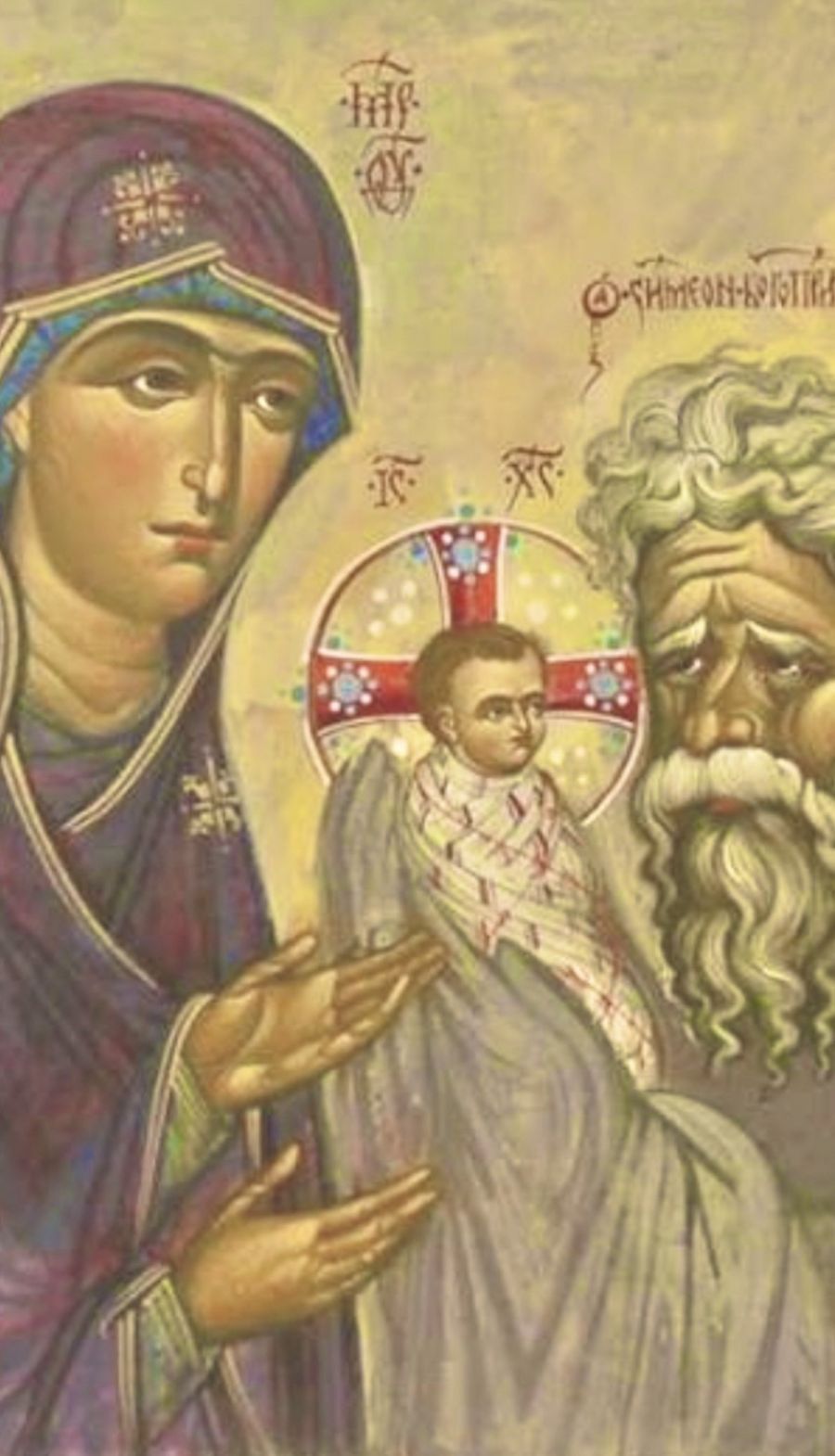
The Lk’s Gospel passage narrates the surprising response of the Father to the prophecy of the last of the minor prophets (Mal 3,1-4).

An eloquent and peremptory manifestation of the power of the Israel’s God and the submission of those who did not fulfill the Law was expected.

Everyone imagined witnessing the triumphal entry of a boss surrounded by military leaders or angelic hosts (Mal 3:1).

Commander who would subjugate the pagan peoples, brought their goods to the ‘holy city’, guaranteed many slaves, and imposed observance.

Jesus?  Here he is yes in the Temple, but defenceless and accompanied by insignificant people.

No one notices them, although at all hours the sacred place was swarming with visitors.

So it’s not enough to be a devoted person to realize the presence of the Lord. But how to break through the wall of contrary appearances?

With the help of particularly sensitive people, who want to tell us something, because they are more able to understand the Unknown.

They are those who do not set their own intentions, current dreams, habitual expectations against the creative Design of the Most High - only demanding help from God to achieve them.

Here then rise Simeon and Anna, men and women from both inside and outside the Temple, who attempt to block the small domestic procession [Lk 2,28.38 Greek text].

The Holy Family must embark on a completely different Way - which will lead it to unforeseen growth.

Nobody should follow up legalist conventions based on culturally calibrated purisms and rites of social passage, which circumvent and block the evolutionary mechanisms brought about by surprises.

Women and men animated by the Spirit break in like ‘strangers’: they always try to prevent the "same" useless rite: it claimed to transform and reduce into son of Abraham the One who had been announced as the Son of God.

If the goal is the triumph of life, history must not prevail over Revelation.  Uniqueness that manifests itself in what is happening and is proposed even dimly, now.

The ‘unveiling’ is here; not something to conquer, nor a race for “excellence”. It’s the Present that opens an arc of full existence.

Thus in Mary: the Mother, figure of that more sensitive and original remnant of Israel - compared to all the people of expectations, still sterile.

The repetitive world, therefore content with itself but now without new momentum, is challenged by a contrast (vv. 34-35).

It’s the reversal that shatters the outcome that everyone had in mind.


In the figure of «the innocent, glory of his people», resides a Light that illuminates everyone (v.32).

Spirit of childhood and simple immediacy that becomes the «redemption of Jerusalem» (v.38), that is, of the institution.

It’s another Story, an unsuspected ‘time of the soul’... that have turned the ancient root into a sapling. And the Jesse trunk in new sprout (Is 11: 1).

Young Gift, without our knowledge. But that recovers the great Desires of each - instead of the “compliant” and reduced ways, which even today in the time of the crisis lose us without posing.


[Presentation of the Lord, February 2]


[Octave of Christmas, Liturgy of December 29]

296 Last modified on Monday, 29 December 2025 12:01
don Giuseppe Nespeca

Giuseppe Nespeca è architetto e sacerdote. Cultore della Sacra scrittura è autore della raccolta "Due Fuochi due Vie - Religione e Fede, Vangeli e Tao"; coautore del libro "Dialogo e Solstizio".

Salt, in the cultures of the Middle East, calls to mind several values such as the Covenant, solidarity, life and wisdom. Light is the first work of God the Creator and is a source of life; the word of God is compared to light (Pope Benedict)
Il sale, nella cultura mediorientale, evoca diversi valori quali l’alleanza, la solidarietà, la vita e la sapienza. La luce è la prima opera di Dio Creatore ed è fonte della vita; la stessa Parola di Dio è paragonata alla luce (Papa Benedetto)
Even after his failure even in Nazareth (vv.1-6) - his heralds gladly confused the Servant [who was educating them] with the victorious, sighed, respected and glorious Messiah…
Ancora dopo il suo fallimento persino a Nazareth (vv.1-6) - i suoi banditori hanno ben volentieri confuso il Servo [che li stava educando] col Messia vincitore, sospirato, rispettato e glorioso…
During more than 40 years of his reign, Herod Antipas had created a class of functionaries and a system of privileged people who had in their hands the government, the tax authorities, the economy, the justice, every aspect of civil and police life, and his command covered the territory extensively…
Durante più di 40 anni di regno, Erode Antipa aveva creato una classe di funzionari e un sistema di privilegiati che avevano in pugno il governo, il fisco, l’economia, la giustizia, ogni aspetto della vita civile e di polizia, e il suo comando copriva capillarmente il territorio…
Familiarity at the human level makes it difficult to go beyond this in order to be open to the divine dimension. That this son of a carpenter was the Son of God was hard for them to believe. Jesus actually takes as an example the experience of the prophets of Israel, who in their own homeland were an object of contempt, and identifies himself with them (Pope Benedict)
La familiarità sul piano umano rende difficile andare al di là e aprirsi alla dimensione divina. Che questo Figlio di un falegname sia Figlio di Dio è difficile crederlo per loro. Gesù stesso porta come esempio l’esperienza dei profeti d’Israele, che proprio nella loro patria erano stati oggetto di disprezzo, e si identifica con essi (Papa Benedetto)
These two episodes — a healing and a resurrection — share one core: faith. The message is clear, and it can be summed up in one question: do we believe that Jesus can heal us and can raise us from the dead? The entire Gospel is written in the light of this faith: Jesus is risen, He has conquered death, and by his victory we too will rise again. This faith, which for the first Christians was sure, can tarnish and become uncertain… (Pope Francis)
These two episodes — a healing and a resurrection — share one core: faith. The message is clear, and it can be summed up in one question: do we believe that Jesus can heal us and can raise us from the dead? (Pope Francis)
Some medieval theologians explained: first God, the Creator, creates the universe, creates the heavens, the earth, the living. He creates. The work of creation. But creation does not end: He continuously supports what He has created, He works to support what He has created so that it goes forward (Pope Francis)
Alcuni teologi medievali spiegavano: prima Dio, il Creatore, crea l’universo, crea i cieli, la terra, i viventi. Lui crea. Il lavoro di creazione. Però la creazione non finisce: Lui continuamente sostiene quello che ha creato, opera per sostenere quello che ha creato perché vada avanti (Papa Francesco)

Due Fuochi due Vie - Vol. 1 Due Fuochi due Vie - Vol. 2 Due Fuochi due Vie - Vol. 3 Due Fuochi due Vie - Vol. 4 Due Fuochi due Vie - Vol. 5 Dialogo e Solstizio I fiammiferi di Maria

duevie.art

don Giuseppe Nespeca

Tel. 333-1329741


Disclaimer

Questo blog non rappresenta una testata giornalistica in quanto viene aggiornato senza alcuna periodicità. Non può pertanto considerarsi un prodotto editoriale ai sensi della legge N°62 del 07/03/2001.
Le immagini sono tratte da internet, ma se il loro uso violasse diritti d'autore, lo si comunichi all'autore del blog che provvederà alla loro pronta rimozione.
L'autore dichiara di non essere responsabile dei commenti lasciati nei post. Eventuali commenti dei lettori, lesivi dell'immagine o dell'onorabilità di persone terze, il cui contenuto fosse ritenuto non idoneo alla pubblicazione verranno insindacabilmente rimossi.






