


don Giuseppe Nespeca
Giuseppe Nespeca è architetto e sacerdote. Cultore della Sacra scrittura è autore della raccolta "Due Fuochi due Vie - Religione e Fede, Vangeli e Tao"; coautore del libro "Dialogo e Solstizio".
18th Sunday in Ordinary Time (Year A) [2 August 2016]
First Reading from the Book of the Prophet Isaiah (55:1–3)
We have reached the end of the second book of Isaiah, which is entirely focused on the end of the Exile and the return to the Promised Land, and is therefore called ‘the book of the consolation of Israel’. Chapter 54 heralds the long-awaited return, and this chapter specifies the spirit in which we are to return. Four major themes are evoked. The first theme is the gratuitous nature of God’s gifts: ‘Come, buy without paying’. Sometimes, it is precisely this gratuitousness that is the hardest to accept. We tend to think of merits and dignity that must be regained in order to stand before God, whilst mercy bends down to repentant sinners. Isaiah declares: ‘For my thoughts are not your thoughts, nor are your ways my ways. As the heavens are higher than the earth, so are my ways higher than your ways’ (55:8–9). Voltaire used to say: “God made man in his own image, and man has done him a fine job of it.” He was right, because we sometimes imagine a God with the same feelings as our own – one who takes revenge and punishes – whereas in the Bible, God always shows such an abundance that is entirely free and generous that we might say that in God’s supermarket, everything is always free. But if everything is free, can we do as we please? Certainly not, because if we are touched by God’s love, our hearts change and we begin to resemble him. In a society founded more on commerce than on service, Christians must nurture the kingdom of gratuitousness, for if we stray from the path of gratuitousness, we are far from God’s ways. The second theme is the struggle against idolatry, a temptation that constantly resurfaces. Only God holds the keys to our happiness and freedom, and with Him, everything is given. We simply need to trust. The third theme is listening and trust – ‘Give ear and you shall live’ ‘Give ear and come to me; listen and you shall live’ (55:3). We lend an ear to so much commercial advertising; why, then, does this message from Isaiah – spoken in God’s name and marked by gratuitousness – fail to convince us? The way of gratuitousness stands above our ways of calculation and ‘quid pro quo’. Fourth theme: God’s faithfulness to the Covenant, another key theme in the sermons of Second Isaiah: the exiles feared they would be abandoned by God forever, yet His love is entirely gratuitous and unconditional, and He never calls His Covenant into question; indeed, He renews it at every moment.
Responsorial Psalm (144/145)
Psalm 144/145 is an alphabetic psalm of praise for the Covenant. This Sunday’s first reading speaks of the gratuitousness and abundance of God’s gifts; this psalm says nothing other than this! It is an alphabetic, acrostic psalm: it has as many verses as there are letters in the Hebrew alphabet, with each verse beginning with a different letter of the alphabet. This style of composition has a specific, consistent purpose: to express to God the believers’ gratitude for the gift of the Covenant. It is therefore no surprise to find in this psalm a reference to all aspects of the Covenant: the extraordinary discovery of a God who is both almighty and close to humankind. The Book of Wisdom made this clear: ‘You, Lord, who possess power, judge with gentleness; you rule us with great forbearance, for when you wish, you can use your power’ (12:16–18). Even before the Book of Wisdom, other Old Testament texts had powerfully proclaimed God’s greatness and goodness. At the outset, verse 8 of the psalm echoes God’s revelation to Moses on Mount Sinai: ‘The Lord, a God merciful and gracious, slow to anger and abounding in love and faithfulness’ (Ex 34:6); the burning bush: Exodus 3:1–6 presents a twofold revelation: God reveals himself to Moses in the burning bush whilst he was tending the flock of Jethro, his father-in-law, the priest of Midian (cf. Exodus 3:7). He always reveals himself to be compassionate and merciful = literally ‘a heart open to our miseries’, who takes the side of those in distress. Moses, who had previously veiled his face, realises that he need not be afraid. ‘My people’ is a reference to the Covenant with the people dating back to Abraham. Just as God had seen the misery of Abraham, an elderly man without children, so He has seen the misery of His people. In conclusion, this psalm, like the account of the Exodus, is important for the faith of Israel and therefore for our own: it reveals the dual nature of God as both the Wholly Other and the Wholly Near. He is the Wholly Other, to whom one approaches only with awe and reverence, and at the same time the Wholly Near, who sees the misery of his people and raises up a liberator. In the verses chosen from Psalm 144/145 for this Sunday, the emphasis is placed on this tenderness of God, a conviction that forever nourishes the faith of the Jewish people and our own, just as it filled the heart of Jesus of Nazareth.
Second Reading from the Letter of Saint Paul the Apostle to the Romans (8:35, 37–39)
Nothing can ever separate us from the love of God: this statement brings to a close Chapter 8, which we have been reading for several weeks, in which Paul marvels at God’s love. In Chapter 5 he had said: ‘The love of God has been poured into our hearts through the Holy Spirit’ (Rom 5:5). Here he gives free rein to the exultation that fills the hearts of believers when they realise God’s work on their behalf: ‘God, who did not spare his own Son, but handed him over for us all’ (Rom 8:32). From now on, no one can break the covenant so closely bound between God and us. As the first Eucharistic Prayer of Reconciliation states, ‘with your arms outstretched on the cross, you have drawn between heaven and earth the indelible sign of the covenant’. From now on, every attempt at separation is doomed to failure. Paul takes up one of the major themes of Scripture: the very stake of the lives of the children of Adam is to remain attached to God, without allowing themselves to be separated from him by the Tempter. In the wilderness, Jesus faced the onslaught of the Tempter, who tempted him with power, ease and honours. Peter himself tempted Jesus to flee from the inevitable persecution. But nothing—neither hunger nor the mirages of success—could separate the Son from the Father. In turn, Paul and the other apostles draw from the Spirit of Christ the strength to remain grafted onto him. Paul offers us here a great profession of faith: ‘For I am convinced that neither death nor life… nor anything else will ever be able to separate us from the love of God, which is in Christ Jesus our Lord’ (Rom 8:38–39). This is not pride, but the certainty of faith: Paul does not for a moment consider that the credit for this faithfulness lies with him. When he states, ‘In all these things we are more than conquerors through him who loved us’, the key word is ‘through’ him. His declaration resembles that of the prophet Isaiah concerning the Servant of God: ‘The Lord God helps me; therefore I shall not be disgraced’ (Isaiah 50:7).
From the Gospel according to Matthew (14:13–21)
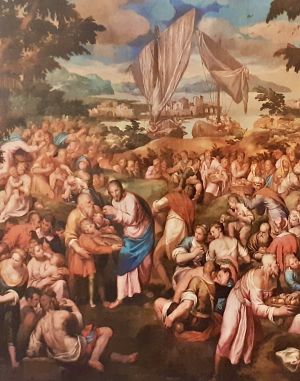
The episode of the multiplication of the loaves follows immediately after the announcement of John the Baptist’s execution. Matthew recounts John’s death and concludes: ‘His disciples went and took his body, buried it, and went to tell Jesus’ (14:12). Jesus’s first reaction, which appears to be prudence, is to withdraw: “On hearing this, Jesus got into a boat and withdrew to a deserted place by himself” (14:13). But he is immediately overtaken by the crowd’s pleas and “he had compassion on them” – literally, “he was moved to the depths of his being”, as Matthew puts it. Humanly speaking, Jesus commits an act of reckless folly. It was politically imprudent because the wise course of action at that moment would have been to keep a low profile, since his popularity would attract the hatred of the Pharisee leaders; it was folly because it was senseless to believe that five loaves and two fish would be enough to feed such a crowd. The disciples, being realists, pointed this out to him, but Jesus replied, unperturbed: ‘You yourselves give them something to eat’ (14:16). This episode brings to mind the prophet Elisha, in the Northern Kingdom, 800 years earlier, whose story was known to all. In the midst of a famine, a faithful follower had brought an offering of the first fruits of the harvest: twenty barley loaves that would normally have been Elisha’s due, but he, given the circumstances, decided to share them with everyone. Twenty loaves were too many for a single prophet, but they were a pittance for the hungry people around him: the text says there were a hundred people. Elisha had told his servant, ‘Give it to the people to eat’, but the servant could see that the numbers didn’t add up: ‘How can I set this before a hundred people?’. And the prophet insisted: ‘Give it to the people to eat. For thus says the Lord: “They shall eat and there will be some left over.”’ And the servant distributed it: ‘They ate and there was some left over, according to the word of the Lord’ (2 Kings 4:42–44). In this miracle, too, we note the disparity between the number of diners, the few loaves and fish available, and the amount of leftovers collected. Matthew is keen to point out: ‘They all ate and were satisfied; and they carried away twelve baskets full of the fragments’ (14:20). What do Jesus and Elisha have in common? What is their secret? First of all, both believe that sharing is possible, whatever the number of diners, because both place their trust in God. They also share the mention of the leftovers and the precise statement that ‘everyone ate their fill’. This miracle brings to mind the gift of manna in the Book of Exodus: ‘I will satisfy you with bread, and you shall know that I am the Lord your God’ (Ex 16:12). Jesus, as the evangelist writes, had gone off to a deserted place on the outskirts in search of some peace and quiet, but he agrees to let himself be found, to draw near to the people, and this leads him to commit the ‘foolish recklessness’ I mentioned at the beginning. Disciples of all ages are in turn invited to nurture this reckless folly: in other words, it is enough to have faith to remember that sharing works miracles. And we must learn to rejoice in our own poverty, for it is the privileged place where God acts. When we recognise our powerlessness, we call upon God for help, and this is always the first thing to do. Whilst the first reading, taken from Isaiah, proclaims the abundance and gratuitousness of God’s gifts, Jesus’ multiplication of the loaves is a magnificent illustration of this.
+Giovanni D’Ercole
17th Sunday in Ordinary Time (year A) [26 July 2026]
First Reading from the First Book of Kings (3:5, 7–12)
This passage from the First Book of Kings recounts the first great celebration of the reign of Solomon, David’s successor on the throne of Jerusalem. After his coronation, Solomon went to the sanctuary at Gibeon to offer a great sacrifice and there uttered a prayer that would become a model for all Israel.
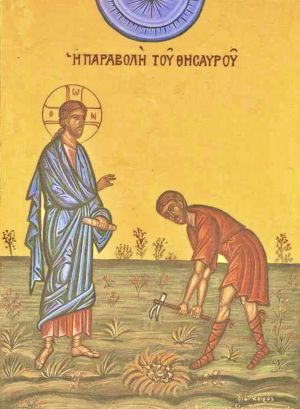
However, the historical context shows that Solomon was not a perfect man. His accession to the throne was marked by dynastic struggles, political intrigues and violence. Although he was one of David’s youngest sons, he managed to secure power thanks to the rivalries among his elder brothers and the decisive intervention of his mother, Bathsheba. After his coronation, he swiftly eliminated his opponents. Therefore, his renowned wisdom was not an innate quality, but a gift received from God. True wisdom thus emerges as the most precious of all goods. Once in power, Solomon realised the difficulty of governing. This realisation represents the first sign of his wisdom. He recognised that the most precious good is not wealth or power, but wisdom, and that it comes only from God. In his prayer, he presents himself with humility: ‘I am a young and inexperienced man; grant your servant a discerning heart to govern your people and to distinguish between good and evil.’ His request recalls the hidden treasure and the precious pearl of which Jesus will speak in the Gospel (Mt 13:44–46): wisdom is worth more than any other good. Here is a lesson for all those who govern. The second lesson concerns not only kings, but anyone who exercises authority. Solomon does not ask for personal advantages, a long life, riches or victory over his enemies. He asks only for what is necessary to serve the people entrusted to him. In this, he shows that he has understood the ideal of the monarchy of Israel: the ruler must not seek his own interests, but the good and safety of the people. The prophets, beginning with Nathan, constantly reminded the kings of Israel of this mission. God’s response is generous: He appreciates the selflessness of the request and responds by granting Solomon a wise and discerning heart, superior to that of all other kings; by giving him the ability to discern and govern justly; and, furthermore, by granting him what he had not asked for: wealth, glory and prestige. This reveals God’s generosity: those who seek His will above all else also receive other gifts in addition. The theme echoes Jesus’ teaching: ‘Seek first the Kingdom of God, and all these things will be given to you as well’ (Mt 6:33).
Responsorial Psalm (118/119)
In the First Reading, Solomon, at the beginning of his reign, had grasped the essential truth: true wisdom is the most precious treasure and can come only from God.
He continues in the psalm: ‘The law from your mouth is more precious to me than thousands of pieces of gold and silver.’ And the psalmist adds: ‘How wonderful are your commandments; that is why I keep them!’ For the believer, faithfulness to the commandments is a delight, not a burden. This psalm is a litany of love for the Law; today’s verses are just a short stanza from a very long psalm: 176 verses = 22 stanzas of 8 verses each. Why 22 stanzas? Because there are 22 letters in the Hebrew alphabet. Each stanza is an ‘acrostic’: all 8 verses begin with the same letter, and the stanzas follow the alphabetical order from Alef to Tav. This is not literary virtuosity. It is a true profession of faith: a poem in honour of the Law, a meditation on the gift of God that is the commandments. Rather than a ‘psalm’, it is a litany in honour of the Law. It may sound strange to us, but that is how it is. In the Bible, to love the Law is to love the Father’s gift; this is why the biblical believer truly loves the Law. The commandments are not endured as God’s dominion over us, but as advice—the only valid advice for living happily. When the biblical person says this, they mean it with all their heart. And the Law is not endured as dominion; it is received as a gift that God gives to his people to warn them against all false paths. It is said that God ‘gives’ his Law, and it is indeed regarded as a ‘gift’. God did not merely free Israel from slavery in Egypt. By giving his Law, God has, in a sense, provided the ‘user’s manual’ for freedom. The Torah is an expression of God’s love for his people. If God is Love, his Law leads to love. We did not have to wait for the New Testament to discover that God is Love and that the Law has but one purpose: to lead us along the path of love. The entire Bible is the story of the chosen people’s learning, in the school of brotherly love, from Deuteronomy (Dt 6:4) to Leviticus (Lv 19:18). The famous Rabbi Hillel, who lived from 70 BC to 10 AD, said: ‘Do not do to your neighbour what you would hate for yourself: this is the whole of the Torah; the rest is commentary. Go and study.’ He also said: ‘Do not judge your neighbour until you have been in his place.’ Jesus takes the same line: the two commandments of love for God and for one’s neighbour sum up the whole Law. And the Golden Rule echoes this as follows: ‘Do to others whatever you would have them do to you: for this is the Law and the Prophets’ (Mt 7:12). Finally, this psalm resembles a litany: after the first three verses, which affirm the happiness of those faithful to the Law, the remaining 173 verses address God directly, at times in a contemplative tone, at others in supplication: ‘Open my eyes, that I may see the wonders of your Law’ (v. 18), and the litany continues, almost always repeating the same phrases. In Hebrew, eight identical words recur throughout all the stanzas to describe the Law: Law, Word, Precepts, Statutes, Commandments, Judgements, Promises, Ways. Only lovers repeat themselves like this without ever tiring. Nor is the number 8 coincidental: in the Bible, it is the number of the new creation. God created the first Creation in seven days; therefore, the eighth day will be that of the renewed Creation, of the ‘new heavens and new earth’. This will finally come to pass when all humanity lives according to God’s Law—that is, in love—because they are one and the same.
Second Reading from the Letter of Saint Paul the Apostle to the Romans (8:28–30)
For weeks now we have been reading chapter eight of the Letter to the Romans: Paul contemplates the whole of human history as a long journey towards a magnificent future. One day we shall be like Jesus Christ, in his image, and we shall be one with him. This is God’s plan: ‘God calls those he loves according to his plan’ (Rom 8:28), with the best commentary: ‘God chose you from the very beginning for salvation, through the Holy Spirit who sanctifies and through faith in the truth. For this is what he has called you to through our Gospel, so that you may share in the glory of our Lord Jesus Christ’ (2 Thessalonians 2:13–14). This plan, which culminates in union with Christ, is the work of the Spirit, made possible by our free participation. Paul puts it even more simply: ‘God calls you to his Kingdom and to his glory’ (1 Thessalonians 2:12). We are on a journey towards the transformation of our whole being, a ‘shaping’ that will mould us in the image of Christ. Earlier, Paul had compared this transformation to a birth: ‘The whole creation groans and suffers the pains of childbirth’ (Rom 8:22). Here we see the image of entering into a great family: God has ‘predestined us to be conformed to the image of his Son, so that he might be the firstborn among many brothers’ (Rom 8:29). Shortly before, he had called us “children of God” and had continued: “If we are children, then we are also heirs: heirs of God and co-heirs with Christ” (Rom 8:17). To God’s invitation to take part in this great plan, we respond with faith and trust. It is often said: “Man proposes, God disposes”, but here Paul says the opposite: ‘God proposes, man disposes’. God does not impose his plan on us; he proposes it to us. From the very beginnings of Revelation, we hear God calling humankind and proposing his Covenant to us, as if God were tirelessly repeating: ‘Love me, trust me, for I love you’. And this plan of God depends on our freedom. In today’s passage, the freedom to accept or refuse is expressed as follows: ‘Moreover, we know that all things work together for good for those who love God, for those who are called according to his purpose’ (Rom 8:2). The verb ‘to love’ indicates man’s free response to God’s proposal. It is not a feeling, it is an impulse, it is the adherence of ‘faith’ . Yet we remain free not to love God. In Paul’s vocabulary, we are all ‘known, called, justified, and brought into his glory’, provided we accept him. And he describes the journey of those who wish to enter into this plan of salvation. First, God sent his Son (Col 1:18). Thus, those who respond to God’s love resemble that Son who fulfilled the Father’s will for salvation: predestined, called, justified, glorified—that is, brought into perfect harmony with God, made partakers of his divine nature, already welcomed into his glory. It is no surprise that Paul concludes immediately afterwards: ‘What more can be said?’ Rom 8:31.
From the Gospel according to Matthew (13:44–52)
In this passage from the Gospel of Matthew, Jesus presents four brief parables to explain the meaning of the Kingdom of Heaven: the hidden treasure, the pearl of great price, the net cast into the sea, and the householder who brings out of his treasure things both new and old. The treasure and the pearl: the absolute value of the Kingdom. The first two parables convey the same message: a man discovers a treasure hidden in a field; a merchant finds a pearl of exceptional value. In both cases, the protagonists sell everything they own to acquire that unique treasure. This act of renunciation is not experienced as a loss, but as a joy, because the value of the treasure infinitely surpasses that of everything else. Jesus teaches that the Kingdom of God is the greatest good that exists. Those who discover it realise that it is worth more than any earthly wealth, security or success. The net and the final judgement. The third parable describes a bountiful catch. Once the net has been hauled ashore, the fishermen separate the good fish from the bad. Jesus applies this image to the Last Judgement: at the end of time, there will be a definitive distinction between what belongs to the Kingdom and what opposes it. As in the parable of the wheat and the tares, however, it is not simply a matter of dividing people into two rigid categories. Good and evil coexist within every person’s heart. The parable highlights the gravity of human choices: one cannot serve both God and other ‘masters’ at the same time. This is why Jesus continually calls for conversion: ‘Repent, for the Kingdom of Heaven is near.’ The same teaching emerges in his encounter with the rich young man: called to leave everything to follow Christ and gain a treasure in heaven, he is unable to give up his securities and goes away sad. These parables show that following Christ requires concrete decisions. There are no half-measures: every choice must be assessed in the light of the Kingdom of God. To welcome the Kingdom means being willing to let go of whatever prevents one from fully adhering to God’s will, just as one who sells everything to acquire the treasure or the pearl—a treasure both ancient and new. After asking his disciples whether they had understood his teaching, Jesus adds a fourth parable: ‘Every scribe who has become a disciple of the Kingdom of Heaven is like a householder who brings out of his treasure things both new and old.’ The scribes had a profound knowledge of the Old Testament Scriptures. However, in order to welcome the Kingdom proclaimed by Jesus, they had to open themselves to the newness of his revelation without losing the heritage they had received. The true disciple cherishes both: the treasure of the Old Covenant and the newness brought by Jesus Christ. This is why Jesus affirms: ‘I have not come to abolish the Law and the Prophets, but to bring them to fulfilment.’ The Old and New Testaments are not opposed to one another: the former prepares and announces, the latter realises and brings to fulfilment. Knowing both constitutes the true treasure of the Christian faith. The life of Paul of Tarsus represents a living synthesis of these parables. Having enjoyed prestige as a Jew and a Pharisee, he regards all that as a loss compared with the knowledge of Christ. In his letter to the Philippians, he states that every human privilege pales in comparison with the gift of Christ, for which he was willing to lose everything. Ultimately, the four parables converge on a single teaching: the Kingdom of God is the supreme treasure; it is worth giving up everything to obtain it; our choices have decisive consequences; the disciple must embrace both the richness of the Old Covenant and the newness of Christ; true wisdom lies in recognising that nothing is of greater value than communion with God. The ‘treasure hunt’ of which Jesus speaks is not the pursuit of material goods, but the discovery of the Kingdom, a treasure so great that it renders everything else secondary.
+Giovanni D’Ercole
16th Sunday in Ordinary Time (year A) [19 July 2026]
First Reading from the Book of Wisdom (12:3, 16–19)
The Book of Wisdom, written in Greek by a Jew from Alexandria shortly before the coming of Christ, is addressed to people steeped in Greek culture, which exalted intelligence and philosophy as the highest paths to knowledge. The author, however, reminds us that true wisdom belongs to God and that his mysteries are not attained through human knowledge, but are received as a gift and with humility. This is the same truth that Jesus expresses when he points out that the Father reveals his secrets to the little ones rather than to the wise of this world (Mt 11:25, Lk 10:21). The central theme of the text is the relationship between omnipotence and mercy. On the one hand, God is the absolute Lord of the universe: there is no other God; he rules over all things and possesses infinite power. On the other hand, this power is not manifested through violence, but through gentleness and goodness: God cares for all things, judges with leniency, governs with tenderness and, after sin, always offers the possibility of conversion. The author puts forward a surprising idea: God is merciful precisely because he is almighty. Human beings, often insecure about their own authority, feel the need to flaunt their power; God, on the other hand, who possesses all power, has nothing to prove. This is why his power is expressed in patience, forgiveness and tenderness. This image of God is the fruit of a long journey of revelation. Through the prophets, Israel learnt that God is not a tyrannical ruler, but a loving Father. Like Elijah on Mount Horeb, believers discover that God does not reveal himself in the storm or the earthquake, but in the gentle breeze. His strength is unobtrusive yet invincible, for it is the strength of love. This discovery also has implications for humankind. If we are created in God’s image, we are called to imitate his way of acting. Therefore, the righteous do not seek domination or violence, but humanity, compassion and service. Jesus takes up this same teaching when he instructs his disciples that the logic of power must not prevail amongst them, but rather that of the service of love (Mk 9:35; Mt 20:26–27; Mt 23:11; Lk 22:26). In short, God’s greatness does not lie in dominating by force, but in saving through mercy; and his omnipotence is manifested in forbearance, forgiveness and the ability to always offer humankind a new chance. Those who wish to resemble God must make goodness—and not power—the measure of their lives.
Responsorial Psalm (85/86)
In this psalm, the image of a tender and merciful God emerges, one who reveals his power through mercy. If we read the psalm in the light of the first reading, taken from the Book of Wisdom, we realise that the author marvels at both God’s greatness and his tenderness. One explains the other, for if God is forgiving towards humankind, it is precisely because He is almighty. And this dual emphasis – forgiveness and greatness – recurs in the stanzas of the psalm: the 1st and 3rd stanzas focus on forgiveness; the second stanza is about greatness. First stanza: ‘You who are good and forgiving, you are full of mercy towards those who call upon you.’ Third stanza: ‘You, Lord, are a merciful and compassionate God, slow to anger, abounding in love and faithfulness. Turn to me and have mercy.’ 2nd stanza: “Great are You and You work wonders; You alone are God”. In the third stanza, “a merciful and compassionate God” leads us to God’s great revelation to Moses on Mount Sinai (Ex 34:6). It comes at the worst possible moment, immediately after the episode of the golden calf, when Moses, in his anger, had broken the tablets of the Law. The Covenant had been desecrated by the people, who had made themselves an idol. God does not renounce the Covenant: he tells Moses to carve two new stone tablets, upon which he will inscribe the same words. This is a sign of mercy. And it is precisely here that he says: “God, merciful and gracious, slow to anger…”. It is interesting to note Moses’ reaction here (cf. Ex 34:8–9). The author of the psalm reacts just as Moses did: he recalls God’s mercy and ‘takes Him at His word’, imploring Him: ‘You, Lord, God of tenderness and compassion… Turn your gaze upon me and have mercy on me’. In all our prayers, we too recall his merciful plan for humanity and implore him to hasten its fulfilment (cf. Rom 8:26–27). The parallel with the Book of Exodus continues because, following the revelation and Moses’ response, God establishes a covenant (cf. Ex 34:10). But the psalm adds something new compared with the Book of Exodus, as it was written much later. During the Babylonian exile, Israel became aware of the universal nature of God’s plan—namely, that all nations are called to know him. But how can they come to know him? By discovering God’s work on behalf of his people. The Jewish people do not presume to convert others, but they understand that God’s work on their behalf becomes a means of conversion for other nations: if they open their eyes, they recognise the God of Israel as their Saviour and turn to him.
Second Reading from the Letter of Saint Paul the Apostle to the Romans (8:26–27)
Saint Paul has already said that the life of the baptised is under the influence of the Spirit. He emphasises once again the role of the Holy Spirit (in this chapter he mentions him 18 times). He highlights that the life of the baptised unfolds entirely under his influence, if we allow ourselves to be guided by him. The Spirit dwells within us, and God’s great plan is like the process of childbirth. The labour pains are the prelude to great joy. “I consider that the sufferings of the present time are not worth comparing with the glory that is to be revealed… We know that the whole creation groans and suffers the pains of childbirth.” And it is the Spirit who guides our prayer, as we read in this very brief text which nevertheless contains an important contrast: on the one hand, in the last verse: ‘it is in accordance with God’s will that the Spirit intercedes for the saints’; on the other: ‘he comes to the aid of our weakness, for we do not know how to pray as we ought’. It teaches us that we pray by entering into God’s will, looking at the world and at ourselves through God’s eyes; rejoicing in the signs—however small—of the Kingdom’s advance, which are brotherhood, sharing, solidarity and respect. We must never lose heart in the face of humanity’s slow progress, for the Spirit blows ceaselessly even if it is not always visible. The reference to the Lord’s Prayer is immediate: ‘Hallowed be thy name, thy kingdom come, thy will be done on earth as it is in heaven’—three expressions that draw us into God’s plans. We need the help of the Holy Spirit to enlighten our prayer, just as Jesus promised: “I will pray to the Father, and he will give you another Paraclete to be with you for ever” (Jn 14:16). He knows the secrets of God’s plan, as Paul so aptly puts it: “The Spirit searches everything, even the depths of God… We have not received the spirit of the world, but the Spirit who comes from God, so that we may know what God has bestowed upon us’ (1 Cor 2:10–12). And the model is Jesus, always guided by the Spirit: his whole life is marked by the fulfilment of the Father’s mission, right up to Gethsemane, when he proclaims, ‘Father, not my will, but yours be done’ (Mark 14:36). And the author of the Letter to the Hebrews sums up his life thus: “Upon entering the world, Christ says… ‘Behold, I have come to do your will, O God’” (Hebrews 10:5, 9).
From the Gospel according to Matthew (13:24–43)
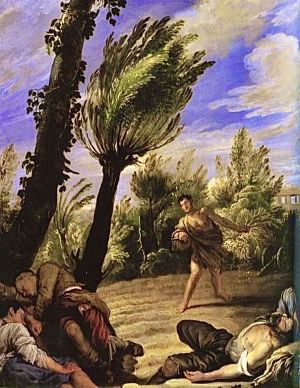
The parable of the weeds is not primarily intended to explain the origin of evil, although it reaffirms a fundamental principle: God is not the author of evil. As in the account in Genesis, everything God has created is good; the owner of the field sows only good wheat, whilst the weeds are the work of an enemy. In the context of the Gospel of Matthew, however, this parable is linked to that of the sower. Having shown that the proclamation of the Kingdom does not always bear the hoped-for fruit, Jesus addresses a new question: why not immediately remove what stands in the way of good? The servants suggest pulling up the weeds, but the owner forbids this so as not to uproot the wheat as well. Only at harvest time will the separation take place.
The message is clear: it is not for human beings to pass final judgement or to eliminate evil in others; this task belongs to God. Jesus therefore invites us to live with the simultaneous presence of good and evil in the world and within communities, avoiding elitist or fanatical attitudes. Matthew was probably addressing a community tempted to draw a rigid distinction between the ‘good’ and the ‘bad’. At the end of time, God will make the final judgement. The Bible often presents judgement as a separation between the righteous and the wicked, but the reality is deeper: the line separating good from evil runs through the heart of every person. No one is merely righteous or merely holy, but we all carry within us both the good wheat and the weeds. God will not destroy the good along with the evil: he will save that which, in each of us, is capable of bearing fruit. After the parable of the weeds, Jesus tells the parables of the mustard seed and the yeast. Whilst the previous parables highlighted the obstacles to the Kingdom, these reveal its inner strength. What is small and hidden inevitably grows to full realisation: the seed becomes a great tree and the yeast causes the whole dough to rise. Herein lies the central teaching that Jesus sets out in three fundamental attitudes: trust, because the Kingdom of God grows even when we cannot see it; patience, because the harvest will come at the time appointed by God; and humility, because no one can consider themselves entirely righteous or authorised to judge others. God’s patience stems from his desire not to lose even a single good ear of corn amongst the weeds. But above all, it reveals that God never ceases to hope for humanity’s conversion and for the transformation of the ‘tares’ in our hearts into good grain. This is the true meaning of his merciful patience.
+Giovanni D’Ercole
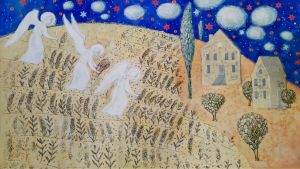

15th Sunday in Ordinary Time (year A) [12 July 2026]
First Reading from the Book of the Prophet Isaiah (55:10–11)
The central theme of this passage is the image of rain: the Word of God is life-giving rain; it does not return until it has fulfilled its mission of forgiveness and reconciliation. This oracle concludes the Second Isaiah (Isaiah 40–55) As prophets often do, Isaiah uses an image: rain and snow are daydreams for an Eastern farmer accustomed to often arid soil. In Babylon, where he is in exile with his people in the 6th century BC, the benefits of rain are experienced. A sun-drenched land, such as Israel or Babylon, flourishes anew at the first rain. The prophet applies this effectiveness to the Word of God: ‘So shall my word be that goes forth from my mouth: it shall not return to me empty.’ Isaiah emphasises this effectiveness for two reasons. 1) He announces the end of the Exile and the return to Jerusalem. For 50 years, the inhabitants of Jerusalem have been in exile in Babylon. Isaiah promises, on God’s behalf, their liberation and their departure from Babylon. To believe in a promise long awaited requires trust in the Word of God. This is why Isaiah is so firm: ‘my word… shall not return to me empty…’. Statements about the effectiveness of the Word (‘Davar’ means both ‘word’ and ‘event’) are always made during difficult times in Israel’s history, when it is necessary to cling to faith. Examples: ‘All flesh is like grass… dry grass; the flower withers, but the word of our God stands for ever’ (Isa 40:6–8); ‘I am watching over my word to bring it to pass’ (Jer 1:12). These words were spoken to combat idolatry, for during the exile the temptation was strong amongst the inhabitants of Jerusalem, who, in the face of defeat, thought it better to turn to the gods of the victorious Babylonians, since they were effective. There is a sarcastic passage by the prophet Isaiah: poor people who use the same wood to make a fire and to carve idols; then they expect help from those lifeless idols they have made themselves (cf. Isa 44). 2) The other reason for emphasising the power of the word is that the ‘mission’ of the Word is forgiveness and reconciliation. Immediately before this text, he notes: ‘Seek the Lord whilst he may be found; call upon him whilst he is near. Let the wicked forsake his way, and the unrighteous man his thoughts; let him return to the Lord, who will have mercy on him, and to our God, who abundantly forgives. For my thoughts are not your thoughts…’ (Isaiah 55:6–8). The ‘mission’ referred to here is therefore a mission to proclaim God’s free forgiveness and the reconciliation of humanity with Him: God will ultimately reconcile humanity to Himself. Later, Paul will say the same: ‘God our Saviour desires all people to be saved and to come to the knowledge of the truth’ (1 Tim 2:4). This plan of God is fulfilled through the Incarnation of the Word and the sending of the disciples as ambassadors of reconciliation: “God has reconciled us to himself through Christ and has entrusted to us the ministry of reconciliation” (2 Cor 5:18).
Responsorial Psalm (64/65)
Psalm 64 is a votive offering from a people written upon their return from exile to thank God for their deliverance: on the surface, it is a song of renewed creation, but it is not merely a song about nature. The liturgy presents us only with the final verses (10–14), which appear to be a contemplation of nature, but the preceding verses are fundamental, and without them the true meaning of the psalm is lost. This is a vow of thanksgiving for the return from exile, made in Babylon in the 6th century BC: if God frees us and brings us back to Israel, we shall celebrate in his temple. Deliverance is experienced as forgiveness because the exile was regarded as a punishment for the sins of the people and their leaders, and the return is a ‘return to favour’: God wipes the sinful past clean. ‘Our sins have overwhelmed us; you forgive them’. It is clear that Israel’s election becomes a mission, and the people celebrate God’s faithfulness: “Blessed are those whom you have chosen and brought near: they shall dwell in your courts.” Just as the Levites had a special place to serve God in the temple, so Israel has a special place amongst the nations: when the other nations see Israel’s salvation, they will recognise that the God of Israel is the only Saviour. With the return to the homeland, a new life begins; it is a true re-creation. For this reason, the final bucolic section should not be separated from the central theme, which is thanksgiving. Lush nature is an image of new life and of God’s greatest gift: forgiveness
Second Reading from the Letter of Saint Paul to the Romans (8:18–23)
Creation is not complete; it is a work in progress and eagerly awaits the revelation of the children of God. This means that creation is not an event of the past: it is an ongoing project, comparable to a work of art. Let us imagine the creation of an immense bronze sculpture. From the very first day, the artist knows that it will require patience and time: the process involves many successive stages. There are hardships, struggles and risks to face; one must have a clear understanding of where this sometimes thankless work is leading and assess every possible difficulty. Only the artist can already visualise the finished work in his mind, but the challenge lies in how to describe the glimpsed beauty to his collaborators, and to share it with them with the same passion. God’s project is comparable to the birth of a work of art: Paul speaks specifically of ‘childbirth’. Only God, for now, can describe the finished work. And who has the mission to complete it? We do, each in our own small way, but above all the Spirit who breathes upon the world to direct it towards God. ‘We have received the firstfruits of the Spirit, but we await adoption as children, the redemption of our body’. In the biblical sense, ‘body’ refers to our whole being. Redemption of the body: our whole being, still in chains today, bound by sin, will finally be set free and free to live as children of God. We speak of the ‘firstfruits’, which biblically refer to the first handful of ears of corn or the firstborn lamb of the flock in spring. They were both the beginning and the promise of the entire harvest. A beautiful image to convey that we already possess the down payment of our ultimate salvation: “the love of God has been poured into our hearts through the Holy Spirit who has been given to us” (Rom 5:5). And it is because we already possess the firstfruits, because we are already animated by the Spirit, that we groan as we await our final transformation. Yet it is always the Spirit who continues the work in the world. In the Fourth Eucharistic Prayer we say: “ He – your Son – has sent from you, Father, as a first gift to believers, the Holy Spirit who continues his work in the world and brings every sanctification to fulfilment”. “Every sanctification” – that is, every transformation. For now, creation is still “subject to futility”, but in the new heavens and new earth that we await, towards which we strive, this energy will become a passion for unity: ‘According to his promise, we await new heavens and a new earth, in which righteousness dwells’ (2 Pet 3:13). Then creation will be ‘set free from the bondage of corruption to enter into the freedom of the glory of the children of God’. Paul speaks of the whole of creation and the cosmos, not just of us. He takes up a theme familiar to the Bible: the disharmony caused by Adam’s wrong choice plunges the entire garden—that is, the whole of creation—into chaos: “The ground shall be cursed because of you” (Gen 3:17). Conversely, when righteousness dwells on the earth, not only humans but also animals will know peace. Humanity is part of the cosmos and cannot be conceived of without it. This is one of the meanings of Isaiah’s magnificent ‘parable’ of the animals: ‘The wolf shall dwell with the lamb… the lion shall feed on straw like the ox… They shall do no harm or destroy any more on all my holy mountain, for the knowledge of the Lord shall fill the earth as the waters cover the sea’ (Isaiah 11:6–9). As Paul says in Ephesians: it is ‘the whole universe, the things in heaven and on earth’ that will one day be brought together under one Head, Christ (Ephesians 1:9–10). It is our privilege to be able to catch a glimpse of the completed work even now. Returning to the analogy of the work of art: we who are engaged in God’s plan have an immense privilege compared to an artist’s collaborators: we can already glimpse the completed work: “The Word became flesh and dwelt amongst us; and we beheld his glory, the glory as of the only-begotten of the Father, full of grace and truth” (Jn 1:14). Meanwhile, this great labour of bringing forth the new humanity continues amidst pain and groaning. All the more reason for believers to find the courage to proclaim, even now, the glory promised to all creation.
From the Gospel according to Matthew (13:1–23)
Jesus speaks in parables because the ‘parable’ is a literary genre of the Jewish tradition, similar to a narrative with a pedagogical purpose, designed to lead the listener to change their perspective. A parable is not an allegory: not every detail has a precise meaning; the lesson comes from the overall context.
The disciples ask why Jesus speaks in parables, and Jesus gives three reasons: firstly, to distinguish between the disciples and the crowd: ‘To you it has been given to know the mysteries of the Kingdom of Heaven, but to them it has not been given.’ Secondly, to console them, because their opponents ‘look without seeing, listen without hearing or understanding’. Jesus quotes a passage from Isaiah to them: “This people’s heart has grown callous; their ears are hard of hearing, and they have closed their eyes…” (Isaiah 6:9–10). Thirdly, to recall the Old Testament theme of the two paths: “To those who have, more will be given, and they will have an abundance; but from those who have not, even what they have will be taken away.” In Matthew and Mark, this teaching in parables immediately follows the disputes with the Pharisees and with those who refuse to recognise Jesus as the Messiah, revealing their hardened hearts and their imperviousness to the Word. Indeed, the more the listeners shut themselves away in their certainties, the more impervious they become to the Word. The parables are a pedagogical means of touching those hardened hearts. However, the disposition of the heart is decisive in understanding Jesus. I shall now return to these words: ‘To those who have, more will be given’ – which is the theme of the two paths already present in the Old Testament and which always presents human existence as a crossroads. If you take the right path, every step brings you closer to your goal: ‘Give to the wise, and he will become wiser still; instruct the righteous, and he will increase his knowledge’ (Prov 9:9). If, on the other hand, you choose the wrong path, every step takes you further away. A clear choice is therefore required: either to listen, to open your ears to be taught and transformed by the Word; or to refuse to listen and become increasingly hard of hearing. In the parable of the sower, Jesus shows what the obstacles to preaching are. Jesus is the Word of God made flesh (Jn 1:14); and he communicates only the Father’s Word: “The word that you hear is not mine, but the Father’s who sent me” (Jn 14:24). Yet he finds it difficult to find fertile ground. What are the difficulties involved in listening to the Word? First of all, the cares of the world which choke out the demands of the Kingdom (Mt 6:25–34). A deeper difficulty is not trusting Jesus and recognising him as the Messiah. The disciples themselves stumbled: after the discourse on the bread of life, many said, ‘This teaching is hard! Who can accept it?’ From that moment on, many of the disciples turned back, and Jesus said to the Twelve, ‘Do you also wish to go away?’ Peter replied, ‘Lord, to whom shall we go? You have the words of eternal life’ (John 6:60–68). Despite the difficulties, Jesus proclaims that the harvest—‘a hundredfold, sixtyfold or thirtyfold’—is certain, though it comes at a high price. The Kingdom of God will be established through many failures. To enter into the understanding of the Kingdom is solely a gift from God: ‘It has been granted to you to know the mysteries of the Kingdom of Heaven… Blessed are your eyes because they see, and your ears because they hear…’ Those who have received the seed in good soil are those who hear the Word and understand it with a receptive heart, capable of receiving from God the light that comes only from Him. This openness, too, is a gift. The Pharisees and the crowd were not yet ready. Jesus had Ezekiel in mind when he said, ‘Those who received the seed among the thorns are those who hear the Word, but the cares of the world and the allure of wealth choke the Word.’ Ezekiel writes: “They come to you as a people gather; they listen to your words, but do not put them into practice; their mouths are full of lusts, their hearts are set on gain. To them you are like a love song, with a sweet voice, well played” (Ezek 33:30–32).
+ Giovanni D’Ercole
The Sower: from the captivating Call of Faith to the struggle of withdrawal

14th Sunday in Ordinary Time (year A) [5 July 2026]
First Reading from the Book of the Prophet Zechariah (9:9–10)
This text could be summarised as follows: for the prophet Zechariah, the Messiah is a King of peace, not of war, and humble like the Servant. ‘Rejoice, O Daughter of Zion’ is a message of consolation in times of war. For thus says the Lord: Rejoice, shout for joy, O Daughter of Jerusalem! ‘Daughter of Zion/Jerusalem’ is not a young woman, but the city itself: it is as if to say ‘Jerusalem, rejoice’. The paradox is that whilst the tone is triumphant, in reality it is a time of war because the prophet Zechariah carried out his mission at the beginning of Greek rule (c. 330 BC), following Alexander’s conquests, and it is an ‘oracle of consolation’. This helps us to understand certain expressions such as ‘He will remove the war chariots from Ephraim and the war horses from Jerusalem; he will break the bow of war and proclaim peace to the nations’. At a time when all seems lost, Zechariah leads Israel to hope in God’s intervention. And when Zechariah speaks of the Messiah, he uses the classic terms of the expected Messiah: a king who brings justice and peace: ‘O God, entrust your judgement to the king… May he rule from sea to sea, from the River to the ends of the earth’ (Ps 71/72). The boldness lies in proclaiming this hope precisely when all human hope has collapsed. Here are three statements by Zechariah, the last of which is decisive. First: “He will proclaim peace to the nations”: it was only after the exile to Babylon that Israel realised that God’s plan encompasses all humanity. Second: “He will remove… from Ephraim… from Jerusalem”: mentioning Ephraim (the North) and Jerusalem (the South) together is a subtle way of announcing the restoration and reunification of the ancient kingdom of David. By the time Zechariah was writing, the North and South had long since lost their unity and sovereignty. Third: The real novelty: “poor and riding on a donkey, a colt, the foal of a donkey”. The donkey is a humble mount. Alexander’s conquerors rode on quite different steeds. In Jerusalem, Solomon had introduced the warhorse and the parade horse, and was reproached for his taste for grandeur. A king on a donkey had never been seen before. Jesus presents himself as the Messiah ‘in the manner of Zechariah’. Isaiah had already glimpsed a humble Messiah (Isaiah 50:6; 53:7). The Servant does not bear the title of ‘king’, but carries out the work of the Messiah and is filled with the Spirit of God. Zechariah, on the other hand, immediately presents the Messiah as King: he takes up the traditional expectation of the Messiah-King. The novelty lies in combining this royal expectation with the humility of Isaiah’s Servant. For his king is humble: the dreams of grandeur, war and power come to an end. Only one thing matters: establishing peace for his people. The four Gospels describe Jesus’ triumphal entry into Jerusalem precisely as the coming of this King riding on a donkey. Matthew (Mt 21:5) and John (12:15) quote Zechariah. Perhaps Jesus himself quoted it to the disciples on the road to Emmaus, whilst ‘explaining to them what was written about himself in the Scriptures’ (Lk 24:27).
Responsorial Psalm (144/145)
In this psalm, it is clear that God’s kingship is mercy towards all. Moreover, Psalm 144/145 is the only one entitled ‘Praise’. Whilst it is true that the entire Hebrew Psalter is called ‘praises’, this is the only psalm actually titled ‘praise’. The tone is one of wonder; the theme is the kingship of the God of the Covenant. In a celebration of the renewal of the Covenant, Israel contemplates the King who protects them freely, without merit. Hence the royal language: “I will exalt you, my God, my King… your faithful ones will proclaim the glory of your kingdom; they will speak of your mighty deeds”. We can discern in this psalm an “alphabet” of tenderness because it is an “alphabetical” psalm, and from Aleph to Tav—that is, “all of life, from A to Z, is immersed in the Covenant, in God’s tenderness”. The verse-by-verse parallelism is very marked: it should be read by two alternating choirs. And it is precisely this parallelism that is instructive, because in the liturgy two pairs of verses are joined which, at first glance, are surprising: “The Lord is faithful in all his words and good in all his deeds; the Lord upholds those who falter and lifts up all who have fallen”. “The Lord is faithful in all his words and good in all his deeds / He is close to those who call upon him, to those who call upon him in sincerity.” This means that God’s justice, truth and faithfulness are nothing other than his mercy. The greatest justice in the world is not that of the scales, but that of love. If we live “according to the Spirit of God”, as Paul urges the Romans – Sunday’s second reading – we set out precisely on this path: a justice that is synonymous with mercy. The King spoken of in the psalm is not like the kings of the earth; he is almighty and good: he desires only our happiness. When Israel speaks of the power of this King ‘not like the others’, it knows that his power is nothing but love: ‘The Lord is good; he is full of compassion and mercy, slow to anger and abounding in love.’ This is the finest summary of the entire biblical revelation. Israel speaks from experience: how many times, especially during the exile in Babylon, did it call upon God and plead for forgiveness and a return… Now the people gathered in the rebuilt Temple sing: ‘The Lord is merciful and compassionate.’ ‘May all your works praise you, O Lord, and may your faithful bless you’—may they bless you!... O God, my King, I will exalt you and bless your name for ever and ever.’ The task is to sing it loud enough for everyone to know: the abundance of the Lord’s forgiveness, tenderness and compassion is for everyone, for God loves humanity and his ‘merciful plan’ encompasses all humanity and the whole of creation. It is easy to see why Psalm 144/145 has become the morning prayer of the people who were the first to learn to speak to God as to a father. For the Jewish believer, the morning – the dawn of a new day – irresistibly evokes the dawn of the final Day, of the world to come, of the renewed creation. The rabbinic tradition of the Talmud states that whoever recites this psalm three times a day ‘can be sure of being a child of the world to come’.
Second Reading from the Letter of Saint Paul the Apostle to the Romans (8:9, 11–13)
For Saint Paul, living according to the Spirit means allowing God’s Love to dwell within us.
The difficulty with this text lies in the word ‘flesh’. For Paul, it does not have the same meaning as it does in our 21st-century English. We contrast ‘body’ and ‘soul’ and risk a huge misunderstanding. When Paul says ‘flesh’, he does not mean the body; when he says ‘Spirit’, he does not mean the soul. Nor does he set two words—‘flesh’ against ‘Spirit’—but rather two expressions: ‘living according to the flesh’ and ‘living according to the Spirit’. For him, it is a matter of choosing between two ways of life, two masters, two courses of action. For Paul, to live ‘according to the flesh’ is to live without God, relying solely on our own strength, confined within the limits of human intelligence and strength. Obviously, that doesn’t get us very far! Or rather, it can take us very far, but in the wrong direction. This is the theme of the ‘two paths’ that recurs constantly in Paul’s writing. Living without God always ends up meaning living far from God, in a state of estrangement that can only get worse. He described this in the opening chapters of the Letter to the Romans, using images from Genesis: to live according to the flesh is to live like Adam – he wants to become like God, but without God’s help. He is mistaken. We, too, sometimes seek happiness on our own, without Him or in opposition to Him, without realising that this is the best way to harm ourselves. ‘Living according to the Spirit’ is the great news
because living ‘according to the Spirit’ means allowing oneself to be guided by Him, and thus living by the power of God: it changes everything! The great news of the text is: ‘The Spirit of God dwells in you’, so ‘you are not under the dominion of the flesh, but under the dominion of the Spirit’. The verb ‘to dwell’ appears three times today: whoever dwells in a house is the master; it is he who is in charge. We have literally become the Spirit’s dwelling places: it is He who is now in command. Our freedom lies in opening the door to Him. We must, however, consider what place we leave for Him in our home, for we are free to open the door to a greater or lesser extent. In many passages, Paul emphasises our freedom: ‘you are not under the dominion of the flesh’ means that we are no longer slaves to the forces of evil; we now have the strength to ensure that true values triumph: love, peace, truth and justice. We have the strength, but we are not obliged: the choice must be made anew at every moment. The more space we make for the Holy Spirit in our home – that is, the more we do what he suggests on the path of love, kindness and forgiveness – the more truly alive we will be. Before his conversion, Paul faithfully observed many moral and religious rules, but the Spirit of Christ did not dwell within him; he still lived ‘under the dominion of the flesh’. And this could have led him to violence and murder, in perfect good faith. Now his whole life is inspired by the Spirit of Christ, to the point of saying: ‘It is no longer I who live, but Christ lives in me’ (Gal 2:20). Two consequences can be drawn for us who are baptised: 1) We shall rise with Christ: a promise for the future. ‘The Spirit will exercise his power in us and bring to fulfilment in us what he brought to fulfilment in Jesus’ (Rom 8:11). 2) Even now, our lives are transformed just as Paul’s was, because we are now ‘under the rule of the Spirit’. ‘I will put my Spirit within you, and you shall live,’ proclaimed Ezekiel (37:14). Paul often speaks of the new spiritual life that springs from Baptism: whilst remaining in our mortal bodies, we can already live by the Spirit of Christ. This is what John calls ‘eternal life’. In practical terms: the Spirit is Love. Simply replace ‘Spirit’ with ‘Love’, and to live according to the Spirit is to allow Him to inspire our words and deeds of love. A few chapters earlier, Paul wrote to the Romans: ‘God’s love has been poured into our hearts through the Holy Spirit who has been given to us’ (Rom 5:5). And to the Galatians he explains the fruits of the Spirit: ‘love, joy, peace, patience, kindness, goodness, faithfulness, gentleness, self-control’ (Gal 5:22): in a word, it is love expressed in all the concrete circumstances of life. Paul is the heir to the prophets: they all affirm that our relationship with God is reflected in the quality of our relationship with others. In the Servant Songs, Isaiah affirms that to live according to the Spirit of God is to love and serve one’s brothers and sisters. As John says: ‘Whoever does not love remains in death… We know that we have passed from death to life, because we love our brothers and sisters’ (1 John 3:14).
From the Gospel according to Matthew (11:25–30)
In this text, we find the central theme in Jesus’ ‘gentle yoke and light burden’, which is, in fact, the Law of love that brings rest: ‘ ‘Come to me, all you who are weary and burdened, and I will give you rest.’ What is the ‘yoke’? The yoke is a heavy, solid piece of wood that joins two oxen for ploughing. They join forces, and the stronger one sets the pace. Figuratively speaking, ‘taking up the yoke’ means binding oneself to someone to walk at the same pace, yoked to the same task. In the Old Testament and in Judaism, the expression was commonly used to refer to the Covenant: ‘to take up the yoke of the Torah’, that is, to commit oneself to following God’s Law, knowing that all the strength of the ‘team’ comes from God himself. For a Jew, the service of the Torah is not an unbearable burden; it is the path to true happiness. Ben Sirach said: “You will find your rest in it, and it will become your joy” (Sir 6:28). Jesus takes up this image, linking it to the yoke of the Torah and to rest: “Take my yoke upon you, become my disciples, practise my commandments, and you will find rest for your souls”. And he adds: “Yes, my yoke is easy to bear and my burden is light.” One senses a criticism of certain Pharisees who had turned the Law into a litany of meticulous obligations. Of them, Jesus says: “They tie up heavy burdens, hard to bear, and lay them on people’s shoulders; but they themselves are not willing to move them even with a finger” (Mt 23:4). Meanwhile, the majority of the people struggled to observe all the commandments imposed by the religious authorities and felt the contempt directed at them. Jesus invites his disciples to lay aside these burdens that are too heavy: ‘Take my yoke upon you… my yoke is easy and my burden is light’. His yoke is simply the law of love, and it is He who gives us the strength to bear it. ‘Rest’ was also a familiar word. The Old Testament presented the Promised Land as the place of rest given by God to his people. Conversely, when the people were unfaithful, Psalm 94/95 expressed God’s sorrow: ‘This people’s heart is led astray… they shall not enter my rest’. Taking up that psalm, the Letter to the Hebrews announces a new day when, with Christ, we shall enter God’s rest with confidence: ‘Let us therefore strive to enter that rest’ (Heb 4:11). The absolute novelty is that Jesus identifies himself with God, and he alone can say, ‘I will give you rest. Take my yoke upon you… my yoke is easy…’. The religious leaders were annoyed by this, whilst those who were weary under the weight of their burdens were drawn to the respect and care he showed to each one.
+Giovanni D’Ercole
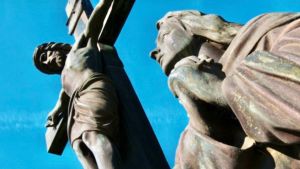
Little one and Small one: the only ‘titles’ that belong to us and that we can keep
THE HAM - (by Francesco Giovannozzi, psychologist and psychotherapist)
The ham.
The Treccani dictionary defines ‘ham’ as: ‘one who acts in theatrical performances’. In common parlance and in a figurative sense: ‘someone who adopts exaggeratedly theatrical behaviour in life; someone who puts on a show in a blatant and undignified manner’.
Many years ago, when I was still a teenager, Charles Aznavour released a beautiful song containing these words: ‘I am a ham. But genius was born with me […] but theatricality flows within me’.
A song which, if I’m not mistaken, was later covered by Massimo Ranieri some time later.
Perhaps those of us who are a bit older will also remember the original version.
A few days ago, I bumped into a young man with a VIP-like air about him, whom I’ve known since he was born.
He stopped, greeted me warmly and began telling me about his life, his work in the world of politics and his travels.
He said that one of his goals is to visit the wonders of the world and that he’d just returned from one such destination. He solemnly declared that he’d already visited several of them.
All this without me having asked anything, partly because he didn’t give me the chance.
He was too caught up in his soliloquy and I was merely a spectator.
At the end of his speech, he tells me that he has completed dental treatment for a tooth that had been causing him a great deal of trouble and that he is still in pain […] he lists the medicines he is taking. Then he looks at me and ironically reiterates that when doctors encounter difficulties in their work, they always say it’s down to the mind.
And here came a thunderous laugh, coupled with all the ‘pathos’ with which he’d woven his narrative.
The only thing missing was the final round of applause, which didn’t come. Just a cordial ‘goodbye’. My professional bias kicked in as I reflected on what had happened.
There are people who, rather than simply connecting with others, need to put on a show and seek the approval of others.
This is something we all do to a certain extent, within acceptable limits, and it gives us pleasure. Such people sometimes go in search of an ‘audience’ where they can express and display their feelings and experiences, without worrying about building a relationship or a genuine connection – and once they have communicated their emotions, they leave quickly, often in search of another ‘audience’.
They must always be the centre of attention and often express their emotions in a theatrical manner. Everything they achieve is something grand; all their actions are ‘a triumph’.
Behind this behaviour, there is usually an enormous fear of being alone, of being abandoned. Of course, we all have these fears to some extent, but we do not resort to compensatory mechanisms of that sort.
Sometimes we are afraid of certain emotions we feel, as if we feared that what we are feeling is unhealthy.
We must always bear in mind that what happens within our psyche is not entirely random or pathological, but purposeful and constructive. There are not only demons; there are angels too.
I can’t recall whether I’ve already expressed this idea, but I’ll reiterate it because I consider it important and because I think we’ll be less frightened if we realise we’re experiencing certain feelings.
Without referring to psychological manuals or classifications… we’ve all probably experienced feelings like those described above at certain times in our lives.
People with these characteristics are ‘theatrical’ and express their experiences in an exaggerated manner.
They can be seductive or even provocative.
They use their physical appearance in an exaggerated way to get noticed and appear interesting.
They rely more on emotion than on reflection, and tend towards superficiality and banality.
They are also easily influenced and idealise the people they admire; sometimes to the point of imitating them.
They dream of ideal love, but often become involved in unsuitable and unattainable relationships.
They exaggerate every physical sensation, even when there is no actual physical pain.
In severe cases, many people channel and project these emotions onto parts of the body that are psychologically significant to the individual and their personal history.
And so, as the young VIP mentioned above humorously put it, the psyche comes into play.
I do not wish to bore readers or come across as melodramatic myself, but many individuals have often expressed their unease through their bodies.
Some do so more visibly, others in a more subtle way – though perhaps more interesting and fascinating to an ‘insider’.
The literature often refers to ‘hysterical blindness’.
These people are unable to see properly – to a greater or lesser degree. I recall a teenager with visual problems being referred to our department’s psychological assessment (sent by the ophthalmology department).
However, it is not always accepted that objective problems may have an ‘internal’ cause, and so often either the psychological assessment – deemed offensive – is abandoned, or other solutions are sought that may give the illusion of a way out.
It also happens that some individuals, having been referred for an ‘internal’ assessment by leading Italian centres of excellence, but subsequently rejecting what was suggested to them, turn to private practitioners who offer solutions that are, unfortunately, sometimes harmful.
Dr Francesco Giovannozzi, Psychologist and Psychotherapist.
There are also serious, dangerous omissions and we have to recognize with healthy realism that in this way things are not all right, it is not all right when errors are made. However, we must also be certain at the same time that if, here and there, the Church is dying because of the sins of men and women, because of their non-belief, at the same time she is reborn (Pope Benedict)
Ci sono anche cadute gravi, pericolose, e dobbiamo riconoscere con sano realismo che così non va, non va dove si fanno cose sbagliate. Ma anche essere sicuri, allo stesso tempo, che se qua e là la Chiesa muore a causa dei peccati degli uomini, a causa della loro non credenza, nello stesso tempo, nasce di nuovo (Papa Benedetto)
The question makes apparent the concern, present in ancient Jewish tradition, over finding a unifying principle in the various formulations of God's will […] Emphasis is placed on the totality of this dedication to God, listing the three faculties that define man in his deep psychological structures: heart, soul and mind. The word mind, diánoia, contains the rational element (Pope Benedict)
La domanda lascia trasparire la preoccupazione, presente nell’antica tradizione giudaica, di trovare un principio unificatore delle varie formulazioni della volontà di Dio […] L’accento è posto sulla totalità di questa dedizione a Dio, elencando le tre facoltà che definiscono l’uomo nelle sue strutture psicologiche profonde: cuore, anima e mente. Il termine mente, diánoia, contiene l’elemento razionale (Papa Benedetto)
A “year” of grace: the period of Christ’s ministry, the time of the Church before his glorious return, an interval of our life (Pope Francis)
Un “anno” di grazia: il tempo del ministero di Cristo, il tempo della Chiesa prima del suo ritorno glorioso, il tempo della nostra vita (Papa Francesco)
The Church, having before her eyes the picture of the generation to which we belong, shares the uneasiness of so many of the people of our time (Dives in Misericordia n.12)
Avendo davanti agli occhi l'immagine della generazione a cui apparteniamo, la Chiesa condivide l'inquietudine di tanti uomini contemporanei (Dives in Misericordia n.12)
Addressing this state of mind, the Church testifies to her hope, based on the conviction that evil, the mysterium iniquitatis, does not have the final word in human affairs (Pope John Paul II)
Di fronte a questi stati d'animo la Chiesa desidera testimoniare la sua speranza, basata sulla convinzione che il male, il mysterium iniquitatis, non ha l'ultima parola nelle vicende umane (Papa Giovanni Paolo II)
Jesus reminds us today that the expectation of the eternal beatitude does not relieve us of the duty to render the world more just and more liveable (Pope Francis)
Let us look at them together, not only because they are always placed next to each other in the lists of the Twelve (cf. Mt 10: 3, 4; Mk 3: 18; Lk 6: 15; Acts 1: 13), but also because there is very little information about them, apart from the fact that the New Testament Canon preserves one Letter attributed to Jude Thaddaeus [Pope Benedict]
Li consideriamo insieme, non solo perché nelle liste dei Dodici sono sempre riportati l'uno accanto all'altro (cfr Mt 10,4; Mc 3,18; Lc 6,15; At 1,13), ma anche perché le notizie che li riguardano non sono molte, a parte il fatto che il Canone neotestamentario conserva una lettera attribuita a Giuda Taddeo [Papa Benedetto]








duevie.art
don Giuseppe Nespeca
Tel. 333-1329741
Disclaimer
Questo blog non rappresenta una testata giornalistica in quanto viene aggiornato senza alcuna periodicità. Non può pertanto considerarsi un prodotto editoriale ai sensi della legge N°62 del 07/03/2001.
Le immagini sono tratte da internet, ma se il loro uso violasse diritti d'autore, lo si comunichi all'autore del blog che provvederà alla loro pronta rimozione.
L'autore dichiara di non essere responsabile dei commenti lasciati nei post. Eventuali commenti dei lettori, lesivi dell'immagine o dell'onorabilità di persone terze, il cui contenuto fosse ritenuto non idoneo alla pubblicazione verranno insindacabilmente rimossi.