Mar 15, 2026 Written by 

Stoning or using mercy

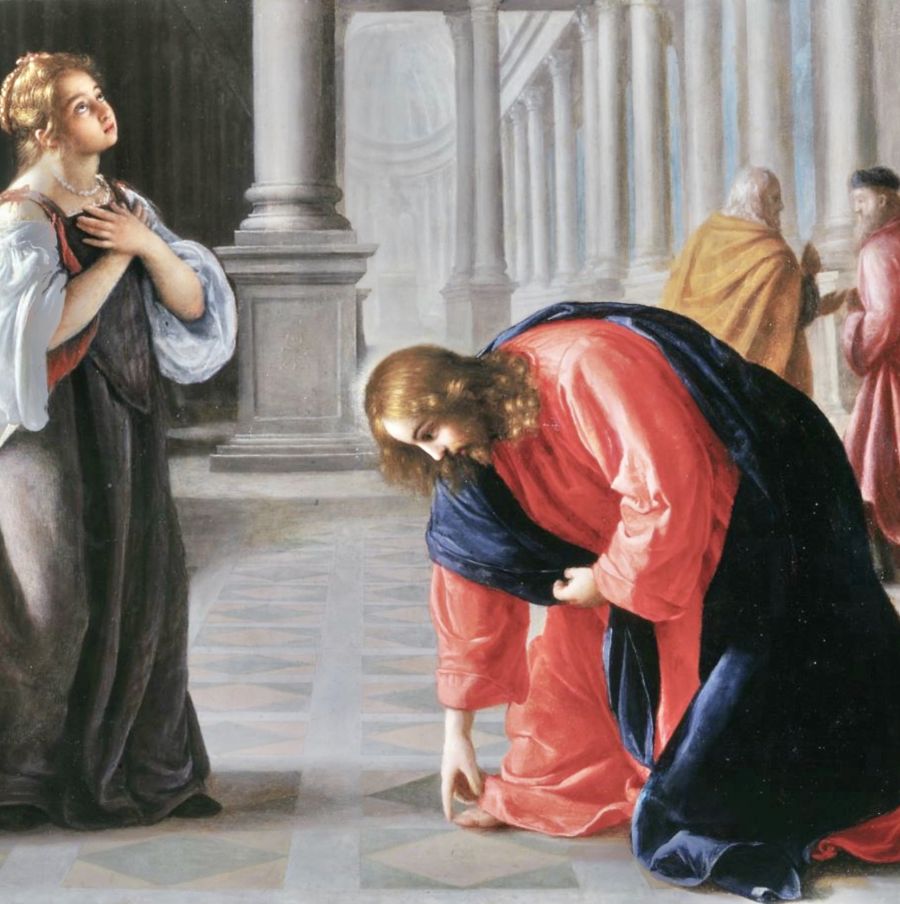
The woman caught in adultery and brought by the scribes and Pharisees to Jesus is the specious 'fig leaf' they use to cover their sins.

The Lord knows this to be so, as to say to the bystanders:

"Let him who is without sin among you cast a stone at her first" (Jn 8:7).

He condemns the lack of mercy, shown in an arrogant and clumsy manner.


Francis was truly the herald of Compassion - the one who always made this prevail, along with patience, in the face of the sinner, giving time to change his life.

In his Letter to a Minister he writes:

"If any of the brothers, at the instigation of the enemy, has mortally sinned, he is bound by obedience to have recourse to his guardian.

And all the brothers who know of his sin, let them not be ashamed or speak ill of him, but have great mercy on him and keep the sin of their brother very secret, because it is not the healthy who need a doctor, but the sick" (FF 237).

This attitude was also profoundly transmitted to his own, so much so that:

"One day when two brothers were walking together, they came across a madman, who started throwing stones at them.

One of them, seeing that the stones were directed at his companion, immediately stepped in front of him, preferring to be hit himself instead of his brother.

Such was the mutual love that inflamed them, and so sincerely were they ready to lay down their lives for one another" (FF 1447 - Legend of the Three Companions).

Taking upon oneself the stones directed at the other: a great merciful heart that wants the salvation of one's neighbour.

On the other hand, the Poor Man of Assisi, while hating sin, welcomed with great pity those who had fallen into error.

God had remembered him when he was in sin, and now he felt called to do the same for others.

In his memory, the Gospel sentence he had experienced was fixed:

«Go, do likewise» (Lk 10:37).

In the Testament of Francis (1226) we read:

«When I was in sin, it seemed too bitter for me to see lepers; and the Lord himself led me among them and I used mercy with them» (FF 110).

The biographer St Bonaventure, in the Major Legend, narrates:

"No wonder: just as the piety of his heart had made him a brother to all creatures, so the charity of Christ made him even more intensely a brother to those who bear within themselves the image of the Creator and have been redeemed by the blood of the Redeemer.

He did not consider himself a friend of Christ if he did not lovingly care for the souls redeemed by Him.

Nothing, he said, must be put before the salvation of souls, and he confirmed this assertion above all with this argument: that the Only-Begotten of God, for the sake of souls, had deigned to go up on the cross' (FF 1168).

The clear consciousness of the salvation received gratuitously had made Francis the standard bearer of Mercy, who turns his gaze on the wretched in need of being healed and reawakened.


Monday 5th wk. in Lent (year A.B.)  (Jn 8,1-11)

319 Last modified on Sunday, 15 March 2026 05:17
Teresa Girolami

Teresa Girolami è laureata in Materie letterarie e Teologia. Ha pubblicato vari testi, fra cui: "Pellegrinaggio del cuore" (Ed. Piemme); "I Fiammiferi di Maria - La Madre di Dio in prosa e poesia"; "Tenerezza Scalza - Natura di donna"; co-autrice di "Dialogo e Solstizio".

Email This email address is being protected from spambots. You need JavaScript enabled to view it.
Those wounds that, in the beginning were an obstacle for Thomas’s faith, being a sign of Jesus’ apparent failure, those same wounds have become in his encounter with the Risen One, signs of a victorious love. These wounds that Christ has received for love of us help us to understand who God is and to repeat: “My Lord and my God!” Only a God who loves us to the extent of taking upon himself our wounds and our pain, especially innocent suffering, is worthy of faith (Pope Benedict)
Quelle piaghe, che per Tommaso erano dapprima un ostacolo alla fede, perché segni dell’apparente fallimento di Gesù; quelle stesse piaghe sono diventate, nell’incontro con il Risorto, prove di un amore vittorioso. Queste piaghe che Cristo ha contratto per amore nostro ci aiutano a capire chi è Dio e a ripetere anche noi: “Mio Signore e mio Dio”. Solo un Dio che ci ama fino a prendere su di sé le nostre ferite e il nostro dolore, soprattutto quello innocente, è degno di fede (Papa Benedetto)
We see that the disciples are still closed in their thinking […] How does Jesus answer? He answers by broadening their horizons […] and he confers upon them the task of bearing witness to him all over the world, transcending the cultural and religious confines within which they were accustomed to think and live (Pope Benedict)
Vediamo che i discepoli sono ancora chiusi nella loro visione […] E come risponde Gesù? Risponde aprendo i loro orizzonti […] e conferisce loro l’incarico di testimoniarlo in tutto il mondo oltrepassando i confini culturali e religiosi entro cui erano abituati a pensare e a vivere (Papa Benedetto)
The Fathers made a very significant commentary on this singular task. This is what they say: for a fish, created for water, it is fatal to be taken out of the sea, to be removed from its vital element to serve as human food. But in the mission of a fisher of men, the reverse is true. We are living in alienation, in the salt waters of suffering and death; in a sea of darkness without light. The net of the Gospel pulls us out of the waters of death and brings us into the splendour of God’s light, into true life (Pope Benedict)
I Padri […] dicono così: per il pesce, creato per l’acqua, è mortale essere tirato fuori dal mare. Esso viene sottratto al suo elemento vitale per servire di nutrimento all’uomo. Ma nella missione del pescatore di uomini avviene il contrario. Noi uomini viviamo alienati, nelle acque salate della sofferenza e della morte; in un mare di oscurità senza luce. La rete del Vangelo ci tira fuori dalle acque della morte e ci porta nello splendore della luce di Dio, nella vera vita (Papa Benedetto)
There is the path of those who, like those two on the outbound journey, allow themselves to be paralysed by life’s disappointments and proceed sadly; and there is the path of those who do not put themselves and their problems first, but rather Jesus who visits us, and the brothers who await his visit (Pope Francis)
C’è la via di chi, come quei due all’andata, si lascia paralizzare dalle delusioni della vita e va avanti triste; e c’è la via di chi non mette al primo posto se stesso e i suoi problemi, ma Gesù che ci visita, e i fratelli che attendono la sua visita (Papa Francesco)
So that Christians may properly carry out this mandate entrusted to them, it is indispensable that they have a personal encounter with Christ, crucified and risen, and let the power of his love transform them. When this happens, sadness changes to joy and fear gives way to missionary enthusiasm (John Paul II)
Perché i cristiani possano compiere appieno questo mandato loro affidato, è indispensabile che incontrino personalmente il Crocifisso risorto, e si lascino trasformare dalla potenza del suo amore. Quando questo avviene, la tristezza si muta in gioia, il timore cede il passo all’ardore missionario (Giovanni Paolo II)

Due Fuochi due Vie - Vol. 1 Due Fuochi due Vie - Vol. 2 Due Fuochi due Vie - Vol. 3 Due Fuochi due Vie - Vol. 4 Due Fuochi due Vie - Vol. 5 Dialogo e Solstizio I fiammiferi di Maria

duevie.art

don Giuseppe Nespeca

Tel. 333-1329741


Disclaimer

Questo blog non rappresenta una testata giornalistica in quanto viene aggiornato senza alcuna periodicità. Non può pertanto considerarsi un prodotto editoriale ai sensi della legge N°62 del 07/03/2001.
Le immagini sono tratte da internet, ma se il loro uso violasse diritti d'autore, lo si comunichi all'autore del blog che provvederà alla loro pronta rimozione.
L'autore dichiara di non essere responsabile dei commenti lasciati nei post. Eventuali commenti dei lettori, lesivi dell'immagine o dell'onorabilità di persone terze, il cui contenuto fosse ritenuto non idoneo alla pubblicazione verranno insindacabilmente rimossi.






