Mar 1, 2026 Written by 

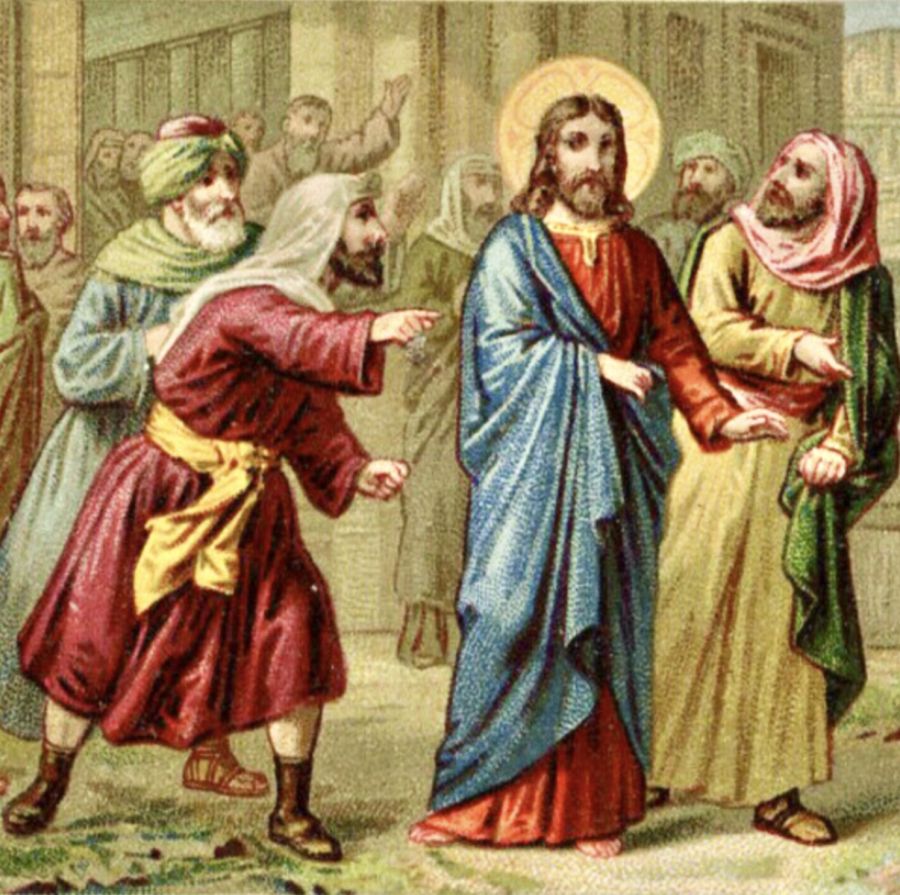
«Is not this the son of Joseph?»

In the Lk passage, the unbelief and mistrust of the people of Nazareth towards Jesus emerges, the provocations put forward and the Lord's replies emphasising the deaf acceptance of his Message.


Francis of Assisi admired the ordinary holiness of anyone, but especially of his brethren.

He often repeated that the preacher who seeks his own glory in preaching rather than the salvation of souls is to be pitied.

To them would be preferable one who was simple and without a 'tongue', but capable of pushing others to the good.

He rejoiced greatly when he knew that his brothers scattered around the world, with the daily holiness of their lives, induced many to return to the right path.

One day, he went to a church in the hamlet of Assisi and started cleaning.

There he learned that a certain John, a simple man, was ploughing a field of his own near the church.

"And immediately he went to him and found him intent on cleaning. He said to him, 'Brother, give the broom to me, I want to help you.'

He took the broom and finished cleaning.

Then they sat down, and John said: "For a long time I have intended to serve God, especially since I heard about you and your brothers. But I did not know how to join you. But since it pleased the Lord that I should see you, I am willing to do whatever pleases you".

Observing his fervour, Francis rejoiced in the Lord, also because he then had few brothers and because this man with his simplicity gave him confidence that he would be a good religious".

Francis invited him to give the goods he possessed to the poor, as the Gospel says.

John, the simple man, did not let himself be told twice and obeyed the Poverello in everything, selling an ox to give to the poor.

The Sources continue:

"Francis, who always liked pure and holy simplicity in himself and in others, had great affection for John.

And as soon as he had dressed him in the habit, he took him as his companion.

He was so simple that he considered himself obliged to do whatever Francis did.

When the saint was praying in a church or in a secluded place, John wanted to see him and stare at him, to repeat all his gestures: if Francis bent his knees, if he raised his joined hands to heaven, if he spat or coughed, he would do the same.

Although enchanted by such simplicity of heart, Francis began to rebuke him. But John replied: "Brother, I have promised to do all that you do; and therefore I intend to do all that you do".

The Saint was amazed and delighted at such purity and simplicity. John made such progress in all the virtues that Francis and the others were amazed at his holiness.

And not long afterwards he died in this holy perfection. Francis, filled with joy inwardly and outwardly, told the brothers about his life, and called him "Saint John" instead of "Brother John" (FF 1566).


The onlookers marvelled at the holiness manifested in the ordinary of one who lived the Word concretely and asked: «Is not this the Son of Joseph?» (Lk 4:22).

The simple and transparent life bewilders those who have abstruse ideas of holiness; they believe it to be linked to sumptuous descent, forgetting that God loves and proclaims in the ordinary.


«No prophet is accepted in his own country» (Lk 4:24)


Monday 3rd wk. in Lent  (Lk 4,24-30)

115 Last modified on Sunday, 01 March 2026 02:58
Teresa Girolami

Teresa Girolami è laureata in Materie letterarie e Teologia. Ha pubblicato vari testi, fra cui: "Pellegrinaggio del cuore" (Ed. Piemme); "I Fiammiferi di Maria - La Madre di Dio in prosa e poesia"; "Tenerezza Scalza - Natura di donna"; co-autrice di "Dialogo e Solstizio".

Email This email address is being protected from spambots. You need JavaScript enabled to view it.
In the divine attitude justice is pervaded with mercy, whereas the human attitude is limited to justice. Jesus exhorts us to open ourselves with courage to the strength of forgiveness, because in life not everything can be resolved with justice. We know this (Pope Francis)
Nell’atteggiamento divino la giustizia è pervasa dalla misericordia, mentre l’atteggiamento umano si limita alla giustizia. Gesù ci esorta ad aprirci con coraggio alla forza del perdono, perché nella vita non tutto si risolve con la giustizia; lo sappiamo (Papa Francesco)
The true prophet does not obey others as he does God, and puts himself at the service of the truth, ready to pay in person. It is true that Jesus was a prophet of love, but love has a truth of its own. Indeed, love and truth are two names of the same reality, two names of God (Pope Benedict)
Il vero profeta non obbedisce ad altri che a Dio e si mette al servizio della verità, pronto a pagare di persona. E’ vero che Gesù è il profeta dell’amore, ma l’amore ha la sua verità. Anzi, amore e verità sono due nomi della stessa realtà, due nomi di Dio (Papa Benedetto)
“Give me a drink” (v. 7). Breaking every barrier, he begins a dialogue in which he reveals to the woman the mystery of living water, that is, of the Holy Spirit, God’s gift [Pope Francis]
«Dammi da bere» (v. 7). Così, rompendo ogni barriera, comincia un dialogo in cui svela a quella donna il mistero dell’acqua viva, cioè dello Spirito Santo, dono di Dio [Papa Francesco]
The mystery of ‘home-coming’ wonderfully expresses the encounter between the Father and humanity, between mercy and misery, in a circle of love that touches not only the son who was lost, but is extended to all (Pope John Paul II)
Il mistero del ‘ritorno-a-casa’ esprime mirabilmente l’incontro tra il Padre e l’umanità, tra la misericordia e la miseria, in un circolo d’amore che non riguarda solo il figlio perduto, ma si estende a tutti (Papa Giovanni Paolo II)
The image of the vineyard is clear: it represents the people whom the Lord has chosen and formed with such care; the servants sent by the landowner are the prophets, sent by God, while the son represents Jesus. And just as the prophets were rejected, so too Christ was rejected and killed (Pope Francis)
L’immagine della vigna è chiara: rappresenta il popolo che il Signore si è scelto e ha formato con tanta cura; i servi mandati dal padrone sono i profeti, inviati da Dio, mentre il figlio è figura di Gesù. E come furono rifiutati i profeti, così anche il Cristo è stato respinto e ucciso (Papa Francesco)
‘Lazarus’ means ‘God helps’. Lazarus, who is lying at the gate, is a living reminder to the rich man to remember God, but the rich man does not receive that reminder. Hence, he will be condemned not because of his wealth, but for being incapable of feeling compassion for Lazarus and for not coming to his aid. In the second part of the parable, we again meet Lazarus and the rich man after their death (vv. 22-31). In the hereafter the situation is reversed [Pope Francis]
“Lazzaro” significa “Dio aiuta”. Lazzaro, che giace davanti alla porta, è un richiamo vivente al ricco per ricordarsi di Dio, ma il ricco non accoglie tale richiamo. Sarà condannato pertanto non per le sue ricchezze, ma per essere stato incapace di sentire compassione per Lazzaro e di soccorrerlo. Nella seconda parte della parabola, ritroviamo Lazzaro e il ricco dopo la loro morte (vv. 22-31). Nell’al di là la situazione si è rovesciata [Papa Francesco]

Due Fuochi due Vie - Vol. 1 Due Fuochi due Vie - Vol. 2 Due Fuochi due Vie - Vol. 3 Due Fuochi due Vie - Vol. 4 Due Fuochi due Vie - Vol. 5 Dialogo e Solstizio I fiammiferi di Maria

duevie.art

don Giuseppe Nespeca

Tel. 333-1329741


Disclaimer

Questo blog non rappresenta una testata giornalistica in quanto viene aggiornato senza alcuna periodicità. Non può pertanto considerarsi un prodotto editoriale ai sensi della legge N°62 del 07/03/2001.
Le immagini sono tratte da internet, ma se il loro uso violasse diritti d'autore, lo si comunichi all'autore del blog che provvederà alla loro pronta rimozione.
L'autore dichiara di non essere responsabile dei commenti lasciati nei post. Eventuali commenti dei lettori, lesivi dell'immagine o dell'onorabilità di persone terze, il cui contenuto fosse ritenuto non idoneo alla pubblicazione verranno insindacabilmente rimossi.






