Mar 2, 2026 Written by 

Forgiveness in the unlimited leap of Faith

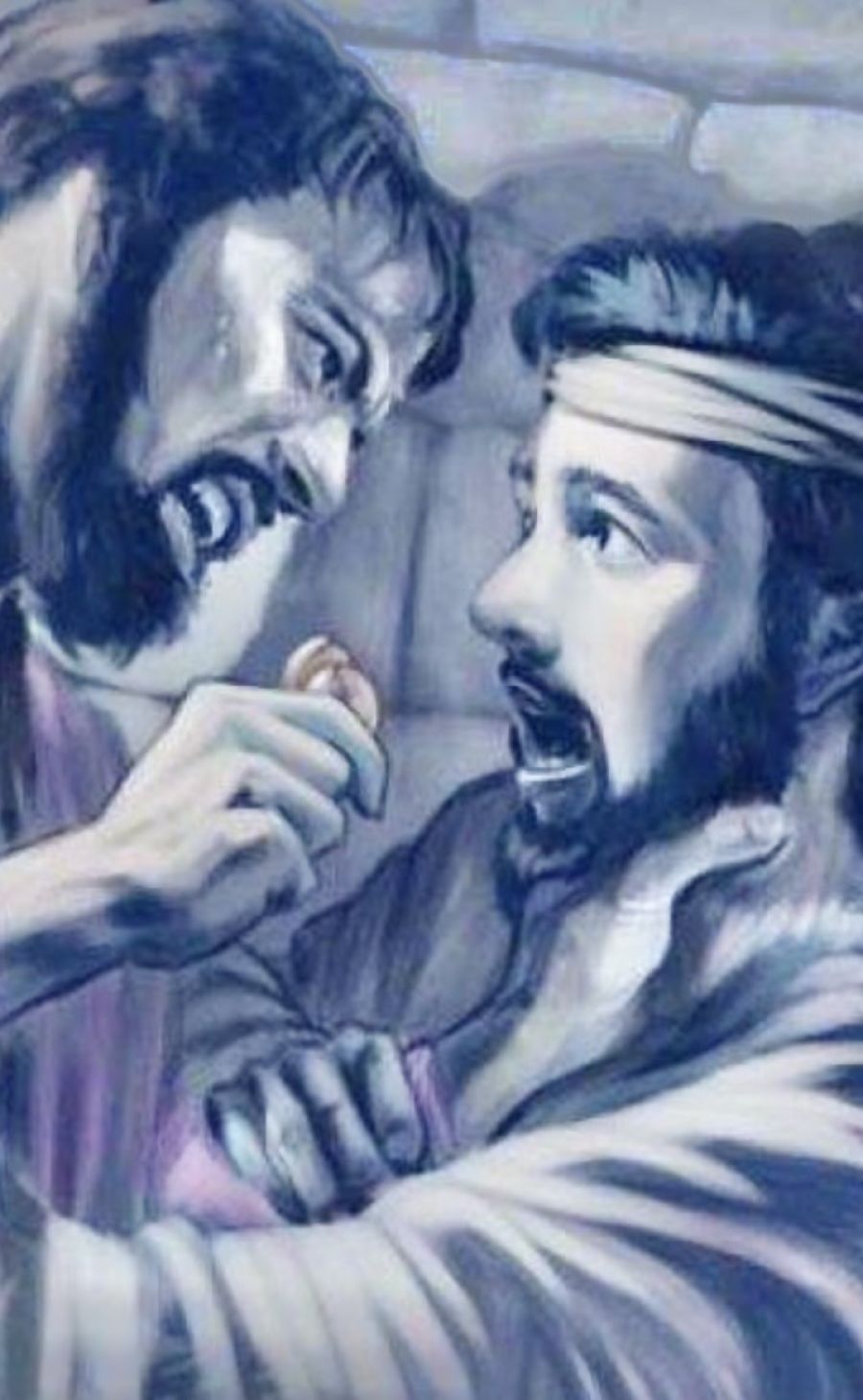
(Mt 18:21-35)


Throughout the ancient Middle East, non-disproportionate retaliation one to one [not cruel] was a sacred law.

Forgiveness was a humiliating and absurd attitude, an incomprehensible principle to anyone experiencing any injustice.

Conversely, in the dynamic of Faith, forgiveness becomes a power, which not only makes the air breathable, but activates our personal destiny.

Peter instead wants to know the limits of forgiveness (v.21).

Historically, at the end of the first century the picky, severe, style of the synagogue and of the Empire [«divide et impera»] reappear in believers. 

A question arises: will we have to stop welcoming?

In addition, in the same churches one begins to think that someone has sinned in lese majesty towards those who - now hard and heartless - are used to being revered.

Veterans who make trouble more than others and then dot on the minutiae of others (the weak brothers, considered subjected and destined to the fiscal rigour of moralisms, as well as penances).


While religious discipline exacerbates minute defects, the very experience of the disproportion between the forgiveness received from the Father and what we are able to offer to the brothers, makes us understand the need for tolerance.

Church should be this space of the experience of God who return life, an alternative place of fraternity.


Imperial society was harsh and uncompassionate, with no room for the small and shaky, who unassumingly sought any refuge for their hearts - but no religion gave them an answer.

Synagogues, too, identified material and spiritual blessings. Cloaked with requirements, purity rules and fulfilments, they did not offer the warmth of a welcoming place for the weak.

The issue was that in the early Christian communities themselves, some people insisted on the rigour of norms, customs and hierarchies, demanding coexistence based on the Judaizing model.

Furthermore, as the Letter of James testifies, towards the end of the first century the identical divisions of society, between miserables and wealthy, were already beginning to manifest themselves in the churches of Christ!

Welcoming space of the communities that in the Spirit had been given the task by the Lord to enlighten the world with their seed of life as a ‘shelter for all’ (and of alternative relationships) ran the risk of becoming again a place of conflict, judgement, punishment, condemnation.

«So also my heavenly Father will do to you, if you do not condone each one to his own brother from your heart» (v.35).


Divine forgiveness becomes effective and evident only in the testimony of the Church (v.35) where sisters and brothers - instead of showing themselves to be meticulous, let themselves be guided by a Vision of new heavens and new earth.

For this reason - without any effort, indeed blessing the needs of others as territories of preparatory energies - they live the communion of resources and remit even material debts, a misery.

Otherwise, we would always have to live in the incumbency of an indulgent God perhaps, but at times, and according to the cases retracting the doing of mercy.

It would be a life without surprising developments, all weighted down in a swamp of little pennies.

Instead, it’s the active energy of the Faith that doesn’t condemn us to trudge.


The magnanimity that comes out of the automatisms shifts our gaze and brings us an ineffable and growing wave, far ahead of what we can imagine.

Our surrenders are preparing new developments - the ones that count, without limitations.


The "win-or-lose" alternative is false: you have to get out of it.


[Tuesday 3rd wk. in Lent, March 10, 2026]

433 Last modified on Tuesday, 10 March 2026 12:21
don Giuseppe Nespeca

Giuseppe Nespeca è architetto e sacerdote. Cultore della Sacra scrittura è autore della raccolta "Due Fuochi due Vie - Religione e Fede, Vangeli e Tao"; coautore del libro "Dialogo e Solstizio".

The school of faith is not a triumphal march but a journey marked daily by suffering and love, trials and faithfulness. Peter, who promised absolute fidelity, knew the bitterness and humiliation of denial:  the arrogant man learns the costly lesson of humility (Pope Benedict)
La scuola della fede non è una marcia trionfale, ma un cammino cosparso di sofferenze e di amore, di prove e di fedeltà da rinnovare ogni giorno. Pietro che aveva promesso fedeltà assoluta, conosce l’amarezza e l’umiliazione del rinnegamento: lo spavaldo apprende a sue spese l’umiltà (Papa Benedetto)
If, in his prophecy about the shepherd, Ezekiel was aiming to restore unity among the dispersed tribes of Israel (cf. Ez 34: 22-24), here it is a question not only of the unification of a dispersed Israel but of the unification of all the children of God, of humanity - of the Church of Jews and of pagans [Pope Benedict]
Se Ezechiele nella sua profezia sul pastore aveva di mira il ripristino dell'unità tra le tribù disperse d'Israele (cfr Ez 34, 22-24), si tratta ora non solo più dell'unificazione dell'Israele disperso, ma dell'unificazione di tutti i figli di Dio, dell'umanità - della Chiesa di giudei e di pagani [Papa Benedetto]
St Teresa of Avila wrote: «the last thing we should do is to withdraw from our greatest good and blessing, which is the most sacred humanity of Our Lord Jesus Christ» (cf. The Interior Castle, 6, ch. 7). Therefore, only by believing in Christ, by remaining united to him, may the disciples, among whom we too are, continue their permanent action in history [Pope Benedict]
Santa Teresa d’Avila scrive che «non dobbiamo allontanarci da ciò che costituisce tutto il nostro bene e il nostro rimedio, cioè dalla santissima umanità di nostro Signore Gesù Cristo» (Castello interiore, 7, 6). Quindi solo credendo in Cristo, rimanendo uniti a Lui, i discepoli, tra i quali siamo anche noi, possono continuare la sua azione permanente nella storia [Papa Benedetto]
Just as he did during his earthly existence, so today the risen Jesus walks along the streets of our life and sees us immersed in our activities, with all our desires and our needs. In the midst of our everyday circumstances he continues to speak to us; he calls us to live our life with him, for only he is capable of satisfying our thirst for hope (Pope Benedict)
Come avvenne nel corso della sua esistenza terrena, anche oggi Gesù, il Risorto, passa lungo le strade della nostra vita, e ci vede immersi nelle nostre attività, con i nostri desideri e i nostri bisogni. Proprio nel quotidiano continua a rivolgerci la sua parola; ci chiama a realizzare la nostra vita con Lui, il solo capace di appagare la nostra sete di speranza (Papa Benedetto)
"Beloved" of God (cf. Lk 1: 28). Origen observes that no such title had ever been given to a human being, and that it is unparalleled in all of Sacred Scripture (cf. In Lucam 6: 7). It is a title expressed in passive form, but this "passivity" of Mary, who has always been and is for ever "loved" by the Lord, implies her free consent, her personal and original response:  in being loved, in receiving the gift of God, Mary is fully active, because she accepts with personal generosity the wave of God's love poured out upon her [Pope Benedict]
"Amata" da Dio (cfr Lc 1,28). Origene osserva che mai un simile titolo fu rivolto ad essere umano, e che esso non trova riscontro in tutta la Sacra Scrittura (cfr In Lucam 6,7). E’ un titolo espresso in forma passiva, ma questa "passività" di Maria, che da sempre e per sempre è l’"amata" dal Signore, implica il suo libero consenso, la sua personale e originale risposta [Papa Benedetto]

Due Fuochi due Vie - Vol. 1 Due Fuochi due Vie - Vol. 2 Due Fuochi due Vie - Vol. 3 Due Fuochi due Vie - Vol. 4 Due Fuochi due Vie - Vol. 5 Dialogo e Solstizio I fiammiferi di Maria

duevie.art

don Giuseppe Nespeca

Tel. 333-1329741


Disclaimer

Questo blog non rappresenta una testata giornalistica in quanto viene aggiornato senza alcuna periodicità. Non può pertanto considerarsi un prodotto editoriale ai sensi della legge N°62 del 07/03/2001.
Le immagini sono tratte da internet, ma se il loro uso violasse diritti d'autore, lo si comunichi all'autore del blog che provvederà alla loro pronta rimozione.
L'autore dichiara di non essere responsabile dei commenti lasciati nei post. Eventuali commenti dei lettori, lesivi dell'immagine o dell'onorabilità di persone terze, il cui contenuto fosse ritenuto non idoneo alla pubblicazione verranno insindacabilmente rimossi.






