Nov 14, 2025 Written by 

Seven husbands, and God who binds His heart to humanity

(Lk 20:27-40)


The defeat of death is the cruel fate that has clouded the mind of all civilizations.

But if God creates us and calls incessantly to enter into dialogue, then what remains of us? Is the goal of all our turmoil a pit?

The Sadducees want to ridicule the doctrine of the resurrection dear to the Pharisees and - it seems - also to Jesus.

However, Master does not apply provisional categories of this world to dimensions that go beyond.

The ties also must be conceived in the relief of the divine reality.

Members of the priestly class did not believe in another life, and in the Torah it seemed to them that there was no note about the resurrection.

In short, they conceived the relationship with God in the dimension of life on earth.

In fact, the Pharisees believed in the raising of the dead in a very banal sense: a sort of improvement and sublimation of the (same) conditions of being natural.

For them, the existence of the afterlife was only an accentuated, ennobled and embellished extension of this form of our being.

Instead life «in the era, that» [v.35 Greek text] is not a strengthened existence, but an indescribable and new condition - as of direct communication. Comparable to the immediacy of love.

The body decays, gets sick and undergoes dissolution: it’s a natural cycle.

‘Resurrection of the flesh’ designates access to an intimate existence of pure Relationship, in our weakness and precariousness, assumed.

Evangelists use two terms to indicate the difference between these forms of life: (transliterating) Bìos and Zoe Aiònios [Life of the Eternal] which has nothing to do with the biological reality [v.36: «equal to angels»].

Life «in the era, that» is not an enhanced existence with respect to this mode of existence, but an indescribable and new condition - precisely, as of ‘direct communication’.

Comparable to the one-to-one of Friendship: a ‘being-with and for’ others; readily, everywhere.

Collimating with the way of existence of the Angels: they do not have a life transmitted by parents, but by God himself.

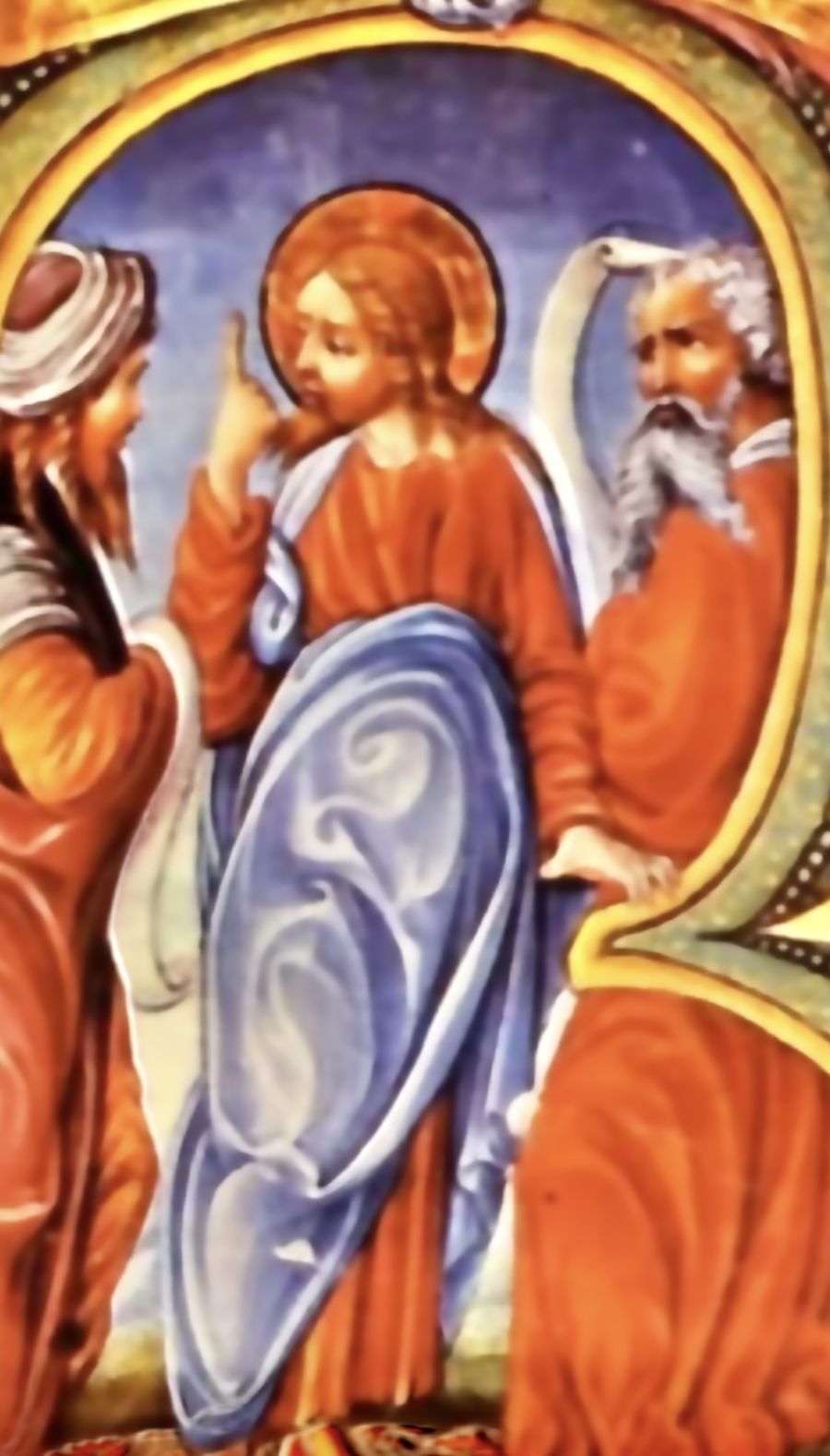
«About the bush...» - Jesus replies. He also silences the Sadducees by making them reflect; and He draws the foundation of the Resurrection (but as He understands it) precisely from Exodus.

Thus He shows that already in the Law there is a presentation of God incompatible with a destiny of humanity devoted to extermination.

The Father does not seek dialogue with the sons and then make them fall on the most beautiful.

Since creation, He takes pleasure in walking with man, and from the patriarchs he has been looking for empathy with us. His Love does not abandon.


In the archaic religious mentality the Most High was named after the region or the heights in its borders [es. Baal of Gad, Baal of Saphon, Baal of Peor, etc.].

The God of Israel already from the First Testament binds his heart to man - no longer to a territory: He is the God of Abraham, of Isaac and of Jacob.

The Father of life arouses all understanding, Alliances, and if the ally could be annihilated, the same divine identity would be shattered.

All the Scriptures attest to this: He is a God of the living, not of dust or of the nothingness.

This is why we call our missing loved ones «deceased» or «departed» - not "dead".


[Saturday 33rd wk. in O.T.  November 22, 2025]

167 Last modified on Saturday, 22 November 2025 12:00
don Giuseppe Nespeca

Giuseppe Nespeca è architetto e sacerdote. Cultore della Sacra scrittura è autore della raccolta "Due Fuochi due Vie - Religione e Fede, Vangeli e Tao"; coautore del libro "Dialogo e Solstizio".

Experts in the Holy Scriptures believed that Elijah's return should anticipate and prepare for the advent of the Kingdom of God. Since the Lord was present, the first disciples wondered what the value of that teaching was. Among the people coming from Judaism the question arose about the value of ancient doctrines…
Gli esperti delle sacre Scritture ritenevano che il ritorno di Elia dovesse anticipare e preparare l’avvento del Regno di Dio. Poiché il Signore era presente, i primi discepoli si chiedevano quale fosse il valore di quell’insegnamento. Tra i provenienti dal giudaismo sorgeva il quesito circa il peso delle dottrine antiche...
Gospels make their way, advance and free, making us understand the enormous difference between any creed and the proposal of Jesus. Even within us, the life of Faith embraces all our sides and admits many things. Thus we become more complete and emancipate ourselves, reversing positions.
I Vangeli si fanno largo, avanzano e liberano, facendo comprendere l’enorme differenza tra credo qualsiasi e proposta di Gesù. Anche dentro di noi, la vita di Fede abbraccia tutti i nostri lati e ammette tante cose. Così diventiamo più completi e ci emancipiamo, ribaltando posizioni
We cannot draw energy from a severe setting, contrary to the flowering of our precious uniqueness. New eyes are transmitted only by the one who is Friend. And Christ does it not when we are well placed or when we equip ourselves strongly - remaining in a managerial attitude - but in total listening
Non possiamo trarre energia da un’impostazione severa, contraria alla fioritura della nostra preziosa unicità. Gli occhi nuovi sono trasmessi solo da colui che è Amico. E Cristo lo fa non quando ci collochiamo bene o attrezziamo forte - permanendo in atteggiamento dirigista - bensì nell’ascolto totale
The Evangelists Matthew and Luke (cf. Mt 11:25-30 and Lk 10:21-22) have handed down to us a “jewel” of Jesus’ prayer that is often called the Cry of Exultation or the Cry of Messianic Exultation. It is a prayer of thanksgiving and praise [Pope Benedict]
Gli evangelisti Matteo e Luca (cfr Mt 11,25-30 e Lc 10,21-22) ci hanno tramandato un «gioiello» della preghiera di Gesù, che spesso viene chiamato Inno di giubilo o Inno di giubilo messianico. Si tratta di una preghiera di riconoscenza e di lode [Papa Benedetto]
The human race – every one of us – is the sheep lost in the desert which no longer knows the way. The Son of God will not let this happen; he cannot abandon humanity in so wretched a condition. He leaps to his feet and abandons the glory of heaven, in order to go in search of the sheep and pursue it, all the way to the Cross. He takes it upon his shoulders and carries our humanity (Pope Benedict)
L’umanità – noi tutti - è la pecora smarrita che, nel deserto, non trova più la strada. Il Figlio di Dio non tollera questo; Egli non può abbandonare l’umanità in una simile miserevole condizione. Balza in piedi, abbandona la gloria del cielo, per ritrovare la pecorella e inseguirla, fin sulla croce. La carica sulle sue spalle, porta la nostra umanità (Papa Benedetto)
"Too bad! What a pity!" “Sin! What a shame!” - it is said of a missed opportunity: it is the bending of the unicum that we are inside, which every day surrenders its exceptionality to the normalizing and prim outline of common opinion. Divine Appeal of every moment directed Mary's dreams and her innate knowledge - antechamber of her trust, elsewhere
“Peccato!” - si dice di una occasione persa: è la flessione dell’unicum che siamo dentro, che tutti i giorni cede la sua eccezionalità al contorno normalizzante e affettato dell’opinione comune

Due Fuochi due Vie - Vol. 1 Due Fuochi due Vie - Vol. 2 Due Fuochi due Vie - Vol. 3 Due Fuochi due Vie - Vol. 4 Due Fuochi due Vie - Vol. 5 Dialogo e Solstizio I fiammiferi di Maria

duevie.art

don Giuseppe Nespeca

Tel. 333-1329741


Disclaimer

Questo blog non rappresenta una testata giornalistica in quanto viene aggiornato senza alcuna periodicità. Non può pertanto considerarsi un prodotto editoriale ai sensi della legge N°62 del 07/03/2001.
Le immagini sono tratte da internet, ma se il loro uso violasse diritti d'autore, lo si comunichi all'autore del blog che provvederà alla loro pronta rimozione.
L'autore dichiara di non essere responsabile dei commenti lasciati nei post. Eventuali commenti dei lettori, lesivi dell'immagine o dell'onorabilità di persone terze, il cui contenuto fosse ritenuto non idoneo alla pubblicazione verranno insindacabilmente rimossi.






