


Third Sunday in Advent (year A) [14 December 2025]
May God bless us and may the Virgin protect us! "Rejoice always in the Lord... the Lord is near." The message of this third Sunday of Advent is the announcement of the joy of Christmas approaching. Advent teaches us to wait with patient hope for Jesus, who will surely come.
*First Reading from the Book of the Prophet Isaiah (35:1...10)
This passage comes from Isaiah's Little Apocalypse, known as the "Minor Apocalypse" (cc34-35), probably written by an anonymous author, and tells of the joyful return of Israel from exile in Babylon. We are in the period when the people suffered the sack of Jerusalem and spent over fifty years away from their land, experiencing humiliation and suffering that would discourage even the strongest. Isaiah, who lived in the 6th century BC during the exile in Babylon, reassures the frightened people: 'Behold your God: vengeance is coming, divine reward. He is coming to save you'. The result will be the liberation of the suffering: the blind will see, the deaf will hear, the lame will leap for joy, the mute will shout for joy. The people have suffered years of domination, deportation with humiliation and many trials, including religious ones: a time that discourages and makes them fear for the future. The author uses the expression 'God's vengeance', which may surprise us today. But here, vengeance is not punishment on men: it is the defeat of the evil that oppresses them and the liberation that God gives. God intervenes personally to save, redeem and restore dignity: the blind will see, the deaf will hear, the lame will leap and the mute will shout for joy. The return from exile is described as a triumphal march through the desert: the arid landscape is transformed into fertile and lush land, as beautiful as the mountains of Lebanon, the hills of Carmel and the plain of Sharon, symbols of abundance and beauty in the land of Israel. This journey shows that even the hardest trials can become a path of joy and hope when God intervenes. The desert, a symbol of hardship and trial, is thus transformed into a path of joy and hope thanks to God's intervention. The liberated people are called 'redeemed' and liberation is compared to 'redemption' in Jewish law: just as a close relative would release a debt or redeem a slave, God himself is our 'Go'el', the Relative who frees those who are oppressed or prisoners of evil. In this sense, redemption means liberation: physical, moral and spiritual. Singing 'Alleluia' means recognising that God leads us from servitude to freedom, transforming despair into joy and the desert into blossoming. This text reminds us that God never abandons us: even in the most difficult moments, his mercy and love free us and give us hope again. It shows how the language of the Bible can transform words that seem threatening into promises of salvation and hope, reminding us that God always intervenes to free us and restore our dignity.
Main elements +Context: Babylonian exile, Israel far from the land, anonymous author. +Isaiah's Little Apocalypse: prophecy of hope and return to the promised land. +God's vengeance: defeat of evil, not punishment of men. +Concrete liberation: the blind, deaf, lame, mute and prisoners redeemed. +The desert will blossom: difficulties transformed into joy and beauty. +Redemption: God as Go'el, liberator of the oppressed. +Alleluia: song of praise for the liberation received. +Spiritual message: God intervenes to free us and give us hope even in the hardest moments.
*Responsorial Psalm (145/146, 7-8, 9-10
This psalm, a 'psalm of Alleluia', is a song full of joy and gratitude, written after the return of the people of Israel from exile in Babylon, probably for the dedication of the rebuilt Temple. The Temple had been destroyed in 587 BC by Nebuchadnezzar, king of Babylon. In 538 BC, after the conquest of Babylon by the Persian king Cyrus, the Jews were allowed to return to their land and rebuild the Temple. The reconstruction was not easy due to tensions between those returning from Babylon and those who had remained in Israel, but thanks to the strength of the prophets Haggai and Zechariah, the work was completed in 515 BC, under King Darius. The dedication of the new Temple was celebrated with great joy (Ezra 6:16). The psalm reflects this joy: Israel recognises that God has remained faithful to the Covenant, as he did during the Exodus. God is the one who frees the oppressed, breaks the chains, gives bread to the hungry, gives sight to the blind and lifts up the weak. This image of God, a God who takes the side of the poor and feels compassion ('mercy' indicates as if the bowels were trembling), was not taken for granted in ancient times. It is Israel's great contribution to the faith of humanity: to reveal a God of love and mercy. The psalm expresses this by saying that the Lord supports the widow and the orphan. The people are invited to imitate God in the same mercy, and the Law of Israel contains many rules for the protection of the weak (widows, orphans, foreigners). The prophets judged Israel's fidelity to the Covenant on the basis of this behaviour. At a deeper level, the psalm shows that God frees us not only from external oppression, but also from internal oppression: spiritual hunger finds its food in the Word; inner blindness is illuminated; the chains of hatred, pride and jealousy are broken. Although we do not see it here, this psalm is actually framed by the word 'Alleluia', which according to Jewish tradition means to sing the praise of God because He leads from slavery to freedom, from darkness to light, from sadness to joy. We Christians read this psalm in the light of Jesus Christ: He gave bread to his contemporaries and continues to give the "bread of life" in the Eucharist; He is the light of the world (Jn 8:12); in his resurrection, he definitively freed humanity from the chains of death. Finally, since man is created in the image of God, every time he helps a poor person, a sick person, a prisoner, a stranger, he manifests the very image of God. And every gesture made "to the least" contributes to the growth of the Kingdom of God. A catechumen, reading about the miracle of the multiplication of the loaves, asked, "Why doesn't Jesus do this today for all the hungry?" And after a moment she replied, "Perhaps he is counting on us to do it."
Important elements to remember +Historical context: psalm written after the return from exile and the reconstruction of the Temple (587–515 BC). +Central theme: the joy of the people for God's faithfulness and their liberation. +Revelation of God: God is merciful and defends the oppressed, the poor, the weak. +Commitment of the people: to imitate God in works of mercy towards all the oppressed. +Spiritual reading: God frees us from inner chains (hatred, pride, spiritual blindness). +Alleluia: symbol of the passage from slavery to freedom and from sadness to joy. +Christian reading: fulfilment in Christ, who gives true bread, enlightens, liberates, saves. +Image of God in man: every gesture of love towards the most fragile makes the image of God visible. +Christian responsibility: God also counts on our commitment to nourish, liberate and support those who suffer.
*Second Reading from the Letter of St James the Apostle (5:7-10)
Christian tradition recognises three figures named James who were close to Jesus: James the Greater, son of Zebedee and brother of John, with an impetuous character, present at the Transfiguration and in Gethsemane; James, son of Alphaeus, one of the Twelve; James, 'brother/cousin' of the Lord, leader of the Church of Jerusalem and probable author of the Letter of James. The text highlights a fundamental theme for the early Christians: the expectation of the coming of the Lord. Like Paul, James always looks to the horizon of the final fulfilment of God's plan. It is significant that at the very beginning of Christian preaching, the end of the world was most ardently desired, perhaps because the Resurrection had given a taste of future glory. In this expectation, James repeats a crucial invitation: patience, a word which in the original Greek (makrothyméo) means 'to have long breath, to have a long spirit'. Waiting for the coming of the Lord is a long-distance race, not a sprint: faith must learn to endure over time. When the early Christians realised that the parousia was not coming immediately, waiting became a true test of fidelity.
To live this endurance, James offers two models: the farmer, who knows the rhythm of the seasons, trusting in God who sends rain 'in its season' (Deut 11:14), and the other model: the prophets, who endured hostility and persecution to remain faithful to their mission. James asks Christians to have stamina (perseverance/patience) and a steadfast heart ("Strengthen your hearts"). In verse 11, which follows this text, James also quotes Job, the only case in the New Testament, as the supreme example of perseverance: those who remain steadfast like him will experience the Lord's mercy. Patience is not only personal: it is lived out in community relationships. James takes up Jesus' teaching: do not complain about one another, do not judge one another, do not murmur. 'The Judge is at hand': only God truly judges, because he sees the heart. Man easily risks confusing wheat and weeds. The lesson is also for us: we often lack the breath of hope, and at the same time we give in to the temptation to judge. Yet Jesus' words about the speck and the log remain relevant today.
Important points to remember: + Of the three James, it is James the Greater, the son of Alphaeus, the 'brother' of the Lord, who is the probable author of this Letter, which reflects the central theme of waiting for the coming of the Lord. + Patience is repeated several times and is understood as 'long breath', an endurance race. + The initial Christian expectation was very intense: it was thought that Christ's return was imminent. + Two models of perseverance: the farmer (trust in God's timing) and the prophets (courage in mission). + v.11 not in this text but immediately after John
cites Job as an example of endurance: the only citation in the New Testament, a symbol of perseverance in trials. +Community mission: do not judge, do not murmur, do not complain because 'the Judge is at the door'. He invites us to live knowing that only God judges rightly. +The danger today is also a lack of spiritual breath and the risk of judging others.
*From the Gospel according to Matthew (11:2-11)
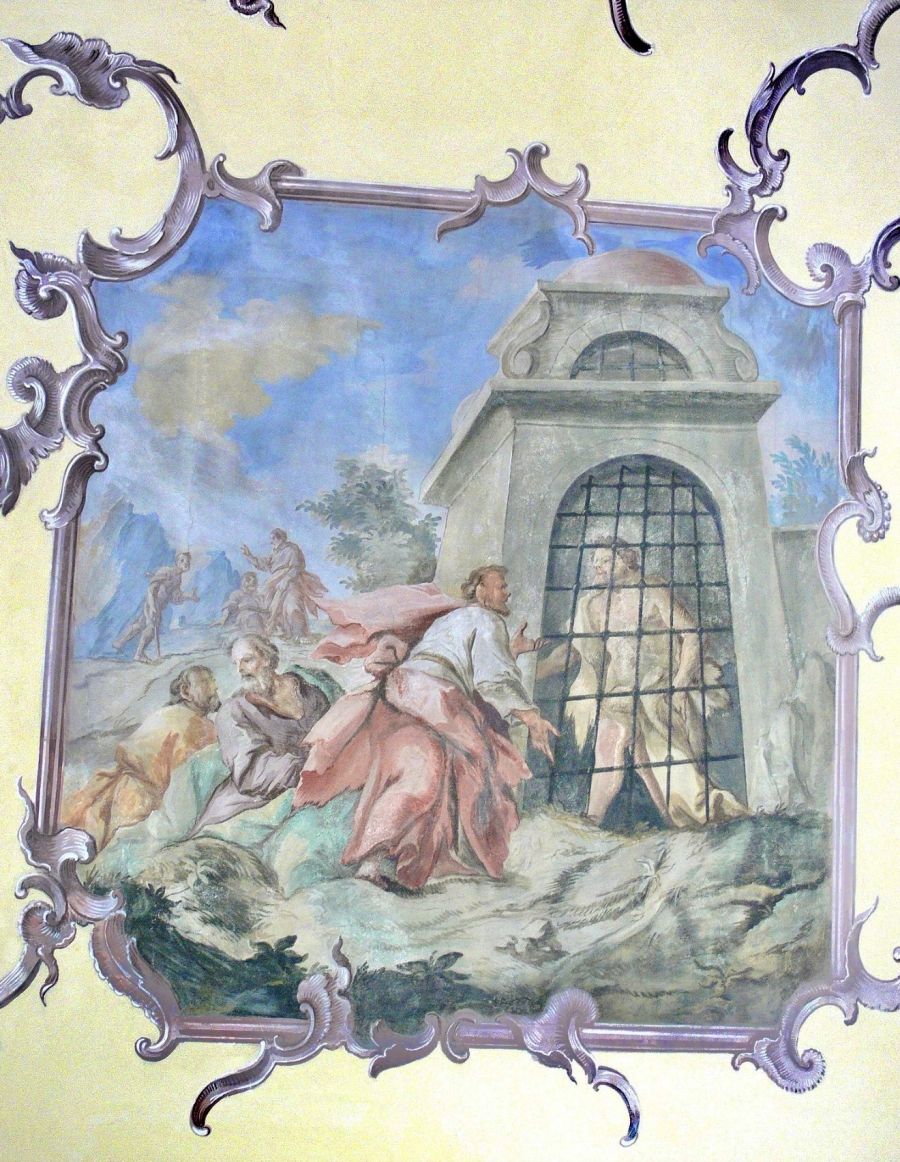
Last Sunday we saw John the Baptist baptising along the Jordan and announcing: 'After me comes one'. When Jesus asked to be baptised, John recognised him as the expected Messiah, but the months passed and John was put in prison by Herod around the year 28, at which time Jesus began his public preaching in Galilee. Jesus began his public life with famous discourses, such as the Sermon on the Mount and the Beatitudes, and with many healings. However, his behaviour was strange in the eyes of the people: he surrounded himself with "unreliable" disciples (publicans, people of different origins and characters); he was not an ascetic like John, he ate and drank like everyone else, and he showed himself among the common people; he never claimed the title of Messiah, nor did he seek power. From prison, John received news from those who kept him informed and began to doubt: 'Have I been deceived? Are you the Messiah?' This question is crucial because it concerns both John and Jesus, who was forced to confront the expectations of those who awaited him. Jesus does not answer with a yes or no, but quotes the prophecies about the works of the Messiah: the blind regain their sight, the lame walk, lepers are cleansed, the deaf hear, the dead are raised, and the poor receive the good news (Isaiah 35:5-6; 61:1). With these words, Jesus invites John to see for himself whether he is doing the works of the Messiah, confirming that yes, he is the Messiah, even if his manners seem strange. The true face of God is revealed in his service to humanity, not in accordance with expectations of power or glory. Finally, Jesus praises John, saying that he is blessed because he "does not find cause for scandal in me." John sets an example of faith: even in doubt, he does not lose confidence and seeks the truth directly from Jesus himself. Jesus concludes by explaining that John is the greatest of the prophets because he paves the way for the Messiah, but with the coming of Jesus, even the least in the Kingdom of Heaven is greater than John, emphasising that the content of Christ's message exceeds all human expectations: "The Word became flesh and dwelt among us".
Important elements to remember +John the Baptist announces the Messiah and baptises along the Jordan. +Jesus begins his public life after John's arrest, in Galilee, with speeches and miracles. +Jesus' "strange" behaviour: he associates with everyone, even the most marginalised, does not claim titles or power, eats and presents himself like ordinary people.+John's doubts: he sends his disciples to ask if Jesus is truly the Messiah. + Jesus' response: he cites the prophetic works of the Messiah (healings, liberations, proclamation to the poor).+ John's active faith: he does not remain in doubt, but asks Jesus directly for clarification. + Joy and surprise: the face of God is revealed in the service of man, not according to traditional expectations. + John as precursor: the greatest of the prophets, but with Jesus, the smallest in the Kingdom is the greatest. + Final message: Christ is the Word incarnate, the fulfilment of God's promises.
*Here is a quote from St Gregory the Great in Homily 6 on the Gospels, commenting on the episode: "John does not ignore who Jesus is: he points to him as the Lamb of God. But, sent to prison, he sends his disciples not to know him, but so that they may learn from Christ what he already knew. John does not seek to be taught, but to teach. And Christ does not respond with words, but with deeds: he makes it clear that he is the Messiah not by saying so, but by showing the works announced by the prophets." He adds: "The Lord proclaims blessed those who are not scandalised by him, because in him there is greatness hidden beneath a humble appearance: those who are not scandalised by his humility recognise his divinity." This commentary perfectly illuminates the heart of the Gospel: John does not doubt for himself, but to help his disciples recognise that Jesus is the expected Messiah, even though he presents himself in a surprising and humble way.
+Giovanni D'Ercole








