Dec 5, 2025 Written by 

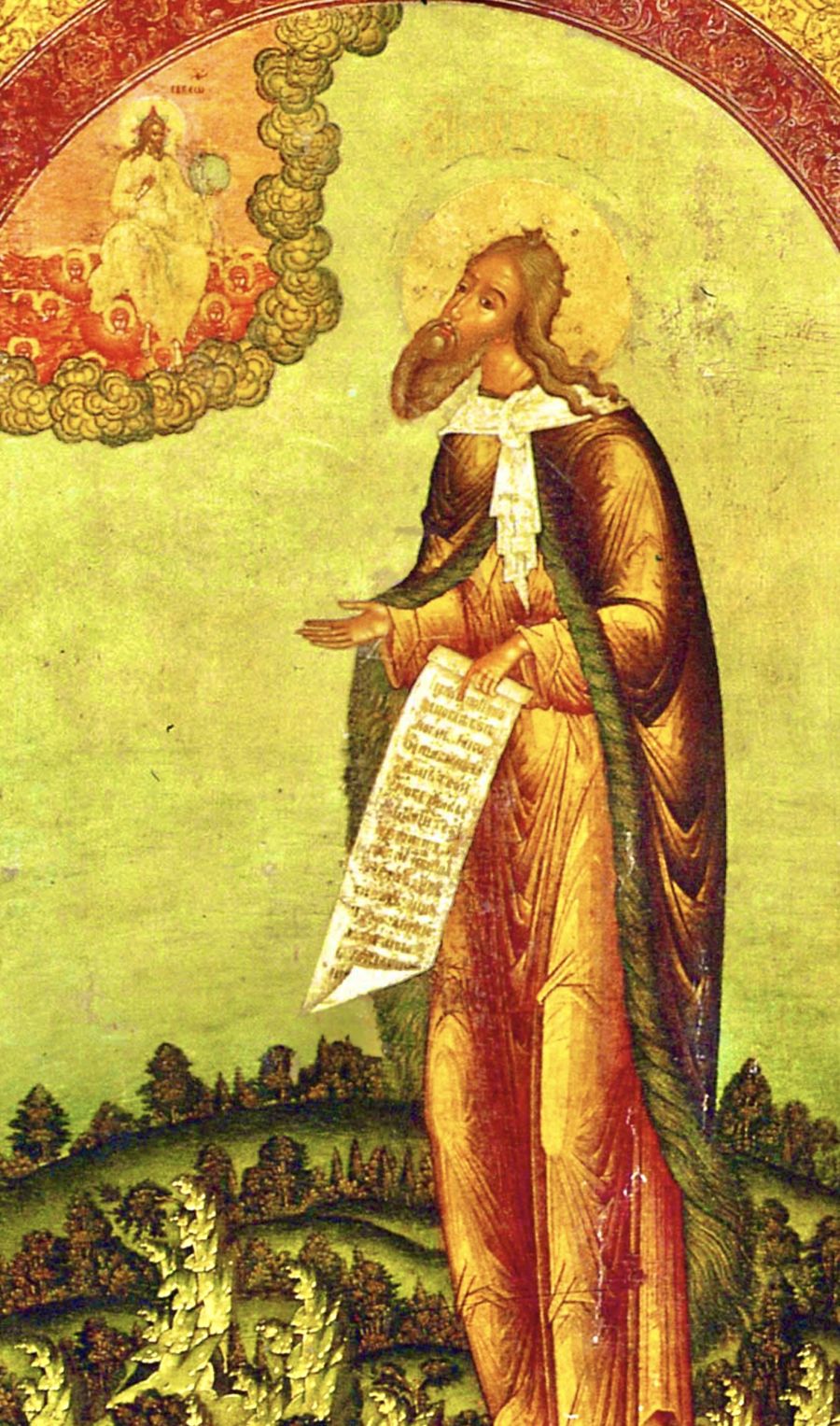
Elijah, John, Jesus: Evolution of Community sense

Curved trajectory, and the model that is not the "sphere"

(Mt 17:10-13)


At the time of Jesus, in the Palestinian area, economic difficulties and Roman domination had forced people to fall back on an individual life model.

The problems of subsistence and social order had resulted in a breakdown of relationship (and ties) of both clans and families themselves. Uniting groups, which had always ensured assistance, support and concrete defense to the weakest and distressed members.

Everyone expected that the coming of Elijah and the Messiah could have a positive outcome in the reconstruction of fraternal life, affected.

As it was said: «to lead the heart of the fathers to the sons and the heart of the sons to the fathers» [Mal 3:22-24 announced the sending of Elijah] to rebuild the disintegrated coexistence.

Obviously the recovery of the people’s inner sense of identity was frowned upon by the system of domination. Let alone the [Jesus’ typical] figure of the Call by Name, which would have opened the life of popular piety and of communion to a thousand possibilities.


John had forcefully preached a rethinking of the idea of conquered freedom (Jordan’s passage), the rearrangement of established religious ideas (conversion and forgiveness of sins in real life, outside the Temple) and social justice.

Having an evolved project of reform in solidarity (Lk 3:7-14), in practice he was the Baptizer himself who had already carried out the mission of the expected Elijah [Mt 17:10-12; Mk 9:11-13].

For this reason he had been taken out of the way: he could reassemble a whole people of ousters - marginalized from both the power and the verticist religiousness, accommodating, servile, and collaborationist.

A compartmentalized devotion, which absolutely did not allow either the ‘memory’ of themselves, or the ancient social community structure, inclined to sharing.

In short, the system of things, interests, hierarchies, forced persons to take root in that unsatisfactory configuration.

But here is Jesus, who does not bend.


He is presented by Mt to his communities as the One who wanted to continue the work of building up the Kingdom, both in terms of vocational quality and in terms of coexistence‘s reconstruction.

With a fundamental difference: compared to the scope of ethnic-religious conceptions, the Master does not propose to everyone a kind of amalgamating ideology that ends up depersonalizing the eccentric Gifts of the weak - those unpredictable for an established mentality, but that trace future.

The Lord proposes a fraternal and assembly life of character, yet not stubborn or marked.

Christ wants a more flourishing collaboration that makes good use of resources (internal and not) and differences.


Here even crises become important, indeed fundamental in order to evolve the quality of ‘being close’ to one another - in the richness of the «polyhedron, which reflects the convergence of all its parts, each of which preserves its distinctiveness» [Evangelii Gaudium 236].

Attempting to manipulate characters and personalities to guide them to the "as they should be", one is not comfortable with oneself or even side by side. Nor is the perception of esteem and adequacy transmitted to the ‘many different’ ones, nor the sense of benevolence - much less the joy of living.

‘Curved or attempt-and-error trajectories fit the Father’s Perspective, and our unrepeatable growth.

Difference between religiosity and Faith.


[Saturday 2nd wk. in Advent, December 13, 2025]

79 Last modified on Friday, 05 December 2025 04:51
don Giuseppe Nespeca

Giuseppe Nespeca è architetto e sacerdote. Cultore della Sacra scrittura è autore della raccolta "Due Fuochi due Vie - Religione e Fede, Vangeli e Tao"; coautore del libro "Dialogo e Solstizio".

Experts in the Holy Scriptures believed that Elijah's return should anticipate and prepare for the advent of the Kingdom of God. Since the Lord was present, the first disciples wondered what the value of that teaching was. Among the people coming from Judaism the question arose about the value of ancient doctrines…
Gli esperti delle sacre Scritture ritenevano che il ritorno di Elia dovesse anticipare e preparare l’avvento del Regno di Dio. Poiché il Signore era presente, i primi discepoli si chiedevano quale fosse il valore di quell’insegnamento. Tra i provenienti dal giudaismo sorgeva il quesito circa il peso delle dottrine antiche...
Gospels make their way, advance and free, making us understand the enormous difference between any creed and the proposal of Jesus. Even within us, the life of Faith embraces all our sides and admits many things. Thus we become more complete and emancipate ourselves, reversing positions.
I Vangeli si fanno largo, avanzano e liberano, facendo comprendere l’enorme differenza tra credo qualsiasi e proposta di Gesù. Anche dentro di noi, la vita di Fede abbraccia tutti i nostri lati e ammette tante cose. Così diventiamo più completi e ci emancipiamo, ribaltando posizioni
We cannot draw energy from a severe setting, contrary to the flowering of our precious uniqueness. New eyes are transmitted only by the one who is Friend. And Christ does it not when we are well placed or when we equip ourselves strongly - remaining in a managerial attitude - but in total listening
Non possiamo trarre energia da un’impostazione severa, contraria alla fioritura della nostra preziosa unicità. Gli occhi nuovi sono trasmessi solo da colui che è Amico. E Cristo lo fa non quando ci collochiamo bene o attrezziamo forte - permanendo in atteggiamento dirigista - bensì nell’ascolto totale
The Evangelists Matthew and Luke (cf. Mt 11:25-30 and Lk 10:21-22) have handed down to us a “jewel” of Jesus’ prayer that is often called the Cry of Exultation or the Cry of Messianic Exultation. It is a prayer of thanksgiving and praise [Pope Benedict]
Gli evangelisti Matteo e Luca (cfr Mt 11,25-30 e Lc 10,21-22) ci hanno tramandato un «gioiello» della preghiera di Gesù, che spesso viene chiamato Inno di giubilo o Inno di giubilo messianico. Si tratta di una preghiera di riconoscenza e di lode [Papa Benedetto]
The human race – every one of us – is the sheep lost in the desert which no longer knows the way. The Son of God will not let this happen; he cannot abandon humanity in so wretched a condition. He leaps to his feet and abandons the glory of heaven, in order to go in search of the sheep and pursue it, all the way to the Cross. He takes it upon his shoulders and carries our humanity (Pope Benedict)
L’umanità – noi tutti - è la pecora smarrita che, nel deserto, non trova più la strada. Il Figlio di Dio non tollera questo; Egli non può abbandonare l’umanità in una simile miserevole condizione. Balza in piedi, abbandona la gloria del cielo, per ritrovare la pecorella e inseguirla, fin sulla croce. La carica sulle sue spalle, porta la nostra umanità (Papa Benedetto)
"Too bad! What a pity!" “Sin! What a shame!” - it is said of a missed opportunity: it is the bending of the unicum that we are inside, which every day surrenders its exceptionality to the normalizing and prim outline of common opinion. Divine Appeal of every moment directed Mary's dreams and her innate knowledge - antechamber of her trust, elsewhere
“Peccato!” - si dice di una occasione persa: è la flessione dell’unicum che siamo dentro, che tutti i giorni cede la sua eccezionalità al contorno normalizzante e affettato dell’opinione comune

Due Fuochi due Vie - Vol. 1 Due Fuochi due Vie - Vol. 2 Due Fuochi due Vie - Vol. 3 Due Fuochi due Vie - Vol. 4 Due Fuochi due Vie - Vol. 5 Dialogo e Solstizio I fiammiferi di Maria

duevie.art

don Giuseppe Nespeca

Tel. 333-1329741


Disclaimer

Questo blog non rappresenta una testata giornalistica in quanto viene aggiornato senza alcuna periodicità. Non può pertanto considerarsi un prodotto editoriale ai sensi della legge N°62 del 07/03/2001.
Le immagini sono tratte da internet, ma se il loro uso violasse diritti d'autore, lo si comunichi all'autore del blog che provvederà alla loro pronta rimozione.
L'autore dichiara di non essere responsabile dei commenti lasciati nei post. Eventuali commenti dei lettori, lesivi dell'immagine o dell'onorabilità di persone terze, il cui contenuto fosse ritenuto non idoneo alla pubblicazione verranno insindacabilmente rimossi.






