


don Giuseppe Nespeca
Giuseppe Nespeca è architetto e sacerdote. Cultore della Sacra scrittura è autore della raccolta "Due Fuochi due Vie - Religione e Fede, Vangeli e Tao"; coautore del libro "Dialogo e Solstizio".
Stubborn Apostle of Hope
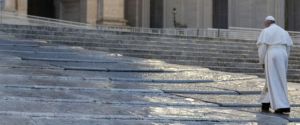
Today we meet the one who, according to the Gospels, was the first to see the Risen Christ: Mary Magdalene. The Sabbath had ended not long before. On the day of the Passion, there had not been enough time to complete the funeral rites. For this reason, at that sorrow-filled dawn, the women went to Jesus’ tomb with aromatic oils. The first to arrive was Mary Magdalene. She was one of the disciples who had accompanied Jesus from Galilee, putting herself at the service of the burgeoning Church. Her walk to the sepulchre mirrors the fidelity of many women who spend years in the small alleyways of cemeteries remembering someone who is no longer there. The most authentic bonds are not broken even in death: there are those who continue loving even if their loved one is gone forever.
The Gospel describes Magdalene by immediately highlighting that she was not a woman easily given to enthusiasm (cf. Jn 20:1-2, 11-18). In fact, after her visit to the sepulchre, she returns disappointed to the Apostles’ hiding place. She tells them that the stone has been removed from the entrance to the sepulchre, and her first hypothesis is the simplest that one could formulate: someone must have stolen Jesus’ body. Thus, the first announcement that Mary makes is not the one of the Resurrection, but of a theft perpetrated by persons unknown while all Jerusalem slept.
The Gospels then tell of Magdalene’s second visit to Jesus’ sepulchre. She was stubborn! She went, she returned ... because she was not convinced! This time her step is slow and very heavy. Mary suffers twice as much: first for the death of Jesus, and then for the inexplicable disappearance of his body.
It is as she is stooping near the tomb, her eyes filled with tears, that God surprises her in the most unexpected way. John the Evangelist stresses how persistent her blindness is. She does not notice the presence of the two angels who question her, and she does not become suspicious even when she sees the man behind her, whom she believes is the custodian of the garden. Instead, she discovers the most overwhelming event in the history of mankind when she is finally called by her name: “Mary!” (v. 16).
How nice it is to think that the first apparition of the Risen One — according to the Gospels — took place in such a personal way! To think that there is someone who knows us, who sees our suffering and disappointment, who is moved with us and calls us by name. It is a law which we find engraved on many pages of the Gospel. There are many people around Jesus who search for God, but the most prodigious reality is that, long before that, in the first place there is God, who is concerned about our life, who wants to raise it, and to do this, he calls us by name, recognizing the individual face of each person. Each person is a love story that God writes on this earth. Each one of us is God’s love story. He calls each of us by our name: he knows us by name; he looks at us; he waits for us; he forgives us; he is patient with us. Is this true or not true? Each of us experiences this.
And Jesus calls her: “Mary!”: the revolution of her life, the revolution destined to transform the life of every man and every woman begins with a name which echoes in the garden of the empty sepulchre. The Gospels describe Mary’s happiness. Jesus’ Resurrection is not a joy which is measured with a dropper, but a waterfall that cascades over life. Christian life is not woven of soft joys, but of waves which engulf everything. You too, try to imagine, right now, with the baggage of disappointments and failures that each of us carries in our heart, that there is a God close to us who calls us by name and says to us: ‘Rise, stop weeping, for I have come to free you!”. This is beautiful.
Jesus is not one who adapts to the world, tolerating in it the persistence of death, sadness, hatred, the moral destruction of people.... Our God is not inert, but our God — allow me to say — is a dreamer: he dreams of the transformation of the world, and accomplished it in the mystery of the Resurrection.
Mary would like to embrace her Lord, but he is already oriented towards the heavenly Father, whereas she is sent to carry the news to the brethren. And so that woman, who, before encountering Jesus, had been at the mercy of evil (cf. Lk 8:2) now becomes the Apostle of the new and greatest hope. May her intercession also help us live this experience: in times of woe and in times of abandonment, to listen to the Risen Jesus who calls us by name and, with a heart full of joy, to go forth and proclaim: “I have seen the Lord!” (v. 18). I have changed my life because I have seen the Lord! I am now different than before. I am another person. I have changed because I have seen the Lord. This is our strength and this is our hope. Thank you.
[Pope Francis, General Audience 17 May 2017]
How to rebuild the Temple?
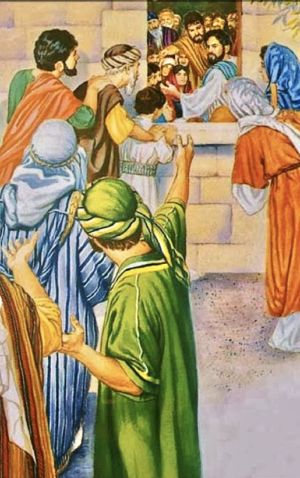
The Lord wants new people, who listen
(Mt 12:46-50)
In the life of those who are challenged by the relationship of Faith, to become blood relatives of the Father (according to the Spirit) is fundamental Perceive [in profound sense of Listening - not so much materially "seeing"].
It is not worth the «staying outside», or wanting to "speak" directly, to "convince" the Lord (vv.46-47).
It is necessary to intuit and grasp: a path to encounter one’s own intimate layers of being, the truth of inclinations, and of life.
It is decisive to welcome a satiating Word, which becomes language and culture, which has creative power: given to the ears and discovered inside. Captured in personal history and reality, and transmitted again.
To depart from this founding Core and Eros means detaching from oneself, dispersing oneself in rivulets that do not belong to us, failing into the void [’emptiness’ not understood as a deep energetic state, which prepares new developments].
Paradoxically, both our Freedom and the Salvation of the world are the result of an Obedience - but not external, or others.
It is rather tuning in to the part of the Logos within us that is blooming; really "perfect". No conditioning model.
No a priori correction, nor forcing according to prejudice: rather, an eternal Metamorphosis - accompanied by the Verbum Domini, which mysteriously guides Exodus into Exodus.
No configured customary expectation would join us full communion with the divine spark and fullness in each and everyone.
Realization of the kingdom and of every day - even out of time.
To know Christ closely it is not enough to look at him and be taken by sympathy, cultural ties, or religious emotion.
It is the Listening that connects and establishes intimate constraints which do not extinguish - a friendship of engaging harmony with the Master.
Around Jesus the Word of God creates a new Family, with bonds of spiritual kinship closer than what the clan attachment offered.
The Lord wants other people, born precisely from Perception.
The union is no longer reserved and exclusive; it becomes accessible to anyone and in any condition - even if he/her were "blind" outside, unable to see what is at hand.
Everyone is a Church, House of the Father, and thus realize God’s Dream of living with men and walking alongside.
He dwells among us and in us. In his Word, without more "distances".
In this way, all our actions must aim for this purpose: to form the Temple of God, his lineage, the Body of the living Christ.
To achieve this complete goal, essential means is to host the Vocation that transforms us, a much more permanent, sensitive and energetic foundation of any feeling, connection, or emotion.
Indispensable is not an (initial) experience of enthusiasm, but the custody of the Call that interprets life and becomes mentality, dynamism inside that leads us.
And flows into suburban paths.
There is yet other Temple to be built.
[Tuesday 16th wk. in O.T. July 21, 2026]
How can we rebuild the Temple?
The Lord wants new people, who listen
(Mt 12:46–50)
In the life of anyone called to a relationship of faith, in order to become kin to the Father according to the Spirit, it is essential to perceive [in the profound sense of ‘listening’ – not so much ‘seeing’ directly in a physical sense].
Nor is it enough simply to ‘stand on the sidelines’, or to seek to ‘speak’ directly in order to ‘convince’ the Lord (vv. 46–47).
It is necessary to intuit and grasp: a journey to encounter the deepest layers of one’s being, the truth of one’s inclinations, and of life itself.
It is crucial to receive a Word that satisfies, which becomes language and culture, and which possesses creative power: given to our ears and discovered within. Grasped within our personal history and reality, and passed on once more.
To turn away from this Word and this founding Eros is to detach oneself from one’s true self, to scatter into streams that do not belong to us, to plunge into the void [‘void’ not understood as a profound energetic state that prepares the way for new developments].
Paradoxically, both our Freedom and the Salvation of the world are the fruit of Obedience – but not an external obedience, nor one imposed by others.
Rather, it is a matter of attuning ourselves to the part of the Logos within us that is blossoming; truly ‘perfect’. No conditioning model.
No a priori correction, nor coercion based on prejudice: rather, an eternal Metamorphosis – accompanied by the Word, which mysteriously guides us from Exodus to Exodus.
No pre-determined cultural expectation could ever lead to full communion with the great divine spark and fullness within each and every one of us.
The realisation of the Kingdom in every day – even beyond time.
To know Christ intimately, it is not enough merely to look at him and be moved by sympathy or religious emotion.
It is Listening that forges and establishes intimate bonds—which never fade—of captivating harmony with the Master.
Around Jesus, the Word of God creates a new Family, with bonds of spiritual kinship closer than those offered by clan ties.
The Lord desires a different kind of people, born precisely from Perception-premonition.
This union is no longer reserved or exclusive; it becomes accessible to anyone, whatever their circumstances – even if they are ‘blind’ to the outside world, unable to perceive what lies within their grasp.
Each person is the Church, the Father’s House, and thus can fulfil God’s Dream of dwelling amongst humankind and walking alongside them.
He dwells amongst us and within us. In his Word, with no ‘distances’ any longer.
In this way, all our actions must be directed towards this aim: to form the Temple of God, his household, the Body of the living Christ.
To reach this fulfilment, the essential means is to embrace the Vocation that transforms us, a foundation far deeper than any bond or emotion.
What is indispensable is not an (initial) experience of enthusiasm, but rather the safeguarding of the Call that gives meaning to life and becomes a mindset, an inner dynamism that guides us and leads us onto paths to the peripheries.
In ancient Israel, the basis of social coexistence was the extended family. Clans and communities guaranteed protection both for individual households and for individuals.
That bond of genuine solidarity ensured ownership of the land – which gave a sense of freedom – and served as a vehicle for cultural transmission, for the sense of being a people, and for spirituality itself.
Defending the coexistence that guaranteed their collective identity was tantamount to defending the First Covenant.
But in Palestine at the time of Jesus, clan life and the wider community life were in decline.
The excessive taxes payable to collaborationist governments and the Temple, the inevitable rise in the number of people forced to sell themselves into slavery to pay off debts, perhaps the more individualistic mindset of the Hellenistic world, imperial threats, and the obligation to welcome, feed and harbour Roman troops [who often took advantage even of the community’s most vulnerable members], all exacerbated the problems of survival.
In addition to this, the strictness of the purity laws was a further factor in their marginalisation, alongside the growing belief – typical of religions – that there was a link between divine curse and a state of poverty.
Concerns about material well-being and the protection of the individual family accentuated their detachment from communal life.
Jesus wanted to broaden once more the narrow confines of the small household community, and extend them to the great family of the Kingdom of God.
A comparison with the parallel passages of this episode reveals that Jesus had difficulties with his blood relatives.
They tended to try to bring him back within the bounds of tradition, out of fear of reprisals and because they regarded him as an extremist (perhaps even unbalanced).
The Risen One broadens the concept of Family and challenges the bonds that distance us from our identity, character and mission – whether these obstacles are posed by his own family, by Peter, by the disciples, by the powerful, or by the leaders of the official religion.
As mentioned above, at a time of political subjugation and rigid, legalistic religious ideology, the core values of the clan and the community were being eroded due to social and economic collapse.
This situation of external control – social and ideological enslavement – prevented people from coming together and sharing, forcing them to confine themselves to individual problems and the concerns of their own exclusive lineage.
[This was the situation in Jesus’ time, yet these aspects are not entirely alien to us, even from the perspective of certain ‘charisms’ defined in excessive detail, and of realities already established in the local area].
For the new Kingdom to manifest itself, the idea of communal living had to transcend the narrow confines of the individual and the tiny domestic hearth – including from a cultural perspective.
There was a need for a stimulus that would open the way to community life – understood in the spirit of the Beatitudes, for a conviviality of differences; even in actual, indeed harsh, cohabitation.
Even today, in this time of global crisis, the goal is an existence no longer marred by withdrawal, nor compromised by immediate necessities, disembodied fantasies, or ingrained patterns.
There is an urgent need for a new vision of the universal Family, one that transcends the limitations of habitual micro-relationships [namely, those of a group, a movement or even a denomination].
The world we are preparing will no longer make free participation, tolerant and concrete exchange, or the overcoming of domestication so difficult.
A new vision of universal Kinship, which fosters exchange and transcendence.
There is a very different Temple to be built.
To internalise and live out the message:
Do your family and your church group encourage an enlightened listening to the Gospel and ‘putting the Word into practice’, or do they merely offer you ready-made, pre-packaged ‘pills’?
Do they help you, or do they close you off from engaging with different ideas, from becoming aware of yourself, of those far away, and of the wealth of resources available—whether your own or those of others?
Mary Church

From this child, a new light issues forth, shining in the darkness of the night, as we can see in so many paintings depicting Christ’s Nativity. Henceforth, it is from him that blessing comes, from his name – Jesus, meaning “God saves” – and from his human face, in which God, the almighty Lord of heaven and earth, chose to become incarnate, concealing his glory under the veil of our flesh, so as to reveal fully to us his goodness (cf. Tit 3:4).
The first to be swept up by this blessing was Mary the virgin, the spouse of Joseph, chosen by God from the first moment of her existence to be the mother of his incarnate Son. She is the “blessed among women” (Lk 1:42) – in the words of Saint Elizabeth’s greeting. Her whole life was spent in the light of the Lord, within the radius of his name and of the face of God incarnate in Jesus, the “blessed fruit of her womb”. This is how Luke’s Gospel presents her to us: fully intent upon guarding and meditating in her heart upon everything concerning her son Jesus (cf. Lk 2:19, 51). The mystery of her divine motherhood that we celebrate today contains in superabundant measure the gift of grace that all human motherhood bears within it, so much so that the fruitfulness of the womb has always been associated with God’s blessing. The Mother of God is the first of the blessed, and it is she who bears the blessing; she is the woman who received Jesus into herself and brought him forth for the whole human family. In the words of the liturgy: “without losing the glory of virginity, [she] brought forth into the world the eternal light, Jesus Christ our Lord” (Preface I of the Blessed Virgin Mary).
Mary is the mother and model of the Church, who receives the divine Word in faith and offers herself to God as the “good soil” in which he can continue to accomplish his mystery of salvation. The Church also participates in the mystery of divine motherhood, through preaching, which sows the seed of the Gospel throughout the world, and through the sacraments, which communicate grace and divine life to men. The Church exercises her motherhood especially in the sacrament of Baptism, when she generates God’s children from water and the Holy Spirit, who cries out in each of them: “Abba, Father!” (Gal 4:6). Like Mary, the Church is the mediator of God’s blessing for the world: she receives it in receiving Jesus and she transmits it in bearing Jesus. He is the mercy and the peace that the world, of itself, cannot give, and which it needs always, at least as much as bread.
[Pope Benedict, homily, 1 January 2012]
Mary throughout her life
The Church has consistently recognised Mary as holy and free from all sin or moral imperfection. The Council of Trent expresses this conviction by stating that no one ‘can avoid, throughout their entire life, every sin, even venial sin, except by virtue of a special privilege, such as the Church holds to be the case with regard to the Blessed Virgin’ (DS 1573). The possibility of sinning does not spare even the Christian who has been transformed and renewed by grace. For grace does not preserve one from every sin throughout one’s life, unless, as the Council of Trent affirms, a special privilege ensures such immunity from sin. This is what happened in the case of Mary.
The Council of Trent did not wish to define this privilege, but it did declare that the Church affirms it with vigour: “Tenet”, that is, it holds it firmly. This is a decision which, far from relegating this truth to the realm of pious beliefs or devotional opinions, confirms its character as sound doctrine, firmly rooted in the faith of the People of God. Moreover, this conviction is founded on the grace bestowed upon Mary by the angel at the time of the Annunciation. By calling her ‘full of grace’, kecharitoméne, the angel recognises in her the woman endowed with permanent perfection and a fullness of holiness, without a shadow of sin or any moral or spiritual imperfection.
Some Church Fathers of the early centuries, not yet having come to the conviction of her perfect holiness, attributed moral imperfections or faults to Mary. Even some recent authors have adopted this position. However, the Gospel passages cited to justify these views do not in any way permit the attribution of a sin, or even merely a moral imperfection, to the Mother of the Redeemer.
Jesus’ reply to his mother, at the age of 12: ‘Why were you looking for me? Did you not know that I must be about my Father’s business?’ (Lk 2:49), has sometimes been interpreted as a veiled rebuke. A careful reading of the episode, however, makes it clear that Jesus did not reproach his mother and Joseph for looking for him, since they were responsible for looking after him.
Upon finding Jesus after a distressing search, Mary merely asks him the ‘why’ behind his behaviour: ‘Son, why have you treated us like this?’ (Lk 2:48). And Jesus replies with another ‘why’, refraining from any reproach and referring to the mystery of his divine sonship.
Nor can the words spoken at Cana – “What have I to do with you, woman? My hour has not yet come” (Jn 2:4) – be interpreted as a rebuke. Faced with the likely distress that the lack of wine would have caused the bride and groom, Mary turns to Jesus with simplicity, entrusting the problem to him. Jesus, whilst fully aware that as the Messiah he was bound to obey only the Father’s will, grants his Mother’s implicit request. Above all, he responds to the Virgin’s faith and thus begins to perform miracles, revealing his glory.
Some have also interpreted Jesus’ statement in a negative light when, at the start of his public life, Mary and his relatives asked to see him. By recounting Jesus’ reply to those who said to him, ‘Your mother and your brothers are standing outside and wish to see you’, the evangelist Luke offers us the key to understanding the account, which must be interpreted in the light of Mary’s inner dispositions, quite different from those of his ‘brothers’ (cf. Jn 7:5). Jesus replied: “My mother and my brothers are those who hear the Word of God and put it into practice” (Lk 8:21). In the account of the Annunciation, in fact, Luke showed how Mary was the model of listening to the Word of God and of generous docility. Interpreted from this perspective, the episode offers a great tribute to Mary, who perfectly fulfilled the divine plan in her own life. Jesus’ words, whilst opposing the attempt made by his brothers, extol Mary’s fidelity to God’s will and the greatness of her motherhood, which she lived out not only physically but also spiritually.
In weaving this indirect praise, Jesus employs a particular method: he highlights the nobility of Mary’s conduct in the light of statements of a more general nature, thereby better illustrating the Virgin’s solidarity with and closeness to humanity on the arduous path to holiness.
Finally, the words: ‘Blessed rather are those who hear the Word of God and keep it!’ (Lk 11:28), spoken by Jesus in response to the woman who declared his Mother blessed, far from casting doubt on Mary’s personal perfection, emphasise her faithful fulfilment of the Word of God: this is how the Church has understood them, incorporating this expression into the liturgical celebrations in honour of Mary.
The Gospel text, in fact, suggests that with this statement Jesus wished to reveal, precisely in her intimate union with God and in her perfect adherence to the divine Word, the highest reason for his Mother’s blessedness.
The special privilege granted by God to the ‘All-Holy One’ leads us to marvel at the wonders wrought by grace in her life. It also reminds us that Mary has always belonged entirely to the Lord, and that no imperfection has ever marred the perfect harmony between her and God.
Her earthly journey, therefore, is characterised by the constant and sublime growth of faith, hope and charity. For this reason, Mary is for believers the radiant sign of divine Mercy and the sure guide towards the lofty heights of evangelical perfection and holiness.
[Pope John Paul II, General Audience, 19 June 1996]
Two misunderstandings
Mk 3:20-35 shows us two types of misunderstanding that Jesus had to face: that of the scribes and that of his own brethren.
The first misunderstanding. The scribes were men educated in the Sacred Scriptures and charged with explaining them to the people. Some of them were sent from Jerusalem to Galilee, where Jesus’ reputation was beginning to spread, in order to discredit him in the eyes of the people: to play the role of gossips, to discredit the other, to remove his authority, to do this awful thing. And they were sent to do this. And these scribes arrived with a specific and terrible accusation — they spared no means; they went straight to the point and said: “He is possessed by Beelzebul, and by the prince of demons he casts out the demons” (v. 22). That is, the prince of demons is the one who drives Him, which is more or less tantamount to saying: “He is possessed by demons”. In fact Jesus healed many sick people, and the scribes wanted to make others believe that he did so not with the Spirit of God — as Jesus did — but with that of the Evil One, with the power of the devil. Jesus reacted with firm and clear words; he did not tolerate this, because those scribes, perhaps without realizing it, were falling into the gravest sin: denying and blaspheming against God’s Love which is present and active in Jesus. And blasphemy, the sin against the Holy Spirit, is the one unforgivable sin — as Jesus said — because it comes from closing the heart to God’s mercy which acts in Jesus.
But this episode contains an admonishment which is useful to all of us. Indeed, it can happen that deep envy of a person’s goodness and good works can drive one to falsely accuse him or her. Here there is true, lethal poison: the malice with which, in a premeditated manner, one wants to destroy the good reputation of the other. May God free us from this terrible temptation! And if, by examining our conscience, we realize that this weed is sprouting within us, let us go straight away to confess it in the Sacrament of Penance, before it grows and produces its evil effects, which are incurable. Be careful, because this attitude destroys families, friendships, communities and even society.
Today’s Gospel also speaks to us about another, very different misunderstanding with regard to Jesus: that of his brethren. They were worried, because his new itinerant life seemed folly to them (cf. v. 21). In fact, he exhibited such openness toward the people, especially toward the sick and toward sinners, to the extent that he did not even have time to eat. Jesus was like that: people first; serving people; helping people; teaching people; healing people. He was for the people. He did not even have time to eat. Thus, his brethren decided to take him back home to Nazareth. His brethren came to the place where Jesus was teaching and they sent to him and called him. He was told: “‘Your mother and your brethren are outside, asking for you.’ And he replied: ‘Who are my mother and my brethren?’. And looking around on those who sat about him, he said ‘Here are my mother and my brethren! Whoever does the will of God is my brother, and sister, and mother’” (vv. 32-35).
Jesus formed a new family, no longer based on natural ties, but on faith in him, on his love which welcomes us and unites us to each other, in the Holy Spirit. All those who welcome Jesus’ word are children of God and brothers and sisters among themselves. Welcoming the word of Jesus makes us brothers and sisters, makes us Jesus’ family. Speaking ill of others, destroying others’ reputations, makes us the devil’s family.
Jesus’ response was not a lack of respect for his mother and his brethren. Rather, for Mary it is the greatest recognition, precisely because she herself is the perfect disciple who completely obeyed God’s will. May the Virgin Mother help us to live always in communion with Jesus, recognizing the work of the Holy Spirit who acts in him and in the Church, regenerating the world to new life.
[Pope Francis, Angelus, 10 June 2018]
The manifestations of God's power on earth: nothing external
Which road leads to the Father?
(Mt 12:38-42)
Human correspondence does not grow with the multiplication of dizzying signals. God does not force the unconvinced, nor outclass with proofs; thus He earns a patrimony of love.
His authentic Church, without clamor or persuasive positions - apparently insignificant - is gathered entirely in intimate unity with her Lord.
The Queen of the South was looking for captivating solutions to enigmatic curiosities, but she could know them inside her soul and life.
Incarnation: there are no other valid signs than the events and new relationships with oneself and others - which offer the very and unheard-of Person of the Risen One, without wrappings.
The Eternal is no longer the pure transcendence of the Jews, nor the summit of the wisdom of the ancient world: the moving Sign of God is the story of Jesus alive in us.
We trust in Christ, so no more spiritual drugs that deceive us about happiness.
It is the meaning of the new Creation: abandonment to the Spirit, but all concrete (not in a manner) and which proceeds by dragging the alternative reality.
He is the Sign unique, who frees from the many substitutes of fears’ religion, of fetters, of consolidated roles that would like to imprison the Lord in an "ally" doer of seductive miracles, immediately resolving.
Some community members seemed to want to frame the Messiah into the pattern of normal sacred and scenic expectations.
They were already getting along with the world, starting to recede, and were proving fed up...
In these "veterans" of Mt there was no sign of conversion to the idea of the Son of God as a Servant, confident in dreams without prestige.
In them? No trace of a new idea - nor change of pace that could mark the end of the blatant, dehumanizing society they were used to.
There are always those who remain tied to an ideology of power. So they do not want to open their eyes except to have their senses captured in a trivial way.
For these, the Lord never reserves impressive confirmations - which would be the paradoxical validation of ancient convictions.
The only «sign» is his living Church and the Risen himself pulsating in all those who take him seriously; eg. in recoveries, healings, and impossible revaluations.
But no shortcut lightning.
Guided by the intimate Friend, we will be a single inventive humanity ‘in the Master’.
Our free and life-giving testimony will nourish an experience of regenerating Faith, singularly incisive.
Far more than miracles, the appeals of our essence and reality will make us recognize the call and action of God in men and in the web of history.
The Father wants his sons to produce far more astonishment and prodigies of divine-human goodness than visions and sentimentality, or magic.
The only «sign» of salvation is Christ in us, without hysterical seams; image and likeness of the new humanity.
For authentic conversion: native power - and nothing external.
[Monday 16th wk. in O.T. July 20, 2026]
The manifestations of God's power on earth: nothing external
What is the Sign of the Mystery?
(Mt 12:38-42)
Jesus encounters unbelief. It comes from various forms of blindness and prejudice, or (especially in the disciples) arises from inattention.
The Lord distances himself from those who test him and from those who reject what is given by God, demanding to dictate how he should act.
The Son of Man respects every person who follows him, but he makes it clear that decisions and, even more so, a lack of acute perception prevent the Encounter and the redemption of life.
From this perspective, believers do not live to 'prove' anything. Christ himself does not wait for us in subliminal and amazing manifestations, but on the shore of an earthly spirituality.
Value does not need applause (a double-edged sword) - a mask for artificial proposals and inauthentic life.
Humanising correspondence does not grow with the multiplication of dizzying signals.
God does not coerce the unconvinced, nor does he overwhelm with proof; in this way, he gains a heritage of Love in growth.
His authentic Church, without clamour or persuasive positions - apparently insignificant - is gathered in intimate unity with his Firstborn: native, portentous and regenerating power - solid and real.
The queen of the south sought captivating solutions to enigmatic curiosities, but she could find them within her soul and in her life.
Incarnation: there are no other valid signs than events and new relationships - with oneself and with others - which present the very Person and unheard-of nature of the Risen One (the one without wrappings).
The Eternal One is no longer the pure transcendence of the Jews, nor the summit of the wisdom of the ancient world.
The sign of the Most High is the story of Jesus (alive in us). It opens the exciting path that leads to the Father.
Let us trust in Christ, therefore, and reject spiritual drugs that delude us with happiness.
This is the meaning of the new Creation: abandonment to the Spirit - but in a concrete way (not in a mannered way) - which proceeds by drawing along an alternative reality.
His Person is a unique sign that frees us from the many surrogates of the religion of fears, shackles and established roles.
These are those who would like to imprison him as an 'ally' who performs seductive and immediately decisive miracles.
Some would like to see him as a simple purifier of the temple or a character from a fairy tale - and so would we, if we allow ourselves to be manipulated.
In fact, the religious leaders to whom Jesus addresses himself are those returning to his communities!
They were Judaizers who wanted to fit the Messiah into the pattern of normal expectations to which they had always been accustomed.
Or they already understood and were fed up...
In these 'veterans' there was no sign of conversion to the idea of the Son of God as a Servant, trusting in dreams without prestige.
In them? There was no trace of a new idea - nor any change of pace that would mark the decline of the ostentatious, dehumanising - and even sacred - society of the outside world.
Popular leaders sometimes miss the meaning of the only living Sign: Jesus, the Bread of Life.
Because of them, not because of those who are far away, the Lord 'groans in spirit' (cf. Mk 8:12, Greek text) - even today, saddened by so much blindness.
Life is in fact precluded to those who cannot shift their gaze.
Immediately after Mt (16:6), he refers to the danger of the dominant ideology that caused even the leaders to lose their objective perception of events.
A coarse "leaven" but rooted in the painful experience of the people - which stimulated swelling even in the disciples, contaminating them.
To the top of the class, it might have seemed that Jesus was a leader like Moses, because he fed the hungry people in the desert (cf. Mt 14:13-21; 15:32-39).
But the rejection is clear: especially Mark (8:12) brings it to life by emphasising the Master's sense of suffering.
Then, as in Matthew and Luke in the episode of Jonah, there is his radical, peremptory refusal.
To save a people in need of everything, there is no other way than to start from within.
Then proceed towards a fullness of being that spreads, approves us, and, flowing out, allows us to break our lives in favour of our brothers and sisters.
There is no escape. Only communion with the hidden source of one's own eminent Self and respectful and active dialogue with others can save us from a closed group mentality.
In this way, no club is allowed - no club that claims exclusive monopoly over God and souls (Mt 9:38-40) with the explicit claim to discipline the multitudes.
The community of the Risen One abhors the competitive conception of religious life itself, if it is a sacred reflection of the imperial world and of a society that oppresses and embitters the existence of the little ones.
It would be a sick life in search of prestige, even if only apparent.
On the contrary, in fraternal realities, 'whoever humbles himself is the greatest in the kingdom of heaven' (Mt 18:4).Therefore, it is absolutely necessary to avoid a pyramidal mentality and a mentality of rejection creeping into the faithful.
A spirit of competition that inevitably ends up seeking refuge in hypocritical miracle-mongering, a substitute for the life of faith.
The Master does the same to educate members of the Church who remain - perhaps even today - affected by a sense of superiority towards crowds and strangers.
A feeling of being a chosen and privileged people (Lk 9:54-55) that was even infiltrating the early communities.
To those who do not want to open their eyes except to be captivated by phenomena that are yet to be discerned - because despite the official creed they profess, they remain tied to an ideology of power - the Lord never reserves impressive confirmations coming 'from heaven' (Mt 16:1) that would be their paradoxical validation.
The only sign is and will be his living Church: the 'victory' of the Risen One who pulsates in all those who take him seriously.
Without fixed hierarchies - under the infallible guidance of the Call and the Word - the children know how to reinterpret, even in new ways.
Such is the miracle, embodied in a thousand events (in history, in personal and community life); in recoveries, healings and impossible re-evaluations.
The authentic Messiah does not offer any cosmic display.
There are no festivals that force spectators to bow their heads in the presence of such overwhelming glory and condescension, as if he were a heavenly dictator.
And no lightning bolts as a shortcut.
Over the centuries, churches have often fallen into this 'apologetic' temptation, which is entirely internal to devotions with a dry impulse: seeking marvellous signs and trumpeting them to silence opponents.
These are stratagems for a banal attempt to silence those who ask not for parapsychological experiences, but for testimonies that are not withered and without tricks or gimmicks: for concrete disalienation.
Not bad, this activity of ours to liberate the least among us, which is holding its own, unclutched by the idea of a demagogue with triumphalist or consolatory airs.
We prefer the wave of Mystery.
We yearn to be guided by an unknown energy that has a non-artificial goal in store for us - led by the eminent but intimate and hidden Friend (exclusive to us).
We will be one humanity in the Master, on the right path that belongs to us. Even if we walk along interrupted and incomplete paths, even paths of confusion.
Commenting on the Tao Te Ching (i), Master Ho-shang Kung writes: 'The eternal Name wants to be like the infant who has not yet spoken, like the chick that has not yet hatched. The luminous pearl lies within the oyster, the beautiful gem lies in the middle of the rock: however much it shines within, on the outside it is foolish and insipid'.
All this may be considered "unconsciousness" and "inconclusiveness"... but it brings out what we are - expressing another way of seeing the world.
In ourselves and within the Call of the Gospels, we have a fresh power that approves of a path that is different from the immediately normal and the conspicuous.
An Appeal that is enchanting, delightful and splendid, because it activates us by challenging us.
A word that does not think according to patterns. A heartfelt plea that is not impressed by exceptional things, by performances that suffocate the soul in search of meaning and authenticity.
Genuine wonder, an indomitable impulse nestled in the dimension of human fullness, which does not give up: it wants to express itself in its transparency and become reality.
A sort of intimate Infante: he moves in a way that is considered 'abstruse', but he puts things right, inside and out.
His free and invigorating testimony, attentive and always personally brilliant, will be innate and unprecedented, biting, inventive without artifice, unpredictable and completely non-conformist.
It will give rise to and incessantly nourish an experience of Faith that is convinced, singular and incisive - even though it may appear losing and unsuccessful, dishonourable and unspectacular.
Much more than miracles, the supplications of our essence and reality will make us recognise God's call and action in human beings and in the fabric of history.
These invitations can give rise to other astonishing wonders of divine-human goodness, rather than paroxysmal visions tinged with neurosis and empty sentimentality or magic.
The only sign of salvation is Christ in us - without seams or great hysterical gestures.
He is the image and likeness of the new humanity; the manifestation of God's power on earth.
For authentic conversion: nothing external.
To internalise and live the message:
What kind of evidence are you looking for?
How does your Sign (which makes people believe) differ from gimmicks, acts of force, or what others would like you to spread?
Giona annuncia l’avvenimento di Gesù

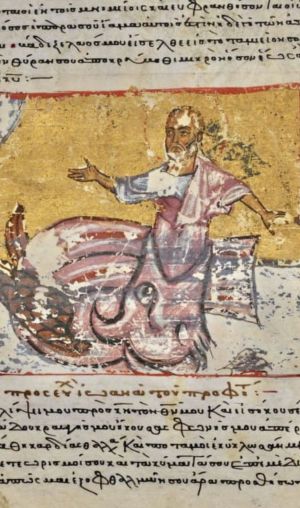
2) Il libro di Giona ci annuncia l’avvenimento di Gesù Cristo – Giona è una prefigurazione della venuta di Gesù. Il Signore stesso ci dice questo nel Vangelo del tutto chiaramente.
Richiesto dai giudei di dar loro un segno che lo riveli apertamente come il Messia, risponde, secondo Matteo: "Nessun segno sarà dato a questa generazione se non il segno di Giona profeta. Come infatti Giona rimase tre giorni e tre notti nel ventre del pesce, così il Figlio dell’uomo resterà tre giorni e tre notti nel cuore della terra" (Mt12,39s).
La versione di Luca delle parole di Gesù è più semplice: "Questa generazione [...] cerca un segno ma non le sarà dato nessun segno fuorché il segno di Giona. Poiché come Giona fu un segno per quelli di Ninive, così anche il Figlio dell’uomo lo sarà per questa generazione" (Lc 11,29s). Vediamo due elementi in entrambi i testi: lo stesso Figlio dell’uomo, Cristo, l’inviato di Dio, è il segno. Il mistero pasquale indica Gesù come il Figlio dell’uomo, egli è il segno in e attraverso il mistero pasquale.
Nel racconto veterotestamentario proprio questo mistero di Gesù traspare del tutto chiaramente.
Nel primo capitolo del libro di Giona si parla di una triplice discesa del profeta: egli scende al porto di Giaffa; scende nella nave; e nella nave egli si mette nel luogo più riposto. Nel suo caso, però, questa triplice discesa è una tentata fuga davanti a Dio. Gesù è colui che scende per amore, non per fuggire, ma per giungere nella Ninive del mondo: scende dalla sua divinità nella povertà della carne, dell’essere creatura con tutte le sue miserie e sofferenze; scende nella semplicità del figlio del carpentiere, e scende nella notte della croce, infine persino nella notte dello Sheòl, il mondo dei morti. Così facendo egli ci precede sulla strada della discesa, lontano dalla nostra falsa gloria da re; la via della penitenza, che è via verso la nostra stessa verità: via della conversione, via che ci allontana dall’orgoglio di Adamo, dal volere essere Dio, verso l’umiltà di Gesù che è Dio e per noi si spoglia della sua gloria (Fil 2,1-10). Come Giona, Gesú dorme nella barca mentre la tempesta infuria. In un certo senso nell’esperienza della croce egli si lascia gettare in mare e così placa la tempesta. I rabbini hanno interpretato la parola di Giona "Gettatemi in mare" come offerta di sé del profeta che voleva con questo salvare Israele: egli aveva timore davanti alla conversione dei pagani e al rifiuto della fede da parte di Israele, e per questo – così dicono – voleva farsi gettare in mare. Il profeta salva in quanto egli si mette al posto degli altri. Il sacrificio salva. Questa esegesi rabbinica è diventata verità in Gesù.
[Papa Benedetto card. Ratzinger, Lectio in s. Maria in Traspontina, 24 gennaio 2003; in “30Giorni” febbraio 2003]
He Himself is the Sign
4. In fact, Jesus invites us to discern the words and deeds that bear witness to the imminent coming of the Father's Kingdom. Indeed, He directs and concentrates all signs in the enigmatic "sign of Jonah." In doing so, He overturns the worldly logic that seeks signs confirming man's desire for self-affirmation and power. As the Apostle Paul emphasises, "while the Jews demand miracles and the Greeks seek wisdom, we preach Christ crucified, a scandal to Jews and foolishness to Gentiles" (1 Cor 1:22-23).
As the firstborn among many brothers (cf. Rom 8:29), Christ was the first to overcome in himself the diabolical "temptation" to use worldly means to bring about the coming of the Kingdom of God. This happened from the moment of the messianic trials in the desert to the sarcastic challenge addressed to him while he was nailed to the cross: "If you are the Son of God, come down from the cross!" (Mt 27:40). In Jesus crucified, there is a transformation and concentration of signs: he himself is the "sign of God," especially in the mystery of his death and resurrection. To discern the signs of his presence in history, we must free ourselves from all worldly pretensions and welcome the Spirit who "searches everything, even the depths of God" (1 Cor 2:10).
[Pope John Paul II, General Audience, 23 September 1998]
The Church desires to give thanks to the Most Holy Trinity for the "mystery of woman" and for every woman - for that which constitutes the eternal measure of her feminine dignity, for the "great works of God", which throughout human history have been accomplished in and through her (Mulieris Dignitatem n.31)
La Chiesa desidera ringraziare la Santissima Trinità per il «mistero della donna», e, per ogni donna - per ciò che costituisce l'eterna misura della sua dignità femminile, per le «grandi opere di Dio» che nella storia delle generazioni umane si sono compiute in lei e per mezzo di lei (Mulieris Dignitatem n.31)
Simon, a Pharisee and rich 'notable' of the city, holds a banquet in his house in honour of Jesus. Unexpectedly from the back of the room enters a guest who was neither invited nor expected […] (Pope Benedict)
Simone, fariseo e ricco “notabile” della città, tiene in casa sua un banchetto in onore di Gesù. Inaspettatamente dal fondo della sala entra un’ospite non invitata né prevista […] (Papa Benedetto)
God excludes no one […] God does not let himself be conditioned by our human prejudices (Pope Benedict)
Dio non esclude nessuno […] Dio non si lascia condizionare dai nostri pregiudizi (Papa Benedetto)
«The Russian mystics of the first centuries of the Church gave advice to their disciples, the young monks: in the moment of spiritual turmoil take refuge under the mantle of the holy Mother of God». Then «the West took this advice and made the first Marian antiphon “Sub tuum Praesidium”: under your cloak, in your custody, O Mother, we are sure there» (Pope Francis)
«I mistici russi dei primi secoli della Chiesa davano un consiglio ai loro discepoli, i giovani monaci: nel momento delle turbolenze spirituali rifugiatevi sotto il manto della santa Madre di Dio». Poi «l’occidente ha preso questo consiglio e ha fatto la prima antifona mariana “Sub tuum praesidium”: sotto il tuo mantello, sotto la tua custodia, o Madre, lì siamo sicuri» (Papa Francesco)
The Cross of Jesus is our one true hope! That is why the Church “exalts” the Holy Cross, and why we Christians bless ourselves with the sign of the cross. That is, we don’t exalt crosses, but the glorious Cross of Christ, the sign of God’s immense love, the sign of our salvation and path toward the Resurrection. This is our hope (Pope Francis)
La Croce di Gesù è la nostra unica vera speranza! Ecco perché la Chiesa “esalta” la santa Croce, ed ecco perché noi cristiani benediciamo con il segno della croce. Cioè, noi non esaltiamo le croci, ma la Croce gloriosa di Gesù, segno dell’amore immenso di Dio, segno della nostra salvezza e cammino verso la Risurrezione. E questa è la nostra speranza (Papa Francesco)
In the divine attitude justice is pervaded with mercy, whereas the human attitude is limited to justice. Jesus exhorts us to open ourselves with courage to the strength of forgiveness, because in life not everything can be resolved with justice. We know this (Pope Francis)
Nell’atteggiamento divino la giustizia è pervasa dalla misericordia, mentre l’atteggiamento umano si limita alla giustizia. Gesù ci esorta ad aprirci con coraggio alla forza del perdono, perché nella vita non tutto si risolve con la giustizia; lo sappiamo (Papa Francesco)
The basis of Christian construction is listening to and the fulfilment of the word of Christ (Pope John Paul II)
Alla base della costruzione cristiana c’è l’ascolto e il compimento della parola di Cristo (Papa Giovanni Paolo II)








duevie.art
don Giuseppe Nespeca
Tel. 333-1329741
Disclaimer
Questo blog non rappresenta una testata giornalistica in quanto viene aggiornato senza alcuna periodicità. Non può pertanto considerarsi un prodotto editoriale ai sensi della legge N°62 del 07/03/2001.
Le immagini sono tratte da internet, ma se il loro uso violasse diritti d'autore, lo si comunichi all'autore del blog che provvederà alla loro pronta rimozione.
L'autore dichiara di non essere responsabile dei commenti lasciati nei post. Eventuali commenti dei lettori, lesivi dell'immagine o dell'onorabilità di persone terze, il cui contenuto fosse ritenuto non idoneo alla pubblicazione verranno insindacabilmente rimossi.