Aug 6, 2026 Written by 

Needs, Desires, or Precepts

Legalistic conception and hardness of heart

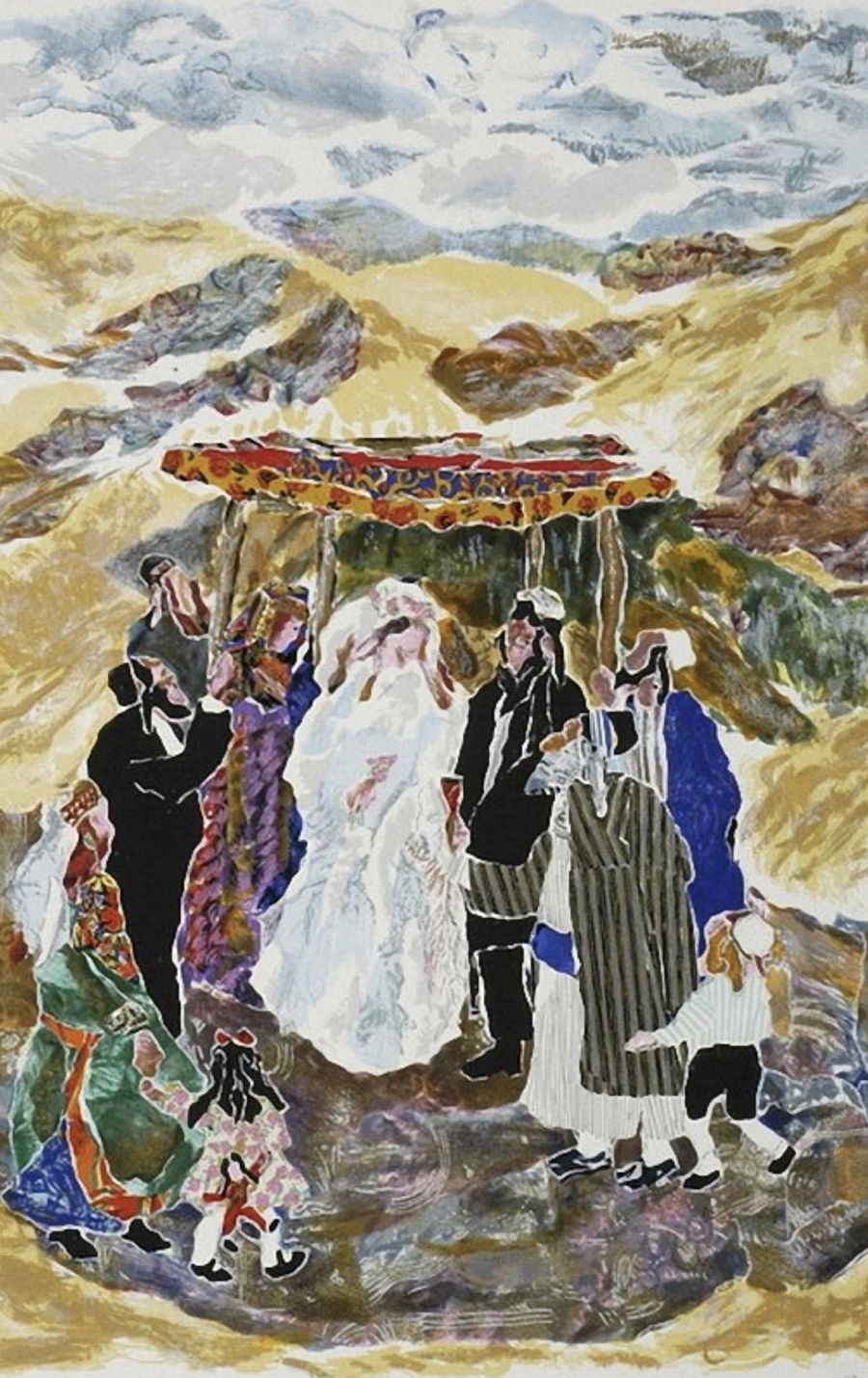
(Mt 19:3-12)


The controversy with the fanatics of the law highlights the need for a new messianic community, which goes beyond the exclusively legalistic moral conception.

The theme chosen by the Pharisees lent itself to putting Jesus in difficulty regarding the ideal of love.

The marriage law required the wife to become the property of her husband.

So in any case the divorce redounded to the detriment of the woman, always seen as an inferior being.

In the society of the time, male domination and marginalization of the weak were established situations.

To protect the freedom of women [Dt 24:1-4], the law required that the tired husband (even for a nonsense or whim) still wrote a divorce "letter" that sanctioned her free.

Unlike Roman society, the wife did not have the same right: a social plague, which obscured her dignity. In practice she was like an object and a slave even in her own home.

But in creating the human being, this was not the intent of the Creator. Thus Jesus takes away the privileges - even domestic ones - asking for maximum equality of rights and duties.

He knew that the apostles themselves preferred not to marry than to renounce the exclusivity of command [v.10: «If the situation of a man with a woman is like this, it is not worth getting married»].

The Master does not allow the dominion of the strong over the weak, therefore the man must lose hegemony over the woman. The new law is love, and love does not allow possessions, emotional exploitation, fixed chains of command.

Both marriage and celibacy are choices that recognize the value of the Person. Awe-inspiring options for God's Kingdom - not in the service of any compromise, supremacy, or other pretentious interests.

The divine plan for humanity is transparent, broad and generous. The marriage union itself is called to express the goal of a fullness.

The stronger does not buy the weaker in ownership, but both enrich each other - with loyalty and even in differences, seen as advanced points of a proposal for growth and expansion.

Christ demands a new approach to ethics. This goes beyond the regulations, which they try to adapt to the order.

Therefore, the Lord's teaching here appeals to the divine creative Act which has engraved a capacity for gift and growth in person's nature - and it cannot be regulated by contract clauses, nor subjected to conditioning and subjection.


The step of the Faith builds people and communities, completing them (without too many accelerations, or forced restrictions). For a Love that originates us without rest.

The Family thus becomes a ‘small domestic Church’ because it is both autonomous and comprehensive; no more nomenclatures, compromises, masks, gags or straitjackets.

Then the complementarity experienced in an authentic way - without exteriority - can go beyond the case studies of the legal systems.

In this way it has good personal and social outcomes, evoking the very Presence of God in the world.


[Friday 19th wk. in O.T.  August 14, 2026]

24 Last modified on Thursday, 06 August 2026 01:29
don Giuseppe Nespeca

Giuseppe Nespeca è architetto e sacerdote. Cultore della Sacra scrittura è autore della raccolta "Due Fuochi due Vie - Religione e Fede, Vangeli e Tao"; coautore del libro "Dialogo e Solstizio".

In the divine attitude justice is pervaded with mercy, whereas the human attitude is limited to justice. Jesus exhorts us to open ourselves with courage to the strength of forgiveness, because in life not everything can be resolved with justice. We know this (Pope Francis)
Nell’atteggiamento divino la giustizia è pervasa dalla misericordia, mentre l’atteggiamento umano si limita alla giustizia. Gesù ci esorta ad aprirci con coraggio alla forza del perdono, perché nella vita non tutto si risolve con la giustizia; lo sappiamo (Papa Francesco)
The Second Vatican Council's Constitution on the Sacred Liturgy refers precisely to this Gospel passage to indicate one of the ways that Christ is present:  "He is present when the Church prays and sings, for he has promised "where two or three are gathered together in my name there am I in the midst of them' (Mt 18: 20)" [Sacrosanctum Concilium, n. 7]
La Costituzione sulla Sacra Liturgia del Concilio Vaticano II si riferisce proprio a questo passo del Vangelo per indicare uno dei modi della presenza di Cristo: "Quando la Chiesa prega e canta i Salmi, è presente Lui che ha promesso: "Dove sono due o tre riuniti nel mio nome, io  sono in mezzo a loro" (Mt 18, 20)" [Sacrosanctum Concilium, 7]
For Jesus we are not a "mass", a "multitude"! We are individual "persons" with an eternal value, both as creatures and as re-deemed persons! He knows us! He knows me, and loves me and gave himself for me! (Gal 2:20) [John Paul II]
Non siamo “massa”, “moltitudine”, per Gesù! Siamo “persone” singole con un valore eterno, sia come creature sia come persone redente! lui ci conosce! lui mi conosce, e mi ama e ha dato se stesso per me! (Gal 2,20) [Giovanni Paolo II]
The grain of wheat that "falls to the ground and dies" becomes the promise of bread (Pope John Paul II)
Il chicco di grano che “cade in terra e muore” diventa la promessa del pane (Papa Giovanni Paolo II)
The power of faith can move mountains (cf. Mt 17:20): the Lord can illuminate even the deepest darkness [Pope Benedict]
La forza della fede può spostare le montagne (cfr Mt 17,20): il Signore può illuminare anche la tenebra più profonda [Papa Benedetto]
By willingly accepting death, Jesus carries the cross of all human beings and becomes a source of salvation for the whole of humanity. St Cyril of Jerusalem commented: “The glory of the Cross led those who were blind through ignorance into light, loosed all who were held fast by sin and brought redemption to the whole world of mankind” (Catechesis Illuminandorum XIII, 1: de Christo crucifixo et sepulto: PG 33, 772 B) [Pope Benedict]
Accettando volontariamente la morte, Gesù porta la croce di tutti gli uomini e diventa fonte di salvezza per tutta l’umanità. San Cirillo di Gerusalemme commenta: «La croce vittoriosa ha illuminato chi era accecato dall’ignoranza, ha liberato chi era prigioniero del peccato, ha portato la redenzione all’intera umanità» (Catechesis Illuminandorum XIII,1: de Christo crucifixo et sepulto: PG 33, 772 B) [Papa Benedetto]
In the New Testament, it is Christ who constitutes the full manifestation of God's light [Pope Benedict]
Nel Nuovo Testamento è Cristo a costituire la piena manifestazione della luce di Dio [Papa Benedetto]
Faith opens us to knowing and welcoming the real identity of Jesus, his newness and oneness, his word, as a source of life, in order to live a personal relationship with him (Pope Benedict)

Due Fuochi due Vie - Vol. 1 Due Fuochi due Vie - Vol. 2 Due Fuochi due Vie - Vol. 3 Due Fuochi due Vie - Vol. 4 Due Fuochi due Vie - Vol. 5 Dialogo e Solstizio I fiammiferi di Maria

duevie.art

don Giuseppe Nespeca

Tel. 333-1329741


Disclaimer

Questo blog non rappresenta una testata giornalistica in quanto viene aggiornato senza alcuna periodicità. Non può pertanto considerarsi un prodotto editoriale ai sensi della legge N°62 del 07/03/2001.
Le immagini sono tratte da internet, ma se il loro uso violasse diritti d'autore, lo si comunichi all'autore del blog che provvederà alla loro pronta rimozione.
L'autore dichiara di non essere responsabile dei commenti lasciati nei post. Eventuali commenti dei lettori, lesivi dell'immagine o dell'onorabilità di persone terze, il cui contenuto fosse ritenuto non idoneo alla pubblicazione verranno insindacabilmente rimossi.






