


[15 August 2026]
First Reading from the Book of Revelation (11:19a; 12:1–6a, 10a)
For the early persecuted community, the entire Book of Revelation is a message of victory, rich in imagery: the Ark of the Covenant, three figures, the woman, the dragon and the infant.
1. The Ark of the Covenant recalls the gilded wooden chest that accompanied the people during the Exodus to Sinai, a constant reminder to Israel of the Covenant with God. That ark had been lost during the Babylonian exile; it was said that Jeremiah had hidden it on Mount Nebo (2 Maccabees 2:8), and it was believed that it would reappear at the coming of the Messiah. Now John sees it reappear: (Rev 11:19) and for him this is the sign that the end of time has come and that God’s Covenant with humanity has been definitively fulfilled.
2. The woman, Israel and the Messiah born of the Chosen People. “Then there appeared, still in heaven, ‘a woman clothed with the sun…’” (Rev 12:1–2). In the Old Testament, the relationship between God and Israel is often described in terms of a wedding. Hosea speaks of God’s betrothal to his people. Isaiah develops the theme of the wedding to the point of presenting the coming of the Messiah as a birth; Jeremiah, Ezekiel, and Second and Third Isaiah use the vocabulary of betrothal and marriage (Jer 2:2); (Isa 62:5). The Song of Songs, a dialogue of love in seven poems that never identifies the two lovers, is seen by the Jews as a dialogue between God and his people; for this reason, they read it on the Sabbath of Easter week, the great feast of God’s Covenant with Israel. Unfortunately, Israel was often an unfaithful bride (idolatrous: jealousy, adultery, but also reconciliation and forgiveness, for God remains faithful). Thus, the woman of Revelation represents the chosen people who give birth to the Messiah. A painful labour for Christ’s disciples facing persecution, to whom John says: ‘You are giving birth to the new humanity.’
3. The dragon: the forces of evil. The dragon lying in wait ‘before the woman to devour her newborn child’ (Rev 12:4) symbolises the battle waged by the forces of evil against God’s plan. For persecuted Christians, the word ‘dragon’ is not too strong, for it conveys the violence they face: the dragon is ‘enormous… as red as fire, with seven heads and ten horns, and on his heads seven diadems’. The heads and horns signify intelligence and strength; the diadem denotes imperial power with its very real capacity to cause harm. And indeed, he manages to drag down ‘a third of the stars of heaven and cast them to the earth’. However, it is only a third of the stars: therefore, merely a semblance of victory, and the rest of the passage will show that the power of evil is temporary.
4. The child is the Risen Messiah. ‘She gave birth to a son, destined to rule all the nations with an iron sceptre’ (Rev 12:5). John identifies the Messiah and alludes to Psalm 2: ‘You are my Son; today I have begotten you… You shall break them with a rod of iron’ (2:7–9). ‘Shepherd’ was also a classical term used to refer to the Messiah. This is followed by the image of the child being taken up ‘to God and his throne’: a symbol of Christ’s Resurrection. This was perfectly clear to the early Christians, who were accustomed to speaking of Him as the ‘Firstborn’, now seated at the right hand of God. Yet His people remain in the world—a difficult world, but one in which they are assured of God’s protection: this is the significance of the desert, another reference to the Exodus, in which God never ceased to care for His people. Believers may take heart: if the dragon has failed in heaven, he cannot succeed on earth. The conclusion is the victory that began with the Resurrection. To the early Christians who were giving birth to a new humanity amidst the pain of persecution, the Book of Revelation proclaims victory: ‘Now have come the salvation and the power and the kingdom of our God, and the authority of his Christ’ (Rev 12:10). Ever since the Messiah rose from the dead, victory has begun.
Responsorial Psalm (44/45)
This psalm allows us to witness the wedding ceremony of the King of Jerusalem to a young foreign princess (v. 10) to seal the covenant between two peoples. Marriages have always marked alliances between states, but for Israel the Covenant is exclusive to the one God; therefore, any foreign girl who became queen had to embrace the king’s religion. Specifically, in this psalm, the princess from Tyre must renounce her idolatrous practices to be worthy of her new people and her king: ‘Listen, my daughter; look, and give ear: forget your own people and your father’s house’ (v. 11). Solomon married pagan foreign women; Ahab married Queen Jezebel, leading to the great confrontation between the prophet Elijah and the many priests and prophets of Baal. For those who can read between the lines, this advice to the princess of Tyre is in fact addressed to Israel. The royal bridegroom described in the psalm is none other than God himself, and this ‘daughter of a king, led in all her splendour to her bridegroom’ is the people of Israel admitted into the intimacy of their God. Through the relationship between God and his people, an allusion is then made to the marriage between God and all humanity.
Second Reading from the Letter of Saint Paul the Apostle to the Corinthians (15:20–27)
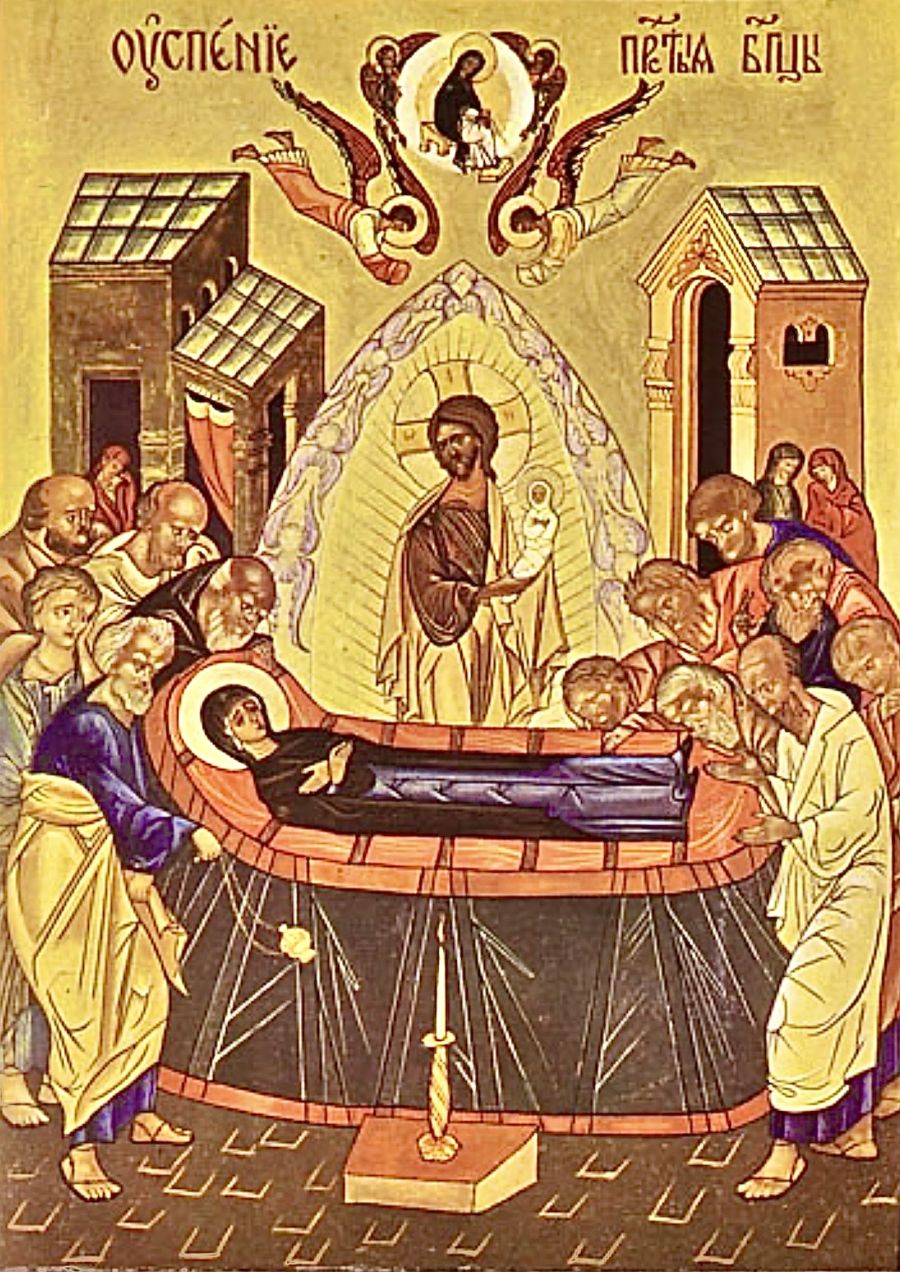
Here, three figures are set side by side: Mary, Jesus of Nazareth and Adam. Mary, the model of faith, is proclaimed blessed because she believed in the word of God. In her life she experienced the sorrow foretold by Simeon, yet she never ceased to trust in God. Jesus follows the same path in total trust in the Father, and everything about him is summed up in these words: ‘Father, I have come to do your will’. His resurrection demonstrates that trust in God leads to true life, which passes through suffering and death. St Paul contrasts Adam and Christ: two opposing attitudes. Adam is the man who distrusts God and wishes to decide for himself; Christ, on the other hand, represents the man who entrusts himself completely to God. According to Paul, everyone behaves like Adam when they refuse to trust in God, and for this reason all die in Adam. Whereas those who follow Christ’s example enter into true life, founded on love and communion with God. The Assumption is God’s plan for faithful humanity: Mary experienced ageing and, having left her earthly life behind, entered fully into the life of God. The Eastern tradition speaks of her Dormition as her passing into a new form of existence with God: human beings are therefore not destined to remain forever in their earthly condition but are called to a transformation. Jesus, put to death by human hatred, was raised from the dead by God and, as the first of the risen, opens the way to eternal life for all humanity. Mary and Jesus show that the path to true life is not Adam’s self-sufficiency, but trust in God
From the Gospel according to Luke (1:39–56)
The episode of the Visitation highlights the role of Mary, the new Ark of the Covenant and model of faith. When Elizabeth says, ‘How is it that the mother of my Lord should come to me?’, the evangelist deliberately alludes to David’s transfer of the Ark of the Covenant to Jerusalem. There are numerous similarities: both the Ark and Mary journey through the hills of Judea; the Ark brings blessing to the house of Obed-Edom, whilst Mary brings joy to the house of Zechariah and Elizabeth; both remain for three months in the house that welcomes them; David dances before the Ark, whilst John the Baptist leaps for joy in his mother’s womb at the sight of Mary.
For Luke, none of this is coincidental. Mary is the new presence of God. The Ark was the sign of God’s presence amongst his people. By presenting Mary as the new Ark, Luke wishes to affirm that God is present in a unique way in the child she carries in her womb. Thus the mystery of the Incarnation is fulfilled. Mary becomes the living dwelling place of the divine presence. Elizabeth proclaims: ‘Blessed is she who has believed’; and Mary’s true greatness lies not merely in being the mother of Jesus, but in having trusted in God’s plan even without fully understanding it. In response to Elizabeth, Mary sings the Magnificat, and she does not invent new words, for it is composed of expressions drawn from the Psalms and other biblical prayers. Two lessons emerge from this. Humility: Mary does not place herself at the centre, but places herself within the tradition of faith of her people; a spirit of community: her prayer concerns not only her personal circumstances, but God’s work on behalf of the whole people. This is why Mary is presented as the new Ark of the Covenant, carrying within her God made man, whilst the Magnificat shows that every authentic vocation is not a personal privilege, but a call to serve others and the whole people of God.
+Giovanni D’Ercole








