Jul 19, 2026 Written by 

Becoming prime ministers

(Mt 20:17-28)


The Roman Empire subjugated the Mediterranean basin with the strength of the Legions.

Through a large base of slaves and tributes, it concentrated titles and wealth in the hands of small circles - with abuse of power and coercion.

The new Kingdom must be the seed of an alternative society.

The pivot will be to regain a kind of synthesis of Jesus' life in order to make it one's own, as expressed in v.28.

Three titles are enunciated here that gave rise to Christology:


«Son of man» is the One who manifested man in the divine condition: fullness of humanity that reflects and reveals the very intimate life of God.

Figure of an accessible and transmissible "holiness", fully embodied -  day-to-day even.

Son of man is in fact the authentic and full development of the person according to the active Dream of the Father, which sweeps away the obsessive "yoke" of the common religion - expanding life (and the ego boundaries).

In adhering to the «Son of man» we are introduced as protagonists into salvation history.

Collaborators in the apex of Creation - that is, in the process of love. And we are detached from the pre-human of competitions [a warlike condition for supremacy’s desire].


«Servant» of Yahweh: Righteous who suffers pains of Love, to save us - an icon of the subdued and wise strength of the Father who through his sons expresses himself not as a conqueror, but as a meek lamb.

Sacrificial icon - in the ancient sense of «sacrum facere», to make Sacred - to revive a people unable to go to God through their brothers.

In Judaism, the ‘death of the righteous’ - even in the legal dimension of the Torah - was equal to a ransom, already understood as reparation-atonement for the multitude (v.28) of the guilty (cf. Is 53:11-12).

In Christ the vicarious mechanism vanishes: the Father sends the Son not as an external or propitiatory victim, necessary and predestined, but to make us reflect, first step in humanization.

Thus recovering the dimension of awareness and Communion [conviviality of differences].


Hence: the only title of "pre-eminence" remains that of «Go'el»: making oneself (each) «close relative» who takes on all debt for the ransom of others, for the restoration of personal dignity - and total self-possession.

Full brotherhood with women and men of all conditions: should be the growing programme of the Apostle.


Despite the disproportion, only this reversal of the Face is at the center of history and doesn’t lower God to the level of banal ‘domination’.

Turning and Freedom that becomes a permanent program of effective solidarity, and stimulates fervor.

Determining Principle of the new Kingdom, where ambitions are not chased.

Rather, the Master’s fate is shared, that is, «drinking the same Chalice» (vv. 22-23) and the destiny of others’ fulfillment; even paradoxical.


In Christ, the Church-Family people proceed towards Jerusalem, without merits or functions that claim a right - but with the keys of ‘life’.

This is how we concretely find ourselves «on the right and left» (vv. 21.23) of the royal Crucified One - and in mystical Union with the wounded Risen One.


By ascending together.


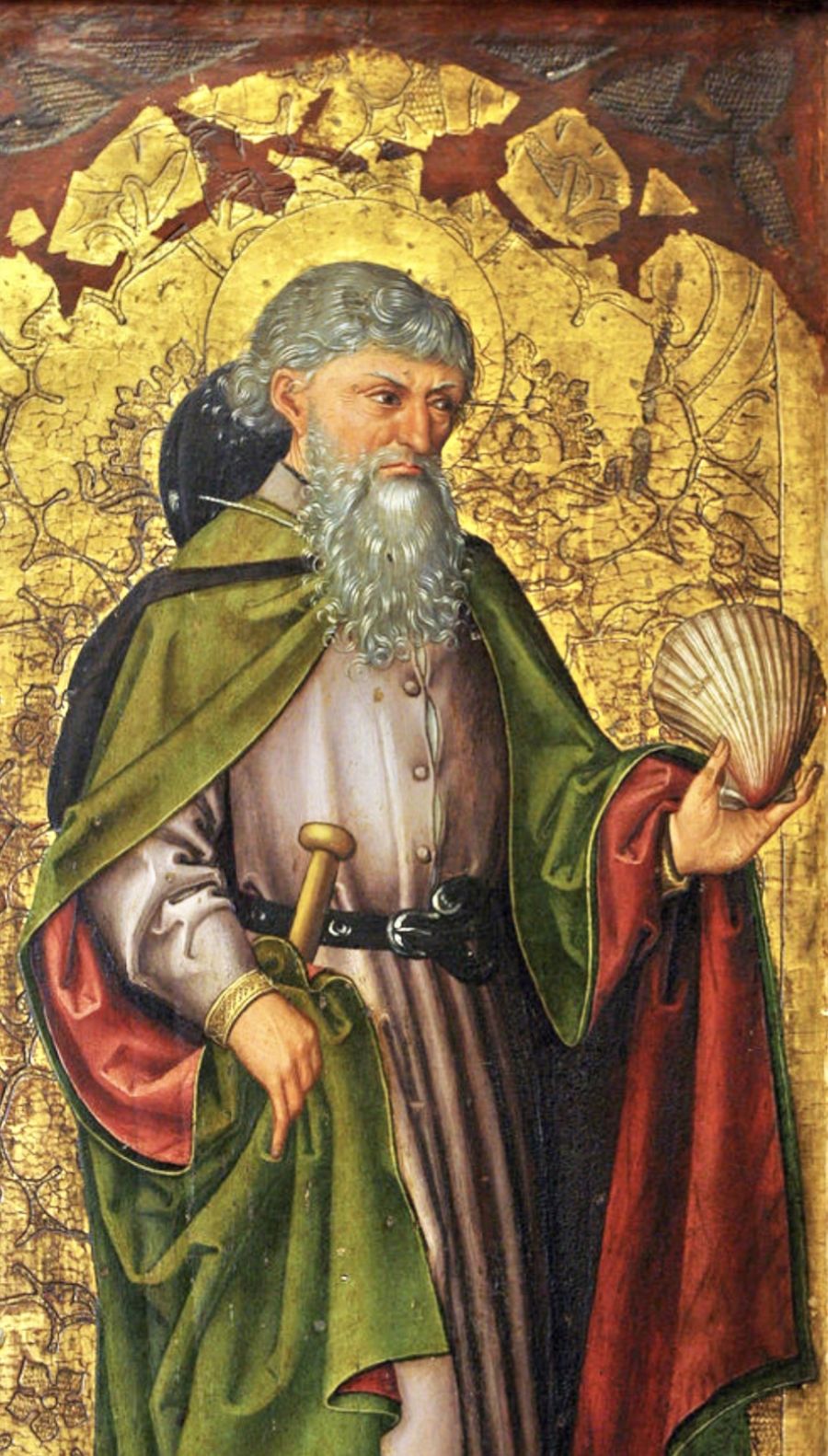
[St James the Apostle, July 25]

81 Last modified on Sunday, 19 July 2026 04:48
don Giuseppe Nespeca

Giuseppe Nespeca è architetto e sacerdote. Cultore della Sacra scrittura è autore della raccolta "Due Fuochi due Vie - Religione e Fede, Vangeli e Tao"; coautore del libro "Dialogo e Solstizio".

The Spirit of the Lord continues to pour out his gifts upon the Church to guide us into all truth, to show us the meaning of the Scriptures and to make us credible heralds of the word of salvation before the world [Pope Benedict, Verbum Domini]
Lo Spirito del Signore continua ad effondere i suoi doni sulla Chiesa perché siamo condotti alla verità tutta intera, dischiudendo a noi il senso delle Scritture e rendendoci nel mondo annunciatori credibili della Parola di salvezza [Papa Benedetto, Verbum Domini]
This belonging to each other and to him is not some ideal, imaginary, symbolic relationship, but – I would almost want to say – a biological, life-transmitting state of belonging to Jesus Christ (Pope Benedict)
Questo appartenere l’uno all’altro e a Lui non è una qualsiasi relazione ideale, immaginaria, simbolica, ma – vorrei quasi dire – un appartenere a Gesù Cristo in senso biologico, pienamente vitale (Papa Benedetto)
Jesus invites us to discern the words and deeds which bear witness to the imminent coming of the Father’s kingdom. Indeed, he indicates and concentrates all the signs in the enigmatic “sign of Jonah”. By doing so, he overturns the worldly logic aimed at seeking signs that would confirm the human desire for self-affirmation and power (Pope John Paul II)
Gesù invita al discernimento in rapporto alle parole ed opere, che testimoniano l'imminente avvento del Regno del Padre. Anzi, Egli indirizza e concentra tutti i segni nell'enigmatico "segno di Giona". E con ciò rovescia la logica mondana tesa a cercare segni che confermino il desiderio di autoaffermazione e di potenza dell'uomo (Papa Giovanni Paolo II)
In reality, an abstract, distant god is more comfortable, one that doesn’t get himself involved in situations and who accepts a faith that is far from life, from problems, from society. Or we would even like to believe in a ‘special effects’ god (Pope Francis)
In realtà, è più comodo un dio astratto, distante, che non si immischia nelle situazioni e che accetta una fede lontana dalla vita, dai problemi, dalla società. Oppure ci piace credere a un dio “dagli effetti speciali” (Papa Francesco)
It is as though you were given a parcel with a gift inside and, rather than going to open the gift, you look only at the paper it is wrapped in: only appearances, the form, and not the core of the grace, of the gift that is given! (Pope Francis)
È come se a te regalassero un pacchetto con dentro un dono e tu, invece di andare a cercare il dono, guardi soltanto la carta nel quale è incartato: soltanto le apparenze, la forma, e non il nocciolo della grazia, del dono che viene dato! (Papa Francesco)
The Lord has our good at heart, that is, that every person should have life, and that especially the "least" of his children may have access to the banquet he has prepared for all (Pope Benedict)
Al Signore sta a cuore il nostro bene, cioè che ogni uomo abbia la vita, e che specialmente i suoi figli più "piccoli" possano accedere al banchetto che lui ha preparato per tutti (Papa Benedetto)
This Parable of the Sower is somewhat the ‘mother’ of all parables […] Such is the heart of God! Each one of us is ground on which the seed of the Word falls; no one is excluded! [Pope Francis]
Questa del seminatore è un po’ la “madre” di tutte le parabole […] Così è il cuore di Dio! Ognuno di noi è un terreno su cui cade il seme della Parola, nessuno è escluso [Papa Francesco]
Are we not perhaps all afraid in some way? If we let Christ enter fully into our lives, if we open ourselves totally to him, are we not afraid that He might take something away from us? (Pope Benedict)

Due Fuochi due Vie - Vol. 1 Due Fuochi due Vie - Vol. 2 Due Fuochi due Vie - Vol. 3 Due Fuochi due Vie - Vol. 4 Due Fuochi due Vie - Vol. 5 Dialogo e Solstizio I fiammiferi di Maria

duevie.art

don Giuseppe Nespeca

Tel. 333-1329741


Disclaimer

Questo blog non rappresenta una testata giornalistica in quanto viene aggiornato senza alcuna periodicità. Non può pertanto considerarsi un prodotto editoriale ai sensi della legge N°62 del 07/03/2001.
Le immagini sono tratte da internet, ma se il loro uso violasse diritti d'autore, lo si comunichi all'autore del blog che provvederà alla loro pronta rimozione.
L'autore dichiara di non essere responsabile dei commenti lasciati nei post. Eventuali commenti dei lettori, lesivi dell'immagine o dell'onorabilità di persone terze, il cui contenuto fosse ritenuto non idoneo alla pubblicazione verranno insindacabilmente rimossi.






