Feb 15, 2026 Written by 

Judgment and sentences

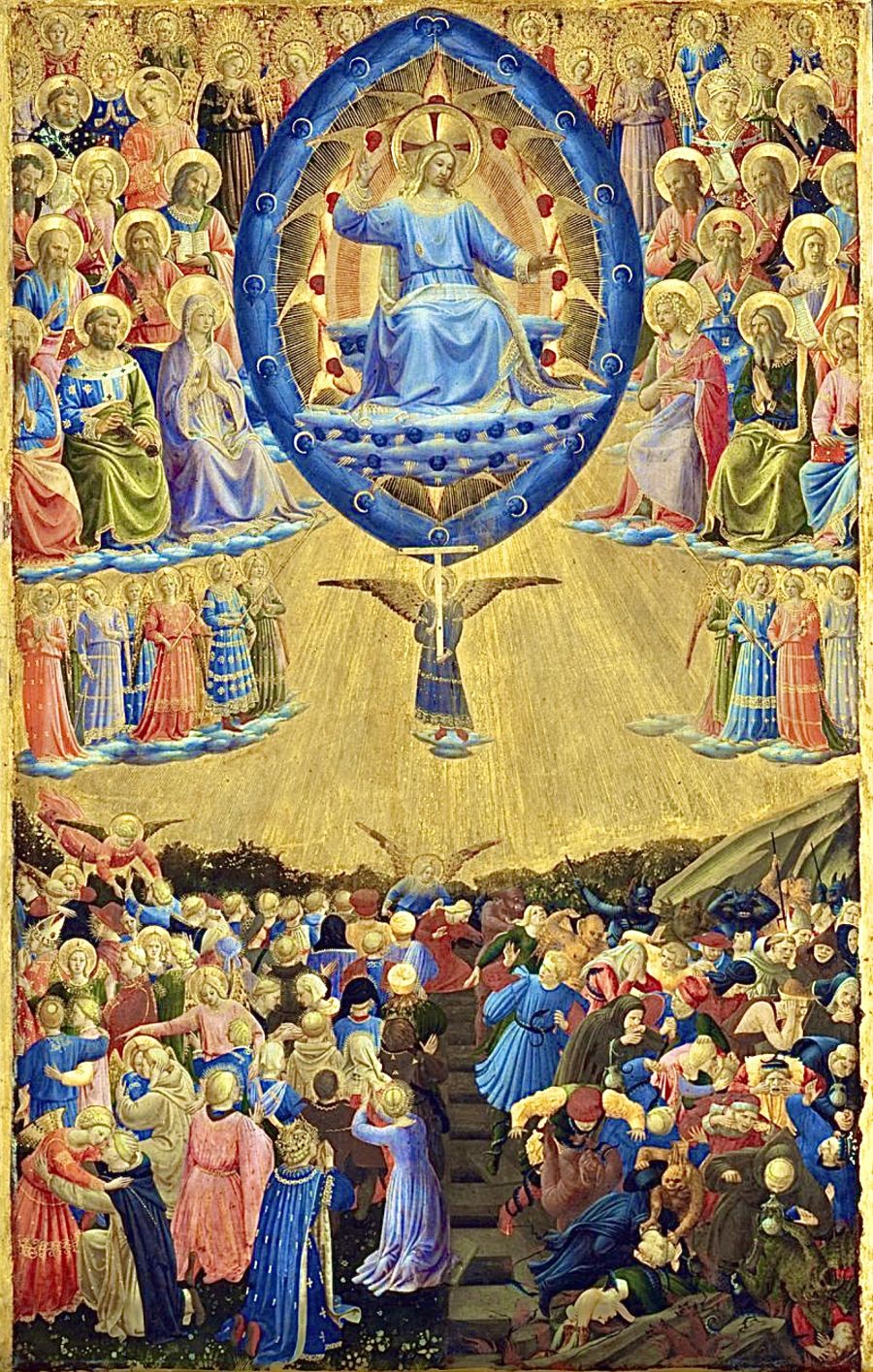
(Mt 25:31-46)


The famous Judgment passage presents the ‘coming’ Risen (v.31) as «Son of man», that is, authentic and complete development of divine plan for humanity: his kind of "verdict" follows.

God embraces the limited condition of his creatures, so the behavior that realizes our life does not concern the religious attitude itself, but what we have had towards our fellow men.


In all ancient beliefs, the soul of the deceased was weighed on a notarial basis and judged according to the positive or negative balance.

In the opinion of the rabbis, Divine Mercy intervened in favor only when the good and bad works were balanced.

Jesus does not speak of a Court that proclaims immutable negative sentences on the whole person, but of his humanizing traits.

«Life of the Eternal» (v.46 Greek text) alludes to a kind of life that is not biological but relational and full of being, which we can already experience.

These are episodes in which our genuine DNA emerged, the Gold that inhabits us: when we knew how to respond to the needs not of God, but of life itself and of our brothers.

These are the moments in which we have been profound listeners to the nature, hope and vocation of all - sensitive to the needs of others. Opportunities that have allowed us to bring the human condition closer to the heavenly one.

Comparing the ‘works’ declared "paradigm" with those of the lists of other religions - even in ancient Egypt - we note the difference in v.36: «I was in prison and you came to me» (vv.39.43).

The difference is remarkable precisely under the criterion of divine Justice: it overlooks forensic considerations, because it creates justice where there is none.

The Father gives life in every case, because He is not “good” [as is believed in all devout persuasions] but exclusively good.

‘Righteous’ - then - did not even realize that they had done who knows what: they spontaneously corresponded to their nature as sons (v.39).

They have had sympathy for our ‘flesh’ in its reality - considering it familiar. They have loved with and like Jesus, in Him.

The others, all taken up by formalisms of no interest to God, are surprised that the Father is not all there where they had imagined Him - locked in the sentences of ordinary justice: «When we saw you [...] in prison and did not we serve you?» (v. 44).

Vocation to meet leads spontaneously to transgress divisions: legalistic, of retribution, or prejudice and kind of cult.

This is the eminent Salvation - which nestles in the direct and genuine aspect, not so much in the organized purposes; nor does it have any consistency on the basis of opinions.

We fulfill ourselves in responding to the instinctive Call that arises from our own essential (altruistic) imprint, even the slightest, ill-considered, or eccentric and shaky - not extraordinary.

Without too external conditions, it recognizes itself disseminated in the soul and in the beneficial divinizing fullness of the «Son of man».

Jesus' ultimate Teaching: eminent, global and all-human Judgement; not verdict by concept and account.

Here the Jesus’ identification with the little ones: his Person has a central meaning, which surpasses the ‘distinction’ between friends and outlaws.

The Person is now a different Subject, far richer - solid in itself, but expanding into the divine and human You, even destitute.


[Monday 1st wk. in Lent, February 23, 2026]

75 Last modified on Sunday, 15 February 2026 05:50
don Giuseppe Nespeca

Giuseppe Nespeca è architetto e sacerdote. Cultore della Sacra scrittura è autore della raccolta "Due Fuochi due Vie - Religione e Fede, Vangeli e Tao"; coautore del libro "Dialogo e Solstizio".

In today’s Gospel passage, Jesus identifies himself not only with the king-shepherd, but also with the lost sheep, we can speak of a “double identity”: the king-shepherd, Jesus identifies also with the sheep: that is, with the least and most needy of his brothers and sisters […] And let us return home only with this phrase: “I was present there. Thank you!”. Or: “You forgot about me” (Pope Francis)
Nella pagina evangelica di oggi, Gesù si identifica non solo col re-pastore, ma anche con le pecore perdute. Potremmo parlare come di una “doppia identità”: il re-pastore, Gesù, si identifica anche con le pecore, cioè con i fratelli più piccoli e bisognosi […] E torniamo a casa soltanto con questa frase: “Io ero presente lì. Grazie!” oppure: “Ti sei scordato di me” (Papa Francesco)
Thus, in the figure of Matthew, the Gospels present to us a true and proper paradox: those who seem to be the farthest from holiness can even become a model of the acceptance of God's mercy and offer a glimpse of its marvellous effects in their own lives (Pope Benedict))
Nella figura di Matteo, dunque, i Vangeli ci propongono un vero e proprio paradosso: chi è apparentemente più lontano dalla santità può diventare persino un modello di accoglienza della misericordia di Dio e lasciarne intravedere i meravigliosi effetti nella propria esistenza (Papa Benedetto)
Man is involved in penance in his totality of body and spirit: the man who has a body in need of food and rest and the man who thinks, plans and prays; the man who appropriates and feeds on things and the man who makes a gift of them; the man who tends to the possession and enjoyment of goods and the man who feels the need for solidarity that binds him to all other men [CEI pastoral note]
Nella penitenza è coinvolto l'uomo nella sua totalità di corpo e di spirito: l'uomo che ha un corpo bisognoso di cibo e di riposo e l'uomo che pensa, progetta e prega; l'uomo che si appropria e si nutre delle cose e l'uomo che fa dono di esse; l'uomo che tende al possesso e al godimento dei beni e l'uomo che avverte l'esigenza di solidarietà che lo lega a tutti gli altri uomini [nota pastorale CEI]
St John Chrysostom urged: “Embellish your house with modesty and humility with the practice of prayer. Make your dwelling place shine with the light of justice; adorn its walls with good works, like a lustre of pure gold, and replace walls and precious stones with faith and supernatural magnanimity, putting prayer above all other things, high up in the gables, to give the whole complex decorum. You will thus prepare a worthy dwelling place for the Lord, you will welcome him in a splendid palace. He will grant you to transform your soul into a temple of his presence” (Pope Benedict)
San Giovanni Crisostomo esorta: “Abbellisci la tua casa di modestia e umiltà con la pratica della preghiera. Rendi splendida la tua abitazione con la luce della giustizia; orna le sue pareti con le opere buone come di una patina di oro puro e al posto dei muri e delle pietre preziose colloca la fede e la soprannaturale magnanimità, ponendo sopra ogni cosa, in alto sul fastigio, la preghiera a decoro di tutto il complesso. Così prepari per il Signore una degna dimora, così lo accogli in splendida reggia. Egli ti concederà di trasformare la tua anima in tempio della sua presenza” (Papa Benedetto)
And He continues: «Think of salvation, of what God has done for us, and choose well!». But the disciples "did not understand why the heart was hardened by this passion, by this wickedness of arguing among themselves and seeing who was guilty of that forgetfulness of the bread" (Pope Francis)

Due Fuochi due Vie - Vol. 1 Due Fuochi due Vie - Vol. 2 Due Fuochi due Vie - Vol. 3 Due Fuochi due Vie - Vol. 4 Due Fuochi due Vie - Vol. 5 Dialogo e Solstizio I fiammiferi di Maria

duevie.art

don Giuseppe Nespeca

Tel. 333-1329741


Disclaimer

Questo blog non rappresenta una testata giornalistica in quanto viene aggiornato senza alcuna periodicità. Non può pertanto considerarsi un prodotto editoriale ai sensi della legge N°62 del 07/03/2001.
Le immagini sono tratte da internet, ma se il loro uso violasse diritti d'autore, lo si comunichi all'autore del blog che provvederà alla loro pronta rimozione.
L'autore dichiara di non essere responsabile dei commenti lasciati nei post. Eventuali commenti dei lettori, lesivi dell'immagine o dell'onorabilità di persone terze, il cui contenuto fosse ritenuto non idoneo alla pubblicazione verranno insindacabilmente rimossi.






