Feb 13, 2026 Written by 

But is it permissible for him to participate in the Eucharist?

The Conversion, forbidden things and the Doctor of opposites

(Lk 5:27-32)


At the time when Luke wrote his Gospel (immediately after the mid-80s), the community of pagans converted to Christ in Ephesus was pervaded by lively temptations and marked by defections.

In addition, a question arises in the internal church debate about the kind of admissible participation in the meetings, and the Breaking of Bread.

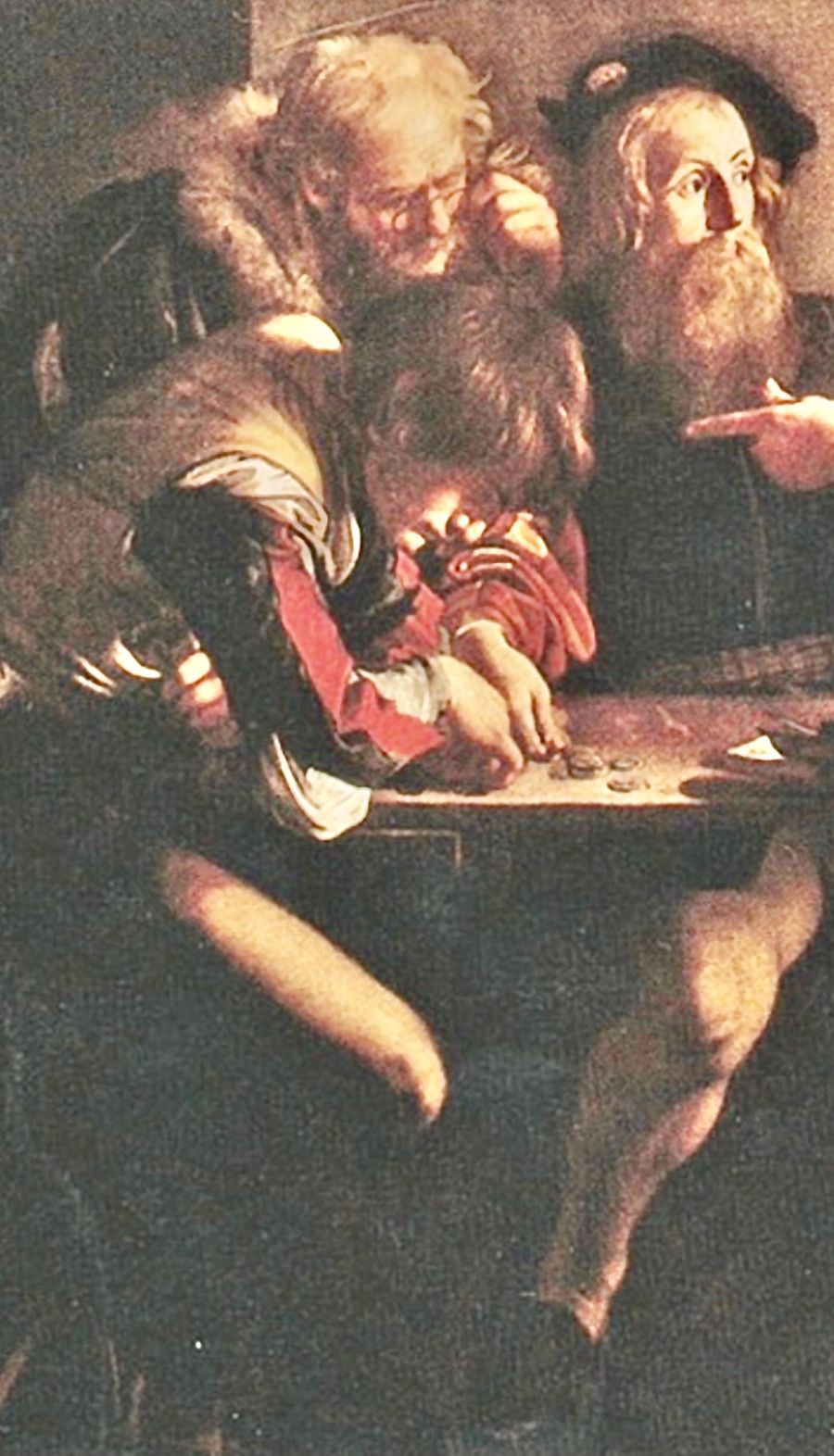
The evangelist narrates the episode of «Levi», avoiding simply calling him Matthew - almost as if to accentuate his Semitic and paradoxically cultic derivation.

Thus Lk wants to describe how Jesus himself had faced the same conflict: without any ritual or sacral attention, if not to man.

According to the Master, in the journey of Faith the relationship with the distant, different, and our very discomforts or hidden abysses, have something to tell us.

The Father is a friendly Presence. His life-saving initiative is for everyone, even for those who don't know how to do anything but look after their own gain.

This diminishes and overcomes the obsession with sin that religions considered an insurmountable barrier to communion with God - by marking life.

The Good News is that the Eucharist (v.29) is not a reward for merit (v.30).

Eating together was a precious sign of sharing, even on a religious level. At banquets, legalists avoided contact with sinful members of their own people.

Instead, all are called and each can be reborn, even surpassing the pure ones.

So putting yourself among sinners is not a defeat, but truth. And sin itself is no longer just a deviation to be corrected.

This is why the figure of the new Master touched the hearts of the people: he bore the sign of Grace; communion with the lost and guilty.

But with these gestures the Son seemed to put himself in God's place (v.30).

In fact, the Father catches us without fences, at the point where we are: He doesn’t pay attention to social condition and origin.

Among the disciples, it is likely that there were quite a few members of the Palestinian resistance [guerrillas fighting against the Roman occupiers].

On the other hand, here Jesus calls a collaborator of the Romans who let himself be guided by the advantage.

As if to say: the new community of children and brothers doesn’t cultivate privileges, separations, oppressions, hatreds.

The Master always stood above the political clashes, ideological distinctions and external disputes of time.

In his Church there is a strong sign of discontinuity.

He does not invite the best or the worst to follow, but opposites - even of our own personality. He wants to dispose us «to conversion» (v.32): to make us change our point of view, mentality, principles, way of being.

In this adventure we are not called to forms of dissociation: we start from ourselves.

Thus Jesus inaugurates a new kind of relationships, even within us. A New Covenant, of fruitful differences.

And the single Word «Follow Me [not others]» creates all (v.27).

Therefore, in this Lent we can put the idea of ​​“belonging” in brackets; to rely on God alone, break down barriers, and celebrate.


It’s not ‘perfection’ that makes us love the Exodus.


[Saturday after the Ashes, February 21, 2026]

88 Last modified on Friday, 13 February 2026 06:45
don Giuseppe Nespeca

Giuseppe Nespeca è architetto e sacerdote. Cultore della Sacra scrittura è autore della raccolta "Due Fuochi due Vie - Religione e Fede, Vangeli e Tao"; coautore del libro "Dialogo e Solstizio".

Thus, in the figure of Matthew, the Gospels present to us a true and proper paradox: those who seem to be the farthest from holiness can even become a model of the acceptance of God's mercy and offer a glimpse of its marvellous effects in their own lives (Pope Benedict))
Nella figura di Matteo, dunque, i Vangeli ci propongono un vero e proprio paradosso: chi è apparentemente più lontano dalla santità può diventare persino un modello di accoglienza della misericordia di Dio e lasciarne intravedere i meravigliosi effetti nella propria esistenza (Papa Benedetto)
Man is involved in penance in his totality of body and spirit: the man who has a body in need of food and rest and the man who thinks, plans and prays; the man who appropriates and feeds on things and the man who makes a gift of them; the man who tends to the possession and enjoyment of goods and the man who feels the need for solidarity that binds him to all other men [CEI pastoral note]
Nella penitenza è coinvolto l'uomo nella sua totalità di corpo e di spirito: l'uomo che ha un corpo bisognoso di cibo e di riposo e l'uomo che pensa, progetta e prega; l'uomo che si appropria e si nutre delle cose e l'uomo che fa dono di esse; l'uomo che tende al possesso e al godimento dei beni e l'uomo che avverte l'esigenza di solidarietà che lo lega a tutti gli altri uomini [nota pastorale CEI]
St John Chrysostom urged: “Embellish your house with modesty and humility with the practice of prayer. Make your dwelling place shine with the light of justice; adorn its walls with good works, like a lustre of pure gold, and replace walls and precious stones with faith and supernatural magnanimity, putting prayer above all other things, high up in the gables, to give the whole complex decorum. You will thus prepare a worthy dwelling place for the Lord, you will welcome him in a splendid palace. He will grant you to transform your soul into a temple of his presence” (Pope Benedict)
San Giovanni Crisostomo esorta: “Abbellisci la tua casa di modestia e umiltà con la pratica della preghiera. Rendi splendida la tua abitazione con la luce della giustizia; orna le sue pareti con le opere buone come di una patina di oro puro e al posto dei muri e delle pietre preziose colloca la fede e la soprannaturale magnanimità, ponendo sopra ogni cosa, in alto sul fastigio, la preghiera a decoro di tutto il complesso. Così prepari per il Signore una degna dimora, così lo accogli in splendida reggia. Egli ti concederà di trasformare la tua anima in tempio della sua presenza” (Papa Benedetto)
And He continues: «Think of salvation, of what God has done for us, and choose well!». But the disciples "did not understand why the heart was hardened by this passion, by this wickedness of arguing among themselves and seeing who was guilty of that forgetfulness of the bread" (Pope Francis)
E continua: «Pensate alla salvezza, a quello che anche Dio ha fatto per noi, e scegliete bene!». Ma i discepoli «non capivano perché il cuore era indurito per questa passione, per questa malvagità di discutere fra loro e vedere chi era il colpevole di quella dimenticanza del pane» (Papa Francesco)
[Faith] is the lifelong companion that makes it possible to perceive, ever anew, the marvels that God works for us. Intent on gathering the signs of the times in the present of history […] (Pope Benedict, Porta Fidei n.15)
[La Fede] è compagna di vita che permette di percepire con sguardo sempre nuovo le meraviglie che Dio compie per noi. Intenta a cogliere i segni dei tempi nell’oggi della storia […] (Papa Benedetto, Porta Fidei n.15)

Due Fuochi due Vie - Vol. 1 Due Fuochi due Vie - Vol. 2 Due Fuochi due Vie - Vol. 3 Due Fuochi due Vie - Vol. 4 Due Fuochi due Vie - Vol. 5 Dialogo e Solstizio I fiammiferi di Maria

duevie.art

don Giuseppe Nespeca

Tel. 333-1329741


Disclaimer

Questo blog non rappresenta una testata giornalistica in quanto viene aggiornato senza alcuna periodicità. Non può pertanto considerarsi un prodotto editoriale ai sensi della legge N°62 del 07/03/2001.
Le immagini sono tratte da internet, ma se il loro uso violasse diritti d'autore, lo si comunichi all'autore del blog che provvederà alla loro pronta rimozione.
L'autore dichiara di non essere responsabile dei commenti lasciati nei post. Eventuali commenti dei lettori, lesivi dell'immagine o dell'onorabilità di persone terze, il cui contenuto fosse ritenuto non idoneo alla pubblicazione verranno insindacabilmente rimossi.






