


don Giuseppe Nespeca
Giuseppe Nespeca è architetto e sacerdote. Cultore della Sacra scrittura è autore della raccolta "Due Fuochi due Vie - Religione e Fede, Vangeli e Tao"; coautore del libro "Dialogo e Solstizio".
RELIGIOUS SENSE AND PSYCHE (by Francesco Giovannozzi, psychologist and psychotherapist)
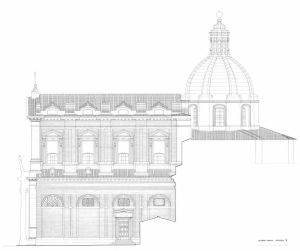
Reflections on the religious sense.
This reflection also stems from a dialogue with a gentleman of about my age.
This well known and respected gentleman in his village met an old acquaintance of his and was rebuked by the latter because he did not attend religious services; according to her, he should have done so for his own good. The gentleman replied that he did not feel this need and that it did not seem to him that his behaviour might offend the generally understood religious sense.
Discussions like this occur often among human beings, this is nothing new. I report it because it made me reflect on the religious sense in human life. The topic touches on several disciplines and is complex.
Studies by Fiorenzo Facchini say that various behaviours of prehistoric man are read in a religious sense. Our ancestors gave burials to their dead and painted representations on the walls.
These caves had something sacred about them. Religious manifestations of antiquity were songs and dances.
In all religions we find a need for reassurance about our lives and also the need to find magical answers to our problems.
Bettelheim argues that on an individual level and especially in childhood, religion can provide that basis of stability and security with which the child can evolve towards autonomy.
The society in which we live forces us to run, to be in step with the times; it wants to give us its values.
Today there is the fashion of the ephemeral, of competitiveness - and so it is psychologically reassuring to believe in a 'mother-environment' that loves us, or to be within a design that gives meaning to our lives.
Unlike Freud who did not have a positive view, or the philosopher Charles Marx who claimed that religion is the opium of the people, Jung in the eleventh volume "Psychology and Religion" says verbatim:
"Since' religion is indisputably one of the first and universal expressions of the human soul [...] it is not only a sociological or historical phenomenon, but an important personal matter" (vol.XI, p.15).
In my long professional practice I have often encountered people who have had to come to terms with this issue.
The therapist's task is not to condition the other, but to clarify the underlying dynamics.
I have met people who described themselves as non-believers but who on an unconscious level had to come to terms with their dreams. Or individuals who belonged to different religions that were so rigid that they inhibited their vital sense.
In all these cases, knowledge of the human soul grew, whether they claimed to be religious or not. We are not discussing each person's philosophical position.
There were differences between the person who called himself religious and one who was not.
I would like to point out that these differences do not constitute value judgements, but only behavioural characteristics.
The religious person believes that there is a reality that is sacred and beyond this world - and that his existence is enhanced according to his belief.
He who called himself a non-believer rejected transcendence, was one who is self-made and believes that he alone constructs his own destiny.
A constant concern was to deny any reference or wisecrack that was made to religious topics.
I have even met someone who was more concerned about what my beliefs were than his personal problems. I always replied that my sphere of action was the psyche in all its manifestations. Beyond any manifestation sacred or not, respect for the person is already a sacred attitude.
"To 'desacralise' oneself completely is not easy either, as it is difficult to deny history altogether - both for those who believe in creation and those who believe in evolution.
Who knows whether evolution includes a creation?
Dr Francesco Giovannozzi Psychologist-psychotherapist
All Jesus, and the Temptations… trials for Life
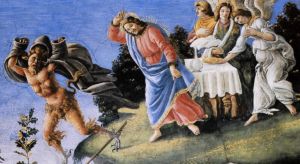
Blind, guide of the Blind. Beam and Straw. Tree and Fruit
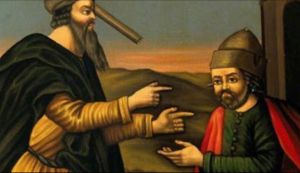
Loving enemies and turning the other cheek: whyever?
Beatitudes of role reversal

From «Master» to «Lord», ‘Word’ that realizes
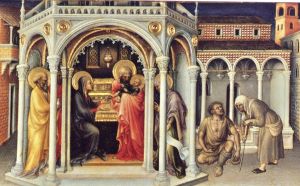
Presentation of the Lord
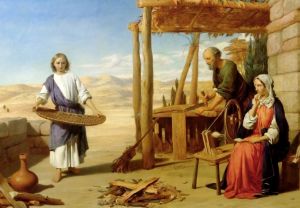
Jesus in the Synagogue, to return to the Father's Dream
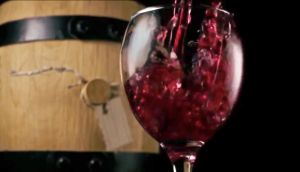
Wedding at Cana: between water and wine... desolation or love
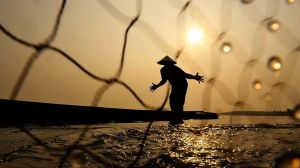
Epiphany: more adventure is needed

That denarius clearly represents eternal life, a gift that God reserves for all. Indeed those who are considered the "last", if they accept, become the "first", whereas the "first" can risk becoming the "last" [Pope Benedict]
Quel denaro rappresenta la vita eterna, dono che Dio riserva a tutti. Anzi, proprio quelli che sono considerati "ultimi", se lo accettano, diventano "primi", mentre i "primi" possono rischiare di finire "ultimi" [Papa Benedetto]
The sower is Jesus. With this image, we can see that he presents himself as one who does not impose himself, but rather offers himself. He does not attract us by conquering us, but by donating himself: he casts seeds. With patience and generosity, he spreads his Word, which is not a cage or a trap, but a seed which can bear fruit (Pope Francis)
Il seminatore è Gesù. Notiamo che, con questa immagine, Egli si presenta come uno che non si impone, ma si propone; non ci attira conquistandoci, ma donandosi: butta il seme. Egli sparge con pazienza e generosità la sua Parola, che non è una gabbia o una trappola, ma un seme che può portare frutto (Papa Francesco)
The Church desires to give thanks to the Most Holy Trinity for the "mystery of woman" and for every woman - for that which constitutes the eternal measure of her feminine dignity, for the "great works of God", which throughout human history have been accomplished in and through her (Mulieris Dignitatem n.31)
La Chiesa desidera ringraziare la Santissima Trinità per il «mistero della donna», e, per ogni donna - per ciò che costituisce l'eterna misura della sua dignità femminile, per le «grandi opere di Dio» che nella storia delle generazioni umane si sono compiute in lei e per mezzo di lei (Mulieris Dignitatem n.31)
Simon, a Pharisee and rich 'notable' of the city, holds a banquet in his house in honour of Jesus. Unexpectedly from the back of the room enters a guest who was neither invited nor expected […] (Pope Benedict)
Simone, fariseo e ricco “notabile” della città, tiene in casa sua un banchetto in onore di Gesù. Inaspettatamente dal fondo della sala entra un’ospite non invitata né prevista […] (Papa Benedetto)
God excludes no one […] God does not let himself be conditioned by our human prejudices (Pope Benedict)
Dio non esclude nessuno […] Dio non si lascia condizionare dai nostri pregiudizi (Papa Benedetto)
«The Russian mystics of the first centuries of the Church gave advice to their disciples, the young monks: in the moment of spiritual turmoil take refuge under the mantle of the holy Mother of God». Then «the West took this advice and made the first Marian antiphon “Sub tuum Praesidium”: under your cloak, in your custody, O Mother, we are sure there» (Pope Francis)
The Gospel of Matthew written in Hebrew or Aramaic is no longer extant, but in the Greek Gospel that we possess we still continue to hear, in a certain way, the persuasive voice of the publican Matthew, who, having become an Apostle, continues to proclaim God's saving mercy to us. And let us listen to St Matthew's message, meditating upon it ever anew also to learn to stand up and follow Jesus with determination (Pope Benedict)
Non abbiamo più il Vangelo scritto da Matteo in ebraico o in aramaico, ma nel Vangelo greco che abbiamo continuiamo a udire ancora, in qualche modo, la voce persuasiva del pubblicano Matteo che, diventato Apostolo, séguita ad annunciarci la salvatrice misericordia di Dio e ascoltiamo questo messaggio di san Matteo, meditiamolo sempre di nuovo per imparare anche noi ad alzarci e a seguire Gesù con decisione (Papa Benedetto)








duevie.art
don Giuseppe Nespeca
Tel. 333-1329741
Disclaimer
Questo blog non rappresenta una testata giornalistica in quanto viene aggiornato senza alcuna periodicità. Non può pertanto considerarsi un prodotto editoriale ai sensi della legge N°62 del 07/03/2001.
Le immagini sono tratte da internet, ma se il loro uso violasse diritti d'autore, lo si comunichi all'autore del blog che provvederà alla loro pronta rimozione.
L'autore dichiara di non essere responsabile dei commenti lasciati nei post. Eventuali commenti dei lettori, lesivi dell'immagine o dell'onorabilità di persone terze, il cui contenuto fosse ritenuto non idoneo alla pubblicazione verranno insindacabilmente rimossi.