Aug 30, 2026 Written by 

Gifts in service

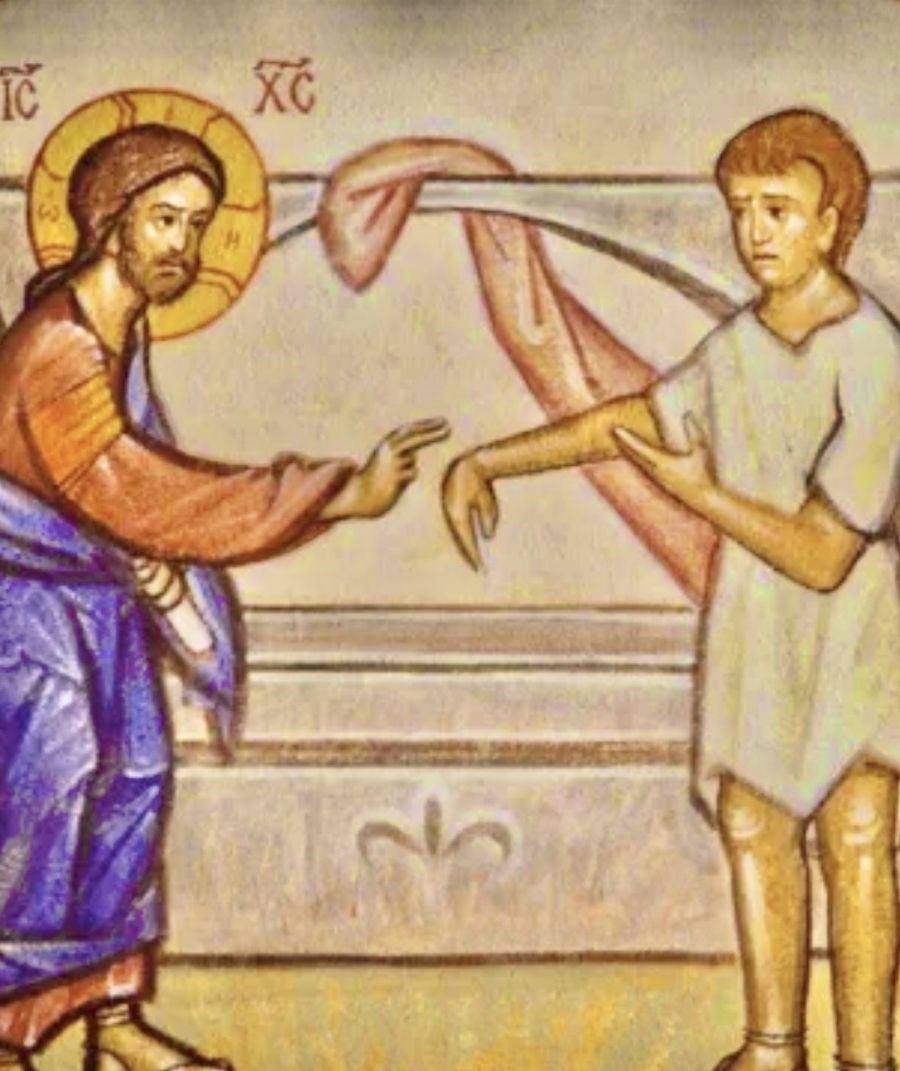
Today’s Gospel highlights the hardness of heart of the Pharisees, who were quick to accuse Jesus for healing a paralysed hand.

For them, observance takes precedence over the person. And that is terrifying!

Francis, on the other hand, following in Christ’s footsteps, placed the well-being of the person – both physical and spiritual – at the centre.

After his conversion, the Little One of Assisi lived his life always doing good, without allowing himself to be influenced by the prevailing mindset; and he taught his friars to do the same, in the freedom of the children of God.

In the Sources – specifically in the Unconfirmed Rule (1221) – we find what he recommended to his brothers:

‘And even if they are accused of being hypocrites, let them not cease to do good’ (FF 8).

And again:

‘Let us bear fruits worthy of penance. And let us love our neighbours as ourselves’ (FF 189).

Thus Francis never missed an opportunity to do good; he who, filled with Grace, was showered with gifts for the service of others.

Indeed, the Lord, through the ‘Poverello’, performed many healings throughout the ages:

“In Gubbio, a paralysed woman repeated the name of Blessed Francis three times, and was immediately healed.

A certain Boniface, afflicted with excruciating pain in his hands and feet, could neither move nor walk, and had completely lost his sleep and appetite. One day a woman came to him and advised and urged him to entrust himself to Blessed Francis if he wished to be immediately delivered.

That man, who at first had almost gone mad because of the spasms, refused, saying: ‘I do not believe he is a saint’.

Then, yielding to the woman’s insistence, he made a vow as follows: ‘I entrust myself to the intercession of Francis and I shall consider him a saint if, within three days, he frees me from my illness’. And his prayer was immediately answered; he regained the ability to walk, his appetite and his sleep, and gave glory to Almighty God” (FF 559).

But the Saint, as mentioned above, was struck by the hardness of heart shown by some Romans in the face of the preaching of the Word.

In the Testimonies following Francis’s death we read:

“But the Roman people […] showered him with contempt, to such an extent that not only did they refuse to listen to him, but they also shunned his sermons. And for many days they continued to mock his preaching. Then Francis rebuked them for the hardness of their hearts, saying:

«I deeply lament your wretchedness, for not only do you shower me, the Lord’s servant, with contempt, but through me you bring shame upon that Redeemer of whom I proclaim the good news […]

I shall go and proclaim Christ to the beasts and the birds of the air; they will hear these words of salvation and obey God with all their hearts» (FF 2288).


«I ask you, is it lawful on the Sabbath to do good or to do evil, to save a life or to destroy it?» (Lk 6:6–11)


*It was a fairly widespread devotional practice in the Middle Ages to offer, as a votive offering to obtain a grace, figures made of wax, bread or metal, of the same weight or size as the supplicant.


Monday of the 23rd wk. in Ordinary Time  (Lk 6:6–11)

103 Last modified on Sunday, 30 August 2026 02:01
Teresa Girolami

Teresa Girolami è laureata in Materie letterarie e Teologia. Ha pubblicato vari testi, fra cui: "Pellegrinaggio del cuore" (Ed. Piemme); "I Fiammiferi di Maria - La Madre di Dio in prosa e poesia"; "Tenerezza Scalza - Natura di donna"; co-autrice di "Dialogo e Solstizio".

Email This email address is being protected from spambots. You need JavaScript enabled to view it.
Luke’s passage puts before the eyes a double slavery: that of man «with his hand paralyzed, slave of his illness», and that of the «Pharisees, scribes, slaves of their rigid, legalistic attitudes» (Pope Francis)
Il racconto di Luca mette davanti agli occhi una duplice schiavitù: quella dell’uomo «con la mano paralizzata, schiavo della sua malattia», e quella «dei farisei, degli scribi, schiavi dei loro atteggiamenti rigidi, legalistici» (Papa Francesco)
Origen says “we should practise this symphony” (Commentary on the Gospel according to Matthew, 14,1), in other words this harmony within the Christian community [Pope Benedict]
Dice Origene che “dobbiamo esercitarci in questa sinfonia” (Commento al Vangelo di Matteo 14, 1), cioè in questa concordia all’interno della comunità cristiana [Papa Benedetto]
Thus in communion with Christ, in a faith that creates charity, the entire Law is fulfilled. We become just by entering into communion with Christ who is Love (Pope Benedict)
Così nella comunione con Cristo, nella fede che crea la carità, tutta la Legge è realizzata. Diventiamo giusti entrando in comunione con Cristo che è l'amore (Papa Benedetto)
«Francis was reproaching his brethren too harsh towards themselves, and who came to exhaustion by means of vigils, fasts, prayers and corporal penances» [FS 1470]
«Francesco muoveva rimproveri ai suoi fratelli troppo duri verso se stessi, e che arrivavano allo sfinimento a forza di veglie, digiuni, orazioni e penitenze corporali» [FF 1470]
From a human point of view, he thinks that there should be distance between the sinner and the Holy One. In truth, his very condition as a sinner requires that the Lord not distance Himself from him, in the same way that a doctor cannot distance himself from those who are sick (Pope Francis)
Da un punto di vista umano, pensa che ci debba essere distanza tra il peccatore e il Santo. In verità, proprio la sua condizione di peccatore richiede che il Signore non si allontani da lui, allo stesso modo in cui un medico non può allontanarsi da chi è malato (Papa Francesco)
The life of the Church in the Third Millennium will certainly not be lacking in new and surprising manifestations of "the feminine genius" (Pope John Paul II)
Il futuro della Chiesa nel terzo millennio non mancherà certo di registrare nuove e mirabili manifestazioni del « genio femminile » (Papa Giovanni Paolo II)
And it is not enough that you belong to the Son of God, but you must be in him, as the members are in their head. All that is in you must be incorporated into him and from him receive life and guidance (Jean Eudes)
E non basta che tu appartenga al Figlio di Dio, ma devi essere in lui, come le membra sono nel loro capo. Tutto ciò che è in te deve essere incorporato in lui e da lui ricevere vita e guida (Giovanni Eudes)
Consequently, just as for Christ carrying the cross was not an option but a mission to be embraced for love, so it is for Christians too. In our world today, where the forces that divide and destroy seem to dominate, Christ does not cease to offer to all his clear invitation [Pope Benedict]
Come per Cristo, così pure per i cristiani portare la croce non è dunque facoltativo, ma è una missione da abbracciare per amore. Nel nostro mondo attuale, dove sembrano dominare le forze che dividono e distruggono, il Cristo non cessa di proporre a tutti il suo chiaro invito [Papa Benedetto]

Due Fuochi due Vie - Vol. 1 Due Fuochi due Vie - Vol. 2 Due Fuochi due Vie - Vol. 3 Due Fuochi due Vie - Vol. 4 Due Fuochi due Vie - Vol. 5 Dialogo e Solstizio I fiammiferi di Maria

duevie.art

don Giuseppe Nespeca

Tel. 333-1329741


Disclaimer

Questo blog non rappresenta una testata giornalistica in quanto viene aggiornato senza alcuna periodicità. Non può pertanto considerarsi un prodotto editoriale ai sensi della legge N°62 del 07/03/2001.
Le immagini sono tratte da internet, ma se il loro uso violasse diritti d'autore, lo si comunichi all'autore del blog che provvederà alla loro pronta rimozione.
L'autore dichiara di non essere responsabile dei commenti lasciati nei post. Eventuali commenti dei lettori, lesivi dell'immagine o dell'onorabilità di persone terze, il cui contenuto fosse ritenuto non idoneo alla pubblicazione verranno insindacabilmente rimossi.






