Oct 11, 2026 Written by 

Foolishness of accumulating for oneself

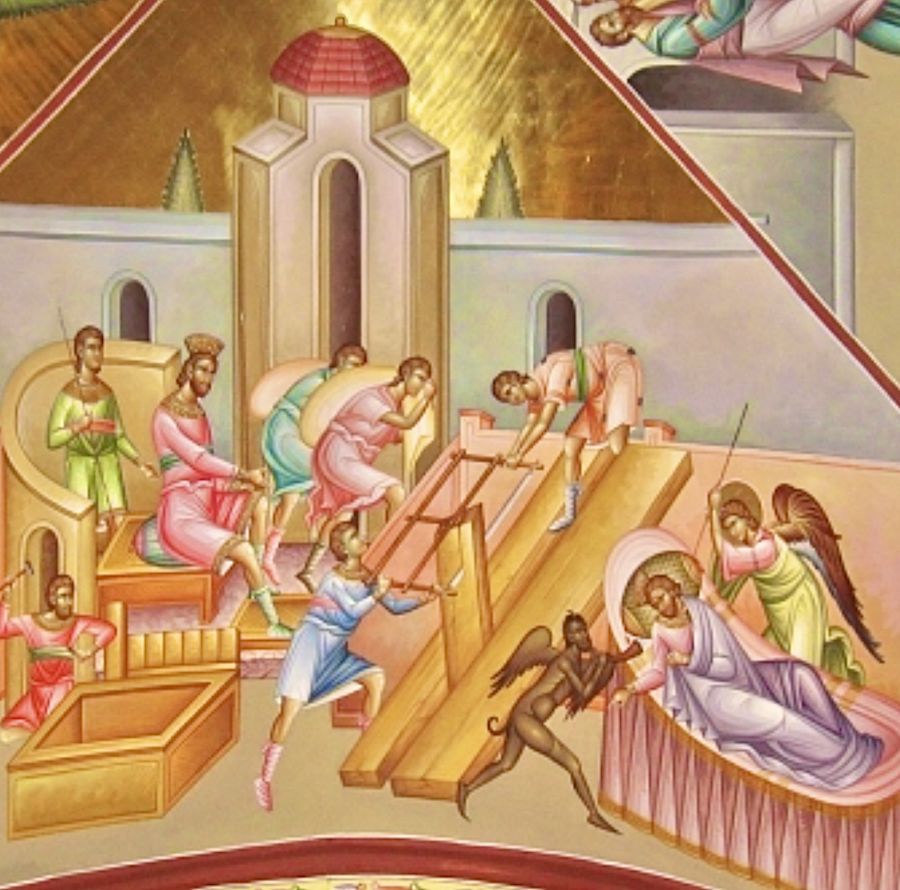
Today's Gospel from Luke emphasises the greed of a rich man who thinks of enlarging his storehouses because of abundant harvests, neglecting his soul and his relationship with God, who finds him unprepared before a sudden death.

Instead of enriching himself with God, he foolishly thinks of accumulating for himself.

Francis of Assisi, on the other hand, donated all he possessed to the poor and set out to give back to God the little he had in exchange for the much he would receive.

He was in love with Our Lady Poverty; he married her and esteemed her because she was chosen by the Son of God, who had nowhere to lay his head.

He was so evangelically attracted to her that he took pity when he met creatures poorer than himself.

The Sources recount:

"It happened to him, during a journey, to meet a poor man. Seeing his nakedness, he was saddened in his heart and said to his companion in a voice of lamentation:

«The misery of this man has brought us great shame; for we, as our only wealth, have chosen poverty: and behold, it shines brighter in him than in us»" (FF 1126).

And Bernard, a citizen of Assisi, who later became his companion in the following of Christ, was advised to leave his possessions, considered a false feud.

But to be sure, "when morning came, they entered a church and, having prayed devoutly, opened the book of the Gospel, willing to carry out the first advice offered them.

They opened the book, and Christ manifested his advice in these words: «If you want to be perfect, go, sell all you possess and give to the poor». They repeat the gesture, and the passage occurs: «Take nothing for the journey». A third time again, and they read: «Whoever wishes to come after me, let him deny himself».

Without delay Bernard performed everything and did not omit a single iota. Many others, in a short time, freed themselves from the mordacious cares of the world and, under the guidance of Francis, returned to the infinite good in the true homeland. But it would be too long to say how each one achieved the prize of the divine call" (FF 601).

Clare herself had requested and obtained from Pope Gregory IX the Privilege of Poverty (17 September 1228) in written form.

This document assured the Poor Sisters of St Damian's the right to live without any property in this world, following in the footsteps of the One who, for our sake, became poor and the Way, the Truth and the Life.

In the same Rule, concerning those who wanted to enter the Monastery to follow Christ, Clare says:

«And if she is tailored to, let the word of the holy Gospel be told her: that she should go and sell all her possessions and endeavour to distribute them to the poor. If she cannot do this, her good will suffices» (FF 2757).

And in his first letter to Blessed Agnes of Prague (his spiritual daughter) he writes:

«O blessed poverty! For those who love you and embrace you procure eternal riches!

O holy poverty! To those who possess and desire you God promises the kingdom of heaven, and infallibly offers eternal glory and blessed life.

O pious poverty! Thee the Lord Jesus Christ [...] deigned to embrace in preference to everything else» (FF 2864).


«So [happens to] those who accumulate treasures for themselves and do not enrich for God» (Lk 12:21)


Monday 29th wk. in O.T.  (Lk 12,13-21)

267 Last modified on Sunday, 11 October 2026 05:29
Teresa Girolami

Teresa Girolami è laureata in Materie letterarie e Teologia. Ha pubblicato vari testi, fra cui: "Pellegrinaggio del cuore" (Ed. Piemme); "I Fiammiferi di Maria - La Madre di Dio in prosa e poesia"; "Tenerezza Scalza - Natura di donna"; co-autrice di "Dialogo e Solstizio".

Email This email address is being protected from spambots. You need JavaScript enabled to view it.
The community of believers is a sign of God’s love, of his justice which is already present and active in history but is not yet completely fulfilled and must therefore always be awaited, invoked and sought with patience and courage (Pope Benedict)
La comunità dei credenti è segno dell’amore di Dio, della sua giustizia che è già presente e operante nella storia ma che non è ancora pienamente realizzata, e pertanto va sempre attesa, invocata, ricercata con pazienza e coraggio (Papa Benedetto)
"In aeternum, Domine, verbum tuum constitutum est in caelo... firmasti terram, et permanet". This refers to the solidity of the Word. It is solid, it is the true reality on which one must base one's life (Pope Benedict)
«In aeternum, Domine, verbum tuum constitutum est in caelo... firmasti terram, et permanet». Si parla della solidità della Parola. Essa è solida, è la vera realtà sulla quale basare la propria vita (Papa Benedetto)
«The morning Resurrection gets us the sustenance of the celestial help. The Resurrection has rejected the night, has brought us the day» (St Ambrosius)
«La Risurrezione mattutina ci procura il sostentamento dell’aiuto celeste, essa che ha respinto la notte, ci ha riportato il giorno» (S. Ambrogio)
It has made us come here the veneration of martyrdom, on which, from the beginning, the kingdom of God is built, proclaimed and begun in human history by Jesus Christ (Pope John Paul II)
Ci ha fatto venire qui la venerazione verso il martirio, sul quale, sin dall’inizio, si costruisce il regno di Dio, proclamato ed iniziato nella storia umana da Gesù Cristo (Papa Giovanni Paolo II)
The evangelization of the world involves the profound transformation of the human person (Pope John Paul II)
L'opera evangelizzatrice del mondo comporta la profonda trasformazione delle persone (Papa Giovanni Paolo II)
The Church, which is ceaselessly born from the Eucharist, from Jesus' gift of self, is the continuation of this gift, this superabundance which is expressed in poverty, in the all that is offered in the fragment (Pope Benedict)
La Chiesa, che incessantemente nasce dall’Eucaristia, dall’autodonazione di Gesù, è la continuazione di questo dono, di questa sovrabbondanza che si esprime nella povertà, del tutto che si offre nel frammento (Papa Benedetto)
How we treat them will be taken as the way we treat Jesus himself. We do not see here a simple literary device, or a simple metaphor [Pope Benedict]
Il comportamento che noi abbiamo nei loro confronti sarà dunque considerato come il comportamento che abbiamo nei confronti di Gesù stesso. Non vediamo in questo una semplice formula letteraria, una semplice immagine! [Papa Benedetto]
The Sadducees, addressing Jesus for a purely theoretical "case", at the same time attack the Pharisees' primitive conception of life after the resurrection of the bodies; they in fact insinuate that faith in the resurrection of the bodies leads to admitting polyandry, contrary to the law of God (Pope John Paul II)
I Sadducei, rivolgendosi a Gesù per un "caso" puramente teorico, attaccano al tempo stesso la primitiva concezione dei Farisei sulla vita dopo la risurrezione dei corpi; insinuano infatti che la fede nella risurrezione dei corpi conduce ad ammettere la poliandria, contrastante con la legge di Dio (Papa Giovanni Paolo II)

Due Fuochi due Vie - Vol. 1 Due Fuochi due Vie - Vol. 2 Due Fuochi due Vie - Vol. 3 Due Fuochi due Vie - Vol. 4 Due Fuochi due Vie - Vol. 5 Dialogo e Solstizio I fiammiferi di Maria

duevie.art

don Giuseppe Nespeca

Tel. 333-1329741


Disclaimer

Questo blog non rappresenta una testata giornalistica in quanto viene aggiornato senza alcuna periodicità. Non può pertanto considerarsi un prodotto editoriale ai sensi della legge N°62 del 07/03/2001.
Le immagini sono tratte da internet, ma se il loro uso violasse diritti d'autore, lo si comunichi all'autore del blog che provvederà alla loro pronta rimozione.
L'autore dichiara di non essere responsabile dei commenti lasciati nei post. Eventuali commenti dei lettori, lesivi dell'immagine o dell'onorabilità di persone terze, il cui contenuto fosse ritenuto non idoneo alla pubblicazione verranno insindacabilmente rimossi.