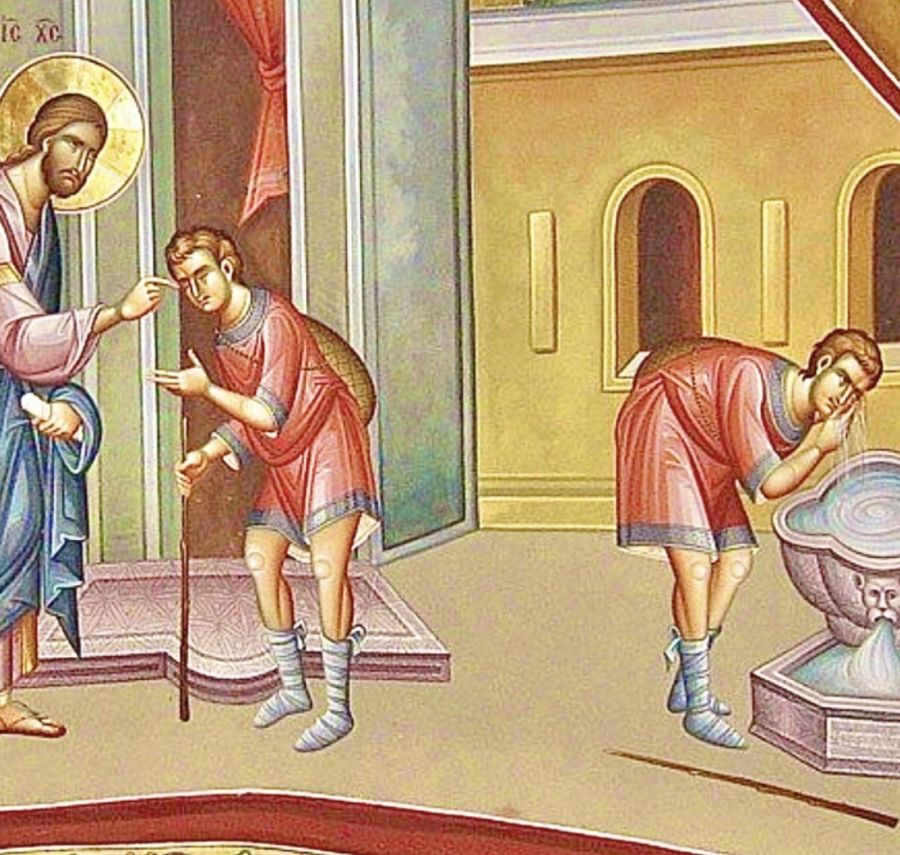
On this fourth Sunday of Lent, John's Gospel presents the healing of the man born blind, questioned by the Pharisees to whom Jesus, faced with their disbelief, paints a picture of the serious condition they are in:
«If you were blind, you would have no sin; but now you say, ‘We see’, your sin remains» (Jn 9:41).
Every day Francis went spiritually "to Siloam", weeping for his sins and those of the whole world, thus damaging his eyes and becoming blind.
But he feared the inner blindness produced by sin more than physical blindness. During and after his earthly life, he healed many people who had been blind from birth, giving glory to God.
In the Sources we read:
"He restored sight to a blind girl from Bevagna, smearing her eyes with spittle three times, in the name of the Trinity" (FF1218).
"A woman named Sibilla, who had been blind for many years, was one day brought, blind and sad, to the tomb of the Saint. She instantly regained her sight and returned home happy and joyful.
Likewise, a man from Spello regained his long-lost sight in front of the Saint's tomb" (FF 553).
Clare of Assisi also often wept over the Passion of Christ, and the devil, resorting to his cunning, pointed out to her that she would become blind for this.
But she, with boldness of spirit, replied:
«Those who see God will not be blind» (FF 3198), confounding the enemy.
This was proof of her solid faith.
The pharisaical heart does not believe in miracles, but the heart founded on the solid rock of the Word experiences healing and joy, like the two Poor Men of Assisi, instruments of health for the people in the hands of God.
4th Sunday in Lent A (Jn 9:1-41)