Mar 5, 2026 Written by 

The greatest commandment

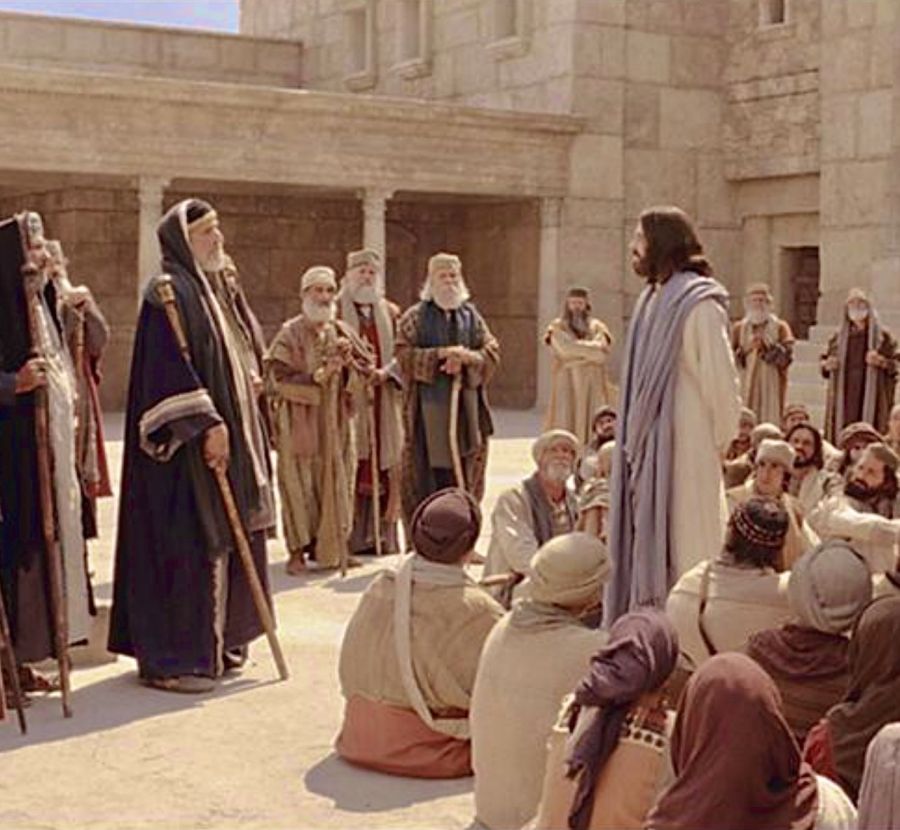
To the scribes who ask what is the greatest commandment Jesus answers in a disconcerting way: Listen! To love God and neighbour with all one's self is worth more than a thousand sacrifices!

To the scribe, who had understood all this, Jesus points out that he is not far from the Kingdom of God.


The Poor Assisian had clear ideas about the priorities to be given on the spiritual path.

For him, love for God with every fibre of his being, and for his neighbour, was a sweet truth carved into his heart in letters of fire.

In this regard, we are assisted by the Sources, rich in episodes from his life.

"The soul was all thirsty for its Christ and offered itself entirely to Him in body and spirit [...].

She was always looking for a secluded place, where she could be united not only with her spirit, but with her individual limbs, to her God.

And if he suddenly felt visited by the Lord, so as not to be without a cell, he made himself a small one with his cloak.

And if at times he was without it, he would cover his face with his sleeve, so as not to reveal the hidden manna [...].

Often, without moving his lips, he would meditate for a long time within himself and, concentrating the outward powers within, he would lift up his spirit to heaven.

In this way he directed his whole mind and affection to that one thing he asked of God: he was not so much a praying man as he himself was transformed into a living prayer' (FF 681-682).

Also, from the very beginning of his conversion, love for his brothers, compassion for their sufferings and needs, were the guiding motif of his actions.

"He took much money with him and went to the lepers' hospice; he gathered them together and distributed alms to each one, kissing their hands.

On his return, the contact that had previously been repugnant to him, that is, seeing and touching lepers, was truly transformed into sweetness [...] by the grace of God he became a companion and friend of the lepers so that, as he says in his Testament, he stood among them and humbly served them" (FF 1408).

Clare, a faithful disciple of Francis, did the same within the Damianite walls, always ready to serve lovingly the sisters of her community and those who knocked at the Monastery door.

"She washed the seats of the infirm, she cleansed them herself, with that noble spirit of hers, without shying away from filthiness or disgusting stench" (FF 3181).

"Very often she washed the feet of the servants who returned from outside and, washing them, she kissed them" (FF 3182).

Loving the Lord with all one's strength and one's neighbour as oneself is worth more than holocausts; the two Assisian giants had understood this well, testifying it to all.


«And you shall love the Lord your God with all your heart and with all your life and with all your mind and with all your strength [...] You shall love your neighbour as yourself» (Mk 12:30-31)


Friday, 3rd wk. in Lent  (Mk 12,28b-34)

517 Last modified on Thursday, 05 March 2026 04:00
Teresa Girolami

Teresa Girolami è laureata in Materie letterarie e Teologia. Ha pubblicato vari testi, fra cui: "Pellegrinaggio del cuore" (Ed. Piemme); "I Fiammiferi di Maria - La Madre di Dio in prosa e poesia"; "Tenerezza Scalza - Natura di donna"; co-autrice di "Dialogo e Solstizio".

Email This email address is being protected from spambots. You need JavaScript enabled to view it.
The devotional and external purifications purify man ritually but leave him as he is replaced by a new bathing (Pope Benedict)
Al posto delle purificazioni cultuali ed esterne, che purificano l’uomo ritualmente, lasciandolo tuttavia così com’è, subentra il bagno nuovo (Papa Benedetto)
If, on the one hand, the liturgy of these days makes us offer a hymn of thanksgiving to the Lord, conqueror of death, at the same time it asks us to eliminate from our lives all that prevents us from conforming ourselves to him (John Paul II)
La liturgia di questi giorni, se da un lato ci fa elevare al Signore, vincitore della morte, un inno di ringraziamento, ci chiede, al tempo stesso, di eliminare dalla nostra vita tutto ciò che ci impedisce di conformarci a lui (Giovanni Paolo II)
The school of faith is not a triumphal march but a journey marked daily by suffering and love, trials and faithfulness. Peter, who promised absolute fidelity, knew the bitterness and humiliation of denial:  the arrogant man learns the costly lesson of humility (Pope Benedict)
La scuola della fede non è una marcia trionfale, ma un cammino cosparso di sofferenze e di amore, di prove e di fedeltà da rinnovare ogni giorno. Pietro che aveva promesso fedeltà assoluta, conosce l’amarezza e l’umiliazione del rinnegamento: lo spavaldo apprende a sue spese l’umiltà (Papa Benedetto)
If, in his prophecy about the shepherd, Ezekiel was aiming to restore unity among the dispersed tribes of Israel (cf. Ez 34: 22-24), here it is a question not only of the unification of a dispersed Israel but of the unification of all the children of God, of humanity - of the Church of Jews and of pagans [Pope Benedict]
Se Ezechiele nella sua profezia sul pastore aveva di mira il ripristino dell'unità tra le tribù disperse d'Israele (cfr Ez 34, 22-24), si tratta ora non solo più dell'unificazione dell'Israele disperso, ma dell'unificazione di tutti i figli di Dio, dell'umanità - della Chiesa di giudei e di pagani [Papa Benedetto]
St Teresa of Avila wrote: «the last thing we should do is to withdraw from our greatest good and blessing, which is the most sacred humanity of Our Lord Jesus Christ» (cf. The Interior Castle, 6, ch. 7). Therefore, only by believing in Christ, by remaining united to him, may the disciples, among whom we too are, continue their permanent action in history [Pope Benedict]
Santa Teresa d’Avila scrive che «non dobbiamo allontanarci da ciò che costituisce tutto il nostro bene e il nostro rimedio, cioè dalla santissima umanità di nostro Signore Gesù Cristo» (Castello interiore, 7, 6). Quindi solo credendo in Cristo, rimanendo uniti a Lui, i discepoli, tra i quali siamo anche noi, possono continuare la sua azione permanente nella storia [Papa Benedetto]
Just as he did during his earthly existence, so today the risen Jesus walks along the streets of our life and sees us immersed in our activities, with all our desires and our needs. In the midst of our everyday circumstances he continues to speak to us; he calls us to live our life with him, for only he is capable of satisfying our thirst for hope (Pope Benedict)
Come avvenne nel corso della sua esistenza terrena, anche oggi Gesù, il Risorto, passa lungo le strade della nostra vita, e ci vede immersi nelle nostre attività, con i nostri desideri e i nostri bisogni. Proprio nel quotidiano continua a rivolgerci la sua parola; ci chiama a realizzare la nostra vita con Lui, il solo capace di appagare la nostra sete di speranza (Papa Benedetto)

Due Fuochi due Vie - Vol. 1 Due Fuochi due Vie - Vol. 2 Due Fuochi due Vie - Vol. 3 Due Fuochi due Vie - Vol. 4 Due Fuochi due Vie - Vol. 5 Dialogo e Solstizio I fiammiferi di Maria

duevie.art

don Giuseppe Nespeca

Tel. 333-1329741


Disclaimer

Questo blog non rappresenta una testata giornalistica in quanto viene aggiornato senza alcuna periodicità. Non può pertanto considerarsi un prodotto editoriale ai sensi della legge N°62 del 07/03/2001.
Le immagini sono tratte da internet, ma se il loro uso violasse diritti d'autore, lo si comunichi all'autore del blog che provvederà alla loro pronta rimozione.
L'autore dichiara di non essere responsabile dei commenti lasciati nei post. Eventuali commenti dei lettori, lesivi dell'immagine o dell'onorabilità di persone terze, il cui contenuto fosse ritenuto non idoneo alla pubblicazione verranno insindacabilmente rimossi.






