Jan 4, 2026 Written by 

«Know your calling well»

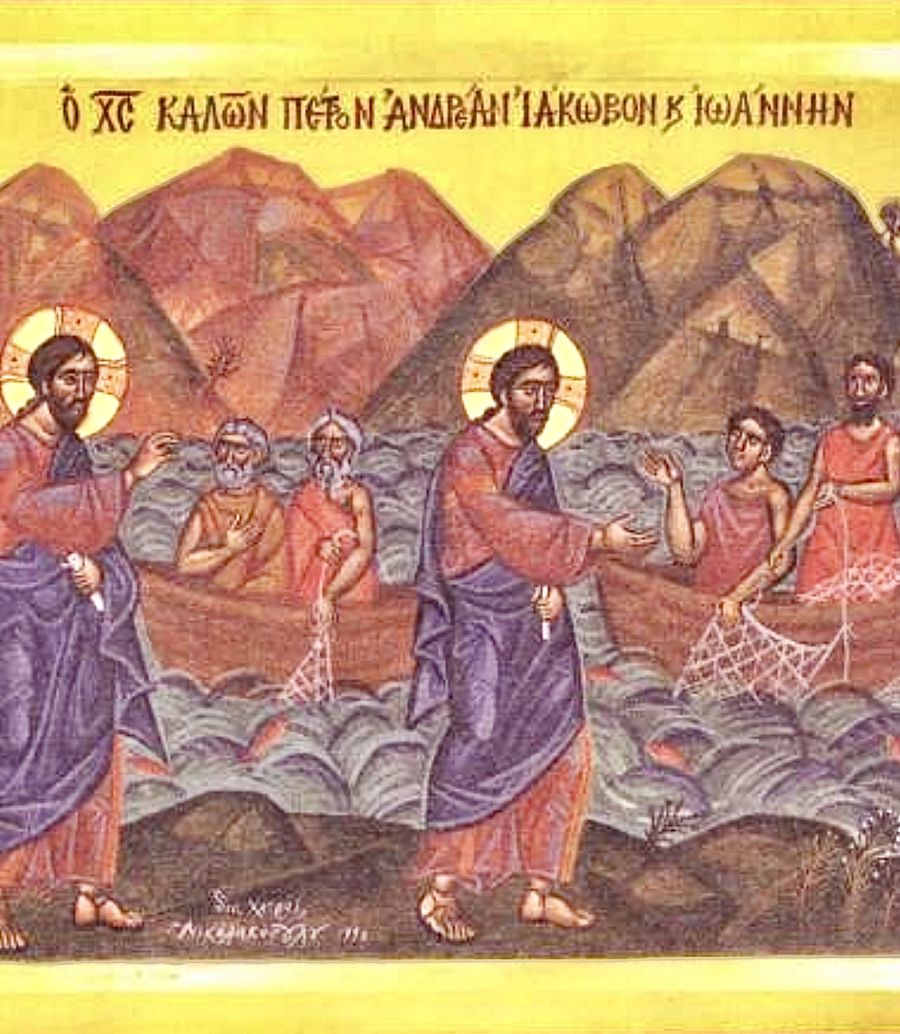
Jesus, during his preaching and passing by the Sea of Galilee, calls to his retinue the first four disciples who, having left their nets, are about to become involved in the Gospel adventure for the Kingdom.

Francis feels the call to become a "fisherman" of men from the very beginning of his evangelical parable.

"Francis, who, never trusting in himself, sought inspiration from God in prayer in every decision, chose to live not for himself alone, but for Him who died for all, well aware that he had been sent by God to conquer the souls that the devil was trying to kidnap" (FF 381).

The explicit call that Christ had addressed to him had induced him to leave the nets of worldly life to become a herald of the Truth of the Gospel.

"In the church of the Virgin Mother of God dwelt, therefore, his servant Francis and insistently begged with continual groans She who conceived the Word full of grace and truth, that She might deign to become his advocate. And the Mother of mercy obtained by her merits that he himself conceived and gave birth to the spirit of gospel truth.

As he devoutly listened one day to the Apostles' Mass, he heard the Gospel passage recited in which Christ, sending the disciples to preach, gives them the Gospel way of life, saying:

"Keep neither gold nor silver nor money in your belts; have no travelling bag, nor two tunics, nor shoes, nor staff."

This he heard, understood, and committed to memory the friend of apostolic poverty, and immediately, filled with unspeakable joy, he exclaimed: "This is what I desire, this is what I yearn for with all my heart!"

He took off his shoes from his feet; he left his staff; he cursed his saddlebags and money and, content with only one little cassock, he threw away his belt and replaced it with a rope and put all his concern into discovering how to fully realise the words he had heard and to adapt himself in everything to the rule of holiness, dictated by the apostles" (FF 1051).

"From that moment the man of God, by divine incitement, devoted himself to emulating evangelical perfection and inviting all others to penance" (FF 1052).

Clare, as a little plant of the Seraphic Father, in her extraordinary Testament says:

"Among the other benefits, which we have received and every day receive from our Donor, the Father of mercies, for which we are greatly obliged to render to Him glorious living graces, great is that of our vocation.

And the greater and more perfect it is, the more we are obliged to him.

Therefore the Apostle admonishes: Know your vocation well" (FF 2823).


Monday 1st wk. in O.T. (Mk 1,14-20)

167 Last modified on Sunday, 04 January 2026 03:46
Teresa Girolami

Teresa Girolami è laureata in Materie letterarie e Teologia. Ha pubblicato vari testi, fra cui: "Pellegrinaggio del cuore" (Ed. Piemme); "I Fiammiferi di Maria - La Madre di Dio in prosa e poesia"; "Tenerezza Scalza - Natura di donna"; co-autrice di "Dialogo e Solstizio".

Email This email address is being protected from spambots. You need JavaScript enabled to view it.
In today’s Gospel passage, Jesus identifies himself not only with the king-shepherd, but also with the lost sheep, we can speak of a “double identity”: the king-shepherd, Jesus identifies also with the sheep: that is, with the least and most needy of his brothers and sisters […] And let us return home only with this phrase: “I was present there. Thank you!”. Or: “You forgot about me” (Pope Francis)
Nella pagina evangelica di oggi, Gesù si identifica non solo col re-pastore, ma anche con le pecore perdute. Potremmo parlare come di una “doppia identità”: il re-pastore, Gesù, si identifica anche con le pecore, cioè con i fratelli più piccoli e bisognosi […] E torniamo a casa soltanto con questa frase: “Io ero presente lì. Grazie!” oppure: “Ti sei scordato di me” (Papa Francesco)
Thus, in the figure of Matthew, the Gospels present to us a true and proper paradox: those who seem to be the farthest from holiness can even become a model of the acceptance of God's mercy and offer a glimpse of its marvellous effects in their own lives (Pope Benedict))
Nella figura di Matteo, dunque, i Vangeli ci propongono un vero e proprio paradosso: chi è apparentemente più lontano dalla santità può diventare persino un modello di accoglienza della misericordia di Dio e lasciarne intravedere i meravigliosi effetti nella propria esistenza (Papa Benedetto)
Man is involved in penance in his totality of body and spirit: the man who has a body in need of food and rest and the man who thinks, plans and prays; the man who appropriates and feeds on things and the man who makes a gift of them; the man who tends to the possession and enjoyment of goods and the man who feels the need for solidarity that binds him to all other men [CEI pastoral note]
Nella penitenza è coinvolto l'uomo nella sua totalità di corpo e di spirito: l'uomo che ha un corpo bisognoso di cibo e di riposo e l'uomo che pensa, progetta e prega; l'uomo che si appropria e si nutre delle cose e l'uomo che fa dono di esse; l'uomo che tende al possesso e al godimento dei beni e l'uomo che avverte l'esigenza di solidarietà che lo lega a tutti gli altri uomini [nota pastorale CEI]
St John Chrysostom urged: “Embellish your house with modesty and humility with the practice of prayer. Make your dwelling place shine with the light of justice; adorn its walls with good works, like a lustre of pure gold, and replace walls and precious stones with faith and supernatural magnanimity, putting prayer above all other things, high up in the gables, to give the whole complex decorum. You will thus prepare a worthy dwelling place for the Lord, you will welcome him in a splendid palace. He will grant you to transform your soul into a temple of his presence” (Pope Benedict)
San Giovanni Crisostomo esorta: “Abbellisci la tua casa di modestia e umiltà con la pratica della preghiera. Rendi splendida la tua abitazione con la luce della giustizia; orna le sue pareti con le opere buone come di una patina di oro puro e al posto dei muri e delle pietre preziose colloca la fede e la soprannaturale magnanimità, ponendo sopra ogni cosa, in alto sul fastigio, la preghiera a decoro di tutto il complesso. Così prepari per il Signore una degna dimora, così lo accogli in splendida reggia. Egli ti concederà di trasformare la tua anima in tempio della sua presenza” (Papa Benedetto)
And He continues: «Think of salvation, of what God has done for us, and choose well!». But the disciples "did not understand why the heart was hardened by this passion, by this wickedness of arguing among themselves and seeing who was guilty of that forgetfulness of the bread" (Pope Francis)

Due Fuochi due Vie - Vol. 1 Due Fuochi due Vie - Vol. 2 Due Fuochi due Vie - Vol. 3 Due Fuochi due Vie - Vol. 4 Due Fuochi due Vie - Vol. 5 Dialogo e Solstizio I fiammiferi di Maria

duevie.art

don Giuseppe Nespeca

Tel. 333-1329741


Disclaimer

Questo blog non rappresenta una testata giornalistica in quanto viene aggiornato senza alcuna periodicità. Non può pertanto considerarsi un prodotto editoriale ai sensi della legge N°62 del 07/03/2001.
Le immagini sono tratte da internet, ma se il loro uso violasse diritti d'autore, lo si comunichi all'autore del blog che provvederà alla loro pronta rimozione.
L'autore dichiara di non essere responsabile dei commenti lasciati nei post. Eventuali commenti dei lettori, lesivi dell'immagine o dell'onorabilità di persone terze, il cui contenuto fosse ritenuto non idoneo alla pubblicazione verranno insindacabilmente rimossi.






