Feb 14, 2026 Written by 

Desert, solitude, adoration

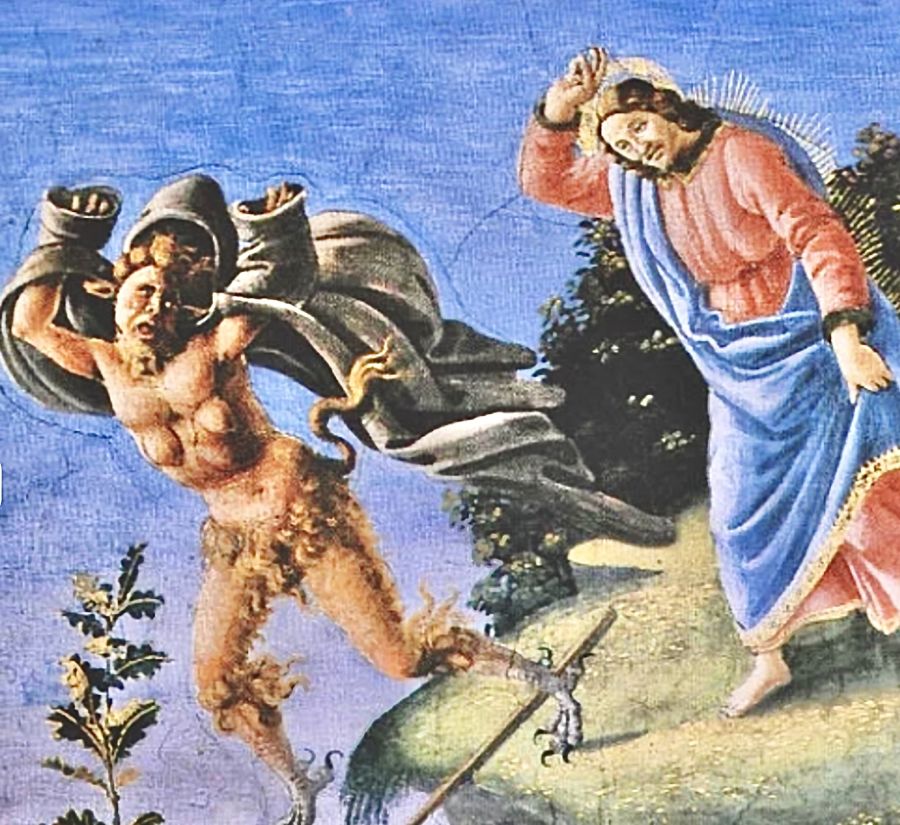
The enemy suggests to the Son of God a different way from the Father, but Jesus shrugs off that stench.


Francis' life had undergone a radical change when the Physician Jesus had spoken to him.

The Poor Man had realised that he was loved and that, by following Him, he would be healed from self-worship to render it to God alone.

The Crucifix at San Damiano and the leper he had met had changed him inwardly.

The Minim of Assisi devoted himself to frequent fasts and nights in prayer, for periods of forty days (in consonance with the forty days Jesus spent in the desert).

He did this often - apart from the period before Easter.

At those times he would suspend his apostolic commitments, retiring to hermitages: simple and austere places, far from the cities.

There, as his biographer Celano recalls, he would build his nest in the clefts of the rock*.

The Sources chronicle his Lenten periods, where he was often put to the test.

"Two years before he rendered his spirit to God, after many and various labours, divine Providence drew him aside and led him to a lofty mountain, called the mountain of La Verna.

Here he had begun, according to his custom, to fast during Lent in honour of St Michael the Archangel, when he began to feel flooded with extraordinary sweetness in contemplation, inflamed by a more lively flame of celestial desires, filled with richer divine gifts [...] intent on seeking God's will, to which he yearned with the greatest ardour to conform himself in everything" (FF1223).

La Verna was par excellence "the desert" of Francis, where, as happened to Jesus in arid places, he was subjected to oppressive temptations.

While the Saint was in prayer, there "came a great multitude of ferocious demons [...] and they began strongly to fight and vex him" (FF 1901).

But he began to shout aloud:

"«O damned spirits, you can do nothing except as much as the hand of God permits you [...] And I am prepared to cheerfully endure every punishment and every adversity that you, my God, want to send me for my sins».

Then the demons, confused and overcome by his constancy and patience, departed" (FF 1901).

He fed more than on material bread on that of the Holy Word and taught his brothers to adore God alone, wherever they were, trusting in divine care and solicitude.

In fact, his sons, faithful to Francis' exhortation, when they passed near a church, would stop and prone, with body and spirit, adore the Almighty, saying: «We adore you, O Christ, in all your churches» (FF 401).

The power of the Holy Spirit placed them in the right attitude of need, before power or success, just as Christ had instructed them, without allowing themselves to be caged by such seductions.


«It is written: The Lord thy God shalt thou worship, and him only shalt thou worship».

«And the Spirit drove him into the wilderness, and he was in the wilderness tempted by the satan, and was with the beasts»


*Famous is the hermitage of the Carceri, near Assisi; in reality Francis created twenty in central Italy.


[1st Sunday in Lent]

113 Last modified on Saturday, 14 February 2026 06:55
Teresa Girolami

Teresa Girolami è laureata in Materie letterarie e Teologia. Ha pubblicato vari testi, fra cui: "Pellegrinaggio del cuore" (Ed. Piemme); "I Fiammiferi di Maria - La Madre di Dio in prosa e poesia"; "Tenerezza Scalza - Natura di donna"; co-autrice di "Dialogo e Solstizio".

Email This email address is being protected from spambots. You need JavaScript enabled to view it.
Thus, in the figure of Matthew, the Gospels present to us a true and proper paradox: those who seem to be the farthest from holiness can even become a model of the acceptance of God's mercy and offer a glimpse of its marvellous effects in their own lives (Pope Benedict))
Nella figura di Matteo, dunque, i Vangeli ci propongono un vero e proprio paradosso: chi è apparentemente più lontano dalla santità può diventare persino un modello di accoglienza della misericordia di Dio e lasciarne intravedere i meravigliosi effetti nella propria esistenza (Papa Benedetto)
Man is involved in penance in his totality of body and spirit: the man who has a body in need of food and rest and the man who thinks, plans and prays; the man who appropriates and feeds on things and the man who makes a gift of them; the man who tends to the possession and enjoyment of goods and the man who feels the need for solidarity that binds him to all other men [CEI pastoral note]
Nella penitenza è coinvolto l'uomo nella sua totalità di corpo e di spirito: l'uomo che ha un corpo bisognoso di cibo e di riposo e l'uomo che pensa, progetta e prega; l'uomo che si appropria e si nutre delle cose e l'uomo che fa dono di esse; l'uomo che tende al possesso e al godimento dei beni e l'uomo che avverte l'esigenza di solidarietà che lo lega a tutti gli altri uomini [nota pastorale CEI]
St John Chrysostom urged: “Embellish your house with modesty and humility with the practice of prayer. Make your dwelling place shine with the light of justice; adorn its walls with good works, like a lustre of pure gold, and replace walls and precious stones with faith and supernatural magnanimity, putting prayer above all other things, high up in the gables, to give the whole complex decorum. You will thus prepare a worthy dwelling place for the Lord, you will welcome him in a splendid palace. He will grant you to transform your soul into a temple of his presence” (Pope Benedict)
San Giovanni Crisostomo esorta: “Abbellisci la tua casa di modestia e umiltà con la pratica della preghiera. Rendi splendida la tua abitazione con la luce della giustizia; orna le sue pareti con le opere buone come di una patina di oro puro e al posto dei muri e delle pietre preziose colloca la fede e la soprannaturale magnanimità, ponendo sopra ogni cosa, in alto sul fastigio, la preghiera a decoro di tutto il complesso. Così prepari per il Signore una degna dimora, così lo accogli in splendida reggia. Egli ti concederà di trasformare la tua anima in tempio della sua presenza” (Papa Benedetto)
And He continues: «Think of salvation, of what God has done for us, and choose well!». But the disciples "did not understand why the heart was hardened by this passion, by this wickedness of arguing among themselves and seeing who was guilty of that forgetfulness of the bread" (Pope Francis)
E continua: «Pensate alla salvezza, a quello che anche Dio ha fatto per noi, e scegliete bene!». Ma i discepoli «non capivano perché il cuore era indurito per questa passione, per questa malvagità di discutere fra loro e vedere chi era il colpevole di quella dimenticanza del pane» (Papa Francesco)
[Faith] is the lifelong companion that makes it possible to perceive, ever anew, the marvels that God works for us. Intent on gathering the signs of the times in the present of history […] (Pope Benedict, Porta Fidei n.15)
[La Fede] è compagna di vita che permette di percepire con sguardo sempre nuovo le meraviglie che Dio compie per noi. Intenta a cogliere i segni dei tempi nell’oggi della storia […] (Papa Benedetto, Porta Fidei n.15)

Due Fuochi due Vie - Vol. 1 Due Fuochi due Vie - Vol. 2 Due Fuochi due Vie - Vol. 3 Due Fuochi due Vie - Vol. 4 Due Fuochi due Vie - Vol. 5 Dialogo e Solstizio I fiammiferi di Maria

duevie.art

don Giuseppe Nespeca

Tel. 333-1329741


Disclaimer

Questo blog non rappresenta una testata giornalistica in quanto viene aggiornato senza alcuna periodicità. Non può pertanto considerarsi un prodotto editoriale ai sensi della legge N°62 del 07/03/2001.
Le immagini sono tratte da internet, ma se il loro uso violasse diritti d'autore, lo si comunichi all'autore del blog che provvederà alla loro pronta rimozione.
L'autore dichiara di non essere responsabile dei commenti lasciati nei post. Eventuali commenti dei lettori, lesivi dell'immagine o dell'onorabilità di persone terze, il cui contenuto fosse ritenuto non idoneo alla pubblicazione verranno insindacabilmente rimossi.






