Feb 2, 2026 Written by 

Woodland creatures

Mk highlights the comparison between Jesus and the scribes and Pharisees, whom He reproaches for the hypocrisy of appearances - worshipping their tradition instead of God Himself - and neglecting the commandment of Love.

Francis of Assisi detested appearances, rituals observed for mere vanity, honour to God given with the lips and not with the adherence of the heart; failing the commandment of Love, the Substance of God.

He resented the hypocrisy of 'ablutions' that misunderstand the charity to be extended to one's neighbour.

He urged his brothers to bear witness to the Gospel with boldness, proclaiming the Word at every opportunity; without kneeling to abstract precepts.

Looking at the episodes that recall this new sense of purity, a passage from the Sources is particularly interesting:

The brethren, in their all-interior ideal "When they met a church or a cross along the way, they would bow down to recite a prayer and say devoutly:

«We adore thee, O Christ, and bless thee for all thy churches scattered throughout the world, for thou hast redeemed them by thy holy cross».

They were convinced, in fact, that they were in a holy place, wherever they encountered a cross or a church.

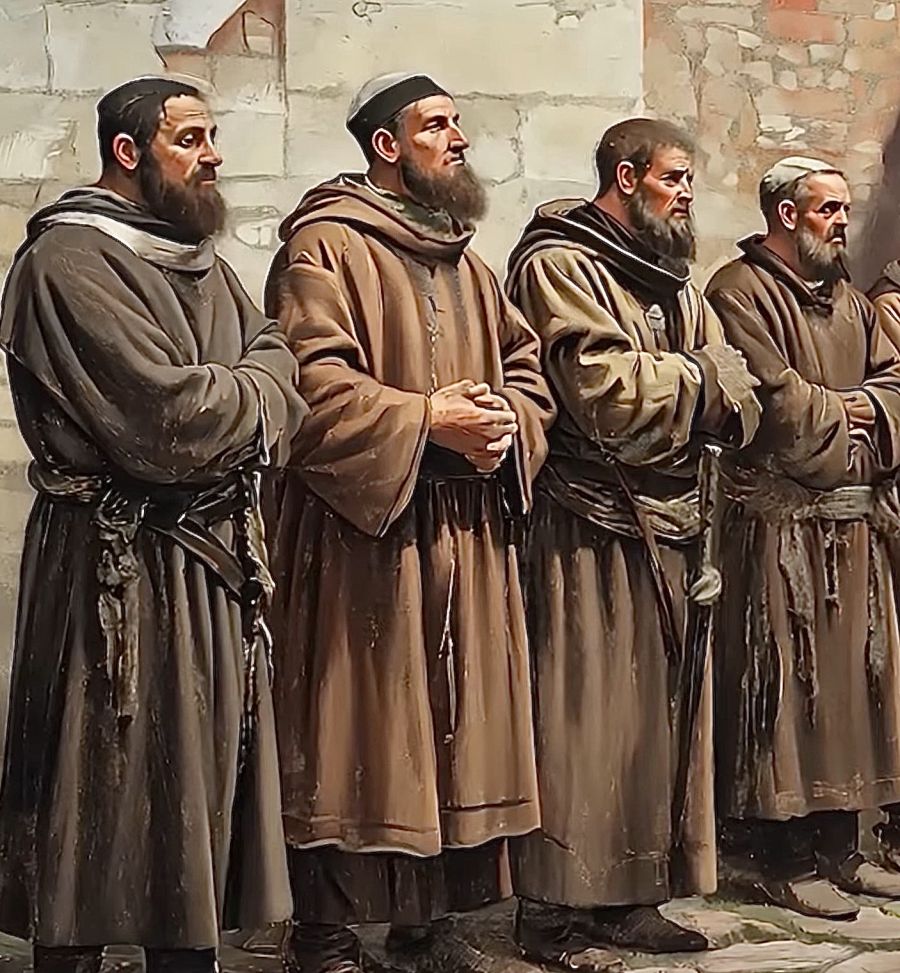
Everyone who saw them was greatly astonished, because of their way of dressing and living that was so different from any other: they looked like woodland creatures.

Wherever they entered, be it a city, a castle, a village, a dwelling, they proclaimed peace, exhorting men and women to fear and love the Creator of heaven and earth, and to keep his commandments.

There were those who listened to them willingly and those who, on the contrary, mocked them.

Mostly they were pelted with a storm of questions [...].

Although it was annoying to answer so many questions, they confessed with simplicity that they were penitents from Assisi [...]" (FF 1441).

Free from ceremonial, they proclaimed the Kingdom of God with authenticity and not only with their lips, but with the testimony of their lives, which emphasised the Word read and prayed.

They were not slaves to useless observances of custom, but tenacious servants of the Gospel at all costs.

Jesus' warning was not directed at them:

«Setting aside the commandment of God, keep the tradition of men» (Mk 7:8).

Rather, this admonition concerns those who take glory from one another, neglecting what pleases God.


«Artfully you set aside the commandment of God, to observe your own tradition» (Mk 7:9)


Tuesday, 5th wk. in O.T.  (Mk 7,1-13)

497 Last modified on Monday, 02 February 2026 06:21
Teresa Girolami

Teresa Girolami è laureata in Materie letterarie e Teologia. Ha pubblicato vari testi, fra cui: "Pellegrinaggio del cuore" (Ed. Piemme); "I Fiammiferi di Maria - La Madre di Dio in prosa e poesia"; "Tenerezza Scalza - Natura di donna"; co-autrice di "Dialogo e Solstizio".

Email This email address is being protected from spambots. You need JavaScript enabled to view it.
Jesus seems to say to the accusers: Is not this woman, for all her sin, above all a confirmation of your own transgressions, of your "male" injustice, your misdeeds? (John Paul II, Mulieris Dignitatem n.14)
Gesù sembra dire agli accusatori: questa donna con tutto il suo peccato non è forse anche, e prima di tutto, una conferma delle vostre trasgressioni, della vostra ingiustizia «maschile», dei vostri abusi? (Giovanni Paolo II, Mulieris Dignitatem n.14)
Here we can experience first hand that God is life and gives life, yet takes on the tragedy of death (Pope Francis)
Qui tocchiamo con mano che Dio è vita e dona vita, ma si fa carico del dramma della morte (Papa Francesco)
The people thought that Jesus was a prophet. This was not wrong, but it does not suffice; it is inadequate. In fact, it was a matter of delving deep, of recognizing the uniqueness of the person of Jesus of Nazareth and his newness. This is how it still is today: many people draw near to Jesus, as it were, from the outside (Pope Benedict)
La gente pensa che Gesù sia un profeta. Questo non è falso, ma non basta; è inadeguato. Si tratta, in effetti, di andare in profondità, di riconoscere la singolarità della persona di Gesù di Nazaret, la sua novità. Anche oggi è così: molti accostano Gesù, per così dire, dall’esterno (Papa Benedetto)
Because of this unique understanding, Jesus can present himself as the One who revealsr the Father with a knowledge that is the fruit of an intimate and mysterious reciprocity (John Paul II)
In forza di questa singolare intesa, Gesù può presentarsi come il rivelatore del Padre, con una conoscenza che è frutto di un'intima e misteriosa reciprocità (Giovanni Paolo II)
Yes, all the "miracles, wonders and signs" of Christ are in function of the revelation of him as Messiah, of him as the Son of God: of him who alone has the power to free man from sin and death. Of him who is truly the Savior of the world (John Paul II)
Sì, tutti i “miracoli, prodigi e segni” di Cristo sono in funzione della rivelazione di lui come Messia, di lui come Figlio di Dio: di lui che, solo, ha il potere di liberare l’uomo dal peccato e dalla morte. Di lui che veramente è il Salvatore del mondo (Giovanni Paolo II)
It is known that faith is man's response to the word of divine revelation. The miracle takes place in organic connection with this revealing word of God. It is a "sign" of his presence and of his work, a particularly intense sign (John Paul II)
È noto che la fede è una risposta dell’uomo alla parola della rivelazione divina. Il miracolo avviene in legame organico con questa parola di Dio rivelante. È un “segno” della sua presenza e del suo operare, un segno, si può dire, particolarmente intenso (Giovanni Paolo II)
In the rite of Baptism, the presentation of the candle lit from the large Paschal candle, a symbol of the Risen Christ, is a sign that helps us to understand what happens in the Sacrament. When our lives are enlightened by the mystery of Christ, we experience the joy of being liberated from all that threatens the full realization (Pope Benedict)
Nel rito del Battesimo, la consegna della candela, accesa al grande cero pasquale simbolo di Cristo Risorto, è un segno che aiuta a cogliere ciò che avviene nel Sacramento. Quando la nostra vita si lascia illuminare dal mistero di Cristo, sperimenta la gioia di essere liberata da tutto ciò che ne minaccia la piena realizzazione (Papa Benedetto)
Doing a good deed almost instinctively gives rise to the desire to be esteemed and admired for the good action, in other words to gain a reward (Pope Benedict)

Due Fuochi due Vie - Vol. 1 Due Fuochi due Vie - Vol. 2 Due Fuochi due Vie - Vol. 3 Due Fuochi due Vie - Vol. 4 Due Fuochi due Vie - Vol. 5 Dialogo e Solstizio I fiammiferi di Maria

duevie.art

don Giuseppe Nespeca

Tel. 333-1329741


Disclaimer

Questo blog non rappresenta una testata giornalistica in quanto viene aggiornato senza alcuna periodicità. Non può pertanto considerarsi un prodotto editoriale ai sensi della legge N°62 del 07/03/2001.
Le immagini sono tratte da internet, ma se il loro uso violasse diritti d'autore, lo si comunichi all'autore del blog che provvederà alla loro pronta rimozione.
L'autore dichiara di non essere responsabile dei commenti lasciati nei post. Eventuali commenti dei lettori, lesivi dell'immagine o dell'onorabilità di persone terze, il cui contenuto fosse ritenuto non idoneo alla pubblicazione verranno insindacabilmente rimossi.






