Jan 19, 2026 Written by 

Will of God, the watershed of spiritual kinship

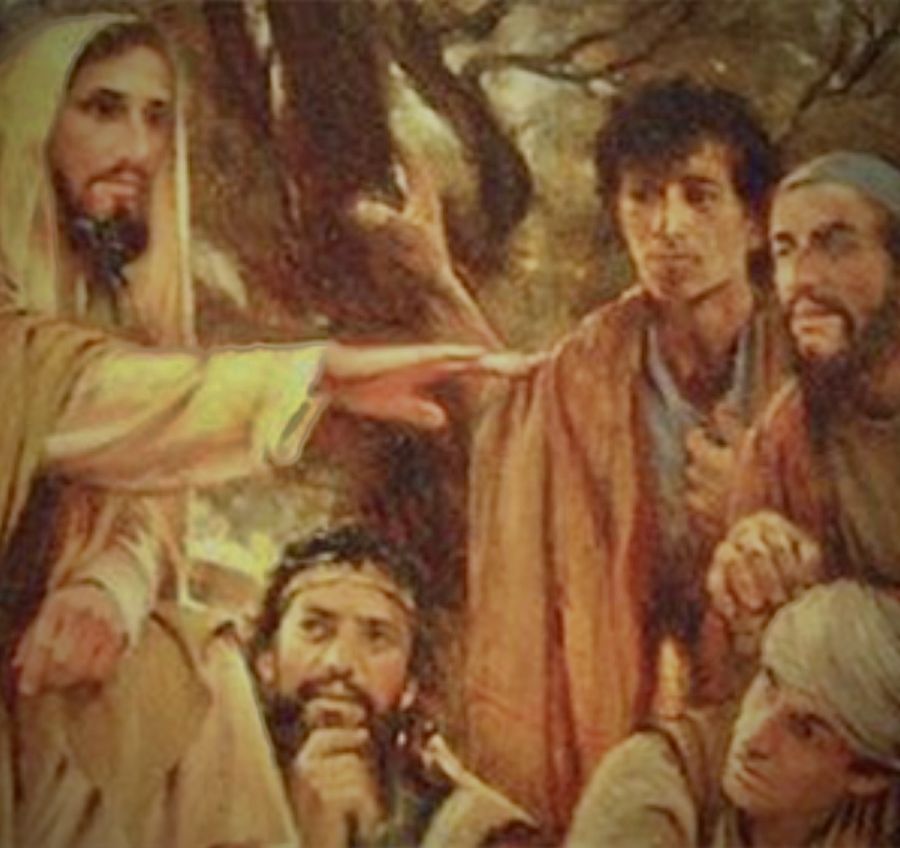
With an astonishing twist of hand, Jesus explains who his mother and brothers are: those who embody the will of God.

After their conversion, Francis and Clare always sought God's will by looking to Mary, the handmaid of the Lord, the one who had found favour with the Almighty by becoming the Mother of Jesus.

Francis, from the very beginning of his vocation-mission paid special and devoted attention to the Virgin.

The Sources make us aware of his extraordinary love for Her, summed up by a hieratic antiphon of the Poverello:

"Holy Virgin Mary, there is none like thee, born in the world, among women, daughter and handmaid of the most high King the heavenly Father, mother of our most holy Lord Jesus Christ, spouse of the Holy Spirit; pray for us with Saint Michael the Archangel and with all the powers of heaven and with all the saints, to thy most holy beloved Son, Lord and Master" (FF 281).

Francis 'surrounded the Mother of Jesus with an unspeakable love, because she had made the Lord of majesty our brother' (FF 786).

But Clare herself was considered 'altera Maria' when she arrived at the Portiuncula, where Francis and the brothers awaited her for her total dedication to God:

"After she had taken the insignia of holy penance before the altar of St. Mary and, as if before the nuptial thalamus of the Virgin, the humble handmaiden had been married to Christ, immediately St. Francis led her to the church of St. Paul*, with the intention that she should remain there until the Will of the Most High disposed otherwise" (FF 3172).

Like Mary, Clare pronounced her "Fiat" to the will of the Father.

Oh how they both loved the will of God!

Forgetting themselves, they adhered to the divine plan for them, each in their own time, each in their own groove.

In the Sources again:

"In the same way, then, that the glorious Virgin of virgins bore Christ materially in her womb, you too, following his vestiges, especially of his humility and poverty, can always, without any doubt, bear him spiritually in your chaste and virginal body.

And you will contain in you Him by whom you and all creatures are contained, and you will possess that which is the most lasting and definitive good even in comparison with all the other transient possessions of this world" (FF 2893 - Letter three to Blessed Agnes of Prague).

Francis and Clare, following the example of the humble Mary of Nazareth, loved God's will for them in a sunny and lasting way.

In fact, in a concluding prayer of Francis, we contemplate his constant yearning to seek it and indulge it with abandon.

"Almighty, eternal, just and merciful God, grant to us miserable people to do, by the power of your love, what we know you want, and to always want what pleases you, so that, inwardly purified, inwardly enlightened and kindled by the fire of the Holy Spirit we may follow in the footsteps of your beloved Son, our Lord Jesus Christ, and, with the help of your grace alone, come to you, O Most High, who in perfect Trinity and simple Unity live and reign glorious, Almighty God for ever and ever. Amen" (FF 234 - Letter to the whole Order).


«And answering, he says to them: Who is my mother and brothers? [Whoever does the will of God is my brother and sister and mother» (Mk 3:33, 35)


*The church and the Benedictine monastery of San Paolo delle Abbadesse, where Clare was led after her consecration in the Portiuncula, stood near Bastìa Umbra, 4 km from Assisi.


Tuesday 3rd wk. in O.T.  (Mk 3,31-35)

190 Last modified on Monday, 19 January 2026 07:34
Teresa Girolami

Teresa Girolami è laureata in Materie letterarie e Teologia. Ha pubblicato vari testi, fra cui: "Pellegrinaggio del cuore" (Ed. Piemme); "I Fiammiferi di Maria - La Madre di Dio in prosa e poesia"; "Tenerezza Scalza - Natura di donna"; co-autrice di "Dialogo e Solstizio".

Email This email address is being protected from spambots. You need JavaScript enabled to view it.
In the divine attitude justice is pervaded with mercy, whereas the human attitude is limited to justice. Jesus exhorts us to open ourselves with courage to the strength of forgiveness, because in life not everything can be resolved with justice. We know this (Pope Francis)
Nell’atteggiamento divino la giustizia è pervasa dalla misericordia, mentre l’atteggiamento umano si limita alla giustizia. Gesù ci esorta ad aprirci con coraggio alla forza del perdono, perché nella vita non tutto si risolve con la giustizia; lo sappiamo (Papa Francesco)
The true prophet does not obey others as he does God, and puts himself at the service of the truth, ready to pay in person. It is true that Jesus was a prophet of love, but love has a truth of its own. Indeed, love and truth are two names of the same reality, two names of God (Pope Benedict)
Il vero profeta non obbedisce ad altri che a Dio e si mette al servizio della verità, pronto a pagare di persona. E’ vero che Gesù è il profeta dell’amore, ma l’amore ha la sua verità. Anzi, amore e verità sono due nomi della stessa realtà, due nomi di Dio (Papa Benedetto)
“Give me a drink” (v. 7). Breaking every barrier, he begins a dialogue in which he reveals to the woman the mystery of living water, that is, of the Holy Spirit, God’s gift [Pope Francis]
«Dammi da bere» (v. 7). Così, rompendo ogni barriera, comincia un dialogo in cui svela a quella donna il mistero dell’acqua viva, cioè dello Spirito Santo, dono di Dio [Papa Francesco]
The mystery of ‘home-coming’ wonderfully expresses the encounter between the Father and humanity, between mercy and misery, in a circle of love that touches not only the son who was lost, but is extended to all (Pope John Paul II)
Il mistero del ‘ritorno-a-casa’ esprime mirabilmente l’incontro tra il Padre e l’umanità, tra la misericordia e la miseria, in un circolo d’amore che non riguarda solo il figlio perduto, ma si estende a tutti (Papa Giovanni Paolo II)
The image of the vineyard is clear: it represents the people whom the Lord has chosen and formed with such care; the servants sent by the landowner are the prophets, sent by God, while the son represents Jesus. And just as the prophets were rejected, so too Christ was rejected and killed (Pope Francis)
L’immagine della vigna è chiara: rappresenta il popolo che il Signore si è scelto e ha formato con tanta cura; i servi mandati dal padrone sono i profeti, inviati da Dio, mentre il figlio è figura di Gesù. E come furono rifiutati i profeti, così anche il Cristo è stato respinto e ucciso (Papa Francesco)
‘Lazarus’ means ‘God helps’. Lazarus, who is lying at the gate, is a living reminder to the rich man to remember God, but the rich man does not receive that reminder. Hence, he will be condemned not because of his wealth, but for being incapable of feeling compassion for Lazarus and for not coming to his aid. In the second part of the parable, we again meet Lazarus and the rich man after their death (vv. 22-31). In the hereafter the situation is reversed [Pope Francis]
“Lazzaro” significa “Dio aiuta”. Lazzaro, che giace davanti alla porta, è un richiamo vivente al ricco per ricordarsi di Dio, ma il ricco non accoglie tale richiamo. Sarà condannato pertanto non per le sue ricchezze, ma per essere stato incapace di sentire compassione per Lazzaro e di soccorrerlo. Nella seconda parte della parabola, ritroviamo Lazzaro e il ricco dopo la loro morte (vv. 22-31). Nell’al di là la situazione si è rovesciata [Papa Francesco]

Due Fuochi due Vie - Vol. 1 Due Fuochi due Vie - Vol. 2 Due Fuochi due Vie - Vol. 3 Due Fuochi due Vie - Vol. 4 Due Fuochi due Vie - Vol. 5 Dialogo e Solstizio I fiammiferi di Maria

duevie.art

don Giuseppe Nespeca

Tel. 333-1329741


Disclaimer

Questo blog non rappresenta una testata giornalistica in quanto viene aggiornato senza alcuna periodicità. Non può pertanto considerarsi un prodotto editoriale ai sensi della legge N°62 del 07/03/2001.
Le immagini sono tratte da internet, ma se il loro uso violasse diritti d'autore, lo si comunichi all'autore del blog che provvederà alla loro pronta rimozione.
L'autore dichiara di non essere responsabile dei commenti lasciati nei post. Eventuali commenti dei lettori, lesivi dell'immagine o dell'onorabilità di persone terze, il cui contenuto fosse ritenuto non idoneo alla pubblicazione verranno insindacabilmente rimossi.






