Jan 21, 2026 Written by 

Lamp under the bushel?

Granted that Francis considered the preachers of the Word to be the «lamp of the world» and that the Spirit of God made him so, marvellous is what we read in the Sources, an exalted collection of Franciscan realities.

"Irradiated by the splendours of eternal light, he scrutinised the depths of the Scriptures with a clear and acute intellect.

His intellect, pure from all stain, penetrated the secret of the mysteries, and where the science of masters is excluded, he entered with the affection of a lover.

He read, from time to time, the sacred books and kept tenaciously imprinted in his memory what he had once assimilated: for he continually ruminated with affectionate devotion what he had listened to with an attentive mind" (FF 1187).

Likewise Clare, seraphic little plant, is recognised in the

Legend as the one in whom "the merciful God [...] made a very bright lamp shine for women: and you, most blessed Father*, by ascribing her to the number of the Saints, prompted by the power and evidence of miracles, have placed this lamp on the candelabrum, so that it may give light to all those who are in the house" (FF 3151).

"So Clare, while she was alive, shone by the light of her merits: and now, that she is bathed in endless clarity, no less does she still shine, by the marvellous light of miracles, to the ends of the earth" (FF 3262).

It was a miracle to see her (when she lived within the Damianite walls exuding holiness):

"[...] for Matins, she would prevent the young girls and, waking them noiselessly with nods, she would invite them to the praises of God. Often, while they were all still asleep, she would light the lamps, often she herself would ring the bell with her hands" (FF 3200).

"Certainly, in his gentleness, God had given the poor girl a banquet and, after having flooded her soul in prayer with his eternal Light, he manifested it outside sensibly" (FF 3199).


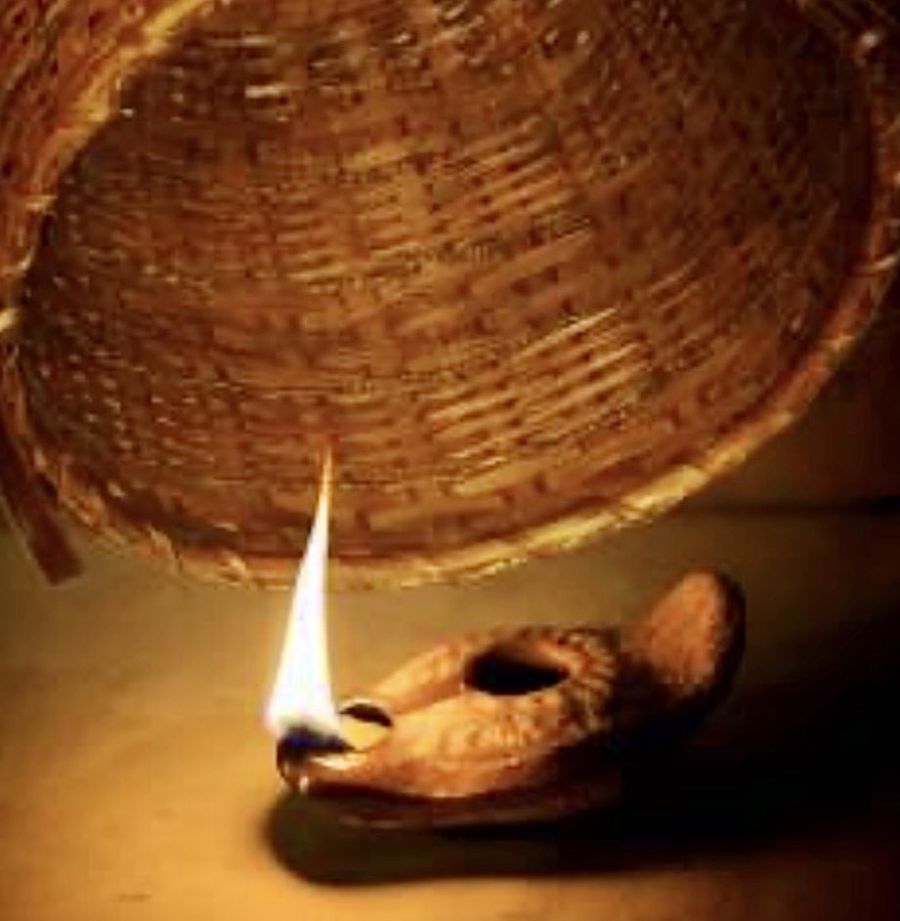
«Does the lamp come to be put under the bushel or under the bed?» (Mk 4:21)


*St Clare's canonisation took place in Anagni by Pope Alexander IV on an unspecified date, varying between August, 26 September and 19 October 1255.


Thursday 3rd wk. in O.T.  (Mk 4,21-25)

152 Last modified on Wednesday, 21 January 2026 04:15
Teresa Girolami

Teresa Girolami è laureata in Materie letterarie e Teologia. Ha pubblicato vari testi, fra cui: "Pellegrinaggio del cuore" (Ed. Piemme); "I Fiammiferi di Maria - La Madre di Dio in prosa e poesia"; "Tenerezza Scalza - Natura di donna"; co-autrice di "Dialogo e Solstizio".

Email This email address is being protected from spambots. You need JavaScript enabled to view it.
Another aspect of Lenten spirituality is what we could describe as "combative" […] where the "weapons" of penance and the "battle" against evil are mentioned. Every day, but particularly in Lent, Christians must face a struggle […] (Pope Benedict)
Un altro aspetto della spiritualità quaresimale è quello che potremmo definire "agonistico" […] là dove si parla di "armi" della penitenza e di "combattimento" contro lo spirito del male. Ogni giorno, ma particolarmente in Quaresima, il cristiano deve affrontare una lotta […] (Papa Benedetto)
Jesus wants to help his listeners take the right approach to the prescriptions of the Commandments given to Moses, urging them to be open to God who teaches  us true freedom and responsibility through the Law. It is a matter of living it as an instrument of freedom (Pope Francis)
Gesù vuole aiutare i suoi ascoltatori ad avere un approccio giusto alle prescrizioni dei Comandamenti dati a Mosè, esortando ad essere disponibili a Dio che ci educa alla vera libertà e responsabilità mediante la Legge. Si tratta di viverla come uno strumento di libertà (Papa Francesco)
In the divine attitude justice is pervaded with mercy, whereas the human attitude is limited to justice. Jesus exhorts us to open ourselves with courage to the strength of forgiveness, because in life not everything can be resolved with justice. We know this (Pope Francis)
Nell’atteggiamento divino la giustizia è pervasa dalla misericordia, mentre l’atteggiamento umano si limita alla giustizia. Gesù ci esorta ad aprirci con coraggio alla forza del perdono, perché nella vita non tutto si risolve con la giustizia; lo sappiamo (Papa Francesco)
The true prophet does not obey others as he does God, and puts himself at the service of the truth, ready to pay in person. It is true that Jesus was a prophet of love, but love has a truth of its own. Indeed, love and truth are two names of the same reality, two names of God (Pope Benedict)
Il vero profeta non obbedisce ad altri che a Dio e si mette al servizio della verità, pronto a pagare di persona. E’ vero che Gesù è il profeta dell’amore, ma l’amore ha la sua verità. Anzi, amore e verità sono due nomi della stessa realtà, due nomi di Dio (Papa Benedetto)
“Give me a drink” (v. 7). Breaking every barrier, he begins a dialogue in which he reveals to the woman the mystery of living water, that is, of the Holy Spirit, God’s gift [Pope Francis]
«Dammi da bere» (v. 7). Così, rompendo ogni barriera, comincia un dialogo in cui svela a quella donna il mistero dell’acqua viva, cioè dello Spirito Santo, dono di Dio [Papa Francesco]
The mystery of ‘home-coming’ wonderfully expresses the encounter between the Father and humanity, between mercy and misery, in a circle of love that touches not only the son who was lost, but is extended to all (Pope John Paul II)
Il mistero del ‘ritorno-a-casa’ esprime mirabilmente l’incontro tra il Padre e l’umanità, tra la misericordia e la miseria, in un circolo d’amore che non riguarda solo il figlio perduto, ma si estende a tutti (Papa Giovanni Paolo II)
The image of the vineyard is clear: it represents the people whom the Lord has chosen and formed with such care; the servants sent by the landowner are the prophets, sent by God, while the son represents Jesus. And just as the prophets were rejected, so too Christ was rejected and killed (Pope Francis)
L’immagine della vigna è chiara: rappresenta il popolo che il Signore si è scelto e ha formato con tanta cura; i servi mandati dal padrone sono i profeti, inviati da Dio, mentre il figlio è figura di Gesù. E come furono rifiutati i profeti, così anche il Cristo è stato respinto e ucciso (Papa Francesco)

Due Fuochi due Vie - Vol. 1 Due Fuochi due Vie - Vol. 2 Due Fuochi due Vie - Vol. 3 Due Fuochi due Vie - Vol. 4 Due Fuochi due Vie - Vol. 5 Dialogo e Solstizio I fiammiferi di Maria

duevie.art

don Giuseppe Nespeca

Tel. 333-1329741


Disclaimer

Questo blog non rappresenta una testata giornalistica in quanto viene aggiornato senza alcuna periodicità. Non può pertanto considerarsi un prodotto editoriale ai sensi della legge N°62 del 07/03/2001.
Le immagini sono tratte da internet, ma se il loro uso violasse diritti d'autore, lo si comunichi all'autore del blog che provvederà alla loro pronta rimozione.
L'autore dichiara di non essere responsabile dei commenti lasciati nei post. Eventuali commenti dei lettori, lesivi dell'immagine o dell'onorabilità di persone terze, il cui contenuto fosse ritenuto non idoneo alla pubblicazione verranno insindacabilmente rimossi.






