Jan 15, 2026 Written by 

Vocation attracting other disciples

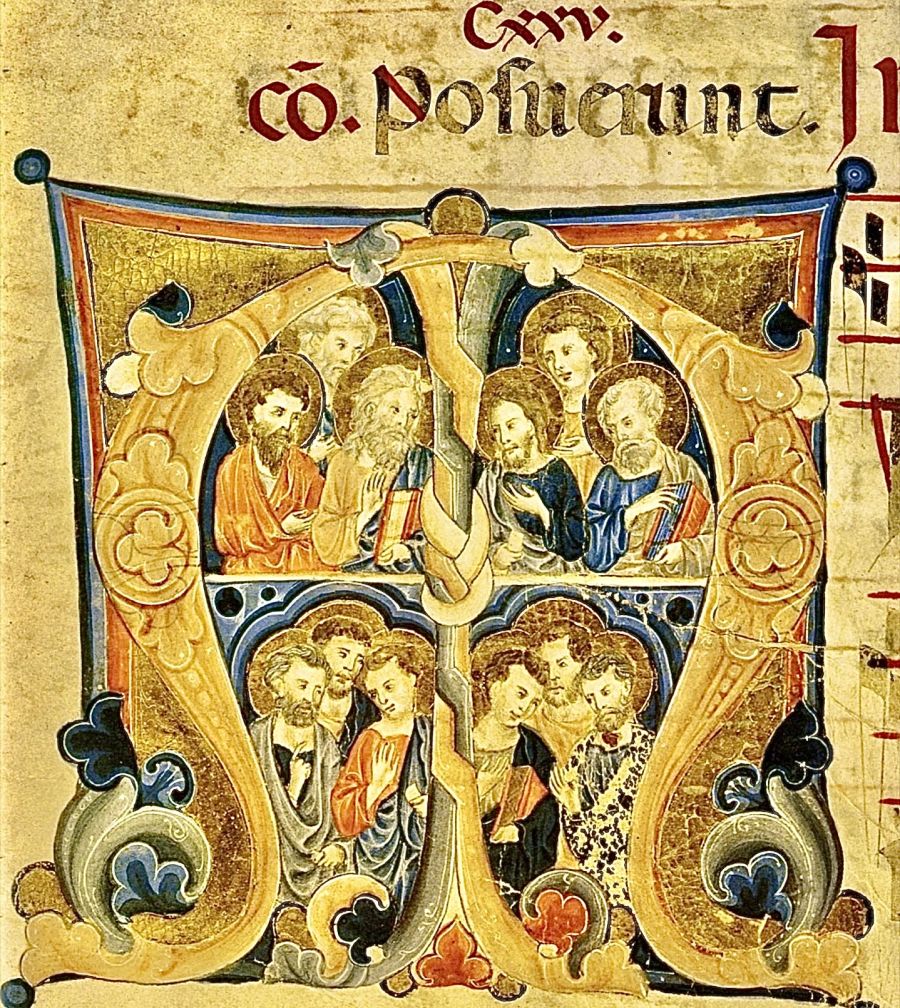
Mk depicts Jesus ascending the mountain and in solitude-prayer calling the Twelve to follow him.

Francis' vocation to follow Christ was a call and attraction of other sequels. His assiduous prayer encouraged many souls to share the evangelical ideal.

Francis desired to have brothers who would «stay with him and to send them out to preach» (Mk 3:14).

In the Sources there are numerous episodes that portray the call of many future brothers and souls willing to follow Clare of Assisi.

We read:

"Some began to feel called to penance by his example and to join him, in habit and life, leaving everything behind.

The first of them was the "venerable Bernard", who, having been made a partaker of the divine vocation, deserved to be the firstborn of the blessed father, first in time and holiness.

Bernard, having ascertained by himself the holiness of Christ's servant, decided to follow his example, abandoning the world completely.

Therefore he turned to him, to know how to realise this intention" (FF 1053).

And to his brothers, he often repeated:

«This is our vocation: to heal wounds, to bind up fractures, to call the lost back.

Many, who seem to us to be members of the devil, may one day become disciples of Christ» (FF1470).

In the legend of St Clare:

"Placing her nest, like a silver dove, in the hollows of this cliff, she generated a host of virgins of Christ, founded a holy monastery and started the Order of the Poor Ladies" (FF3176).

"The fame of the sanctity of the virgin Clare soon spread through the neighbouring districts, and women flocked from all sides after the fragrance of her perfume.

The virgins, following her example, hasten to keep themselves as such for Christ; the married ones study to live more chastely [...].

Countless virgins, spurred on by the fame of Clare, having some impediment to embrace the cloistered life in a monastery, study to live in their father's house, though without a rule, according to the spirit of the rule.

Such were the seeds of salvation born by the example of the virgin Clare, that it seemed to be fulfilled in her the saying of the prophet: more numerous are the sons of the abandoned than of the one who has a husband" (FF 3177).


«And he went up on the mountain and called those whom he wanted, and they came to him» (Mk 3:13)


Friday, 2nd wk. in O.T.  (Mk 3,13-19)

121 Last modified on Thursday, 15 January 2026 02:36
Teresa Girolami

Teresa Girolami è laureata in Materie letterarie e Teologia. Ha pubblicato vari testi, fra cui: "Pellegrinaggio del cuore" (Ed. Piemme); "I Fiammiferi di Maria - La Madre di Dio in prosa e poesia"; "Tenerezza Scalza - Natura di donna"; co-autrice di "Dialogo e Solstizio".

Email This email address is being protected from spambots. You need JavaScript enabled to view it.
And this is the problem: when the People put down roots in the land and are the depository of the Law, they are tempted to place their security and joy in something that is no longer the Word of God: in possessions, in power, in other ‘gods’ that in reality are useless, they are idols. Of course, the Law of God remains but it is no longer the most important thing, the rule of life; rather, it becomes a camouflage, a cover-up, while life follows other paths, other rules, interests that are often forms of egoism, both individual and collective. Thus religion loses its authentic meaning, which is to live listening to God in order to do his will — that is the truth of our being — and thus we live well, in true freedom, and it is reduced to practising secondary customs which instead satisfy the human need to feel in God’s place. This is a serious threat to every religion which Jesus encountered in his time and which, unfortunately, is also to be found in Christianity. Jesus’ words against the scribes and Pharisees in today’s Gospel should therefore be food for thought for us as well (Pope Benedict)
Ed ecco il problema: quando il popolo si stabilisce nella terra, ed è depositario della Legge, è tentato di riporre la sua sicurezza e la sua gioia in qualcosa che non è più la Parola del Signore: nei beni, nel potere, in altre ‘divinità’ che in realtà sono vane, sono idoli. Certo, la Legge di Dio rimane, ma non è più la cosa più importante, la regola della vita; diventa piuttosto un rivestimento, una copertura, mentre la vita segue altre strade, altre regole, interessi spesso egoistici individuali e di gruppo. E così la religione smarrisce il suo senso autentico che è vivere in ascolto di Dio per fare la sua volontà - che è la verità del nostro essere - e così vivere bene, nella vera libertà, e si riduce a pratica di usanze secondarie, che soddisfano piuttosto il bisogno umano di sentirsi a posto con Dio. Ed è questo un grave rischio di ogni religione, che Gesù ha riscontrato nel suo tempo, ma che si può verificare, purtroppo, anche nella cristianità. Perciò le parole di Gesù nel Vangelo di oggi contro gli scribi e i farisei devono far pensare anche noi (Papa Benedetto)
Salt, in the cultures of the Middle East, calls to mind several values such as the Covenant, solidarity, life and wisdom. Light is the first work of God the Creator and is a source of life; the word of God is compared to light (Pope Benedict)
Il sale, nella cultura mediorientale, evoca diversi valori quali l’alleanza, la solidarietà, la vita e la sapienza. La luce è la prima opera di Dio Creatore ed è fonte della vita; la stessa Parola di Dio è paragonata alla luce (Papa Benedetto)
Even after his failure even in Nazareth (vv.1-6) - his heralds gladly confused the Servant [who was educating them] with the victorious, sighed, respected and glorious Messiah…
Ancora dopo il suo fallimento persino a Nazareth (vv.1-6) - i suoi banditori hanno ben volentieri confuso il Servo [che li stava educando] col Messia vincitore, sospirato, rispettato e glorioso…
During more than 40 years of his reign, Herod Antipas had created a class of functionaries and a system of privileged people who had in their hands the government, the tax authorities, the economy, the justice, every aspect of civil and police life, and his command covered the territory extensively…
Durante più di 40 anni di regno, Erode Antipa aveva creato una classe di funzionari e un sistema di privilegiati che avevano in pugno il governo, il fisco, l’economia, la giustizia, ogni aspetto della vita civile e di polizia, e il suo comando copriva capillarmente il territorio…

Due Fuochi due Vie - Vol. 1 Due Fuochi due Vie - Vol. 2 Due Fuochi due Vie - Vol. 3 Due Fuochi due Vie - Vol. 4 Due Fuochi due Vie - Vol. 5 Dialogo e Solstizio I fiammiferi di Maria

duevie.art

don Giuseppe Nespeca

Tel. 333-1329741


Disclaimer

Questo blog non rappresenta una testata giornalistica in quanto viene aggiornato senza alcuna periodicità. Non può pertanto considerarsi un prodotto editoriale ai sensi della legge N°62 del 07/03/2001.
Le immagini sono tratte da internet, ma se il loro uso violasse diritti d'autore, lo si comunichi all'autore del blog che provvederà alla loro pronta rimozione.
L'autore dichiara di non essere responsabile dei commenti lasciati nei post. Eventuali commenti dei lettori, lesivi dell'immagine o dell'onorabilità di persone terze, il cui contenuto fosse ritenuto non idoneo alla pubblicazione verranno insindacabilmente rimossi.






