


don Giuseppe Nespeca
Giuseppe Nespeca è architetto e sacerdote. Cultore della Sacra scrittura è autore della raccolta "Due Fuochi due Vie - Religione e Fede, Vangeli e Tao"; coautore del libro "Dialogo e Solstizio".
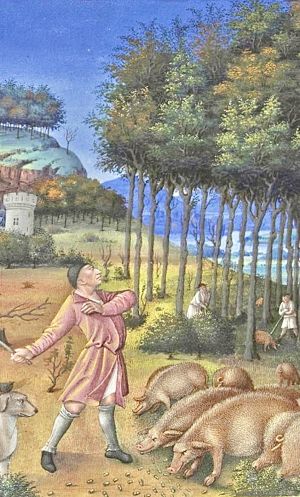
(Mt 8:28-34)
In all religions, man is invited to bind himself to divine consent to receive light and strength, submitting to his authority.
The dilemma of the Judaizing assemblies of Galilee and Syria - reflected here - is whether to close or open the circuit of the sacred.
And whether to customize, or step back and repeat.
The passage associates the icons of the sea (vv.27.32) and of the wandering possessed ones, separated from God and people; deprived of a regenerating inner strength.
The optics is that of our baptismal purification in Christ, which drowns impurities and germs of death.
In this way: those who have not yet met Jesus proceed haphazardly, they are «furious» (v.28); without criterion or goal.
The only constant these souls have in common is to put fear into others: they live in a belligerent, disorderly, pre-human situation, impeded in themselves and of a hindrance to all (v.28).
But the fact appeared within the norm (v.29).
In Semitic literature, the image of «sea» alludes to disordered forces, aimlessly and not in accordance with God's project on woman and man.
Powers that generate chaos in our existence.
It is the bitter panorama of a world that loses the foundation of its being and becoming.
Ambit assiduously forced to groping... to solve problems and not permanently lose the vitality-wave.
«Pig» [symbol of paganism] is a figure of that kind of irremediable contamination that prevented the human being from having a relationship with God - and feeling his welcome.
The critical moment is the Presence of the Lord: suddenly the evil crumbles completely, revealing its emptiness - unexpectedly devoid of all solidity.
A disproportion takes over: between what seemed fearful and invincible, and the nothingness that appearances were masking (v.31).
Imperial ideology was threatening and destructive. It leveraged on people's fears in order to subdue consciences.
This was the situation of persons - crumbled inside - before Jesus arrival.
Power then ideologically manipulated popular beliefs about demons - to shatter singular personalities and accentuate the surrender of the already oppressed masses.
Conversely, in the experience of life’s victory over death, early Christian communities gained breath of Faith and a return to oneself - as a soul therapy.
They experienced a kind of disproportion and self-control, despite defeats in preaching.
The ancient assembly that once had the horror of contaminations began to open the doors of the purist ghetto, making everyone participate.
The church broke away from common beliefs, which transmitted perverse competitions, and to the weak a feeling of mortifying awe - lack of autonomy and conscience.
Of course, the early heralds were quick to realize that the new sense of freedom produced a twofold feeling: oppressed men do not always want to be freed from their alienations and torments.
Jesus fascinates and consternates. He precipitates inconsistent bonds, and common idols.
His Message is decisive and beneficial, but it forces us to upset habits, purposes, and every closure.
[Wednesday 13th wk. in O.T. July 1st, 2026]
(Mt 8:28-34)
After the destruction of the Temple in Jerusalem, the only schools of Judaism that survived were those of the Pharisees and the Jewish Christians.
Both had maintained that the coming of the Messiah had nothing to do with direct political struggle against the Romans.
This was despite their opposition to the unsustainable ideology of power, oppression and exploitation of the humble.
However, while the Pharisees were reorganising and gradually beginning to dominate the Jewish community that wanted to rebuild itself, in the mid-70s, the communities of Mt. were living under oppression in Syria and Galilee.
All this took place in the marginalisation of the empire and the rejection of their co-religionists [who considered them traitors to their roots].
In this passage of the Gospel, the evangelist wants to encourage and motivate the members of the church.
Matthew emphasises the 'power' of Jesus' life, who manifests himself as Lord even in difficult territories, ages and times.
In an unclean and deathly place ('tombs'), precisely among the unclean 'pigs', i.e. those most separated from God [probably an image-epithet of some Roman legions: Mk 5:9], the Lord exercises an internal regenerating force.
The background scenario is a figure of 'baptismal immersion' and its outcomes, which are also critical from a family and social point of view.
In short: those who have not yet encountered Jesus proceed haphazardly, they are 'furious' (v. 28); without criteria or goal.
The only constant that unites these souls is that they frighten others: they live in a savage, disordered, pre-human situation, impeded in themselves and a hindrance to everyone (v. 28).
But this seemed normal (v. 29)...
The turning point is the new Presence: suddenly, evil crumbles completely, revealing its emptiness - unexpectedly devoid of any solidity.
A disproportion arises: between what seemed frightening and invincible, and the nothingness that appearances were masking (v. 31).
The ideology of domination seemed to everyone to be something extraordinary; suddenly it disintegrates.
Faced with the true Power of Life, the two spontaneously convert and ask for Baptism: a gesture of immersion in the waves of primordial chaos, to drown (v. 32) their self-destructive spirits.
In short: Christ and his vital energy are always visiting our territory, whatever it may be.
With Him, we can recover; we are not marked for life.
And there is no need for exhausting climbs or progressions, long and unsustainable trials: everything can happen in an instant.
But autonomy frightens an inert, consolidated, habitual society - alerted by the guardians of the ancient world (v.33).
For some, it is better to be sheep and carve out their usual little securities [even though they do not feel welcomed by God, nor totally alive] than to take on the burden of managing the new Freedom.
The ancient 'onions of Egypt' seem more succulent: chosen out of an atavistic fear of a new life.
It is like saying: better a religion that subjugates us and feeds our fears and anxieties than the spirit of enterprise and risk in Faith.
An unpredictable existence, which would otherwise put us back in the game, which would draw on the strength of life itself and the regenerated autonomy of people in Christ.
On the other hand, many prefer to hold on to their little demons, and so they expel Him as undesirable (v. 34).
The Gospels insist on describing the victory of believers over the forces of evil and death.
At the time of Matthew, these were the backbone of Eastern mystery beliefs [which were spreading].
This is to encourage us to overcome the swamp of addiction and the satanic uncertainties instilled by religions that fill hearts with empty spirituality.
And to continue on the good path that finally does not alienate simple people, nor subjugates society and the world - still today here and there inoculated with unfounded terrors and punishments.
To internalise and live the message:
Even gently, how many times have you prayed to Jesus to stay away from your territory?
Have you already become accustomed to Him, or do you feel yourself being activated?
From what alienating power has faith in Christ saved you?
What amazing example do you have to offer?
Jesus and his disciples reached the other side
In all religions, man is invited to bind himself to divine approval in order to receive light and strength, submitting himself to His authority.
The dilemma of the Roman assemblies - reflected here - is whether to close or, conversely, open the circuit of the sacred.
And whether to personalise, or retreat and repeat.
The passage from Mark associates the icons of the sea, the cemetery, the wandering demoniac, and the Roman legions.
The perspective is that of our baptismal purification in Christ, which drowns impurity and the seeds of death.
In Semitic literature, the image of the 'sea' alludes to disorderly forces, aimless and not in accordance with God's plan for man.
Powers that generate chaos in our existence.'Cemetery' is the bitter panorama of a world that loses the foundation of its being and becoming.
A circle assiduously forced to grope around... to solve problems and not lose the vital wave forever.
The 'pig' is a figure of that kind of irremediable contamination [symbol of paganism] that prevented human beings from relating to God - and feeling His welcome.
'Legion' is the name of every power (here religious, political and military) that stifled the yearning for happiness, producing confusion, marginalisation and inner division.
It was the milieu and determining factor of processes that worsened the very conditions of poverty.
The imperial ideology was threatening and destructive. It played on people's fears in order to subjugate their consciences.
This was the situation of the people - crumbling inside - before the arrival of Jesus.
The legions then ideologically manipulated popular beliefs about demons in order to shatter individual personalities and accentuate the submissiveness of the already oppressed masses.
Conversely, in the experience of the victory of life over death, the early Christian communities experienced a breath of faith and a return to themselves, like a therapy for the soul.
They lived a kind of disproportion and self-control, despite their defeats in preaching.
The ancient assembly that had once abhorred contamination began to open the doors of the purist ghetto, making everyone participants.
The church detached itself from the common beliefs in the capital of the empire, which conveyed perverse competition and a sense of mortifying subjugation to the weak - a lack of autonomy and conscience.
Of course, the first heralds immediately realised that the new sense of freedom produced a double feeling: the oppressed man does not always want to be freed from his alienation and torments.
Jesus fascinates and disconcerts. He breaks down insubstantial bonds and common idols.
His message is decisive and beneficial, but it forces us to disrupt habits, goals, and all forms of closure.
God is not a ticket inspector
(Mk 5:18-20)
We are called to a more intense enjoyment of existence and to a new "Witness".
The latter does not involve effort, sacrifice or facile moralism.
The Lord does not want us to mix with the sick officialdom of those who crowd around him, but rather to follow our own path.
Jesus' invitation (Mk 5:19) is astonishing.
Ideological demons mortify the being and must be cast out, even if the devout masses are satisfied with them.
Perhaps people have become accustomed to welcoming them into the environment they love, and now consider them part of the indispensable landscape (Mk 5:1-17).
Here, then, is the adventure of Faith - based on one's own experience of God.
In this way, the baptismal proclamation has the 'task' of broadening horizons and expanding communication between Heaven and earth.
This starts with the extraordinary nature of the person. For the joy of all.
The Prophet disturbs the ancient balance because he does not adapt to a quiet life.
He goes against the tide... out of a need for an inner fire, which he feels like a burning bush that cannot be extinguished.
He does not seek the opinion of others, but the ever-fresh and crystal-clear water of the Source in action.
The innate paradigm that lies within the Call gives him a vision of a path, an instinct to move forward. Even the essential equipment.
An impulse of life - or exodus - that enables us to set out towards that destination, which is absolute because it is unrepeatable.
The natural interface of the journey lies in the deep identity of each individual.
Its extraordinary, incomparable and unusual uniqueness manifests itself in privileged emotional inclinations - and in personal eccentricities - often already detectable at an early age.
Vocation reveals itself to the soul in a burning desire and through a real image [unique to each person, even if dreamlike but lasting] perceptible to the inner eye, which periodically peeps out.
It may be a glimpse of a future situation - not only individually unique and singular (or something else).
It possesses the authentic perfection of character, even relational, of the divine condition. But with its own point of view - albeit communal and joyful - which echoes perseveringly and accompanies the path to be followed.
Interacting with the surrounding environment and also by contrast, each root will bear its fruit.
But any distraction from one's own character will become a tiring labyrinth...
Normally, a struggle arises between the individual divine spark and the restriction of the accustomed environment, already endowed with its own twisted expertise.
Consequently, the difficulty of continuing the journey is guaranteed by that hidden icon that is our real and ideal capacity.
This is much more important than the reassurances offered by prevailing knowledge - in situ - or skill and discipline.
Self-realisation will rhyme with trust, but in contrast to the ancient meaning.In fact, in order to achieve one's aspirations, one does not need to improve by imitating 'right' models and becoming skilled, or by imposing greater efforts on oneself.
As Pope Francis reiterated: 'God is not a ticket inspector'.
To make your dreams come true, you don't have to fixate, obey external voices, or sweat.
Rather, we must let ourselves go to our innate nature, to our quintessence: there lies the secret of our happiness.
Here, even through partial attempts and momentary errors that recalibrate, everyone finds their own path and fulfils themselves. They do not remain at the starting blocks forever, nor do they feel inferior to their more accomplished friends.
They have gained the confidence of knowing how to please themselves and the Father.
Because they produce attractive effects, their spontaneous beauty also involves others.
And it is this beauty that has found a way to throw off so much ballast: the old artificial posturing, with useless and static things.
By turning a corner... we reconnect with the ancient energy of exceptional inclination - even in our infirmities.
In the pious life, in order to grow, one must normally submit to a prescribed task and, if one really wants to excel, exhaust oneself in rigid procedures that have already been followed by others.
In this way, one can hope to have a religious 'career', even a spiritually athletic or catwalk one, co-opted into the upper echelons of good manners.
The soul that runs on the track of its completeness, on the other hand, removes the swampy mentality (which discourages the unusual) and heads towards a new birth and childhood.
A genesis and development that reawaken our interests, or our 'obsession', and allow us to spread our wings of vivacity. A wave that belongs to us.
An astonishing example.
To internalise and live the message:
From what alienating power has faith in Christ saved you?
Returning to yourself or something else? What matters to you in the community? The healing of dissipated humanity or the usual bond - insubstantial and destined to collapse - with common idols?
Faith, caricatures and a different way of following
Mk 5:18-20 [Lk 9:57-62]
For Semites, parental figures indicate a bond with ethnicity, tradition, the past and the cultural environment.
Jesus seems to exclude any correlation with such figures, even though he addresses his own in an exclusive and singular way.
He never speaks of fathers, but of the Father - who is not a repeater.
He therefore imposes on everyone a horizontal break with customs that could delay or condition his Call, the profound discovery of the meaning of events, the emergence of a new mentality, the Sequela.
He diversifies Vocations, to make each person understand the intimate character, by Name, of the relationship of Covenant in Faith - which does not depersonalise as in religions.
Symbiosis with the surrounding mentality or intellectual knowledge itself can paradoxically obscure the very intelligence of the unique inclinations that manifest the incomparable signature of the Creator in our innermost being.
The authentic Call captures women and men in an exclusive and penetrating way, in the uniqueness of their experience. What kind of Covenant and Mission would it be otherwise?
Sometimes the best thing to do for oneself and for others is to cut the umbilical cord and distance oneself from the expectations of those one usually associates with.
This decision is essential in order to seek the meaning of the Spirit, which is only personal Love - and becomes true Passion.
Here, the inner state of individuation and independence must be very present in the soul.
By frequenting the same conformist environments, we identify with people and situations: this blocks the centre of our expectations and dreams. The doors to other worlds, to another realm, do not open.
The personality wants its space of autonomy, because life in its fullness is experiencing a fresh cascade of rebirths in Christ - celebrating together, but standing on one's own two feet.
Impossible for our nature... but the Source of being leads us like a skilled director, always from novelty to novelty. And his profound Wisdom will make us dance - even if we have never learned to dance in style.
What kind of life of faith would it be that seeks to stem the waves of the open sea so that we can always remain in the familiar, reassuring harbour?
Leaning on family, friends, habitual opinions, the clubhouse or the beach of the movement [in short, wanting to be like everyone else in order to gain immediate approval] does not allow us to experience new genesis.
Jesus is peremptory, because the choice is decisive.
Those who keep their heads down or look backwards – or engage in confrontation – cannot experience the adventure of faith; they do not live, but drag the religion of the dead behind them.
Those who live only in the future and have no sense of reality experience illusions. But those who remain in the past or with models live with skeletons (not only in the closet) and do not perceive the meaning of change.
They easily become obsessed or brood, turning things into chronic conditions. Meanwhile, new stimuli could introduce them to a chain of unexpected leaps.
This is why insistent family and cultural ties can take away the intensity or character of the Call by Name.
They encroach on the necessary space, invaded by too many 'Yes, sir's' - which do not belong to us and we do not want. They only block the mechanisms that lie dormant.
In the passionate exodus with Jesus, the pleasure of the Vocation cannot allow the inclinations of others [and those who conform] to spill over, pervade and occupy our personal world and time.
In order to listen to and make our own the Call to Mission, we need to build a sphere of the Self that is eminent, unassailable, friendly and protected, whose pace and horizons we will learn to follow over time.
This identifying sphere, whose boundaries are protected from interference, will help us in the Dialogue of prayer. It will also ward off the danger of being absorbed by the common, impersonal, accommodating mentality.
The defence of this intimacy, dense with the Unpublished and non-institutional, becomes the driving force and determination of our committed life, which does not back down.
Over time, this Nest will teach us to express the quality of relationships in a genuine way, rather than in a conventional way, even if we completely disagree with the prevailing external mentality, which is powerful if it is trivial.
Those who choose otherwise will sooner or later have to compensate for the cut (of themselves) with gratifications of various kinds, which will distance them from their own face and from the ideal that intimately corresponds to them.
[Even a dreamy, saintly wickedness can serve to rediscover the intimate core of a person, the sacredness of each individual].
We are not called to conform to a neutral do-goodism that only wants to please on the outside, perhaps because it is afraid of being excluded from the circle or judged badly - even the opposite.
Behind the main lines of each person's personality lies a Pearl, which, in order to make a significant contribution according to the Lord's plan, must reveal its own unique nuances.
Especially in our spousal relationship with God, we must not adapt to roles that do not belong to us.
Over time, compromise becomes a habit that causes us to lose our natural tendencies: these tendencies contain the chromosomes of our vocation.
The realisation of our unique missionary calling does not happen according to a character or established and widespread principles – conciliatory and successful – nor because it goes hand in hand with the whole world of veterans [or those who are 'à la page'].
Contrary to adapting and letting ourselves be influenced by irenicism, at a certain point we deviate to follow the inner Friend who knows where to lead us and does not know the act of always agreeing.
Otherwise, having lost the energy-Person and the goal that lead us to our destination, Uniqueness fades in the mediations that hold us hostage - behind events, lines of thought and roles that have now faded away.
Finally, we lose sight of our own founding Eros, which wanted to move our desires, our way of knowing the world and our activities.
[The result: a now blurred Core, a Source that recycles and no longer gushes as before, dispersed in a thousand rivulets of transformation - astute shortcuts for a career without ups and downs].
Hence the great dances on nothing: that of missed dangers - staged as quiet compensation by those whom Christ would call 'empty shells' ['doers of vain things': Lk 13:27 original text].
Not infrequently, it is precisely the caste or herd objectives linked to tribal and sectarian thinking that consolidate - they take over the specific weight and intimacy of values, replaced by facile and conformist slogans or adultoids that plagiarise existence.
Every missionary knows that entrusting one's life to serious and quiet opinions, reassuring initiatives or textbook choices does not bear fruit; on the contrary, it becomes counterproductive.
Concordism seems like an attractive refuge, but it only becomes a den of flattery.
According to Chinese thought, in order to acquire polish and escape a polluted and worn-out servility, the saints 'learn from animals the art of avoiding the harmful effects of domestication that life in society imposes'.
In fact: 'Domestic animals die prematurely. And so do men, whom social conventions forbid to obey spontaneously the rhythm of universal life'.
'These conventions impose continuous, self-interested, exhausting activity [whereas it is appropriate] to alternate periods of slow life and exultation'.
"The saint does not submit to retreat or fasting except in order to reach, through ecstasy, escape through long journeys. This liberation is prepared by invigorating games, which nature teaches."
"One trains for paradise by imitating the pleasures of animals. To become holy, one must first become brutalised – that is, learn from children, animals and plants the simple and joyful art of living only for the sake of life."
[M. Granet, Il Pensiero Cinese (Chinese Thought), Adelphi 2019, Kindle pp. 6904-6909].The suggestion of the past to be perpetuated, the bond of narrow judgements and the ties of the circle can rob us of hidden riches, stealing the present and the future: this is the real mistake to avoid!
What matters is not restoring the situation, copying the ancients or the acclaimed and powerful, identifying with them in order to remain quiet and not make mistakes, but rather renewing ourselves in order to evolve, grow, expand and amaze.
Otherwise, our clumsy problems will always be the same and there will be no exuberant Path or Promised Land, but only a vicious circle of regrets or false reassurances.
To live the Faith of the real moment - without giving up and putting things in order - we cannot be schoolchildren repeating the place or fashions, the time or the day before.
Despite the fact that illness is part of human experience, we do not succeed in becoming accustomed to it, not only because it is sometimes truly burdensome and grave, but also essentially because we are made for life, for a full life. Our "internal instinct" rightly makes us think of God as fullness of life indeed, as eternal and perfect Life. When we are tried by evil and our prayers seem to be in vain, then doubt besets us and we ask ourselves in anguish: what is God's will? We find the answer to this very question in the Gospel. For example, in today's passage we read that Jesus "healed many who were sick with various diseases, and cast out many demons" (Mk 1: 34); in another passage from St Matthew it says that Jesus "went about all Galilee, teaching in their synagogues and preaching the Gospel of the Kingdom and healing every disease and every infirmity among the people" (Mt 4: 23). Jesus leaves no room for doubt: God whose Face he himself revealed is the God of life, who frees us from every evil. The signs of his power of love are the healings he performed. He thus shows that the Kingdom of God is close at hand by restoring men and women to their full spiritual and physical integrity. I maintain that these cures are signs: they are not complete in themselves but guide us towards Christ's message, they guide us towards God and make us understand that man's truest and deepest illness is the absence of God, who is the source of truth and love. Only reconciliation with God can give us true healing, true life, because a life without love and without truth would not be life. The Kingdom of God is precisely the presence of truth and love and thus is healing in the depths of our being. One therefore understands why his preaching and the cures he works always go together: in fact, they form one message of hope and salvation.
[Pope Benedict, Angelus, 8 February 2009]
1. A text by Saint Augustine offers us the key to interpreting Christ's miracles as signs of his saving power: "Becoming man for us has benefited our salvation far more than the miracles he performed among us; and it is more important than healing the diseases of the body destined to die" (St Augustine, In Io. Ev. Tr., 17, 1). For the sake of this salvation of the soul and the redemption of the whole world, Jesus also performed miracles of a physical nature. The theme of this catechesis is therefore the following: through the "miracles, wonders and signs" he performed, Jesus Christ manifested his power to save man from the evil that threatens the immortal soul and its vocation to union with God.
2. This is revealed in a special way in the healing of the paralytic in Capernaum. The people who brought him, unable to enter through the door of the house where Jesus was teaching, lowered the sick man through an opening in the roof, so that the poor man found himself at the feet of the Master. "Jesus, seeing their faith, said to the paralytic, 'Son, your sins are forgiven.'" These words aroused suspicion of blasphemy in some of those present: "This man is blaspheming! Who can forgive sins but God alone?" As if in response to those who had thought this, Jesus addressed those present with the words: "Which is easier: to say to the paralytic, 'Your sins are forgiven,' or to say, 'Get up, take your bed and walk'? Now, so that you may know that the Son of Man has authority on earth to forgive sins, I say to you," he said to the paralytic, "get up, take your bed and go home. The man got up, took his bed and went away in the presence of everyone" (cf. Mk 2:1-12 and also Mt 9:1-8; Lk 5:18-26; Lk 5:25).
Jesus himself explains in this case that the miracle of healing the paralytic is a sign of the saving power by which he forgives sins. Jesus performs this sign to show that he has come as the Saviour of the world, whose main task is to free man from spiritual evil, the evil that separates man from God and prevents salvation in God, which is precisely sin.
3. The same key can be used to explain that special category of Christ's miracles which is 'casting out demons'. 'Come out of this man, unclean spirit!' Jesus commands, according to the Gospel of Mark, when he encounters a demon-possessed man in the country of the Gerasenes (Mk 5:8). In that circumstance, we witness an unusual conversation. When the 'unclean spirit' feels threatened by Christ, he cries out against him: 'What have you to do with me, Jesus, Son of the Most High God? I beg you, in the name of God, do not torment me!'. In turn, Jesus 'asked him, "What is your name?" "My name is Legion," he replied, "for we are many" (cf. Mk 5:7-9). We are therefore on the edge of a dark world, where physical and psychological factors are at play that undoubtedly have their weight in causing the pathological conditions in which that demonic reality is inserted, represented and described in various ways in human language, but radically hostile to God and therefore to man and to Christ who came to free him from that evil power. But despite itself, even the "unclean spirit," in that clash with the other presence, bursts out in that admission coming from a perverse but lucid intelligence: "Son of the Most High God!"
4. In Mark's Gospel, we also find a description of the event usually described as the healing of the epileptic. In fact, the symptoms reported by the evangelist are also characteristic of this disease ("foaming at the mouth, grinding his teeth and stiffening"). However, the epileptic's father presents his son to Jesus as possessed by an evil spirit, which shakes him with convulsions, causes him to fall to the ground and roll around foaming at the mouth. It is quite possible that in a state of infirmity such as this, the evil one infiltrates and works, but even if we admit that this is a case of epilepsy, from which Jesus heals the boy considered possessed by his father, it is nevertheless significant that he performs this healing by commanding the "deaf and mute spirit": "Come out of him and never enter him again" (cf. Mk 9:17-27). It is a reaffirmation of his mission and his power to free man from the evil of the soul down to its roots.
5. Jesus makes clear his mission to free man from evil and, first and foremost, from sin, which is spiritual evil. It is a mission that involves and explains his struggle with the evil spirit, who is the first author of evil in human history. As we read in the Gospels, Jesus repeatedly declares that this is the meaning of his work and that of his apostles. Thus in Luke: "I saw Satan fall from heaven like lightning. Behold, I have given you power over all the enemy's power; nothing will harm you" (Lk 10:18-19). And according to Mark, after appointing the Twelve, Jesus sent them out "to preach and to have authority to drive out demons" (Mk 3:14-15). According to Luke, the seventy-two disciples, after returning from their first mission, also report to Jesus: "Lord, even the demons submit to us in your name" (Lk 10:17).
Thus is manifested the power of the Son of Man over sin and the author of sin. The name of Jesus, in whom even demons are subjugated, means Saviour. However, his saving power will have its definitive fulfilment in the sacrifice of the cross. The cross will mark the total victory over Satan and sin, because this is the plan of the Father, which his only Son carries out by becoming man: to conquer in weakness and attain the glory of the resurrection and life through the humiliation of the cross. Even in this paradoxical fact, his divine power shines forth, which can rightly be called the "power of the cross."
6. Part of this power, and belonging to the mission of the Saviour of the world manifested in "miracles, wonders and signs", is also the victory over death, the dramatic consequence of sin. The victory over sin and death marks the path of the messianic mission of Jesus of Nazareth to Calvary. Among the "signs" that particularly indicate his path towards victory over death are above all the resurrections: "the dead are raised" (Mt 11:5), Jesus replies to the question about his messianic identity posed to him by John the Baptist's messengers (cf. Mt 11:3). Among the various "dead" raised by Jesus, Lazarus of Bethany deserves special attention, because his resurrection is like a "prelude" to the cross and resurrection of Christ, in which the definitive victory over sin and death is accomplished.
7. The evangelist John has left us a detailed description of the event. It suffices for us to refer to the final moment. Jesus asks for the stone covering the tomb to be removed ("Take away the stone"). Martha, Lazarus' sister, observes that her brother has been in the tomb for four days and that his body has certainly begun to decompose. However, Jesus cries out in a loud voice, "Lazarus, come out!" "And the dead man came out," attests the evangelist (cf. Jn 11:38-43). This event arouses faith in many of those present. Others, however, go to the representatives of the Sanhedrin to report what has happened. The chief priests and Pharisees are concerned, thinking of a possible reaction from the Roman occupiers ("the Romans will come and destroy our holy place and our nation" (cf. Jn 11:45-48). It was then that Caiaphas uttered his famous words to the Sanhedrin: "You know nothing at all, and you do not consider how it is better for one man to die for the people than for the whole nation to perish." And the evangelist notes: "He did not say this of his own accord, but as high priest he prophesied." What prophecy is this? Here, John gives us the Christian interpretation of those words, which are of immense significance: "Jesus had to die for the nation, and not for the nation only, but also to gather together the children of God who were scattered abroad" (cf. Jn 11:49-52).
8. As we can see, the description of Lazarus also contains essential indications concerning the salvific meaning of this miracle. These are definitive indications, because it is precisely then that the Sanhedrin takes the decision on Jesus' death (cf. Jn 11:53). And it will be the redemptive death "for the nation" and "to gather together the children of God who were scattered": for the salvation of the world. But Jesus has already said that this death will also be the definitive victory over death. On the occasion of Lazarus' resurrection, he assured Martha: "I am the resurrection and the life; whoever believes in me, even if he dies, will live; whoever lives and believes in me will never die" (Jn 11:25-26).
9. At the end of our catechesis, let us return once more to the text of St Augustine: "If we now consider the deeds wrought by our Lord and Saviour Jesus Christ, we see that the eyes of the blind, miraculously opened, were closed by death, and the limbs of the paralysed, loosened by a miracle, were again immobilised by death: everything that was temporally healed in the mortal body was ultimately undone; but the soul that believed passed into eternal life. With this sick man, the Lord wanted to give a great sign to the soul that would believe, for whose remission of sins he had come, and to heal whose weaknesses he had humbled himself" (St. Augustine, In Io. Ev. Tr., 17, 1).
Yes, all the "miracles, wonders and signs" of Christ are at the service of his revelation as Messiah, as Son of God: of him who alone has the power to free man from sin and death. Of him who truly is the Saviour of the world.
[John Paul II, General Audience, 11 November 1987]
1. "Lord, if you had been here, my brother would not have died" (Jn 11:21). Martha's words sum up the universal longing for a presence that will defeat this implacable enemy, before whom every attempt to make man absolute inevitably collapses: death.
Today, dear brothers and sisters, we pray for the dead: in these days we visit cemeteries as prayerful pilgrims to implore eternal peace for our loved ones. Before those tombs, the aspiration to conquer death is affirmed within us, and the breath of eternity that dwells in our hearts takes shape.
We decorate, adorn and beautify those tombs because our hearts tell us that a body wrapped in the cold immobility of death is not, cannot be, the last word of a life. An immense web of plans, of potential only partially expressed, the hopes for a more just and humane world, the warmth of affection, the effort of daily fidelity, all this treasure of goodness cannot be walled up in the implacable silence of nothingness.
2. That is why the whole of humanity rejoiced when a stone was rolled away from the new tomb in a garden in Jerusalem, and a word announced one day and awaited for millennia of history became reality: "I am the resurrection and the life; whoever believes in me, even if he dies, will live, and whoever lives and believes in me will never die" (Jn 11:25-26).
The glorious Lord who throws open the gates of life finally gives meaning to this need for eternity, fulfilment and fullness that each of us feels pulsing within us: the faithful God, who raises his Son in solidarity with humanity even unto death, instils in us the consoling certainty of immortality.
Today, death continues to reap its victims; suffering and pain wound the battered body of humanity every day. Yet, amid the darkness of physical and moral evil, the light of a sure promise shines in the eyes of believers: "I am the resurrection and the life." These words make our waiting firm, our patience constant, our hope certain.
3. Over such an immense multitude of the dead, the Church today pronounces her act of faith in life, in the name of the One who is life. Over those who died almost imperceptibly in a wise old age, such as children welcomed into the bosom of the Father before their eyes were opened to the light; over those whom sickness consumed, associating them with the sacrifice of the Lamb, such as those pierced by murderous violence; over all of them, the voice of hope rises decisively: "As all die in Adam, so all will receive life in Christ" (1 Cor 15:22).
We are certain of this: Christ, who loves us, has gone to prepare a place for us. He will return and take us with him in an eternal embrace. For this reason, today the prayer of the Church, sister and mother, witness of the Risen One, rises unceasingly for all the deceased, whatever time or people they belong to, so that from the grain of wheat that fell into the earth, a hope rich in immortality may sprout.
On this day, we wish to remember in a special way all the victims of hatred and violence, imploring the Lord to grant humanity the peace for which it so longs.
[Pope John Paul II, Angelus, 2 November 1986]
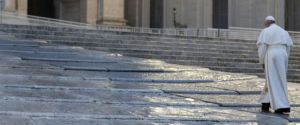
"How do I follow Jesus?" This is the simple question every Christian should ask themselves in order to understand whether their faith is authentic and sincere, or somehow "self-serving." The risk, in fact, is that of watering down one's commitment to Christ with calculations of convenience. Pope Francis emphasised this in his homily during Mass celebrated on the morning of Monday, 16 April, at Santa Marta. Commenting on the liturgy of the word, the Pontiff identified two possible paths that lie before every baptised person: that of the protomartyr Stephen, who, "full of grace and the Holy Spirit," acted "without weighing the consequences" of his choices, and that of the crowd that allowed itself to be won over by miracles.
There are, therefore, Francis explained, "different ways, different manners of following Jesus." The people described in John's Gospel (6:22-29), who had just witnessed the miracle of the multiplication of the loaves, followed Jesus not only "because they were hungry for the word of God and felt that Jesus touched their hearts, warmed their hearts," but also "because Jesus performed miracles; they also followed him to be healed, to gain a new vision of life." So much so that, the Pope recalled, in another passage of the same evangelist (4:48), Jesus rebukes them: "You, unless you see miracles, you do not believe." As if to emphasise that "miracles are not important; what is important is the word of God, it is faith." Therefore, Jesus "praises the people who approach him with faith." In fact, "to the father who asked for his son's healing," he said, "Everything is possible for those who believe."
So the people who "followed Jesus to hear him" after the multiplication of the loaves even wanted to "make him king." Therefore, he went away "alone to pray." Summarising the Gospel story, the Pope described what happened, with the people seeking the Lord and finding him the next day on the other side of the lake. Why this insistent search? To listen to Jesus, but above all "out of interest." In fact, the Lord's rebuke comes immediately: "Truly, truly, I say to you, you are seeking me, not because you saw signs, but because you ate your fill of the loaves." Francis entered into the psychology of the crowd: "good people" who want "to hear the word of Jesus and feel how that word touches their hearts," but who are also driven by interest. Theirs is therefore a faith that combines "two things: a faith, a desire to love Jesus, but also a little self-interest."
They are not the only ones in the Gospel to have this attitude. The Pontiff recalled, for example, the episode of the demoniac of Gerasa narrated by Luke (8:26-39), in which the herdsmen, when they saw that because of that miracle "they had lost their pigs," made "calculations and said: 'Yes, yes, this man is a miracle worker, but he is not good for us; we are losing money because of him,' and they said to him politely, 'Go away, go back to your own place.'" Or we can think of the ten lepers mentioned again by Luke (17:11-19), who "were healed and went away, but only one returned to give thanks: the others had been healed and so they forgot Jesus."
Faced with a faith conditioned by self-interest, Jesus rebukes them and says, "Work not for food that perishes, but for food that endures for eternal life, which the Son of Man will give you." Food is the word of God and the love of God.
[Pope Francis, at St. Martha's, in L'Osservatore Romano, 17 April 2018]
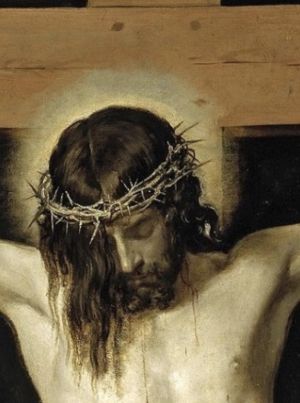
13th Sunday in O.T. and Solemnity of Saints Peter and Paul
13th Sunday in Ordinary Time (year A) [28 June 2026]
First Reading from the Second Book of Kings (4:8–11, 14–16a)
Here is a brief overview of this Sunday’s biblical readings, beginning with this story of a beautiful human friendship. In Shunem, a village in the Northern Kingdom around 850 BC, Elisha, at the start of his ministry, forms a strong and lasting friendship with a wealthy family. The biblical authors do not recount this story merely as an anecdote: they have a theological purpose and show that the covenant between Elisha and the Shunammites is a reflection of the Covenant between God and Israel. This story unfolds in four acts: 1. The promise of a son: Elisha announces to the barren woman: ‘Next year, at this very time, you will be holding a son in your arms.’ She does not believe him and replies: ‘No, my lord, man of God, do not lie to your servant.’ Like Sarah at Mamre, she doubts. But the following year the child is born. 2. The resurrection: Years later, the child dies in the fields, struck down by heatstroke. Without losing faith, the mother lays the body on Elisha’s bed, in the room on the terrace, and runs to find him. She reminds him: ‘I had not asked you for anything; do not take this son from me.’ Elisha prays and raises the child from the dead. 3. The warning of famine: True to this friendship, Elisha warns the Shunammite woman of seven years of famine and advises her to leave for the land of the Philistines. She obeys and goes into exile. 4. The restoration of her property. On her return, her house and fields had been confiscated by the king’s officials. Elisha intervenes once more and restores her lands to her. But what theological lesson does this text offer us? This friendship illustrates five aspects of the Covenant between God and Israel: 1. A permanent covenant and faithfulness: God remains faithful even in the face of unbelief. 2. Constant care: Just as Elisha did for his hostess, God watches over his people without ceasing. 3. God dwells with us: Elisha accepts the room on the terrace: God wishes to dwell amongst his people, as in Solomon’s Temple. 4. God restores: Elisha restores the land; God promises to restore the land to Israel – a key message written during the Babylonian Exile. 5. God is the God of life: A promise of the child’s birth and resurrection, for God gives life. The Shunammite woman becomes a model of faith for us: she welcomes the prophet ‘as a prophet’, as Jesus will say in the Gospel of Matthew (10:41). Her trust is complete: she dares to tell God her needs and even her anger. She recognises Elisha as a ‘holy man of God’. Here is a practical application: God dwells in the heart of every person, and it is important to recognise this.
Responsorial Psalm (88/89)
Here is a clear message: we must never doubt. The first reading recounts the long friendship between a family from Shunem and the prophet Elisha, the ‘man of God’. Through this human relationship, we reflect on the eternal Covenant between God and his people, and with all humanity. Psalm 88/89, which is proclaimed today, seems to be a song written in the midst of trial. Although the few verses of the responsorial psalm seem full of joy, the complete psalm, comprising no fewer than 53 verses, was probably composed during the Babylonian Exile. It is a synthesis of the entire history of Israel: the beginning of the Covenant, the promises to David, the expectation of the Messiah… and then the collapse: no more kings in Jerusalem, no heir, and therefore no Messiah. Hence the anguished question in verse 50: ‘Where, O Lord, is your first love, the one you swore to David concerning your faithfulness?’. What is asserted with such force is, in reality, what one fears to have lost. The psalm is, moreover, the last in the third book of the Psalms and concludes with: ‘Blessed be the Lord for ever! Amen! Amen!’. It therefore has the character of a conclusion. On closer inspection, this psalm presents itself as a skilful composition. The first stanza is very carefully crafted, with parallel structures: I will sing of the Lord’s love without end; I will proclaim your faithfulness from age to age. Love/faithfulness, song/proclamation, without end/from age to age, established/stable, for ever/the heavens: a marvellous parallelism between time and space that invites us to cherish the singing of the Psalms. The heart of the message is Love and faithfulness. In the complete psalm, the pairing ‘love and faithfulness’ occurs seven times, a symbolic number. It is the translation of the revelation to Moses on Mount Sinai: ‘A God merciful and gracious, slow to anger and abounding in love and faithfulness’ (Ex 34:6) . In Hebrew, ‘love’—that is, ‘God’s acts of love’—indicates that God does not love merely in words, but ‘in deed and in truth’, as St John will say in the New Testament. It is precisely during the exile that Israel remembers, more than ever, ‘God’s acts of love’ so as not to fall into the temptation of thinking that God has forgotten them. In short, the psalm presents a group of believers composing hymns to commemorate the faithfulness of God, who has never ceased to be the King of Israel. The phrase “for the Lord is our shield, our King, the Holy One of Israel” is sung precisely at a time when there is no longer a human king. And it is interesting that the psalm uses royal and martial vocabulary: ‘shout of triumph/terouah, power, strength, vigour, shield’ – because the king led the army. These are victorious expressions spoken in a time of defeat. And the psalm concludes by recalling the insults suffered by the Messiah: ‘ Remember, Lord, your servants who have been humiliated… your enemies have humiliated, Lord, your Messiah”. Moral: it is precisely in the night, in the darkness of exile and trial, that we must believe in the light and in the reaffirmation of God’s promises.
Second Reading from the Letter of Saint Paul the Apostle to the Romans (6:3… 11)
St Paul points to a new way of life and responds to the objection of those who reproach him, saying that by placing too much emphasis on the free gift of salvation, he is encouraging sin. He retorts: grace does not render sin irrelevant, but it no longer has power over the believer because, from Baptism, the believer is a ‘new creation’: ‘If anyone is in Christ, they are a new creation’ (2 Cor 5:17). Paul explains the meaning of the key word ‘death’, which is not biological, and uses this word in a theological sense: all of us who have been baptised into Christ Jesus have been baptised into his death… we have therefore died to sin, and now we live for God in Christ Jesus. It is a radical break with the past, one that no longer fears physical death. Paul speaks from experience: on the road to Damascus, he ‘died’ to the old self, to his former way of seeing, acting and believing. The ‘baptism’ of Israel thus serves as a key for Paul to explain Christian Baptism, as he clearly recalls in his First Letter to the Corinthians (cf. 1 Cor 10:1–2) . Israel, ‘baptised’ by Moses in the cloud and the sea during the crossing of the Red Sea, experienced the death of Egyptian slavery: forced labour, massacres, the Pharaoh’s bad faith – and thus a clean break with the machinery of oppression. In this way, Christ brings about the decisive break: the person enslaved by sin, by doubts, by violence, is set free. Jesus, ‘obedient unto death, even death on a cross’ (Phil 2:8), breaks the vicious circle. His death is a triumph: ‘dead to sin once and for all, alive to God’. To live in the manner of Christ is therefore ‘to die to sin’—that is, to die to the old way of life: hatred, violence, the thirst for power and money—in order to ‘live for and in God’, that is, to choose Christ as the one Lord and to enter into a new life made up of love and service to one’s brothers and sisters. Baptism marks the beginning of this radical change: it is true liberation. Paul says to the baptised: “Consider yourselves dead to sin, but alive to God in Christ Jesus”. The gift has already been granted, but it remains to be put into practice every day. And here lies the challenge that arises from it: whilst entering into salvation is simple—for it is enough simply to believe—living it out becomes extremely demanding, as it requires us to model our daily lives on the Spirit of Christ. He repeats this in his letter to the Ephesians: ‘Put off the old self… be renewed in the spirit of your mind, and put on the new self, created according to God in righteousness and true holiness’ (Eph 4:22–24). There is but one secret: to keep our eyes fixed on the cross of Christ. Only his obedience and gentleness break the chain of violence. As Jesus says: ‘Abide in me, and I in you. Just as the branch cannot bear fruit by itself, neither can you unless you remain in me’ (Jn 15:4).
From the Gospel according to Matthew (10:37–42)
This text helps us to learn how to accept the necessary sacrifices. At first glance, Matthew 10:37–42 seems like a list of unrelated maxims. In reality, it is a single invitation: these are the detachments required by fidelity to the Gospel. After the Sermon on the Mount on love, Jesus speaks here of other demands. We must learn to love God in times of persecution of the Church: ‘Whoever loves father or mother more than me is not worthy of me; whoever loves son or daughter more than me is not worthy of me’. Loving God does not mean ceasing to love one’s family, even though he had warned shortly before: ‘Brother will turn against brother and father against son, and children will rise up against their parents and put them to death’ (cf. Mt 10:21). ‘I have not come to bring peace, but a sword… I will set a man against his father’ (Mt 10:34–35; cf. Micah 7:6). How can this be explained? Every persecution gives rise to personal tragedies because one is forced to choose between faithfulness and death. Even without violence, it is within the family and amongst friends that bearing witness is most difficult and can lead to heart-wrenching conflict. To learn to love is therefore to take up one’s cross: “Whoever does not take up their cross and follow me is not worthy of me. Whoever finds their life will lose it; whoever loses their life for my sake will find it.” For Jesus and his listeners, crucifixion was a humiliating form of mass execution carried out along Roman roads, as it exposed the condemned to horror, disgrace and derision. In Deuteronomy we read that the crucified person is ‘cursed by God’ (Deut 21:22–23). And in Psalm 21/22, Jesus proclaims: ‘I am a worm and not a man, scorned by men, rejected by the people’, although the interpretation of this passage helps us to better understand what Jesus meant (in the footnote, I have taken the liberty of including a text I came across). Jesus knows that he and his disciples will be persecuted, despised and humiliated. “A servant is not greater than his master. If they have persecuted me, they will also persecute you” (John 15:20). “Taking up the cross” means accepting being marginalised, losing one’s reputation for the sake of faithfulness to Christ. Finally, here is the only reward that answers all our objections: “ Whoever welcomes you welcomes me; whoever welcomes me welcomes the One who sent me… Whoever welcomes a prophet because he is a prophet will receive a prophet’s reward; whoever welcomes a righteous person because he is righteous will receive a righteous person’s reward. And whoever gives even a single glass of cool water to one of these little ones because he is my disciple will not lose his reward”. It sounds like a ‘give-and-take’, but it is not. We are not in the realm of ‘having’, but of ‘being’. God does not give quantities of goods, but eternal life: life in his very presence. All the saints bear witness to a quality of happiness, not a quantity. Jesus himself promises: “ ‘Whoever has left houses, brothers, sisters, father, mother, children or fields for my sake will receive a hundredfold and will inherit eternal life’ (Mt 19:29). Paul lived this out: ‘Whatever gains I once had, I have come to regard as a loss for the sake of Christ… so that I may know Christ, share in his sufferings, and become like him in his death’ (Phil 3:7–10). ‘Being seized by Christ’ is what is at stake. If one seeks a common thread running through this text, it can easily be found in the link between all these phrases, precisely in this verb; ‘being seized by Christ’ as an inner fire that makes possible all acts of renunciation out of fidelity to the Gospel: renunciation of affection, of esteem, of possessions, of life itself. The Beatitudes resound powerfully within our hearts: ‘Blessed are you when they revile you… Rejoice and be glad, for your reward in heaven is great! ” (Mt 5:11–12).
Note: Jesus, the “worm” on the cross. On the cross, JESUS COMPARED HIMSELF TO AN INSECT TO REVEAL THE SECRET OF HIS DEATH. THIS IS THE MYSTERY OF PSALM 22… As he was dying on the cross, Jesus recited Psalm 22. It is the quintessential prophetic psalm of the crucifixion. But in verse 6 there is a humiliating and bewildering phrase: ‘Yet I am a worm and not a man, scorned by everyone, despised by the people’ . Why does the King of the universe, at the most glorious moment of redemption, describe himself as a ‘worm’? Middle Eastern zoology reveals one of nature’s most moving portraits of love. The TOLA’ATH SHANI תּוֹלַעַת שָׁנִי, the Hebrew word used by David, is not the common term for ‘earthworm’. He used Tola’ath Shani, meaning ‘crimson worm’, from which a red dye was extracted. When the female of this crimson worm is ready to give birth, she performs an instinctive and radical act: she seeks out a tree trunk and attaches herself to it forever. It clings to it with such force that, if anyone tries to pry it loose, its body is torn apart. There, still attached to the wood, it gives birth to its young. To protect them from predators, the mother secretes a crimson-red fluid that covers her entire body, stains the wood red and completely envelops her young. In this act of giving life and protection, the mother dies.
Here is the extraordinary phenomenon: three days later, the mother’s lifeless body, still attached to the tree, loses its red colour, turns as white as snow and falls gently to the ground (Isaiah 1:18). JESUS NAILED HIMSELF TO THE TREE TO GIVE YOU LIFE: Jesus was not using a metaphor of humiliation, but was proclaiming his mission, and this is a message for us. Jesus was saying to you from the cross: ‘I am the Tola’ath Shani’. He chose to go to the tree of his own free will. He allowed himself to be nailed to the cross, knowing that if he had come down from it, his ‘children’ – us – would have died at the hands of the predator. He shed his crimson fluid – his blood – to cover you, protect you and give you life, by offering up his own. When you feel worthless, when you think that nobody cares about you or that the enemy will devour you, look at the wood of the cross. You have a Saviour who chose to die nailed to a tree rather than lose you. His blood has covered you entirely and, three days later, He rose again to make you as white as snow. You are the fruit of His perfect sacrifice!
+Giovanni D’Ercole
Solemnity of Saints Peter and Paul [29 June 2026]
First Reading from the Acts of the Apostles (12:1–11)
The central theme of this text is: ‘God always delivers for the sake of the mission’. At that time, the young Church was under pressure, and the miracle of Peter’s deliverance must not make us forget the atmosphere of the early Church. Jesus died around AD 30, and at the beginning the disciples were few in number and harmless. The problems began with ‘too spectacular’ healings, which led to Peter being imprisoned twice by the religious authorities: the first time alongside John, involving a trial and threats, whilst the second time alongside other apostles, who were freed at night by an angel: ‘Go, stand in the Temple and proclaim to the people all these words of life’ (Acts 5:17–20). Then came the execution of Stephen and the persecution that drove the ‘Hellenists’ to flee from Jerusalem towards Samaria and the coast. James, Peter and John remained. In the episode in Acts 12, it is the political authorities who take action. We are under Herod Agrippa I, grandson of Herod the Great, who reigned alone from 41 to 44 AD. This is why we can date the episode precisely. Agrippa, ‘a Roman in Caesarea, a Jew in Jerusalem’, sought to curry favour with both Rome and the Jews. In both cases, the Christians were enemies to be eliminated. To please the Jews, he has James, son of Zebedee, put to death and imprisons Peter during the Jewish Passover, the Week of Unleavened Bread. What interests Luke is the mission, not just Peter, who once again escapes miraculously, because for Luke the central point is evangelisation. The angel does not set them free to save them, but because ‘the world needs them’. God does not abandon the apostles: no blind tyranny can halt the proclamation of the Word of life. There is a parallel between Easter, the Exodus and the Passion. In a sense, the story of the Jewish Passover is repeated: Israel, enslaved and threatened with genocide, is miraculously freed by God. From century to century, the people remember that liberation is God’s work. And what of this paradox: can those called to proclaim and carry out God’s liberating work become complicit in a new form of domination? No Church is immune. Jesus died precisely because of the perversion of the religious power of his time: during Easter, the memorial of the liberating God, the Son of God is killed by the ‘defenders of God’. Yet it is the love and forgiveness of the ‘meek and humble of heart’ God that triumphs: Jesus rises from the dead. Now it is the young Church that faces religious and political power, just as Jesus did 10–15 years earlier, again during Passover in Jerusalem. The angel says to Peter: ‘Get up quickly! Put on your belt, fasten your sandals…’. These are the very same words given to Israel on the night of the Exodus: ‘Gird your loins, put sandals on your feet, and take your staff in your hand. You shall eat it in haste’ (Ex 12:11). Luke is saying: God continues the work of liberation. The entire narrative is structured on the model of Christ’s Passion and Resurrection: night, prison, soldiers, the ‘steamroller’ of domination. Peter sleeps passively, like Jesus in the sleep of death. For both of them, light dawns in the night: God is at work. And here is the conclusion: Jesus had said to Peter: ‘The forces of death—that is, of hatred—will not prevail’, and this teaches us that the miraculous is not an end in itself. God sets us free so that the mission may continue through the ages. The deliverance from Egypt, Christ’s Passover, Peter’s imprisonment: it is a single plan of God who saves in order to send us forth to proclaim the life that no one can destroy.
Responsorial Psalm (33/34)
In this psalm, we are guided by this central theme: God hears the cry of the poor and responds with the Spirit and with brothers and sisters. After Peter’s deliverance, the psalm reminds us: ‘The angel of the Lord encamps round those who fear him, to deliver them’. And we realise that, whilst the whole Church was praying fervently for Peter in prison, the Lord set him free: ‘The poor cry out,’ says the psalm, ‘and the Lord hears…’. This is what faith is: daring to cry out to God, knowing that, in every circumstance, He hears our cry. The community cried out, and Peter was set free. Yet one question always remains: what if deliverance does not come? Jesus on the cross did not escape death. Peter himself, years later, would be imprisoned in Rome and executed. So was God no longer listening then? It is the question we keep asking ourselves: where is God when we suffer? What is the point of praying, and if we are not answered as we would like, does that mean we have prayed badly? Too many people say, ‘If you pray properly, everything will work out’, but we know that is not always the case. How many have prayed, made novenas and gone on pilgrimages for a healing that never came? This psalm offers us three answers. 1. God hears our cry. As at the burning bush: ‘I have seen the misery of my people in Egypt; I have heard their cry under their oppressors. I know their sufferings’ (Ex 3:7). The believer knows that the Lord is near in suffering, ‘on our side’. Psalm 33/34 says: ‘I sought the Lord, and he answered me… he delivered me. He listens, he saves; his angel encamps round us, he is a refuge’. 2. God responds by giving us his Spirit. “Ask, and it will be given to you… Which father… would give a snake to a son who asks for a fish?” (Luke 11:9–13). Jesus does not promise that everything will be resolved “as if by magic”. When we pray, God does not remove the problem, but fills us with his Spirit. With the Spirit, we can face our trials. Every prayer offered in faith opens us up to the transforming action of the Spirit. The answer to the desperate cry is therefore the inner strength of the Spirit to change the situation, to overcome the trial. “The poor man cries out; the Lord hears him: he saves him from all his troubles… I sought the Lord, and he answered me: he delivered me from all my fears.” Whatever blow may come, the believer knows they are heard, and their anguish can subside. 3. God raises up brothers and sisters around us. Here is the second lesson from the burning bush: as soon as God says to Moses, ‘I have seen… I have heard the cry… I know their sufferings’, he stirs within Moses the impulse to free the people: “Go, I am sending you to Pharaoh; bring my people out of Egypt” (Ex 3:9–10). Israel has experienced this pattern many times: suffering, a cry, prayer, and God raising up prophets and leaders to take their destiny back into their own hands. This is precisely the historical experience of Israel. 4. Faith is like a double word, a double cry: man cries out his misery to God, like Job. God listens and frees him from his anguish. And man speaks again to give thanks. Israel’s vocation throughout the centuries has been to give voice to this polyphony of suffering, praise and hope, and throughout the course of its history nothing has been able to extinguish Israel’s hope. This is what characterises the believer: ‘I will bless the Lord at all times; his praise shall ever be on my lips. I take pride in the Lord: let the poor hear and rejoice!’
Second Reading from the Second Letter of Saint Paul the Apostle to Timothy (4:6–8, 17–18)
Not everyone agrees that the Letters to Timothy were written by Paul, but these lines are certainly his: indeed, they are his testament, his final farewell as a prisoner in Rome. He knows that he will be released only to be put to death. The ‘time of departure’ has come: he uses the Greek term anàlysis, ‘to cast off the moorings, to weigh anchor’. Viewing life as a marathon, Paul takes stock using the sporting image dear to him: the long-distance runner crossing the finish line. The time of my departure has come. I have fought the good fight, I have finished the race, I have kept the faith. Now all that remains is for me to receive the crown of righteousness. In Rome, the victor did not receive a cup, but a laurel wreath. There is a crown for everyone, so Paul does not boast: he knows that the Lord, the righteous judge, will award it on that day; not only to me, but also to all those who have lovingly awaited his glorious appearing. God, the impartial judge, sees the intentions of the heart, and all the apostles, all the believers who have longed with love for the coming of Christ, will receive the crown. It is therefore not presumption, but unshakeable trust in God’s goodness. For the very strength to run comes from Him: ‘The Lord stood by me and gave me strength, so that I might fulfil the proclamation of the Gospel and all the nations might hear it’. We must learn to expect everything from God: it is He who gives the strength to run, and it is He who gives the reward to all who run, for life is not a competitive race. Each in their own place, at their own pace; it is enough to ‘long with love for the coming of Christ’. Is this not the ‘blessed hope’ we profess at Mass: ‘We await your coming in glory’? For Paul, the definitive ‘manifestation’ of Christ has always been the horizon towards which to run, and he acknowledges that he has been forsaken by men, yet always sustained by the Lord. Like Christ on the cross and later Stephen, Paul forgives because it was precisely in his abandonment by men that he experienced the presence and strength of the Lord. The final sentences are striking: he knows he will die, yet he says, ‘The Lord will deliver me from every evil and bring me safely into his heavenly kingdom’. He is not, therefore, speaking of physical death, which he expects from one day to the next; he is speaking of the worst danger: giving up, abandoning the race, losing faithfulness. The Lord has preserved him from this ‘lion’. His faithfulness is not his own doing, but a strength he has received; and for him, death is merely biological, rather than the passage into glory, for which he is already singing the hymn of joy: ‘To him be glory for ever and ever. Amen’.
From the Gospel according to Matthew (16:13–19)
At Caesarea, a turning point is reached; an important shift takes place in the vision of Christ: from the powerful Jesus to Jesus, the Son of God, crucified. For Matthew, the episode at Caesarea Philippi is a decisive stage: immediately afterwards, Jesus began to explain to the disciples that he had to go to Jerusalem, suffer greatly at the hands of the elders, the chief priests and the scribes, be killed and rise again on the third day. ‘From this moment on’: thus a phase comes to an end, and what is surprising is that nothing new occurs in the titles, but everything is placed in a new light. Nothing unprecedented is said: Jesus gives himself the title ‘Son of Man’, which he has already used nine times in Matthew. Peter proclaims him ‘Son of God’, a title already used before. What is new is the leap in understanding: the ‘Son of Man’ in the Bible is the leader of God’s people, a title taken from the Book of Daniel: ‘Behold, one like a Son of Man was coming with the clouds of heaven… power, glory and a kingdom were given to him; all peoples, nations and languages served him. His power is eternal; his kingdom will never be destroyed’ (Dan 7:13–14). Daniel makes it clear that the ‘Son of Man’ is not merely an individual, but a people: ‘The saints of the Most High shall receive the kingdom and possess it for ever… the kingdom, the power and the greatness of the kingdoms under the whole heaven shall be given to the people of the saints of the Most High’ (Dan 7:18, 27) . When Jesus applies this title to himself, he presents himself as the one who stands at the head of God’s people. ‘Son of God’, on the other hand, is a title that expresses trust, not power. This title has already been used: in chapter 4, when the devil tempts Jesus: ‘If you are the Son of God’. He is right about the title, but wrong about its meaning: he imagines a powerful and invulnerable Son who uses his power for himself. For Jesus, ‘being the Son of God’ means trusting the Father completely and drawing strength from his Word. After Jesus walks on the water, the disciples say to him: ‘Truly, you are the Son of God’. They were struck by his power over the sea. They were still one step away from understanding who Jesus truly is. What is new at Caesarea is that Peter proclaims, ‘You are the Christ, the Son of the living God’, not in response to a miracle; thus the ambiguity is dispelled and the journey towards true faith begins. “Blessed are you, Simon son of Jonah: it was not flesh and blood that revealed this to you, but my Father in heaven.” The novelty lies in the combination of the two titles: “Who is the Son of Man?” asks Jesus, and Peter replies, “He is the Son of God.” Jesus will make the same connection before the high priest: “You have said so. But I tell you: from now on you will see the Son of Man seated at the right hand of Power and coming on the clouds of heaven” (Mt 26:63). Here there is no longer any room for error: God reveals himself not as power and majesty, but as Love entrusted into the hands of humankind. As soon as Peter discovers who Jesus is, Jesus entrusts him with a mission for the Church: ‘You are Peter, and on this rock I will build my Church’. The Son of Man is a people, not an isolated individual. On what does Christ—God made man—build his Church? On Peter, a fragile person whose only virtue is having listened to what the Father revealed to him. The sole pillar of the Church is faith in Jesus Christ. ‘I will give you the keys of the Kingdom of Heaven: whatever you bind on earth shall be bound in heaven, and whatever you loose on earth shall be loosed in heaven’. This does not mean that Peter and his successors are omnipotent. It means that God is committed to them. If we remain in communion with the Church, we are in communion with God. The final reassurance is that Christ builds the Church, and herein lies the ultimate reason for our trust: Jesus says, ‘I will build my Church’. It is not our task to build it, but only to listen to what the living God wishes to reveal to us. And because it is the risen Christ, the Son of the living God, who builds it, we can be certain: “The gates of hell shall not prevail against it”.
+Giovanni D’Ercole
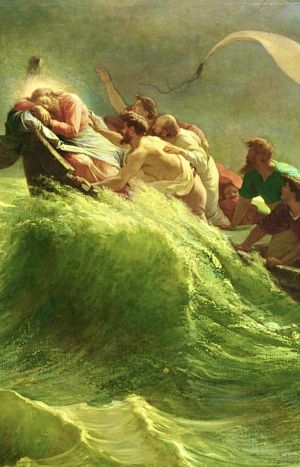
(Mt 8:23-27)
Our adventure proceeds like on a boat tossed by seisms. We go hopeful, but sometimes adversities threaten drowning us, and with us seem to drag down all life.
Using paraphrases from the book of Exodus, Mt tries to help his communities understand the Mystery of the Person of Jesus.
Not a few converted Jews considered Christ a character all in line with their mentality and tradition, in agreement with prophecies and figures of the First Testament.
Elsewhere, some pagans who had accepted the Lord advocated an understanding with the worldly mentality - a kind of agreement between Jesus and the Empire.
But Who could appease the storms?
The situation of the tiny Christian families of Galilee and Syria was still dark. Christ seemed not entirely present, and the sea rough, the wind against.
Could the Exodus be re-created?
Precisely in the condition of tossed pilgrims, in approaching his Person, a strange and different stability was experienced: the against the current enduring.
A crossing towards freedom that came from clinging to Jesus alone, in the chaos of security. For a discordant permanence.
As the disciples caressed nationalist desires, the Master began to make it clear that He is not the vulgarly awaited Messiah, restorer of the late empire of David or the Caesars.
The Kingdom of God is open to all humanity, which in those times of upheaval sought security, acceptance, points of reference. Everyone could find home and shelter there (Mt 13:32c; Mk 4:32b).
But the apostles and church veterans seemed averse to Christ’s proposal; they remained insensitive to an overly broad idea of fraternity - which was crowding them out.
The teaching and call imposed on the disciples is that of passing to the other shore (cf. Mk 4:35; Lk 8:22), that is, not to hold God’s treasures in favour of themselves.
The Apostles have the task of communicating the Father’s riches even to the pagans, considered impure and infamous.
Yet it were precisely the intimates of the Master who did not want to know about risky disproportions, which would actually the wide-meshed action of the Son of God bring out.
They were willingly calibrated to habits of common religiosity, and an (circumscribed) ideology of power.
Already in the 70s, resistance to divine proposal as well as the tearing internal debate that had ensued from it, had unleashed a great storm in the assemblies of believers.
«And behold, there came a great agitation into the sea, so that the boat was covered by the waves» (Mt 8:24).
The storm were concerning the disciples, the only dismayed; not Jesus: «but He was asleep» (v.24c) [it is the Risen Lord].
What happened "inside" the little boat of the Church was not the simple reflection of what happened "outside"! This is the mistake to be corrected.
Emotionally relevant situations make sense, carry a meaningful appeal, introduce a different introspection, the decisive change; a new 'genesis'.
Trial in fact activates souls in the most effective way, because it disengages us from the idea of stability, and brings us into contact with dormant energies, initiating the new dialogue with events.
In Him, we are therefore imbued with a different vision of danger.
[Tuesday 13th wk. in O.T. June 30, 2026]
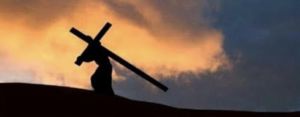
(Mt 8:23-27)
Excita, Domine, potentiam tuam, et veni
"Excita, Domine, potentiam tuam, et veni" - with these and similar words the Church's liturgy repeatedly prays [...].
These invocations were probably formulated in the period of the decline of the Roman Empire. The disintegration of the supporting orders of law and of the basic moral attitudes, which gave them strength, caused the breaking of the banks that had hitherto protected peaceful coexistence between men. A world was passing away. Frequent natural cataclysms further increased this experience of insecurity. No force could be seen to halt this decline. All the more insistent was the invocation of God's own power: that He would come and protect men from all these threats.
"Excita, Domine, potentiam tuam, et veni". Today, too, we have many reasons to associate ourselves with this prayer [...] The world with all its new hopes and possibilities is, at the same time, distressed by the impression that the moral consensus is dissolving, a consensus without which legal and political structures do not function; consequently, the forces mobilised to defend these structures seem doomed to failure.
Excita - the prayer is reminiscent of the cry addressed to the Lord, who was sleeping in the disciples' storm-tossed boat that was close to sinking. When His powerful word had calmed the storm, He rebuked the disciples for their little faith (cf. Mt 8:26 and par.). He wanted to say: in yourselves faith has slept. He also wants to say the same thing to us. Even in us so often faith sleeps. Let us therefore pray to Him to awaken us from the sleep of a faith that has become weary and to restore to faith the power to move mountains - that is, to give right order to the things of the world.
[Pope Benedict, to the Roman Curia 20 December 2010].
Our life proceeds as on a small boat tossed about by earthquakes. We go hopeful, but sometimes adversity threatens to drown us, and with us it seems to drag our whole life down.
Episodes that nevertheless make us realise how much Christ's friendship is worth to us and what it conveys to us.
For we experience that only the Lord overcomes the fear of upheavals.
But he does so without rushing, and without any set patterns that would frame him forever (it would be like making him perish).
If we welcome Him in a simple and forthright manner, we realise that there is another realm, that every element is in His power.
On such a wave that has become vital, everything will serve to reactivate us - even the headwind and the pitfalls of evil.
The Invisible Friend guides and fulfils us infallibly. And he brings us to Riva. Landing that is the ultimate condition.
Dry land that the force of the waves cannot affect, even when we have the feeling of being swept away by the waves.
Using paraphrases from the book of Exodus, Mt tries to help his communities understand the Mystery of the Person of Jesus.
Not a few Jewish converts considered Christ to be a person in line with their mentality and tradition, in agreement with First Testament prophecies and figures.
Elsewhere, some pagans who had accepted the Lord advocated an understanding with the worldly mentality - a kind of agreement between Jesus and the Empire.
But who could calm the storms?
The situation of the tiny Christian families in Galilee and Syria was still dark. Christ seemed not quite present, and the sea was rough, the wind contrary.
Could the Exodus be re-created?
Faith in Him was shaken, not relaxed. The disciples did not possess the Master's same calm trust in the Father.
And yet, in the very condition of shaken pilgrims, in approaching His Person they experienced a strange and different stability: the perseverance against the tide.
A crossing towards freedom that came from clinging to Jesus alone, in the chaos of security. A discordant permanence.
Even today, it is the unaccustomed and critical path of growth that reveals Him capable of manifesting His quiet strength, restoring the disrupted elements to calm.
The direction of travel imposed by Jesus on His disciples seems to go against the grain, and brazenly breaks the rules accepted by all.
While the disciples fondle nationalist desires, the Master begins to make it clear that He is not the vulgarly expected Messiah, restorer of the defunct empire of David or the Caesars.
The Kingdom of God is open to all mankind, who in those turbulent times sought security, acceptance, points of reference. Everyone could find home and shelter there (Mt 13:32c; Mk 4:32b).
But the apostles and church veterans seemed averse to Christ's proposals; they remained insensitive to an overly broad idea of fraternity - which displaced them. This is still a live and very serious problem.
The teaching and call imposed on the disciples is to cross to the other shore (Mk 4:35; Lk 8:22), that is, not to keep to oneself.
The Apostles have the task of communicating the riches of the Father to the pagans, who are considered impure and infamous.
Yet it was precisely the Master's intimates who did not want to know about risky disproportions that would actually make the Son of God's wide-ranging action stand out.
They were willingly tarred by common religiosity, and a circumscribed ideology of power.
The resistance to the divine commission, and the resulting lacerating internal debate, had already stirred up a great storm in the assemblies of believers in the 1970s.
"And behold, there came great turmoil in the sea, so that the boat was covered with waves" (Matthew 8:24).
The storm concerned the disciples alone, the only ones who were dismayed; not Jesus: "but he was asleep" (v.24c) [this is about the Risen One].
What was happening "inside" the little boat of the Church was not a mere reflection of what was happening "outside"! This is the error to be corrected.
For us too, such identification can block and make life chronic, precisely from the handling of emotionally relevant situations - which have their own meaning.
They always carry a meaningful appeal, introduce a different eye, introspection, dialogue.
In short, from the peace of the divine condition that dominates chaos, the Lord calls attention to and rebukes the apostles, accusing them of lacking Faith.
Though devout, they lack an ounce of risk. They lack love - like a mustard seed (v.26) - to bring to humanity to renew it.
And are we believers still confused, embarrassed? Is the chaos of patterns still raging - not excluding selfishness, which inexorably peeps out?
We paradoxically go the way of the Exodus, of the experience of the first; right 'knowledge', because it is direct. The only caveat: we must not be taken in by fear.
In Him, we are imbued with a different vision of danger.
Says the Tao Tê Ching (xxii): "The saint does not see by himself, therefore he is enlightened". Even in straits.
At all times it seems that Jesus expressly wanted the dark moments of confrontation and doubt for the apostles (Mk 4:35; Lk 8:22b). First and foremost, it will be some church leaders who will be called upon to cleanse themselves of repetitive convictions. Only in this way will their proclamation not remain misplaced.
For textbook expectations (and the habit of setting up conformist harmonies) block the flowering of what we are and hope for.
Especially what is annoying or even 'against' has something decisive to tell us.
Even in the boat of the assemblies [cf. Mk 4:36] discomfort must express itself.
"And they drew near and awoke him, saying, Lord, save us, we are lost!" (v.25).
The peril is an opportunity to revive the essence of each person and of the community itself.
The trial introduces change (hidden or repressed) and activates it in the most effective way.
Novelty comes from natural contact with hidden, primordial energies.
More than opposing frictions and conflicting external events, anxiety, impression, anguish, arise from the very fear of facing the normal or decisive questions of existence.
This can happen out of distrust: feeling the danger perhaps only because we perceive ourselves to be intimately undeveloped, and incapable of other conversation; of discovering and reworking, converting, or remodelling.
The fatigue of questioning ourselves and the suffering that the adventure of Faith holds, will also fade amidst the discomfort of the rough sea - which precisely does not want us to return to 'those of before'.
It is enough to disengage from the idea of stability, even religious stability, and listen to life as it is, embracing it.
Even in its throng of bumps, bitterness, shattered hopes for harmony, sorrows - engaging with this flood of new emergencies, and encountering one's own deep nature.
The best vaccine against the anxieties of adventuring together with Christ on the changing waves of the unexpected. will be precisely not to avoid worries upstream - on the contrary, to go towards them and welcome them; to recognise them, to let them happen.
Even in times of global crisis, the apprehensions that seem to want to devastate us, come to us as preparatory energies of other joys that wish to break through. New cosmic attunements; for wonderment from within ourselves - and guidance from beyond.
Our little boat is in an inverted, inverted, unequal stability; uncertain, unseemly - yet energetic, prickly, capable of reinventing itself.
And it may even be excessive, but it is disruptive.
For a proposal of Tenderness (not corresponding) that is not a relaxation zone, because it rhymes with terrible anxiety and... still unfulfilled suburbs!
To internalise and live the message:
On what occasions have you found easy what before seemed impossible? Do you ever raise your voice to Jesus? By what Name did He reveal Himself to you? By what title would you call Him? Have you crossed waters you did not foresee in your plans and intentions? Who has calmed your storms? How do you experience harmony?Some other providence, which you ignore
"It is good not to fall, or to fall and rise again. And if you happen to fall, it is good not to despair and not to become estranged from the love the Sovereign has for man. For if he wills, he can do mercy to our weakness. Only let us not turn away from him, let us not be distressed if we are forced by the commandments, and let us not be disheartened if we come to nothing (...).
Let us neither hurry nor retreat, but always begin again (...).
Wait for him, and he will show you mercy, either by conversion or by trials, or by some other providence that you do not know."
[Peter Damascene, Second Book, Eighth Discourse, in La Filocalia, Turin 1982, I,94]

Excita, Domine, potentiam tuam, et veni. Repeatedly during the season of Advent the Church’s liturgy prays in these or similar words. They are invocations that were probably formulated as the Roman Empire was in decline. The disintegration of the key principles of law and of the fundamental moral attitudes underpinning them burst open the dams which until that time had protected peaceful coexistence among peoples. The sun was setting over an entire world. Frequent natural disasters further increased this sense of insecurity. There was no power in sight that could put a stop to this decline. All the more insistent, then, was the invocation of the power of God: the plea that he might come and protect his people from all these threats.
Excita, Domine, potentiam tuam, et veni. Today too, we have many reasons to associate ourselves with this Advent prayer of the Church. For all its new hopes and possibilities, our world is at the same time troubled by the sense that moral consensus is collapsing, consensus without which juridical and political structures cannot function. Consequently the forces mobilized for the defence of such structures seem doomed to failure.
Excita – the prayer recalls the cry addressed to the Lord who was sleeping in the disciples’ storm-tossed boat as it was close to sinking. When his powerful word had calmed the storm, he rebuked the disciples for their little faith (cf. Mt 8:26 et par.). He wanted to say: it was your faith that was sleeping. He will say the same thing to us. Our faith too is often asleep. Let us ask him, then, to wake us from the sleep of a faith grown tired, and to restore to that faith the power to move mountains – that is, to order justly the affairs of the world.
[Pope Benedict, to the Roman Curia 20 December 2010]
The storm calmed on the Lake of Genesaret can be reread as a "sign" of Christ's constant presence in the "boat" of the Church, which many times throughout history is exposed to the fury of the winds during stormy hours. Jesus, awakened by the disciples, commands the winds and the sea to be becalmed. Then he says to them, "Why are you so fearful? Have you no faith yet?" (Mk 4:40). In this, as in other episodes, one can see Jesus' desire to inculcate in the apostles and disciples faith in his operative and protective presence even in the most stormy hours of history, in which doubt about his divine assistance could infiltrate the spirit. In fact, in Christian homiletics and spirituality, the miracle has often been interpreted as a 'sign' of Jesus' presence and a guarantee of trust in him on the part of Christians and the Church.
[Pope John Paul II, General Audience 2 December 1987]
We see this great figure, this force in the Passion, in resistance to the powerful. We wonder: what gave birth to this life, to this interiority so strong, so upright, so consistent, spent so totally for God in preparing the way for Jesus? The answer is simple: it was born from the relationship with God (Pope Benedict)
Noi vediamo questa grande figura, questa forza nella passione, nella resistenza contro i potenti. Domandiamo: da dove nasce questa vita, questa interiorità così forte, così retta, così coerente, spesa in modo così totale per Dio e preparare la strada a Gesù? La risposta è semplice: dal rapporto con Dio (Papa Benedetto)
The lamp is a symbol of the faith that illuminates our life, while the oil is a symbol of the charity that nourishes the light of faith, making it fruitful and credible (Pope Francis)
La lampada è il simbolo della fede che illumina la nostra vita, mentre l’olio è il simbolo della carità che alimenta, rende feconda e credibile la luce della fede (Papa Francesco)
Jesus wants our existence to be laborious, that we never lower our guard, so as to welcome with gratitude and wonder each new day given to us by God. Every morning is a blank page on which a Christian begins to write with good works (Pope Francis)
Gesù vuole che la nostra esistenza sia laboriosa, che non abbassiamo mai la guardia, per accogliere con gratitudine e stupore ogni nuovo giorno donatoci da Dio. Ogni mattina è una pagina bianca che il cristiano comincia a scrivere con le opere di bene (Papa Francesco)
And this is the problem: when the People put down roots in the land and are the depository of the Law, they are tempted to place their security and joy in something that is no longer the Word of God (Pope Benedict)
Ed ecco il problema: quando il popolo si stabilisce nella terra, ed è depositario della Legge, è tentato di riporre la sua sicurezza e la sua gioia in qualcosa che non è più la Parola del Signore (Papa Benedetto)
Despite the scarcity of information about him, St Bartholomew stands before us to tell us that attachment to Jesus can also be lived and witnessed to without performing sensational deeds. Jesus himself, to whom each one of us is called to dedicate his or her own life and death, is and remains extraordinary (Pope Benedict)
La figura di san Bartolomeo, pur nella scarsità delle informazioni che lo riguardano, resta comunque davanti a noi per dirci che l'adesione a Gesù può essere vissuta e testimoniata anche senza il compimento di opere sensazionali. Straordinario è e resta Gesù stesso, a cui ciascuno di noi è chiamato a consacrare la propria vita e la propria morte (Papa Benedetto)
Faith is more than just empirical or historical facts; it is an ability to grasp the mystery of Christ’s person in all its depth [Pope Benedict]
La fede va al di là dei semplici dati empirici o storici, ed è capace di cogliere il mistero della persona di Cristo nella sua profondità [Papa Benedetto]
More than 600 precepts are mentioned in the Law of Moses. How should the great commandment be distinguished among these? (Pope Francis)
Nella Legge di Mosè sono menzionati oltre seicento precetti. Come distinguere, tra tutti questi, il grande comandamento? (Papa Francesco)
The invitation has three characteristics: freely offered, breadth and universality. Many people were invited, but something surprising happened: none of the intended guests came to take part in the feast, saying they had other things to do; indeed, some were even indifferent, impertinent, even annoyed (Pope Francis)








duevie.art
don Giuseppe Nespeca
Tel. 333-1329741
Disclaimer
Questo blog non rappresenta una testata giornalistica in quanto viene aggiornato senza alcuna periodicità. Non può pertanto considerarsi un prodotto editoriale ai sensi della legge N°62 del 07/03/2001.
Le immagini sono tratte da internet, ma se il loro uso violasse diritti d'autore, lo si comunichi all'autore del blog che provvederà alla loro pronta rimozione.
L'autore dichiara di non essere responsabile dei commenti lasciati nei post. Eventuali commenti dei lettori, lesivi dell'immagine o dell'onorabilità di persone terze, il cui contenuto fosse ritenuto non idoneo alla pubblicazione verranno insindacabilmente rimossi.