Aug 23, 2026 Written by 

The platform that makes the breakthrough

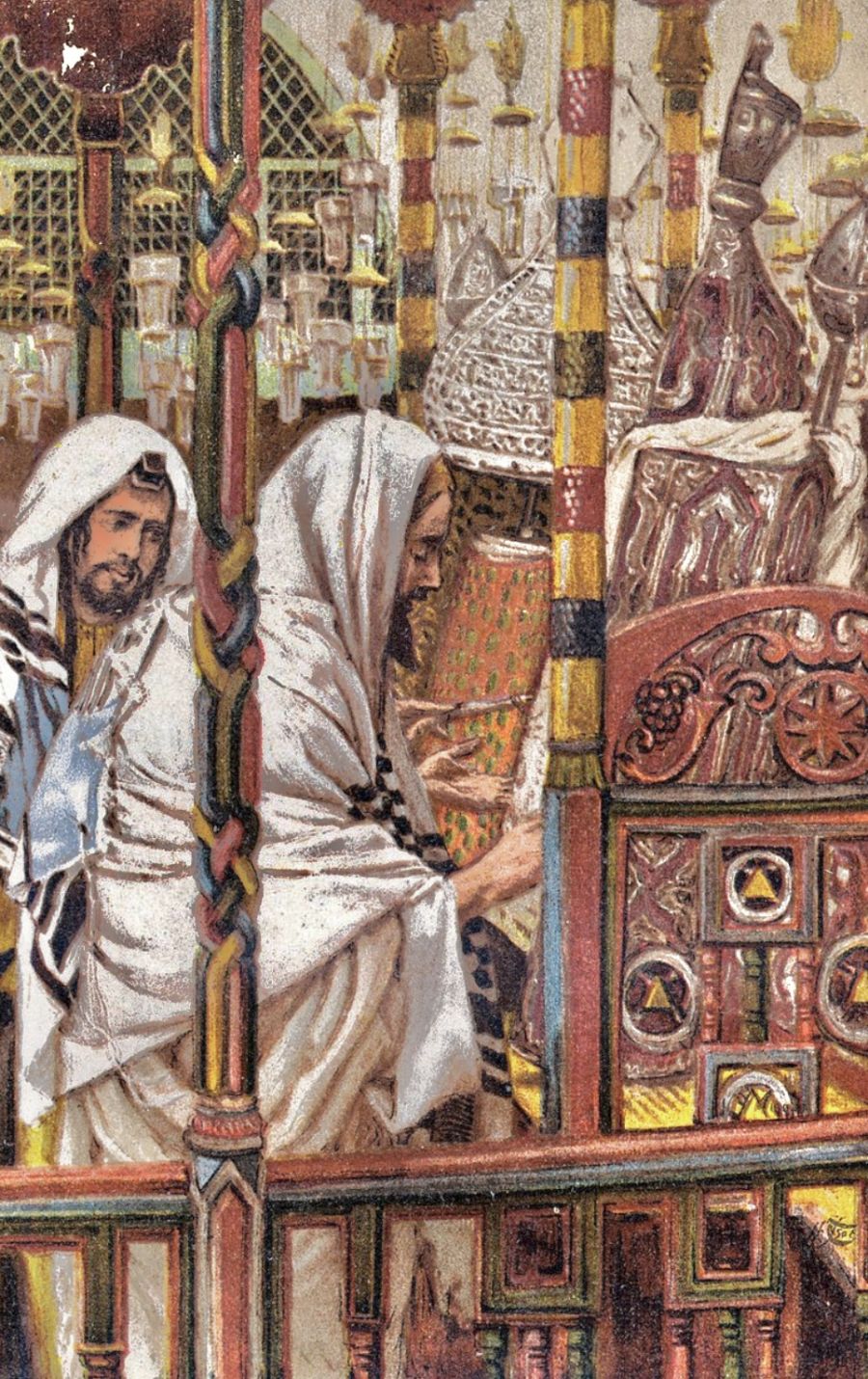
In the Synagogue and from the precipice

(Lc 4:16-30)


In ancient Israel, the patriarchal family, clan and community were the basis of social coexistence.

They ensured the transmission of the nation identity and provided protection for the afflicted.

But at the time of Jesus, Galilee was subject to the segregation dictated by Herod's policies, and suffered from the oppression of official religiosity.

The political and economic situation forced people to retreat into material and individual problems or those of small family.

A situation that was leading the least protected sections of the population to collapse.

Instead, Jesus wants to return to the Father's Dream: the ineradicable one of Fraternity, the only seal to salvation history.

Thus, according to Lk the first time Jesus enters a synagogue he makes a mess.

He does not go to pray, but to Teach what the Grace of God is [the one not weakened by chicanery or false instructions] in the real existence of people.

He chose a passage that reflected the situation of his people, oppressed by the power of the rulers, who were making the weak suffer confusion and poverty.

But his First Reading disregards the liturgical calendar.

He then dares to preach in his own way and personalizes the passage from Isaiah, from which he allows himself to censor the verse announcing God's “vengeance”.

So neither does He proclaim the expected passage of the Law.

Moreover, for the Son of God, the Spirit is not revealed in the extraordinary phenomena of the cosmos, but in the Year of Grace [«a year acceptable to the Lord»: v.19].


Is it possible that the divine likeness could manifest itself in a man who is considerate towards the less fortunate, who disregards official customs, does not believe in retaliation, and displays forms of uncontrolled spontaneity?

It is a reminder to us.

Like the Master, instead of reasoning with induced thoughts and being sequestered by the heaviness of rejections and fears, in Him we begin to think with the empathic codes of our Calling, which breaks through.

The unrepeatable and wide-ranging Vision-Relation (v.18a) - without reduction - then becomes strategic, because it possesses within itself the appeal of the radical essence, and all the resources to solve the real problems.

To listen to the proclamation of the Gospels (v.18b) is to listen to the echo of oneself and the people considered insignificant: intimate and fraternal choice.

And to be in it without the dead leaves of one-sidedness - by wandering freely in that same Appeal; not neglecting precious parts of oneself, nor amputating eccentricities, or the intuition proper to the subaltern classes.

In this way, we remain in the instinct to be and do happy, without ever allowing ourselves to be imprisoned by the craving for security on the side: a stagnant quest.


The Kingdom in the Spirit (cf. vv.14.18) knows what we need. It has ceased to be a goal of mere future.

It is the surprise that Christ arouses in us through his Dream, around his proposal with an extra gear.

The Lord does not neglect us: He extinguishes accusatory brooding and creatively redesigns.

He gives birth again and motivates, recovers dispersions and reinforces the plot.


It is divine because it is personal and social, the new Energy, empowered to create the authentic man.

This is the platform that works the breakthrough.


[Monday 22nd wk. in O.T.  August 31st, 2026]

288 Last modified on Monday, 31 August 2026 12:03
don Giuseppe Nespeca

Giuseppe Nespeca è architetto e sacerdote. Cultore della Sacra scrittura è autore della raccolta "Due Fuochi due Vie - Religione e Fede, Vangeli e Tao"; coautore del libro "Dialogo e Solstizio".

«Religion of appearance» or «road of humility»? (Pope Francis)
«Religione dell’apparire» o «strada dell’umiltà»? (Papa Francesco)
In the crucified Jesus a kind of transformation and concentration of the signs occurs: he himself is the “sign of God”, especially in the mystery of his Death and Resurrection (Pope John Paul II)
In Gesù crocifisso avviene come una trasformazione e concentrazione dei segni: è Lui stesso il "segno di Dio", soprattutto nel mistero della sua morte e resurrezione (Papa Giovanni Paolo II)
However, the king was not discouraged and sent his servants out to seek other guests to fill his banquet hall. Thus the aspect of the refusal of those initially invited caused the invitation to be extended to all [Pope Benedict]
Il re però non si scoraggia e invia i suoi servi a cercare altri commensali per riempire la sala del suo banchetto. Così il rifiuto dei primi ha come effetto l’estensione dell’invito a tutti [Papa Benedetto]
Faith in God opens before us the horizon of a sure hope, one which does not disappoint; it indicates a solid foundation on which to base one’s life without fear; it demands a faith-filled surrender into the hands of the Love which sustains the world (Pope Benedict)
La fede in Dio apre all’uomo l’orizzonte di una speranza certa che non delude; indica un solido fondamento sul quale poggiare, senza paura, la propria vita; richiede l’abbandono, pieno di fiducia, nelle mani dell’Amore che sostiene il mondo (Papa Benedetto)
The "new evangelization" faces this challenge. It must work to ensure that people recover the awareness that in Christ evil can be conquered with good (Pope John Paul II)
La “nuova evangelizzazione” affronta questa sfida. Essa deve impegnarsi perché tutti gli uomini recuperino la consapevolezza che in Cristo è possibile vincere il male con il bene (Papa Giovanni Paolo II)
Many saints experienced the night of faith and God’s silence — when we knock and God does not respond — and these saints were persevering (Pope Francis)
Tanti santi e sante hanno sperimentato la notte della fede e il silenzio di Dio – quando noi bussiamo e Dio non risponde – e questi santi sono stati perseveranti (Papa Francesco)
In some passages of Scripture it seems to be first and foremost Jesus’ prayer, his intimacy with the Father, that governs everything (Pope Francis)
In qualche pagina della Scrittura sembra essere anzitutto la preghiera di Gesù, la sua intimità con il Padre, a governare tutto (Papa Francesco)
It is necessary to know how to be silent, to create spaces of solitude or, better still, of meeting reserved for intimacy with the Lord. It is necessary to know how to contemplate. Today's man feels a great need not to limit himself to pure material concerns, and instead to supplement his technical culture with superior and detoxifying inputs from the world of the spirit [John Paul II]
Occorre saper fare silenzio, creare spazi di solitudine o, meglio, di incontro riservato ad un’intimità col Signore. Occorre saper contemplare. L’uomo d’oggi sente molto il bisogno di non limitarsi alle pure preoccupazioni materiali, e di integrare invece la propria cultura tecnica con superiori e disintossicanti apporti provenienti dal mondo dello spirito [Giovanni Paolo II]
This can only take place on the basis of an intimate encounter with God, an encounter which has become a communion of will, even affecting my feelings (Pope Benedict)

Due Fuochi due Vie - Vol. 1 Due Fuochi due Vie - Vol. 2 Due Fuochi due Vie - Vol. 3 Due Fuochi due Vie - Vol. 4 Due Fuochi due Vie - Vol. 5 Dialogo e Solstizio I fiammiferi di Maria

duevie.art

don Giuseppe Nespeca

Tel. 333-1329741


Disclaimer

Questo blog non rappresenta una testata giornalistica in quanto viene aggiornato senza alcuna periodicità. Non può pertanto considerarsi un prodotto editoriale ai sensi della legge N°62 del 07/03/2001.
Le immagini sono tratte da internet, ma se il loro uso violasse diritti d'autore, lo si comunichi all'autore del blog che provvederà alla loro pronta rimozione.
L'autore dichiara di non essere responsabile dei commenti lasciati nei post. Eventuali commenti dei lettori, lesivi dell'immagine o dell'onorabilità di persone terze, il cui contenuto fosse ritenuto non idoneo alla pubblicazione verranno insindacabilmente rimossi.