Aug 24, 2026 Written by 

Loose from the automatic mentality

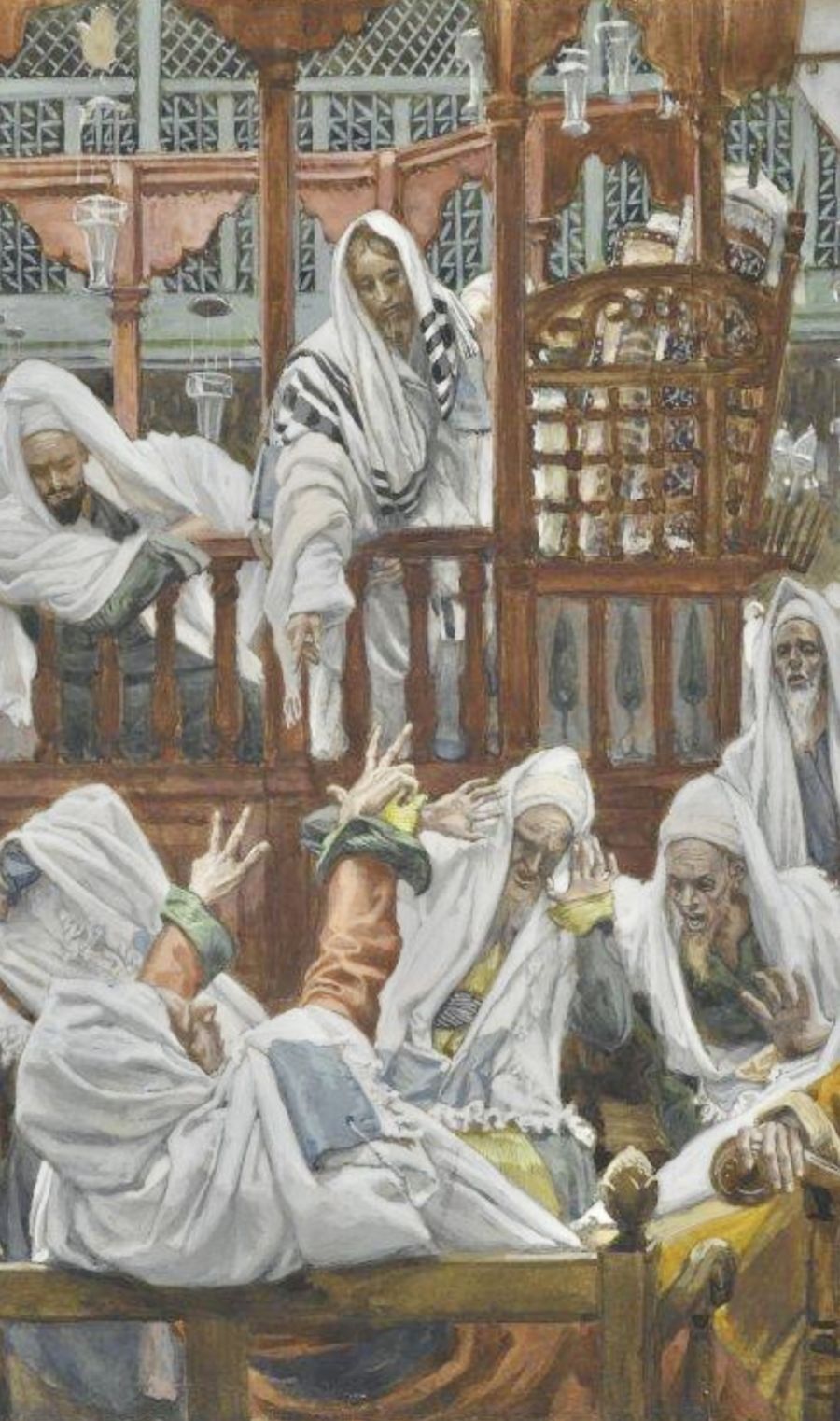
Jesus in the synagogue: Deliverance from quietism

(Lk 4:31-37)


In third Gospel, first ‘signs’ of the Lord are the quiet escape from death threats [agitated by his people!] and the healing of the possessed.

In this way of narrating the Jesus story, Lk indicates the priorities that his communities lived: first of all, it was necessary to suspend the intimate struggles, inculcated by the Judaizing tradition and by his "knowing how to stay in the world".

In the stubborn and conformist village of Nazareth, the Master is unable to communicate his novelty, and is forced to change residence.

He does not resign himself, on the contrary: Capernaum was at the intersection of important roads, which facilitated contacts and dissemination.

Among people of all walks of life, the Son of God wished to create a consciousness strongly critical towards the approved doctrines of religious leaders.

He did not mechanically mention the teachings - modest - of the authorities, but started from his life experience and from the living relationship with the Father.

Thus he created clear minds and in each one an unusual, non-reductive shudder; which aimed to make reach a higher level to souls harassed by the automatic mentality of quiet living.

The Master still faces the power that reduces people to a condition without originality, allergic to differences.


In the Gospel, the person who suddenly makes sparks has always been a quiet visitor to the assembly, who tirelessly dragged his spiritual life into small areas without color, lacking in breath and rhythm.

But the Word of the Lord has in itself a real charge: the power of the bliss of living, of creating, of loving in truth - which does not hate eccentric characteristics.

Where this Appeal comes, all the demons you do not expect are exposed and jump out of the burrows.

Whoever meets Christ is overthrown; he sees his certainties thrown into the air.

Upheaval that allows the hidden or repressed facets to do their part - even if they are not "as they should be".

In short, the Gospel invites us to welcome all that is in us, as it is, not attenuated; by multiplying our energies - because inside lurks the best of our Call to the personal Mission.

In Christ, our multifaceted faces [albeit contradictory] can take to the field together, without repressing the precious territories of the soul, of the essence, of the character; of another persuasion - even distant or unrepeatablely singular.

The habitué of the assemblies is indeed troubled and questioned, but he does not remain abulic; on the contrary, he makes a showy progress from the dormant and ritual existence - bent, repetitive, off, and fake.

He is freed face to face from all the clichés that used to keep him good, subjugated and on a leash.

Even through a protest that breaks apathy, the divine Call forces us to a life as saved sons, of new witness that seemed impossible.

Now no longer on the sidelines, but in the midst of the people (v.35), in the wonder of a deep, personal and unexpected Happiness.


Difference between common religiosity and living Faith.


[Tuesday 22th wk. in O.T.  September 1st, 2026]

241 Last modified on Tuesday, 01 September 2026 11:59
don Giuseppe Nespeca

Giuseppe Nespeca è architetto e sacerdote. Cultore della Sacra scrittura è autore della raccolta "Due Fuochi due Vie - Religione e Fede, Vangeli e Tao"; coautore del libro "Dialogo e Solstizio".

The “reading and meditation of the word of God root us more deeply in Christ and guide our ministry as servants of reconciliation, justice and peace” (second Synod for Africa, Propositio 46)
La lettura e la meditazione della Parola di Dio ci radicano più profondamente in Cristo e orientano il nostro ministero di servitori della riconciliazione, della giustizia e della pace (Secondo Sinodo per l’Africa, Propositio 46)
The Gospel of Matthew written in Hebrew or Aramaic is no longer extant, but in the Greek Gospel that we possess we still continue to hear, in a certain way, the persuasive voice of the publican Matthew, who, having become an Apostle, continues to proclaim God's saving mercy to us. And let us listen to St Matthew's message, meditating upon it ever anew also to learn to stand up and follow Jesus with determination (Pope Benedict)
Non abbiamo più il Vangelo scritto da Matteo in ebraico o in aramaico, ma nel Vangelo greco che abbiamo continuiamo a udire ancora, in qualche modo, la voce persuasiva del pubblicano Matteo che, diventato Apostolo, séguita ad annunciarci la salvatrice misericordia di Dio e ascoltiamo questo messaggio di san Matteo, meditiamolo sempre di nuovo per imparare anche noi ad alzarci e a seguire Gesù con decisione (Papa Benedetto)
That denarius clearly represents eternal life, a gift that God reserves for all. Indeed those who are considered the "last", if they accept, become the "first", whereas the "first" can risk becoming the "last" [Pope Benedict]
Quel denaro rappresenta la vita eterna, dono che Dio riserva a tutti. Anzi, proprio quelli che sono considerati "ultimi", se lo accettano, diventano "primi", mentre i "primi" possono rischiare di finire "ultimi" [Papa Benedetto]
The sower is Jesus. With this image, we can see that he presents himself as one who does not impose himself, but rather offers himself. He does not attract us by conquering us, but by donating himself: he casts seeds. With patience and generosity, he spreads his Word, which is not a cage or a trap, but a seed which can bear fruit (Pope Francis)
Il seminatore è Gesù. Notiamo che, con questa immagine, Egli si presenta come uno che non si impone, ma si propone; non ci attira conquistandoci, ma donandosi: butta il seme. Egli sparge con pazienza e generosità la sua Parola, che non è una gabbia o una trappola, ma un seme che può portare frutto (Papa Francesco)
The Church desires to give thanks to the Most Holy Trinity for the "mystery of woman" and for every woman - for that which constitutes the eternal measure of her feminine dignity, for the "great works of God", which throughout human history have been accomplished in and through her (Mulieris Dignitatem n.31)
La Chiesa desidera ringraziare la Santissima Trinità per il «mistero della donna», e, per ogni donna - per ciò che costituisce l'eterna misura della sua dignità femminile, per le «grandi opere di Dio» che nella storia delle generazioni umane si sono compiute in lei e per mezzo di lei (Mulieris Dignitatem n.31)
It is a word that must be witnessed to and proclaimed explicitly, because without a consistent witness it proves to be less comprehensible and credible [Pope Benedict]
E’ una Parola che deve essere testimoniata e proclamata esplicitamente, perché senza una testimonianza coerente essa risulta meno comprensibile e credibile [Papa Benedetto]

Due Fuochi due Vie - Vol. 1 Due Fuochi due Vie - Vol. 2 Due Fuochi due Vie - Vol. 3 Due Fuochi due Vie - Vol. 4 Due Fuochi due Vie - Vol. 5 Dialogo e Solstizio I fiammiferi di Maria

duevie.art

don Giuseppe Nespeca

Tel. 333-1329741


Disclaimer

Questo blog non rappresenta una testata giornalistica in quanto viene aggiornato senza alcuna periodicità. Non può pertanto considerarsi un prodotto editoriale ai sensi della legge N°62 del 07/03/2001.
Le immagini sono tratte da internet, ma se il loro uso violasse diritti d'autore, lo si comunichi all'autore del blog che provvederà alla loro pronta rimozione.
L'autore dichiara di non essere responsabile dei commenti lasciati nei post. Eventuali commenti dei lettori, lesivi dell'immagine o dell'onorabilità di persone terze, il cui contenuto fosse ritenuto non idoneo alla pubblicazione verranno insindacabilmente rimossi.






