Oct 5, 2026 Written by 

That which dictates the laws of existence

4. In inviting us to consider almsgiving with a more profound gaze that transcends the purely material dimension, Scripture teaches us that there is more joy in giving than in receiving (cf. Acts 20,35). When we do things out of love, we express the truth of our being; indeed, we have been created not for ourselves but for God and our brothers and sisters (cf. 2 Cor 5,15). Every time when, for love of God, we share our goods with our neighbor in need, we discover that the fullness of life comes from love and all is returned to us as a blessing in the form of peace, inner satisfaction and joy. Our Father in heaven rewards our almsgiving with His joy. What is more: Saint Peter includes among the spiritual fruits of almsgiving the forgiveness of sins: “Charity,” he writes, “covers a multitude of sins” (1 Pt 4,8). As the Lenten liturgy frequently repeats, God offers to us sinners the possibility of being forgiven. The fact of sharing with the poor what we possess disposes us to receive such a gift. In this moment, my thought turns to those who realize the weight of the evil they have committed and, precisely for this reason, feel far from God, fearful and almost incapable of turning to Him. By drawing close to others through almsgiving, we draw close to God; it can become an instrument for authentic conversion and reconciliation with Him and our brothers.

5. Almsgiving teaches us the generosity of love. Saint Joseph Benedict Cottolengo forthrightly recommends: “Never keep an account of the coins you give, since this is what I always say: if, in giving alms, the left hand is not to know what the right hand is doing, then the right hand, too, should not know what it does itself” (Detti e pensieri, Edilibri, n. 201). In this regard, all the more significant is the Gospel story of the widow who, out of her poverty, cast into the Temple treasury “all she had to live on” (Mk 12,44). Her tiny and insignificant coin becomes an eloquent symbol: this widow gives to God not out of her abundance, not so much what she has, but what she is. Her entire self.

We find this moving passage inserted in the description of the days that immediately precede Jesus’ passion and death, who, as Saint Paul writes, made Himself poor to enrich us out of His poverty (cf. 2 Cor 8,9); He gave His entire self for us. Lent, also through the practice of almsgiving, inspires us to follow His example. In His school, we can learn to make of our lives a total gift; imitating Him, we are able to make ourselves available, not so much in giving a part of what we possess, but our very selves. Cannot the entire Gospel be summarized perhaps in the one commandment of love? The Lenten practice of almsgiving thus becomes a means to deepen our Christian vocation. In gratuitously offering himself, the Christian bears witness that it is love and not material richness that determines the laws of his existence. Love, then, gives almsgiving its value; it inspires various forms of giving, according to the possibilities and conditions of each person.

[Pope Benedict, Message for Lent 2008]

217 Last modified on Monday, 05 October 2026 04:41
don Giuseppe Nespeca

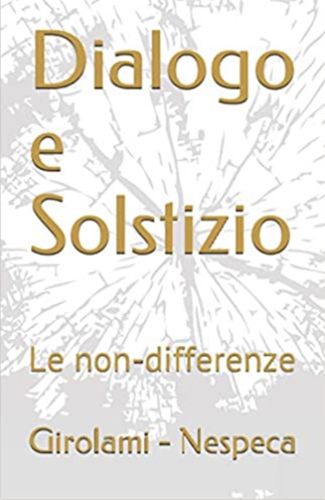
Giuseppe Nespeca è architetto e sacerdote. Cultore della Sacra scrittura è autore della raccolta "Due Fuochi due Vie - Religione e Fede, Vangeli e Tao"; coautore del libro "Dialogo e Solstizio".

Email This email address is being protected from spambots. You need JavaScript enabled to view it.
The community of believers is a sign of God’s love, of his justice which is already present and active in history but is not yet completely fulfilled and must therefore always be awaited, invoked and sought with patience and courage (Pope Benedict)
La comunità dei credenti è segno dell’amore di Dio, della sua giustizia che è già presente e operante nella storia ma che non è ancora pienamente realizzata, e pertanto va sempre attesa, invocata, ricercata con pazienza e coraggio (Papa Benedetto)
"In aeternum, Domine, verbum tuum constitutum est in caelo... firmasti terram, et permanet". This refers to the solidity of the Word. It is solid, it is the true reality on which one must base one's life (Pope Benedict)
«In aeternum, Domine, verbum tuum constitutum est in caelo... firmasti terram, et permanet». Si parla della solidità della Parola. Essa è solida, è la vera realtà sulla quale basare la propria vita (Papa Benedetto)
«The morning Resurrection gets us the sustenance of the celestial help. The Resurrection has rejected the night, has brought us the day» (St Ambrosius)
«La Risurrezione mattutina ci procura il sostentamento dell’aiuto celeste, essa che ha respinto la notte, ci ha riportato il giorno» (S. Ambrogio)
It has made us come here the veneration of martyrdom, on which, from the beginning, the kingdom of God is built, proclaimed and begun in human history by Jesus Christ (Pope John Paul II)
Ci ha fatto venire qui la venerazione verso il martirio, sul quale, sin dall’inizio, si costruisce il regno di Dio, proclamato ed iniziato nella storia umana da Gesù Cristo (Papa Giovanni Paolo II)
The evangelization of the world involves the profound transformation of the human person (Pope John Paul II)
L'opera evangelizzatrice del mondo comporta la profonda trasformazione delle persone (Papa Giovanni Paolo II)
The Church, which is ceaselessly born from the Eucharist, from Jesus' gift of self, is the continuation of this gift, this superabundance which is expressed in poverty, in the all that is offered in the fragment (Pope Benedict)
La Chiesa, che incessantemente nasce dall’Eucaristia, dall’autodonazione di Gesù, è la continuazione di questo dono, di questa sovrabbondanza che si esprime nella povertà, del tutto che si offre nel frammento (Papa Benedetto)
How we treat them will be taken as the way we treat Jesus himself. We do not see here a simple literary device, or a simple metaphor [Pope Benedict]
Il comportamento che noi abbiamo nei loro confronti sarà dunque considerato come il comportamento che abbiamo nei confronti di Gesù stesso. Non vediamo in questo una semplice formula letteraria, una semplice immagine! [Papa Benedetto]
The Sadducees, addressing Jesus for a purely theoretical "case", at the same time attack the Pharisees' primitive conception of life after the resurrection of the bodies; they in fact insinuate that faith in the resurrection of the bodies leads to admitting polyandry, contrary to the law of God (Pope John Paul II)
I Sadducei, rivolgendosi a Gesù per un "caso" puramente teorico, attaccano al tempo stesso la primitiva concezione dei Farisei sulla vita dopo la risurrezione dei corpi; insinuano infatti che la fede nella risurrezione dei corpi conduce ad ammettere la poliandria, contrastante con la legge di Dio (Papa Giovanni Paolo II)

Due Fuochi due Vie - Vol. 1 Due Fuochi due Vie - Vol. 2 Due Fuochi due Vie - Vol. 3 Due Fuochi due Vie - Vol. 4 Due Fuochi due Vie - Vol. 5 Dialogo e Solstizio I fiammiferi di Maria

duevie.art

don Giuseppe Nespeca

Tel. 333-1329741


Disclaimer

Questo blog non rappresenta una testata giornalistica in quanto viene aggiornato senza alcuna periodicità. Non può pertanto considerarsi un prodotto editoriale ai sensi della legge N°62 del 07/03/2001.
Le immagini sono tratte da internet, ma se il loro uso violasse diritti d'autore, lo si comunichi all'autore del blog che provvederà alla loro pronta rimozione.
L'autore dichiara di non essere responsabile dei commenti lasciati nei post. Eventuali commenti dei lettori, lesivi dell'immagine o dell'onorabilità di persone terze, il cui contenuto fosse ritenuto non idoneo alla pubblicazione verranno insindacabilmente rimossi.