Aug 22, 2026 Written by 

Cross and Son of Man: Messiah and against-Messiah in comparison

(Mt 16:21-27)


Common mentality evaluated the life’ success - and the truth of a religion - on the basis of glory, domination, enrichment, and security in general.

This is why Peter and the disciples wanted to return to the usual idea of «the» Messiah [cf. vv.16.20 Greek text] expected by everyone.

An all too normal canvas, incapable of regenerating us.


Everything we do - even in the risk - is motivated by the quest for fullness of being and happiness. We are passionate about the way in the Spirit for the same reason: to have an increase in life.

But in the Master’s proposal we perceive a disconcerting logic: to be protected from vain illusions that degrade, we must not rush to grab prestigious roles, goods, relationships that matter.

The most attractive and showy things remain external and infertile. They do not regenerate us. 

Instead... waiting, listening, exercising passive virtues, bitterness and defeat, call to re-enter ourselves - and they are preparing the most pertinent and well-founded future developments, precisely in favor of a full existence.

But in the misunderstanding, even those who are not afraid of sacrifices can swing, because the Way of Christ seems to lead us immediately to social contempt, to failure.

Even for Jesus the evangelization of the Apostles and the "neighbours" - all intent on softening and attenuating his immoderate Dreams - was not a child’s play.

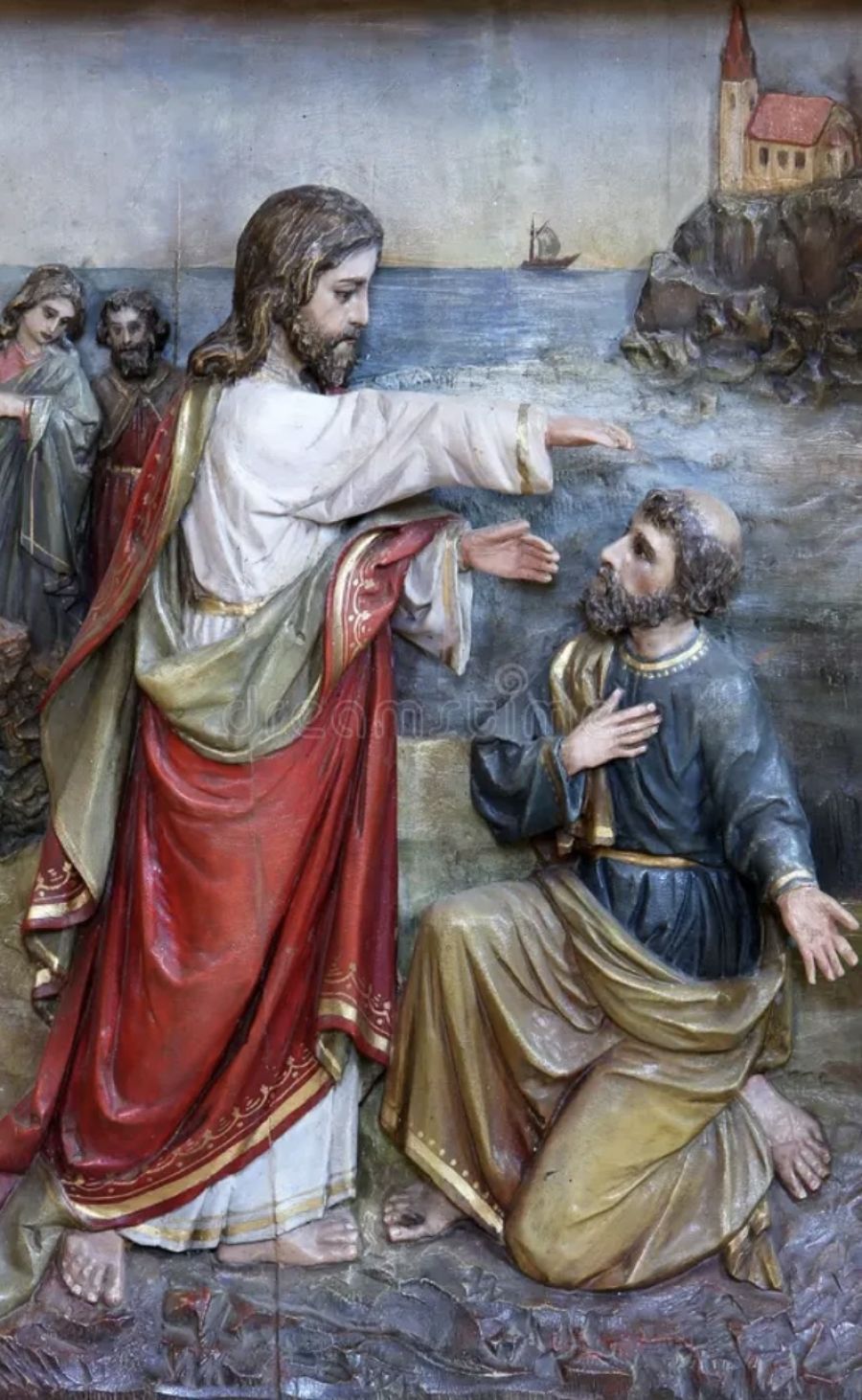
Yet the Master does not be taken like hostage - indeed, it is He who has put the disciples’ leader back in his place (vv.22-23).


The cross was the death penalty and perennial shame reserved for rebellious slaves; bandits, subversives, misfits who refused their position of civil marginalization.

And agreeing to lift the horizontal arm of the public scaffold behind Jesus means still today forgetting the "reputation", being covered with shame.

Not by asceticism, nor particular perfectionism. But so that time is left to Providence, for preparing us.

The coming life will appeal to other energies, arrange events in a more mysterious than obvious way.

It will bring into play different personal and social virtues - confluent - cosmic and intimately humanizing; acutely fascinating and springy.

In the storm, the passion of love has its preparatory stages, mysterious [of higher calibre], that will bring out authentic awareness. And the fraternal spirit that is nestled in the soul.

The perspective is in this sense personal, but not individualistic, rather that of the «Son of Man» that allows us intuiting the human, accessible and deifying aspect: let’s help ourselves to grasp Him Present (vv.27-28)!


«Son of man» is the One who, having pushed himself to the maximum of love in the fullness of Person, comes to reflect the divine condition, shows it and radiates in eminent marks.

Embraced by our own identifying Call, we will experience the Father providing for us. In this way, we will succeed in lifting the flowered Cross that fertilizes the soul and the world around.

On this ray of light, even in the great hardships of our time we will be like the Friend-Guide: genuine, not homologated; lying on the core of being, but standing on unexplored roads.

Simultaneously engaged and serene. Less banal, for personal contact.


To internalize and live the message:


In what sense did you experience life gained, after having “lost” it? Contacting what dormant energies? On which unexplored roads?


[22.a Domenica T.O. (anno A), August 30, 2026]

315 Last modified on Sunday, 30 August 2026 12:04
don Giuseppe Nespeca

Giuseppe Nespeca è architetto e sacerdote. Cultore della Sacra scrittura è autore della raccolta "Due Fuochi due Vie - Religione e Fede, Vangeli e Tao"; coautore del libro "Dialogo e Solstizio".

«Religion of appearance» or «road of humility»? (Pope Francis)
«Religione dell’apparire» o «strada dell’umiltà»? (Papa Francesco)
In the crucified Jesus a kind of transformation and concentration of the signs occurs: he himself is the “sign of God”, especially in the mystery of his Death and Resurrection (Pope John Paul II)
In Gesù crocifisso avviene come una trasformazione e concentrazione dei segni: è Lui stesso il "segno di Dio", soprattutto nel mistero della sua morte e resurrezione (Papa Giovanni Paolo II)
However, the king was not discouraged and sent his servants out to seek other guests to fill his banquet hall. Thus the aspect of the refusal of those initially invited caused the invitation to be extended to all [Pope Benedict]
Il re però non si scoraggia e invia i suoi servi a cercare altri commensali per riempire la sala del suo banchetto. Così il rifiuto dei primi ha come effetto l’estensione dell’invito a tutti [Papa Benedetto]
Faith in God opens before us the horizon of a sure hope, one which does not disappoint; it indicates a solid foundation on which to base one’s life without fear; it demands a faith-filled surrender into the hands of the Love which sustains the world (Pope Benedict)
La fede in Dio apre all’uomo l’orizzonte di una speranza certa che non delude; indica un solido fondamento sul quale poggiare, senza paura, la propria vita; richiede l’abbandono, pieno di fiducia, nelle mani dell’Amore che sostiene il mondo (Papa Benedetto)
The "new evangelization" faces this challenge. It must work to ensure that people recover the awareness that in Christ evil can be conquered with good (Pope John Paul II)
La “nuova evangelizzazione” affronta questa sfida. Essa deve impegnarsi perché tutti gli uomini recuperino la consapevolezza che in Cristo è possibile vincere il male con il bene (Papa Giovanni Paolo II)
Many saints experienced the night of faith and God’s silence — when we knock and God does not respond — and these saints were persevering (Pope Francis)
Tanti santi e sante hanno sperimentato la notte della fede e il silenzio di Dio – quando noi bussiamo e Dio non risponde – e questi santi sono stati perseveranti (Papa Francesco)
In some passages of Scripture it seems to be first and foremost Jesus’ prayer, his intimacy with the Father, that governs everything (Pope Francis)
In qualche pagina della Scrittura sembra essere anzitutto la preghiera di Gesù, la sua intimità con il Padre, a governare tutto (Papa Francesco)
It is necessary to know how to be silent, to create spaces of solitude or, better still, of meeting reserved for intimacy with the Lord. It is necessary to know how to contemplate. Today's man feels a great need not to limit himself to pure material concerns, and instead to supplement his technical culture with superior and detoxifying inputs from the world of the spirit [John Paul II]
Occorre saper fare silenzio, creare spazi di solitudine o, meglio, di incontro riservato ad un’intimità col Signore. Occorre saper contemplare. L’uomo d’oggi sente molto il bisogno di non limitarsi alle pure preoccupazioni materiali, e di integrare invece la propria cultura tecnica con superiori e disintossicanti apporti provenienti dal mondo dello spirito [Giovanni Paolo II]
This can only take place on the basis of an intimate encounter with God, an encounter which has become a communion of will, even affecting my feelings (Pope Benedict)

Due Fuochi due Vie - Vol. 1 Due Fuochi due Vie - Vol. 2 Due Fuochi due Vie - Vol. 3 Due Fuochi due Vie - Vol. 4 Due Fuochi due Vie - Vol. 5 Dialogo e Solstizio I fiammiferi di Maria

duevie.art

don Giuseppe Nespeca

Tel. 333-1329741


Disclaimer

Questo blog non rappresenta una testata giornalistica in quanto viene aggiornato senza alcuna periodicità. Non può pertanto considerarsi un prodotto editoriale ai sensi della legge N°62 del 07/03/2001.
Le immagini sono tratte da internet, ma se il loro uso violasse diritti d'autore, lo si comunichi all'autore del blog che provvederà alla loro pronta rimozione.
L'autore dichiara di non essere responsabile dei commenti lasciati nei post. Eventuali commenti dei lettori, lesivi dell'immagine o dell'onorabilità di persone terze, il cui contenuto fosse ritenuto non idoneo alla pubblicazione verranno insindacabilmente rimossi.