Aug 21, 2026 Written by 

Struggle for Liberation from the corrupt, and court life

(Mk 6:17-29)


The question «Jesus, Who is he?» grows throughout the Gospel according to Mk, up to the answer of the centurion under the Cross (15:39).

The assessment of the opinions of the people (vv.14-16) suggests that even around the first assemblies of believers someone tried to understand Christ starting from what was already known.

Not a few wished to understand his Person on the basis of criteria drawn from the Scriptures or from the Oral Tradition of the Chosen People; from ancient beliefs and suggestions - even superstitious (as in the case of Herod).

But the Herald of God was not a purifier of the Temple, nor was He a simple healer of dated religiosity, of domesticated cultural ideas. Not even one of the many "reformers"... all in all conformists.

He overturns the hopes of the people, thus disturbing any school of thought; in particular, those who hold the exclusivity.


When feel a danger, those who are shrouded in luster and power become brazen and willing to do any violence, even for a false point of honor.

Tyrants always scoff at the isolated, uncomfortable and defenseless.

But leaders and powerful are also cowards: they do not intend to lose face in front of the allies of their immoderate and uncontrolled environment, cloaked in exemptions.

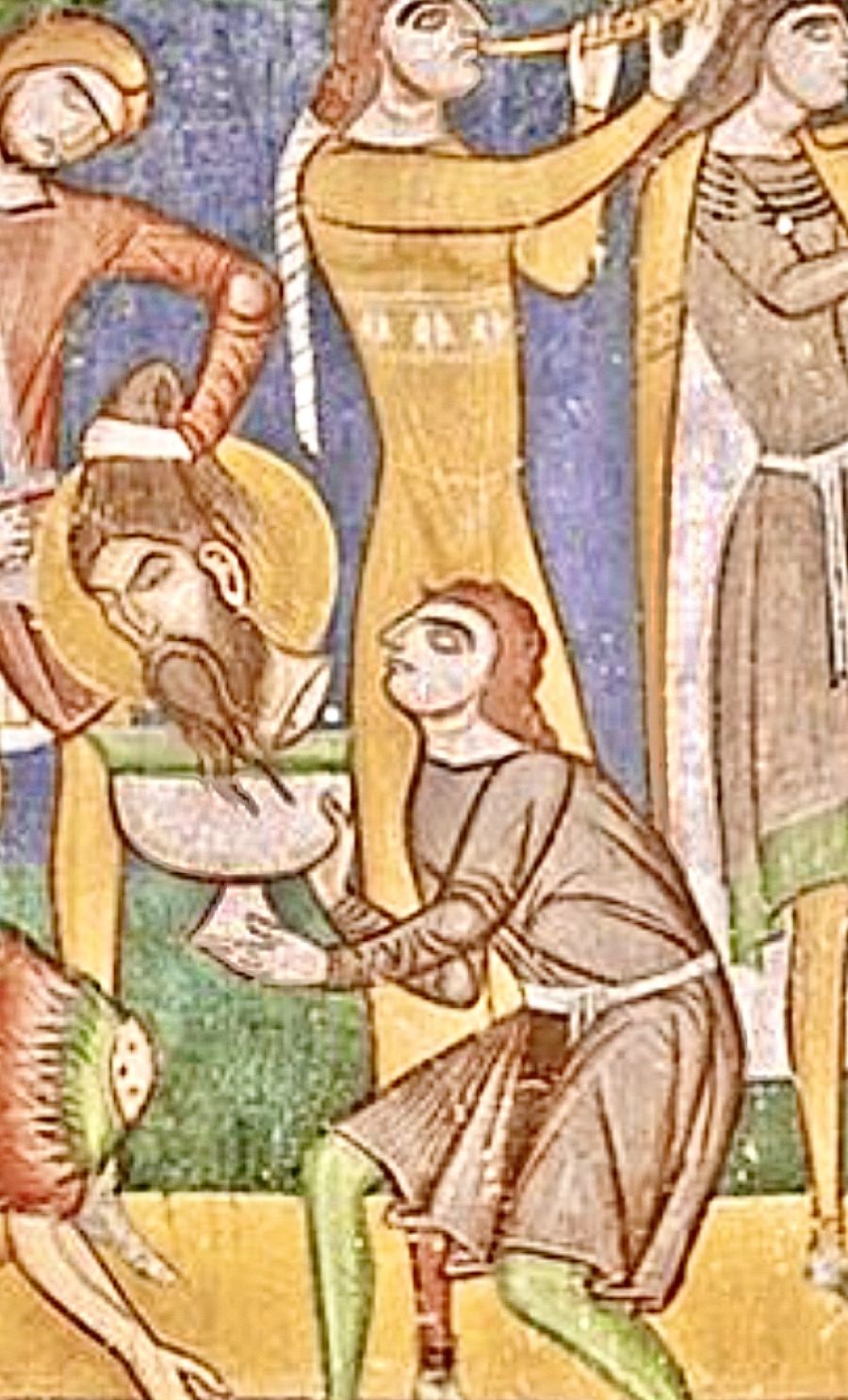
Josephus [Flavius] reports that John was in prison for fear of a popular uprising - evaluating that it was good for him to act early.

The assassination plot was occasional.


The brave one who denounces abuses is cut off, but the Voice of his martyrdom is no longer silent.

For this reason the episode does not lead Jesus to greater prudence.  Once an Envoy is killed, another greater and more incisive takes over: the last of the Prophets, the Son of God.

It seemed absurd that someone in that society dared to break the conspiratorial wall that guaranteed the troublemakers to consider themselves untouchable.

Faced with the unceremonious blackmail of the privileged who had control of every social and cultural class, it seemed impossible to start a new path, or to say and do anything that was not aligned.

John and Jesus challenge the status quo and attract upon themselves the vengeance of those who try to perpetuate the prerogatives of the ancient hierarchical cosmos, and the anger of those who are exposed in their hypocrisy.

This is the real difficulty encountered in the proclamation of the new Kingdom in the world. His contemptuous refusal and every attempted murder will be a litmus test of our noble critical frankness, the ‘revelation’ of which will run parallel the Two.


The Master stood up in defense of conscience and of the divine law itself, against the opportunist authorities, which he challenged openly.

Even today he asks for courage not to surrender in the face of corruption, evil, the current mentality; to be different in the way of thinking, speaking, choosing and acting.

Not listened to, derided, opposed by many courtiers, the children of God bear witness to the Truth, paying in person: perfect Joy.

Authentic Fullness.


To internalize and live the message:


Who is Jesus according to you and the others?


[Martyrdom of St. John the Baptist, August 29]

254 Last modified on Saturday, 29 August 2026 12:00
don Giuseppe Nespeca

Giuseppe Nespeca è architetto e sacerdote. Cultore della Sacra scrittura è autore della raccolta "Due Fuochi due Vie - Religione e Fede, Vangeli e Tao"; coautore del libro "Dialogo e Solstizio".

That denarius clearly represents eternal life, a gift that God reserves for all. Indeed those who are considered the "last", if they accept, become the "first", whereas the "first" can risk becoming the "last" [Pope Benedict]
Quel denaro rappresenta la vita eterna, dono che Dio riserva a tutti. Anzi, proprio quelli che sono considerati "ultimi", se lo accettano, diventano "primi", mentre i "primi" possono rischiare di finire "ultimi" [Papa Benedetto]
The sower is Jesus. With this image, we can see that he presents himself as one who does not impose himself, but rather offers himself. He does not attract us by conquering us, but by donating himself: he casts seeds. With patience and generosity, he spreads his Word, which is not a cage or a trap, but a seed which can bear fruit (Pope Francis)
Il seminatore è Gesù. Notiamo che, con questa immagine, Egli si presenta come uno che non si impone, ma si propone; non ci attira conquistandoci, ma donandosi: butta il seme. Egli sparge con pazienza e generosità la sua Parola, che non è una gabbia o una trappola, ma un seme che può portare frutto (Papa Francesco)
The Church desires to give thanks to the Most Holy Trinity for the "mystery of woman" and for every woman - for that which constitutes the eternal measure of her feminine dignity, for the "great works of God", which throughout human history have been accomplished in and through her (Mulieris Dignitatem n.31)
La Chiesa desidera ringraziare la Santissima Trinità per il «mistero della donna», e, per ogni donna - per ciò che costituisce l'eterna misura della sua dignità femminile, per le «grandi opere di Dio» che nella storia delle generazioni umane si sono compiute in lei e per mezzo di lei (Mulieris Dignitatem n.31)
Simon, a Pharisee and rich 'notable' of the city, holds a banquet in his house in honour of Jesus. Unexpectedly from the back of the room enters a guest who was neither invited nor expected […] (Pope Benedict)
Simone, fariseo e ricco “notabile” della città, tiene in casa sua un banchetto in onore di Gesù. Inaspettatamente dal fondo della sala entra un’ospite non invitata né prevista […] (Papa Benedetto)
God excludes no one […] God does not let himself be conditioned by our human prejudices (Pope Benedict)
Dio non esclude nessuno […] Dio non si lascia condizionare dai nostri pregiudizi (Papa Benedetto)
«The Russian mystics of the first centuries of the Church gave advice to their disciples, the young monks: in the moment of spiritual turmoil take refuge under the mantle of the holy Mother of God». Then «the West took this advice and made the first Marian antiphon “Sub tuum Praesidium”: under your cloak, in your custody, O Mother, we are sure there» (Pope Francis)
The Gospel of Matthew written in Hebrew or Aramaic is no longer extant, but in the Greek Gospel that we possess we still continue to hear, in a certain way, the persuasive voice of the publican Matthew, who, having become an Apostle, continues to proclaim God's saving mercy to us. And let us listen to St Matthew's message, meditating upon it ever anew also to learn to stand up and follow Jesus with determination (Pope Benedict)
Non abbiamo più il Vangelo scritto da Matteo in ebraico o in aramaico, ma nel Vangelo greco che abbiamo continuiamo a udire ancora, in qualche modo, la voce persuasiva del pubblicano Matteo che, diventato Apostolo, séguita ad annunciarci la salvatrice misericordia di Dio e ascoltiamo questo messaggio di san Matteo, meditiamolo sempre di nuovo per imparare anche noi ad alzarci e a seguire Gesù con decisione (Papa Benedetto)

Due Fuochi due Vie - Vol. 1 Due Fuochi due Vie - Vol. 2 Due Fuochi due Vie - Vol. 3 Due Fuochi due Vie - Vol. 4 Due Fuochi due Vie - Vol. 5 Dialogo e Solstizio I fiammiferi di Maria

duevie.art

don Giuseppe Nespeca

Tel. 333-1329741


Disclaimer

Questo blog non rappresenta una testata giornalistica in quanto viene aggiornato senza alcuna periodicità. Non può pertanto considerarsi un prodotto editoriale ai sensi della legge N°62 del 07/03/2001.
Le immagini sono tratte da internet, ma se il loro uso violasse diritti d'autore, lo si comunichi all'autore del blog che provvederà alla loro pronta rimozione.
L'autore dichiara di non essere responsabile dei commenti lasciati nei post. Eventuali commenti dei lettori, lesivi dell'immagine o dell'onorabilità di persone terze, il cui contenuto fosse ritenuto non idoneo alla pubblicazione verranno insindacabilmente rimossi.






