Jun 18, 2026 Written by 

Discomfort: place of Contact

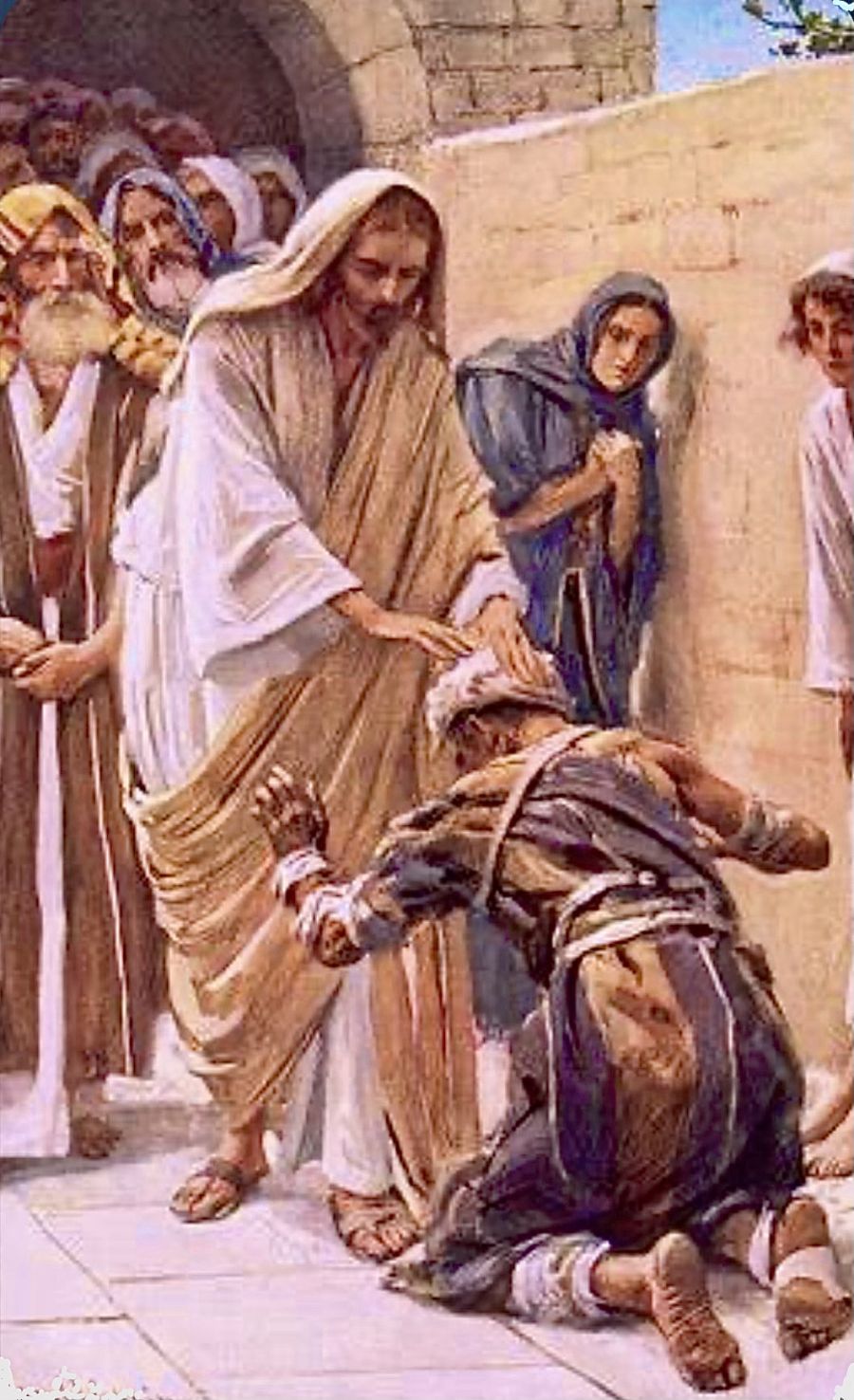
The leper and the creative Touch, which reintegrates him

(Mt 8:1-4)


We ask: how did Jesus practise the Law? His transgressive Touch sums up his life and outcome, teaching and mission.

The marginalised came close to Christ, who did not turn anyone away - openly contravening the Torah's rule (Lev 13) imposing that the unclean should be cast out, and to them to allow themselves to be excluded.

For every rejected from the circle of hypocritical legalists there is only one way out, always: to be healed by God himself. And to invent ways to circumvent the norm [even devout] in order to have a personal relationship - without prior conditions of purity.

One is not saved alone: immaculacy can only be a Gift. But often even those who are called upon to help refuse to deal with - locking the very needy into absurd loneliness.

For the Lord, religious exclusivism is a sordid invention of opportunistic potentates and deviant leaders who distort the face of God to subjugate consciences.

The Father welcomes everyone as sons; Jesus as friends - and He does so by violating [also] certain provisions.

Thus the man of Faith embraces sisters and brothers, excluding the precautionary scrutiny of upstream conditions, moralistic or sacred judgements, and mentalities.

But in that culture it was only the certificate of health issued by the priests (v.4) that meant: “now you can live readmitted to society”.

In the composition of the passage, the evangelist means: it is the encounter with Christ that heals and becomes the free pass even to be accepted in the community - not the precautions, nor the rigmarole of disciplines of the arcane [always directed by those who consider themselves healthy and uninfected].

One does not have to be already perfect and certified, to be admitted or reinstated, and attend church as “not unwelcomed”.

The Saviour misendures marginalization or exclusive realities, through which we would never recover the original innocence they promise.

Instead, it is the Gratis of Jesus that makes one exist unconditionally, with normality and fullness.

He himself obliges the authorities to recognise the fact that we are pure, complete (to live our vocation) and healed; fully empowered to be with others and not to be sent away.

The Message was indeed strange to conventional ideas, but it spread, arousing enthusiasm precisely among those removed from the 'centre' [cf. parallel Mk 1:45]: God has no repugnance.

And where the arrangements on the ground were contrary to its humanising project, something would have to be invented - in order to have a personal relationship, a meeting, a minimum of face-to-face contact.

Not infrequently (unfortunately) without the nerve to transgress the religious precept, the initiative of love that renews the face of the earth cannot be triggered, and death comes back to haunt us, annihilating every yearning for life.

It seems a paradox, but sometimes one does not get back on one's feet otherwise than by circumventing the obstacles of certain provisions, with extreme courage and at the risk of further marginalization.

We see it in the Son who re-lifts us up, a violator of exclusive formal procedures: an 'eccentric divine' who has the power to overcome the most lacerating evil: that which corrodes within and excludes.

Today, too, the Spirit of rehabilitation bursts into our reality, breaking through the outside hard stone tables, in order to ramp through - and finally occupy the centre of our path.


[Friday 12.th wk. in O.T.  June 26, 2026]

255 Last modified on Friday, 26 June 2026 12:00
don Giuseppe Nespeca

Giuseppe Nespeca è architetto e sacerdote. Cultore della Sacra scrittura è autore della raccolta "Due Fuochi due Vie - Religione e Fede, Vangeli e Tao"; coautore del libro "Dialogo e Solstizio".

Jesus invites us to discern the words and deeds which bear witness to the imminent coming of the Father’s kingdom. Indeed, he indicates and concentrates all the signs in the enigmatic “sign of Jonah”. By doing so, he overturns the worldly logic aimed at seeking signs that would confirm the human desire for self-affirmation and power (Pope John Paul II)
Gesù invita al discernimento in rapporto alle parole ed opere, che testimoniano l'imminente avvento del Regno del Padre. Anzi, Egli indirizza e concentra tutti i segni nell'enigmatico "segno di Giona". E con ciò rovescia la logica mondana tesa a cercare segni che confermino il desiderio di autoaffermazione e di potenza dell'uomo (Papa Giovanni Paolo II)
In reality, an abstract, distant god is more comfortable, one that doesn’t get himself involved in situations and who accepts a faith that is far from life, from problems, from society. Or we would even like to believe in a ‘special effects’ god (Pope Francis)
In realtà, è più comodo un dio astratto, distante, che non si immischia nelle situazioni e che accetta una fede lontana dalla vita, dai problemi, dalla società. Oppure ci piace credere a un dio “dagli effetti speciali” (Papa Francesco)
It is as though you were given a parcel with a gift inside and, rather than going to open the gift, you look only at the paper it is wrapped in: only appearances, the form, and not the core of the grace, of the gift that is given! (Pope Francis)
È come se a te regalassero un pacchetto con dentro un dono e tu, invece di andare a cercare il dono, guardi soltanto la carta nel quale è incartato: soltanto le apparenze, la forma, e non il nocciolo della grazia, del dono che viene dato! (Papa Francesco)
The Lord has our good at heart, that is, that every person should have life, and that especially the "least" of his children may have access to the banquet he has prepared for all (Pope Benedict)
Al Signore sta a cuore il nostro bene, cioè che ogni uomo abbia la vita, e che specialmente i suoi figli più "piccoli" possano accedere al banchetto che lui ha preparato per tutti (Papa Benedetto)
This Parable of the Sower is somewhat the ‘mother’ of all parables […] Such is the heart of God! Each one of us is ground on which the seed of the Word falls; no one is excluded! [Pope Francis]
Questa del seminatore è un po’ la “madre” di tutte le parabole […] Così è il cuore di Dio! Ognuno di noi è un terreno su cui cade il seme della Parola, nessuno è escluso [Papa Francesco]
Are we not perhaps all afraid in some way? If we let Christ enter fully into our lives, if we open ourselves totally to him, are we not afraid that He might take something away from us? Are we not perhaps afraid to give up something significant, something unique, something that makes life so beautiful? Do we not then risk ending up diminished and deprived of our freedom? (Pope Benedict)
Non abbiamo forse tutti in qualche modo paura - se lasciamo entrare Cristo totalmente dentro di noi, se ci apriamo totalmente a lui – paura che Egli possa portar via qualcosa della nostra vita? Non abbiamo forse paura di rinunciare a qualcosa di grande, di unico, che rende la vita così bella? Non rischiamo di trovarci poi nell’angustia e privati della libertà? (Papa Benedetto)
«Is there an attitude for those who want to follow Jesus» so that «they do not end badly, that they do not end up eaten alive - as my mother used to say: "Eat raw" - by others»? (Pope Francis)

Due Fuochi due Vie - Vol. 1 Due Fuochi due Vie - Vol. 2 Due Fuochi due Vie - Vol. 3 Due Fuochi due Vie - Vol. 4 Due Fuochi due Vie - Vol. 5 Dialogo e Solstizio I fiammiferi di Maria

duevie.art

don Giuseppe Nespeca

Tel. 333-1329741


Disclaimer

Questo blog non rappresenta una testata giornalistica in quanto viene aggiornato senza alcuna periodicità. Non può pertanto considerarsi un prodotto editoriale ai sensi della legge N°62 del 07/03/2001.
Le immagini sono tratte da internet, ma se il loro uso violasse diritti d'autore, lo si comunichi all'autore del blog che provvederà alla loro pronta rimozione.
L'autore dichiara di non essere responsabile dei commenti lasciati nei post. Eventuali commenti dei lettori, lesivi dell'immagine o dell'onorabilità di persone terze, il cui contenuto fosse ritenuto non idoneo alla pubblicazione verranno insindacabilmente rimossi.






