May 24, 2026 Written by 

Homicidal vintners, and the true enemy of God

(Mk 12,1-12)


Christ introduces everyone to an adventurous, uncomfortable journey, not without pitfalls that throw the situation upside down and destabilize - but it is the Way for each of us to recognize himself.

Otherwise we would not get closer to the Source of perception, imagination, reality and creativity - virtues that are necessary for rebirth, even from global emergency.

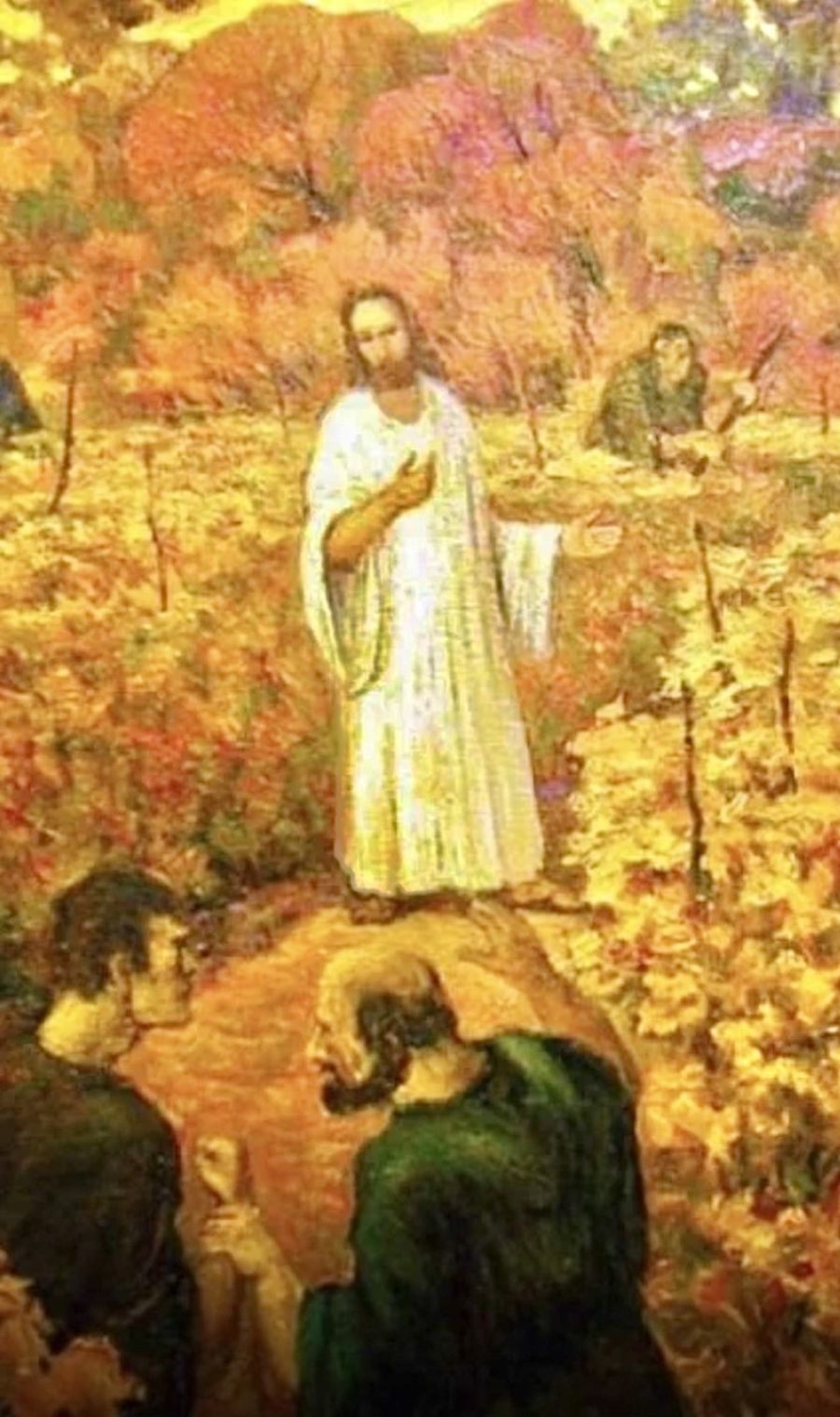
Jesus uses the image of the Vineyard to describe the work of God and the response of men - first and foremost of the spiritual guides (v.1).

Religious leaders were like this: hostile to divine action; equipped to appear, nevertheless violent and sclerotic.

The directors to whom Jesus addresses, follow the entire metaphor step by step - and they seem to find themselves unguarded. They only remain speechless at the end.

Why does He ask them imperatively (Mt 21,33): «Listen you» [which is not a simple invitation]?

From the beginning speaks with a master tone. Why?

He is Lord of those to whom he actually addresses: the Christ so much invoked by new caste of "pharisees" back in the communities, where top of the class already claimed to manage the Vineyard in their own way.

In no uncertain terms, the parable denounces the abuse of authority perpetrated in third generation assemblies, especially by their chiefs.

Church elders who were already annoyed to deal with small people, who on the other hand came to the threshold of communities in the hope of being welcomed.

Conversely, it was precisely these «last» the new prophets called by God to awaken the immobility situation (of bosses) - comparable to the same swampy reality of other religions of time.


Everywhere and even today some potentates discriminate and manipulate consciences in order to protect their world - by eliminating Jesus Present, who recurs in the little, innocent and transparent ones.

Veterans accustomed to directing do not notice that they are decreeing their own condemnation (v.9).

Of course, Christ does not intend to ridicule anyone: He wanted to lead people to ‘tell the truth’ about themselves.

In Gospel the behavior of the titled people does not change. On the contrary, feeling unmasked gets worse it, and only the hesitation of losing face in public can restrain them (v.12).

But now they know who they are - so much so that they are ashamed to openly plot.

Categories that are considered closer to Paradise - those who produce inedible grapes - excluded from the testimony of the Kingdom innervated by tinies’ crowd.

There will inevitably be a new beginning, and the replacement of inept settlers (v.9).

It is «good news»: the Eternal one achieves his purpose despite the repeated refusals of those who should serve Him, and instead use Him.

In short, for Jesus the great enemy of God is expediency.


Even amidst ungenerous brutality and accusations of being deluded dreamers, new and more faithful Heralds of the Spirit are ready for succession.

An unstoppable course, sprinkled by the stream of blood of the Prophets (Mt 21,46).

Outcasts, shunned, expelled and to be crushed - but not locked into mental patterns: capable of giving free rein to regenerative energies.


Consciousness of the world, divorced from compromise.


[Monday 9th wk. in O.T.  June 1st, 2026]

285 Last modified on Monday, 01 June 2026 12:12
don Giuseppe Nespeca

Giuseppe Nespeca è architetto e sacerdote. Cultore della Sacra scrittura è autore della raccolta "Due Fuochi due Vie - Religione e Fede, Vangeli e Tao"; coautore del libro "Dialogo e Solstizio".

The Lord has our good at heart, that is, that every person should have life, and that especially the "least" of his children may have access to the banquet he has prepared for all (Pope Benedict)
Al Signore sta a cuore il nostro bene, cioè che ogni uomo abbia la vita, e che specialmente i suoi figli più "piccoli" possano accedere al banchetto che lui ha preparato per tutti (Papa Benedetto)
This Parable of the Sower is somewhat the ‘mother’ of all parables […] Such is the heart of God! Each one of us is ground on which the seed of the Word falls; no one is excluded! [Pope Francis]
Questa del seminatore è un po’ la “madre” di tutte le parabole […] Così è il cuore di Dio! Ognuno di noi è un terreno su cui cade il seme della Parola, nessuno è escluso [Papa Francesco]
Are we not perhaps all afraid in some way? If we let Christ enter fully into our lives, if we open ourselves totally to him, are we not afraid that He might take something away from us? Are we not perhaps afraid to give up something significant, something unique, something that makes life so beautiful? Do we not then risk ending up diminished and deprived of our freedom? (Pope Benedict)
Non abbiamo forse tutti in qualche modo paura - se lasciamo entrare Cristo totalmente dentro di noi, se ci apriamo totalmente a lui – paura che Egli possa portar via qualcosa della nostra vita? Non abbiamo forse paura di rinunciare a qualcosa di grande, di unico, che rende la vita così bella? Non rischiamo di trovarci poi nell’angustia e privati della libertà? (Papa Benedetto)
«Is there an attitude for those who want to follow Jesus» so that «they do not end badly, that they do not end up eaten alive - as my mother used to say: "Eat raw" - by others»? (Pope Francis)
«Esiste un atteggiamento per quelli che vogliono seguire Gesù» in modo che «non finiscano male, che non finiscano mangiati vivi — come diceva mia mamma: “Mangiati crudi” — dagli altri»? (Papa Francesco)
For Christians, volunteer work is not merely an expression of good will. It is based on a personal experience of Christ (Pope Benedict)
Per i cristiani, il volontariato non è soltanto espressione di buona volontà. È basato sull’esperienza personale di Cristo (Papa Benedetto)
Christ reveals his identity of Messiah, Israel's bridegroom, who came for the betrothal with his people. Those who recognize and welcome him are celebrating. However, he will have to be rejected and killed precisely by his own; at that moment, during his Passion and death, the hour of mourning and fasting will come (Pope Benedict)
Cristo rivela la sua identità di Messia, Sposo d'Israele, venuto per le nozze con il suo popolo. Quelli che lo riconoscono e lo accolgono con fede sono in festa. Egli però dovrà essere rifiutato e ucciso proprio dai suoi: in quel momento, durante la sua passione e la sua morte, verrà l'ora del lutto e del digiuno (Papa Benedetto)
For the prodigious and instantaneous healing of the paralytic, the apostle St. Matthew is more sober than the other synoptics, St. Mark and St. Luke. These add broader details, including that of the opening of the roof in the environment where Jesus was, to lower the sick man with his lettuce, given the huge crowd that crowded at the entrance. Evident is the hope of the pitiful companions: they almost want to force Jesus to take care of the unexpected guest and to begin a dialogue with him (Pope Paul VI)

Due Fuochi due Vie - Vol. 1 Due Fuochi due Vie - Vol. 2 Due Fuochi due Vie - Vol. 3 Due Fuochi due Vie - Vol. 4 Due Fuochi due Vie - Vol. 5 Dialogo e Solstizio I fiammiferi di Maria

duevie.art

don Giuseppe Nespeca

Tel. 333-1329741


Disclaimer

Questo blog non rappresenta una testata giornalistica in quanto viene aggiornato senza alcuna periodicità. Non può pertanto considerarsi un prodotto editoriale ai sensi della legge N°62 del 07/03/2001.
Le immagini sono tratte da internet, ma se il loro uso violasse diritti d'autore, lo si comunichi all'autore del blog che provvederà alla loro pronta rimozione.
L'autore dichiara di non essere responsabile dei commenti lasciati nei post. Eventuali commenti dei lettori, lesivi dell'immagine o dell'onorabilità di persone terze, il cui contenuto fosse ritenuto non idoneo alla pubblicazione verranno insindacabilmente rimossi.






