Jul 13, 2026 Written by 

“My" Father

So for Jesus, God is not only "the Father of Israel, the Father of men", but "my Father"! "My": that is precisely why the Jews wanted to kill Jesus, because "he called God his Father" (Jn 5:18). "His" in the most literal sense: He whom only the Son knows as Father, and by whom alone he is mutually known. We are now on the same ground from which the prologue of John's Gospel will later arise.

2. My Father' is the Father of Jesus Christ, he who is the origin of his being, of his messianic mission, of his teaching. The evangelist John has abundantly reported the messianic teaching that allows us to fathom in depth the mystery of God the Father and Jesus Christ, his only Son.

Jesus says: "Whoever believes in me does not believe in me, but in him who sent me" (John 12: 44). "I did not speak from me, but the Father who sent me, he himself commanded me what I should say and proclaim" (Jn 12:49). "Verily, verily, I say unto you, the Son of himself can do nothing except what he sees the Father do; what he does, the Son also does" (Jn 5:19). "For as the Father has life in himself, so he has granted the Son to have life in himself" (Jn 5:26). And finally: ". . the Father, who has life, has sent me, and I live for the Father" (Jn 6:57).

The Son lives for the Father first of all because he was begotten by him. There is a very close correlation between fatherhood and sonship precisely because of generation: "You are my Son; today I have begotten you" (Heb 1:5). When at Caesarea Philippi Simon Peter confesses: "You are the Christ, the Son of the living God", Jesus answers him: "Blessed are you . . . for neither flesh nor blood has revealed it to you, but my Father . . ." (Mt 16:16-17), for only "the Father knows the Son" just as only the "Son knows the Father" (Mt 11:27). Only the Son makes the Father known: the visible Son makes the invisible Father seen. "He who has seen me has seen the Father" (Jn 14:9).

3. A careful reading of the Gospels shows that Jesus lives and works in constant and fundamental reference to the Father. He often addresses him with the word full of filial love: "Abba"; even during the prayer in Gethsemane this same word returns to his lips (cf. Mk 14:36). When the disciples ask him to teach them to pray, he teaches them the "Our Father" (cf. Mt 6:9-13). After the resurrection, at the moment of leaving the earth, he seems to refer once again to this prayer, when he says: "I ascend to my Father and your Father, my God and your God" (Jn 20, 17).

Thus through the Son (cf. Heb 1:2), God revealed Himself in the fullness of the mystery of His fatherhood. Only the Son could reveal this fullness of the mystery, for only "the Son knows the Father" (Mt 11:27). "God no one has ever seen him: it is the only Son, who is in the bosom of the Father, who has revealed him" (Jn 1:18).

4. Who is the Father? In the light of the definitive witness we have received through the Son, Jesus Christ, we have the full knowledge of faith that the Fatherhood of God belongs first of all to the fundamental mystery of God's intimate life, to the Trinitarian mystery. The Father is the one who eternally begets the Word, the Son consubstantial with him. In union with the Son, the Father eternally "breathes forth" the Holy Spirit, who is the love in which the Father and the Son mutually remain united (cf. Jn 14:10).

Thus the Father is in the Trinitarian mystery the "beginning-without-beginning". "The Father by none is made, nor created, nor begotten" (Quicumque symbol). He alone is the beginning of life, which God has in Himself. This life - that is, the very divinity - the Father possesses in absolute communion with the Son and the Holy Spirit, who are consubstantial with him.

Paul, an apostle of the mystery of Christ, falls in adoration and prayer "before the Father from whom all fatherhood in heaven and on earth takes its name" (Eph 3:15), the beginning and model.

For there is "one God the Father of all, who is above all, who acts through all and is present in all" (Eph 4:6).

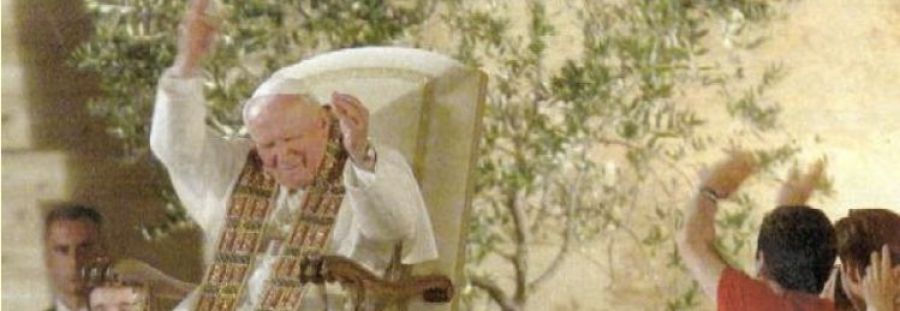
[Pope John Paul II, General Audience 23 October 1985]

92 Last modified on Monday, 13 July 2026 04:34
don Giuseppe Nespeca

Giuseppe Nespeca è architetto e sacerdote. Cultore della Sacra scrittura è autore della raccolta "Due Fuochi due Vie - Religione e Fede, Vangeli e Tao"; coautore del libro "Dialogo e Solstizio".

Email This email address is being protected from spambots. You need JavaScript enabled to view it.
Jesus Christ clearly indicates that even acts of devotion and penance (such as fasting, almsgiving, prayer), which by their religious purpose are primarily 'interior', can succumb to current 'externalism', and can therefore be falsified [John Paul II]
Gesù Cristo indica chiaramente che anche gli atti di devozione e di penitenza (come digiuno, elemosina, preghiera) che per la loro finalità religiosa sono principalmente “interiori”, possono cedere all’“esteriorismo” corrente, e quindi possono essere falsificati [Giovanni Paolo II]
Today’s Gospel reminds us that faith in the Lord and in his Word does not open a way for us where everything is easy and calm; it does not rescue us from life’s storms. Faith gives us the assurance of a Presence (Pope Francis)
Il Vangelo di oggi ci ricorda che la fede nel Signore e nella sua parola non ci apre un cammino dove tutto è facile e tranquillo; non ci sottrae alle tempeste della vita. La fede ci dà la sicurezza di una Presenza (Papa Francesco)
Dear friends, “in the Eucharist Jesus also makes us witnesses of God’s compassion towards all our brothers and sisters. The Eucharistic mystery thus gives rise to a service of charity towards neighbour” (Post-Synodal Apostolic Exhortation Sacramentum Caritatis, 88) [Pope Benedict]
Cari amici, “nell’Eucaristia Gesù fa di noi testimoni della compassione di Dio per ogni fratello e sorella. Nasce così intorno al Mistero eucaristico il servizio della carità nei confronti del prossimo” (Esort. ap. postsin. Sacramentum caritatis, 88) [Papa Benedetto]
We see this great figure, this force in the Passion, in resistance to the powerful. We wonder: what gave birth to this life, to this interiority so strong, so upright, so consistent, spent so totally for God in preparing the way for Jesus? The answer is simple: it was born from the relationship with God (Pope Benedict)
Noi vediamo questa grande figura, questa forza nella passione, nella resistenza contro i potenti. Domandiamo: da dove nasce questa vita, questa interiorità così forte, così retta, così coerente, spesa in modo così totale per Dio e preparare la strada a Gesù? La risposta è semplice: dal rapporto con Dio (Papa Benedetto)
Christian's are a priestly people for the world. Christians should make the living God visible to the world, they should bear witness to him and lead people towards him (Pope Benedict)
I cristiani sono popolo sacerdotale per il mondo. I cristiani dovrebbero rendere visibile al mondo il Dio vivente, testimoniarLo e condurre a Lui (Papa Benedetto)
Christ says: the kingdom of heaven is similar "to a net thrown into the sea, which gathers all kinds of fish" (Mt 13:47). These simple words completely change the physiognomy of the world: the physiognomy of our human world, as we make it [Pope John Paul II]
Cristo dice: il regno dei cieli è simile “a una rete gettata nel mare, che raccoglie ogni genere di pesci” (Mt 13,47). Queste semplici parole mutano completamente la fisionomia del mondo: la fisionomia del nostro mondo umano, come noi ce la facciamo [Papa Giovanni Paolo II]
Christ is not resigned to the tombs that we have built for ourselves (Pope Francis)
Cristo non si rassegna ai sepolcri che ci siamo costruiti (Papa Francesco)
Many situations, then, which unfortunately do not conform to the legitimate predictions and rules established, are anything but negative; and instead of taking away confidence for the harassment they cause, They should have it more generous and far-sighted in favor of their process of responsible decantation (Pope Paul VI)

Due Fuochi due Vie - Vol. 1 Due Fuochi due Vie - Vol. 2 Due Fuochi due Vie - Vol. 3 Due Fuochi due Vie - Vol. 4 Due Fuochi due Vie - Vol. 5 Dialogo e Solstizio I fiammiferi di Maria

duevie.art

don Giuseppe Nespeca

Tel. 333-1329741


Disclaimer

Questo blog non rappresenta una testata giornalistica in quanto viene aggiornato senza alcuna periodicità. Non può pertanto considerarsi un prodotto editoriale ai sensi della legge N°62 del 07/03/2001.
Le immagini sono tratte da internet, ma se il loro uso violasse diritti d'autore, lo si comunichi all'autore del blog che provvederà alla loro pronta rimozione.
L'autore dichiara di non essere responsabile dei commenti lasciati nei post. Eventuali commenti dei lettori, lesivi dell'immagine o dell'onorabilità di persone terze, il cui contenuto fosse ritenuto non idoneo alla pubblicazione verranno insindacabilmente rimossi.






