Mar 18, 2026 Written by 

Controversy over ancestry (and the abstract world)

I Am, and our dignity

(Jn 8:51-59)


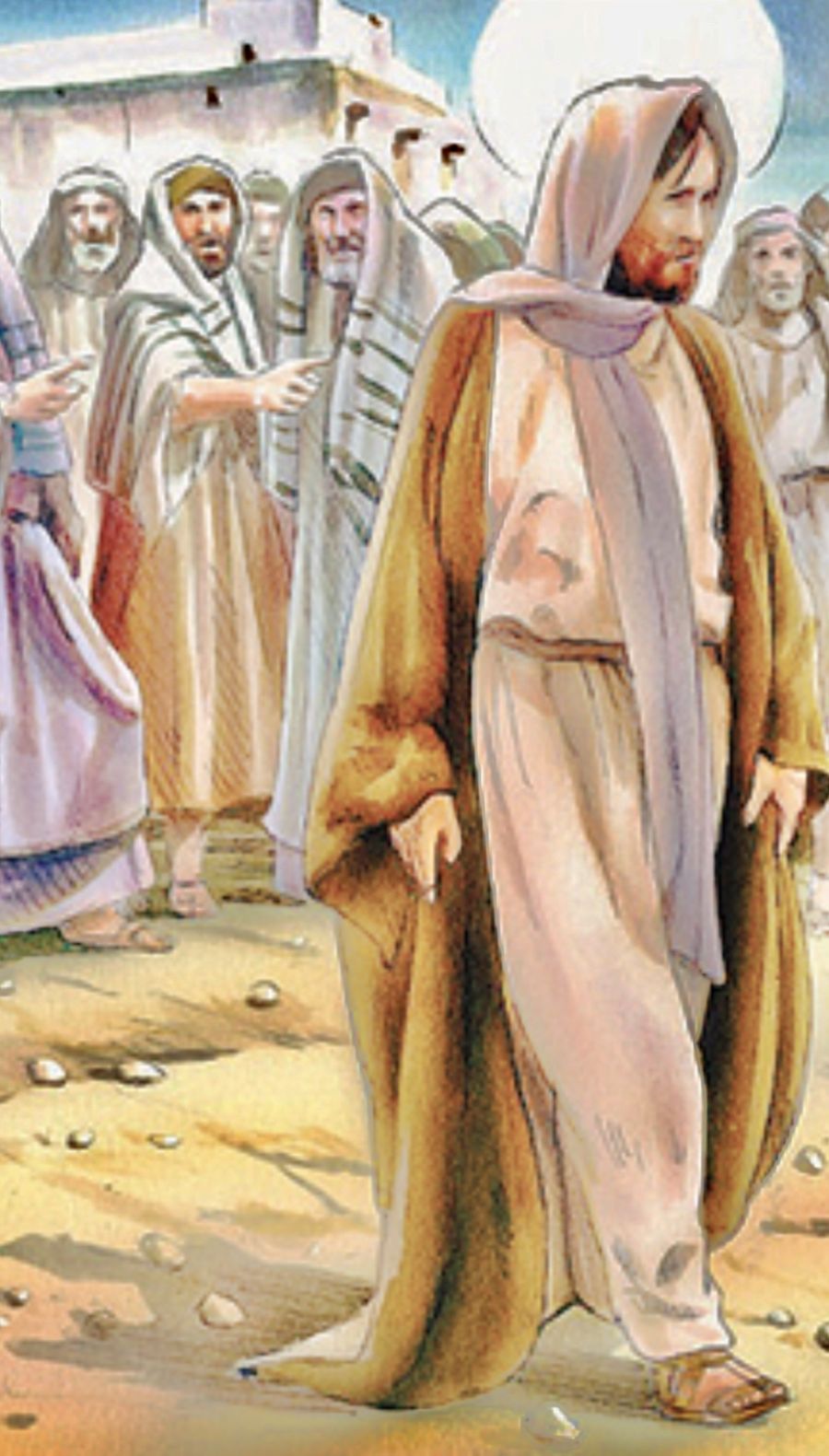
The Gospel passage is addressed to the disciples of the Johannine communities who still hesitated to declare themselves fully of Christ.

Hunted and insulted by veterans of Jewish learning, they were founding it difficult to identify the immanence of the Eternal with a simple carpenter.

Dignity of Christ cannot be established by comparison with the most celebrated figures of salvation history: his is an eternal being, though he appears [in us] of insufficient figure.

But what he effectively communicates does not only exist in a specific place or at a specific moment in time. So he could not be an instrument for cultural claims.

His Mystery seems difficult to fathom and describe.

To express it briefly, we can refer to the paradoxical reversal of the categories «from up there» and «from down here» (cf. vv.21-30).


His is a spirituality founded on personal Faith that goes beyond the common religious sense.

In whoever keeps united with Him, the Mystery implied becomes light’s creative, yet without pretensions.

As someone who subtly has no beginning and no end, everywhere; even in the daily and modest brief, but continuous and present.

Although devoid of full-blown fame, if ‘intimates’ to the Lord, we too can become a ‘bridge’ between two worlds - without ostentation.

This teaches us to recognize «his day» (v. 56).

Here Jesus claims the divine condition, ridiculing the knowledge of the experts, position defenders only.


Ancient or new leaders always feel diminished by the sword of the Word in action.

Seed that in those who receive it, make their own, and cultivate it, transmits an indestructible power of regeneration.

Word that emanates a perspective, a rejoicing in being; new beginnings, without the cloak of descent or à la page ideas.

Those who want to break free from the land of slavery cherish this Proposal. It emancipates us from the sense of belonging at all costs, and it does not die.

Nor does he capitulate in the face of bygone or glamour power’s pitfalls.

System that despite the great promises, does not give the Eternal's quality of Life; it does not make us Allies.


The Name of God that Jesus attributes to himself indicates that He is sacrament of enlightenment.

«I Am» is not the attribute of a character to be counted in the gallery of those who have fought and paid for their ideas - fathers in faith and prophets.

The Lord is our Liberator. In him we can say: «I» - with dignity.

Now we are no longer on the leash of the slavery’s land.

We are able to express ourselves. We do not remain pawns of twilights and of narrow districts.


Such an inner Friend ‘does not die’: he also allows us to wander, but ‘knows’ where.

He unerringly ‘guides’ to destination; to the brightness of open horizons, vital because they are still raw, unsophisticated.

We are thus introduced into the knowledge of the One who is by now «coming out» of the Temple (v.59).

With the immeasurable breadth that does not weigh on the heart.


[Thursday 5th wk. in Lent, March 26, 2026]

206 Last modified on Thursday, 26 March 2026 12:08
don Giuseppe Nespeca

Giuseppe Nespeca è architetto e sacerdote. Cultore della Sacra scrittura è autore della raccolta "Due Fuochi due Vie - Religione e Fede, Vangeli e Tao"; coautore del libro "Dialogo e Solstizio".

First, the world of the Bible presents us with a new image of God. In surrounding cultures, the image of God and of the gods ultimately remained unclear and contradictory (Deus Caritas est n.9)
Vi è anzitutto la nuova immagine di Dio. Nelle culture che circondano il mondo della Bibbia, l'immagine di dio e degli dei rimane, alla fin fine, poco chiara e in sé contraddittoria (Deus Caritas est n.9)
God loves the world and will love it to the end. The Heart of the Son of God pierced on the Cross and opened is a profound and definitive witness to God’s love. Saint Bonaventure writes: “It was a divine decree that permitted one of the soldiers to open his sacred wide with a lance… The blood and water which poured out at that moment was the price of our salvation” (John Paul II)
Il mondo è amato da Dio e sarà amato fino alla fine. Il Cuore del Figlio di Dio trafitto sulla croce e aperto, testimonia in modo profondo e definitivo l’amore di Dio. Scriverà San Bonaventura: “Per divina disposizione è stato permesso che un soldato trafiggesse e aprisse quel sacro costato. Ne uscì sangue ed acqua, prezzo della nostra salvezza” (Giovanni Paolo II)
Thus, paradoxically, from a sign of condemnation, death and failure, the Cross becomes a sign of redemption, life and victory, through faith, the fruits of salvation can be gathered (Pope Benedict)
Così la Croce, paradossalmente, da segno di condanna, di morte, di fallimento, diventa segno di redenzione, di vita, di vittoria, in cui, con sguardo di fede, si possono scorgere i frutti della salvezza (Papa Benedetto)
[Nicodemus] felt the fascination of this Rabbi, so different from the others, but could not manage to rid himself of the conditioning of his environment that was hostile to Jesus, and stood irresolute on the threshold of faith (Pope Benedict)
[Nicodemo] avverte il fascino di questo Rabbì così diverso dagli altri, ma non riesce a sottrarsi ai condizionamenti dell’ambiente contrario a Gesù e resta titubante sulla soglia della fede (Papa Benedetto)
Those wounds that, in the beginning were an obstacle for Thomas’s faith, being a sign of Jesus’ apparent failure, those same wounds have become in his encounter with the Risen One, signs of a victorious love. These wounds that Christ has received for love of us help us to understand who God is and to repeat: “My Lord and my God!” Only a God who loves us to the extent of taking upon himself our wounds and our pain, especially innocent suffering, is worthy of faith (Pope Benedict)
Quelle piaghe, che per Tommaso erano dapprima un ostacolo alla fede, perché segni dell’apparente fallimento di Gesù; quelle stesse piaghe sono diventate, nell’incontro con il Risorto, prove di un amore vittorioso. Queste piaghe che Cristo ha contratto per amore nostro ci aiutano a capire chi è Dio e a ripetere anche noi: “Mio Signore e mio Dio”. Solo un Dio che ci ama fino a prendere su di sé le nostre ferite e il nostro dolore, soprattutto quello innocente, è degno di fede (Papa Benedetto)
We see that the disciples are still closed in their thinking […] How does Jesus answer? He answers by broadening their horizons […] and he confers upon them the task of bearing witness to him all over the world, transcending the cultural and religious confines within which they were accustomed to think and live (Pope Benedict)
Vediamo che i discepoli sono ancora chiusi nella loro visione […] E come risponde Gesù? Risponde aprendo i loro orizzonti […] e conferisce loro l’incarico di testimoniarlo in tutto il mondo oltrepassando i confini culturali e religiosi entro cui erano abituati a pensare e a vivere (Papa Benedetto)

Due Fuochi due Vie - Vol. 1 Due Fuochi due Vie - Vol. 2 Due Fuochi due Vie - Vol. 3 Due Fuochi due Vie - Vol. 4 Due Fuochi due Vie - Vol. 5 Dialogo e Solstizio I fiammiferi di Maria

duevie.art

don Giuseppe Nespeca

Tel. 333-1329741


Disclaimer

Questo blog non rappresenta una testata giornalistica in quanto viene aggiornato senza alcuna periodicità. Non può pertanto considerarsi un prodotto editoriale ai sensi della legge N°62 del 07/03/2001.
Le immagini sono tratte da internet, ma se il loro uso violasse diritti d'autore, lo si comunichi all'autore del blog che provvederà alla loro pronta rimozione.
L'autore dichiara di non essere responsabile dei commenti lasciati nei post. Eventuali commenti dei lettori, lesivi dell'immagine o dell'onorabilità di persone terze, il cui contenuto fosse ritenuto non idoneo alla pubblicazione verranno insindacabilmente rimossi.






