Feb 28, 2026 Written by 

Water’: Well vs Source

(Jn 4:5-42)


In the passage of the Samaritan woman, Jn contrasts the mechanisms of religiosity and the dynamics of Faith, comparing the images of an ancient Well to a fresh Source of Water [cf. Greek text].

While on a well one has to stoop to draw with effort, the Source is there at disposal. It does not absorb energies, it activates them.

And from the perspective of Faith, it becomes overall, generative: cosmic outside and acutely divine within.

One can even immerse oneself in it without danger of becoming trapped and drowning.

The ever-flowing and ever-new pool of water is every proposal that Providence offers to grasp in the events of the inner life and in the ever-changing reality.

The water in the well is at the bottom of a dark tunnel - only here and there animated by reflections, from distant light sources, external.

It is almost stagnant and does not definitively cure the thirst, rather it demands to be drawn again and again, with undiminished sweat.

Sometimes the bucket with which one claims to draw the Person of the Christ who is already there, is pulled up badly, wobbles and falls down - with no chance of recovery.

The common religious sense leads to having to continually recover or procure perfections - by centring examination, therapy, and relationships, on the self: examine, detect, correct, redo; verify and start over again.

In the end exhausted, disappointed, annoyed.

Devotion and regulatory fulfilments do not produce satiety - we know this well - indeed, paradoxically, they accentuate God Face thirst.

In such growing laceration, unfulfilled desire threatens to ruin the main lines of our personality, and the impulse for the Path towards Another realisation - imprecise perhaps, but Ours.

Despite the constant forced return to drink and despite the 'certainty' of doctrines and disciplines, when religious piety becomes self-centred, it produces existential dissatisfaction and spiritual bewilderment.


Living Faith is a Relationship. It proceeds from a God who reveals Himself, questions us and calls by name.

In evolution, this dynamic establishes an invisible Presence in the hidden Self, unquenchable fire of our founding Eros.

Relationship of the believer with God has several approaches. A first stage is that of the Faith-Assent: the person recognises himself in a knowledges’ world that corresponds to her/him.

But already in the First Testament, Faith speaks of a stronger bond: the reliance of the Bride who has full confidence on the Bridegroom.

Faith lived in the Spirit of the Risen One then takes on other facets, which are decisive in bringing colour, maturity, fullness, and joy of life.

The son of God makes himself brother and intimate with the Lord not simply by a common believing, even passionate, but by a personal inner action.

Step which is precisely a kind of Appropriation. Faith-Magnet: it is configured like a ‘coup de main’.

The soul-bride reads the sign of the times, interprets the surrounding reality, own inclinations... and grasping the brought, meaning and scope of the Future, anticipates and actualizes it.

But the ultimate (I would say the pinnacle) perhaps even more “perfect” stage, of such Faith-Trigger is that of Faith-Marvel.

Revelation-Amazement: it configures the specific belief of the Incarnation, because it recognises the Treasures that are hidden behind our dark sides.

Pearls that will be a wonder to discover.

In this way, the pierced cocoon will make its Butterfly, which is not “confirmation”, or prototype-approved construction, but Enchantment.

It is magic and a new pact of sunsets and sunrises. Unveiling, from a glowing magma, that gushes forth.


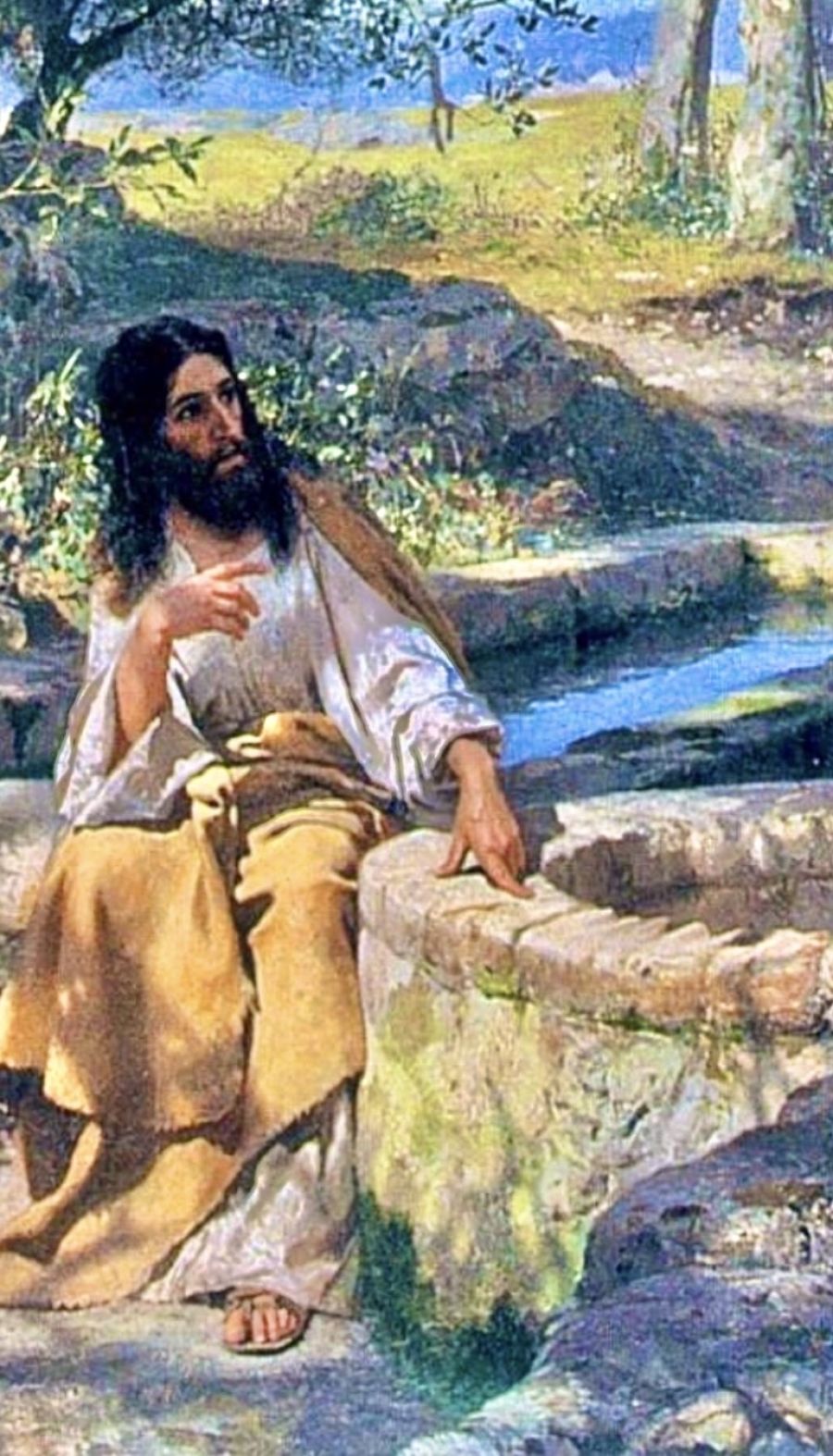
Christ sits on the Source, not on the well. Rather, he overlaps it.


[3rd Sunday of Lent (year A), March 8, 2026]

347 Last modified on Sunday, 08 March 2026 12:43
don Giuseppe Nespeca

Giuseppe Nespeca è architetto e sacerdote. Cultore della Sacra scrittura è autore della raccolta "Due Fuochi due Vie - Religione e Fede, Vangeli e Tao"; coautore del libro "Dialogo e Solstizio".

If, in his prophecy about the shepherd, Ezekiel was aiming to restore unity among the dispersed tribes of Israel (cf. Ez 34: 22-24), here it is a question not only of the unification of a dispersed Israel but of the unification of all the children of God, of humanity - of the Church of Jews and of pagans [Pope Benedict]
Se Ezechiele nella sua profezia sul pastore aveva di mira il ripristino dell'unità tra le tribù disperse d'Israele (cfr Ez 34, 22-24), si tratta ora non solo più dell'unificazione dell'Israele disperso, ma dell'unificazione di tutti i figli di Dio, dell'umanità - della Chiesa di giudei e di pagani [Papa Benedetto]
St Teresa of Avila wrote: «the last thing we should do is to withdraw from our greatest good and blessing, which is the most sacred humanity of Our Lord Jesus Christ» (cf. The Interior Castle, 6, ch. 7). Therefore, only by believing in Christ, by remaining united to him, may the disciples, among whom we too are, continue their permanent action in history [Pope Benedict]
Santa Teresa d’Avila scrive che «non dobbiamo allontanarci da ciò che costituisce tutto il nostro bene e il nostro rimedio, cioè dalla santissima umanità di nostro Signore Gesù Cristo» (Castello interiore, 7, 6). Quindi solo credendo in Cristo, rimanendo uniti a Lui, i discepoli, tra i quali siamo anche noi, possono continuare la sua azione permanente nella storia [Papa Benedetto]
Just as he did during his earthly existence, so today the risen Jesus walks along the streets of our life and sees us immersed in our activities, with all our desires and our needs. In the midst of our everyday circumstances he continues to speak to us; he calls us to live our life with him, for only he is capable of satisfying our thirst for hope (Pope Benedict)
Come avvenne nel corso della sua esistenza terrena, anche oggi Gesù, il Risorto, passa lungo le strade della nostra vita, e ci vede immersi nelle nostre attività, con i nostri desideri e i nostri bisogni. Proprio nel quotidiano continua a rivolgerci la sua parola; ci chiama a realizzare la nostra vita con Lui, il solo capace di appagare la nostra sete di speranza (Papa Benedetto)
"Beloved" of God (cf. Lk 1: 28). Origen observes that no such title had ever been given to a human being, and that it is unparalleled in all of Sacred Scripture (cf. In Lucam 6: 7). It is a title expressed in passive form, but this "passivity" of Mary, who has always been and is for ever "loved" by the Lord, implies her free consent, her personal and original response:  in being loved, in receiving the gift of God, Mary is fully active, because she accepts with personal generosity the wave of God's love poured out upon her [Pope Benedict]
"Amata" da Dio (cfr Lc 1,28). Origene osserva che mai un simile titolo fu rivolto ad essere umano, e che esso non trova riscontro in tutta la Sacra Scrittura (cfr In Lucam 6,7). E’ un titolo espresso in forma passiva, ma questa "passività" di Maria, che da sempre e per sempre è l’"amata" dal Signore, implica il suo libero consenso, la sua personale e originale risposta: nell’essere amata, nel ricevere il dono di Dio, Maria è pienamente attiva, perché accoglie con personale disponibilità l’onda dell’amore di Dio che si riversa in lei [Papa Benedetto]
We are here touching the heart of the problem. In Holy Scripture and according to the evangelical categories, "alms" means in the first place an interior gift. It means the attitude of opening "to the other" (John Paul II)
Qui tocchiamo il nucleo centrale del problema. Nella Sacra Scrittura e secondo le categorie evangeliche, “elemosina” significa anzitutto dono interiore. Significa l’atteggiamento di apertura “verso l’altro” (Giovanni Paolo II)

Due Fuochi due Vie - Vol. 1 Due Fuochi due Vie - Vol. 2 Due Fuochi due Vie - Vol. 3 Due Fuochi due Vie - Vol. 4 Due Fuochi due Vie - Vol. 5 Dialogo e Solstizio I fiammiferi di Maria

duevie.art

don Giuseppe Nespeca

Tel. 333-1329741


Disclaimer

Questo blog non rappresenta una testata giornalistica in quanto viene aggiornato senza alcuna periodicità. Non può pertanto considerarsi un prodotto editoriale ai sensi della legge N°62 del 07/03/2001.
Le immagini sono tratte da internet, ma se il loro uso violasse diritti d'autore, lo si comunichi all'autore del blog che provvederà alla loro pronta rimozione.
L'autore dichiara di non essere responsabile dei commenti lasciati nei post. Eventuali commenti dei lettori, lesivi dell'immagine o dell'onorabilità di persone terze, il cui contenuto fosse ritenuto non idoneo alla pubblicazione verranno insindacabilmente rimossi.






