Apr 11, 2026 Written by 

Broken: different Perfection

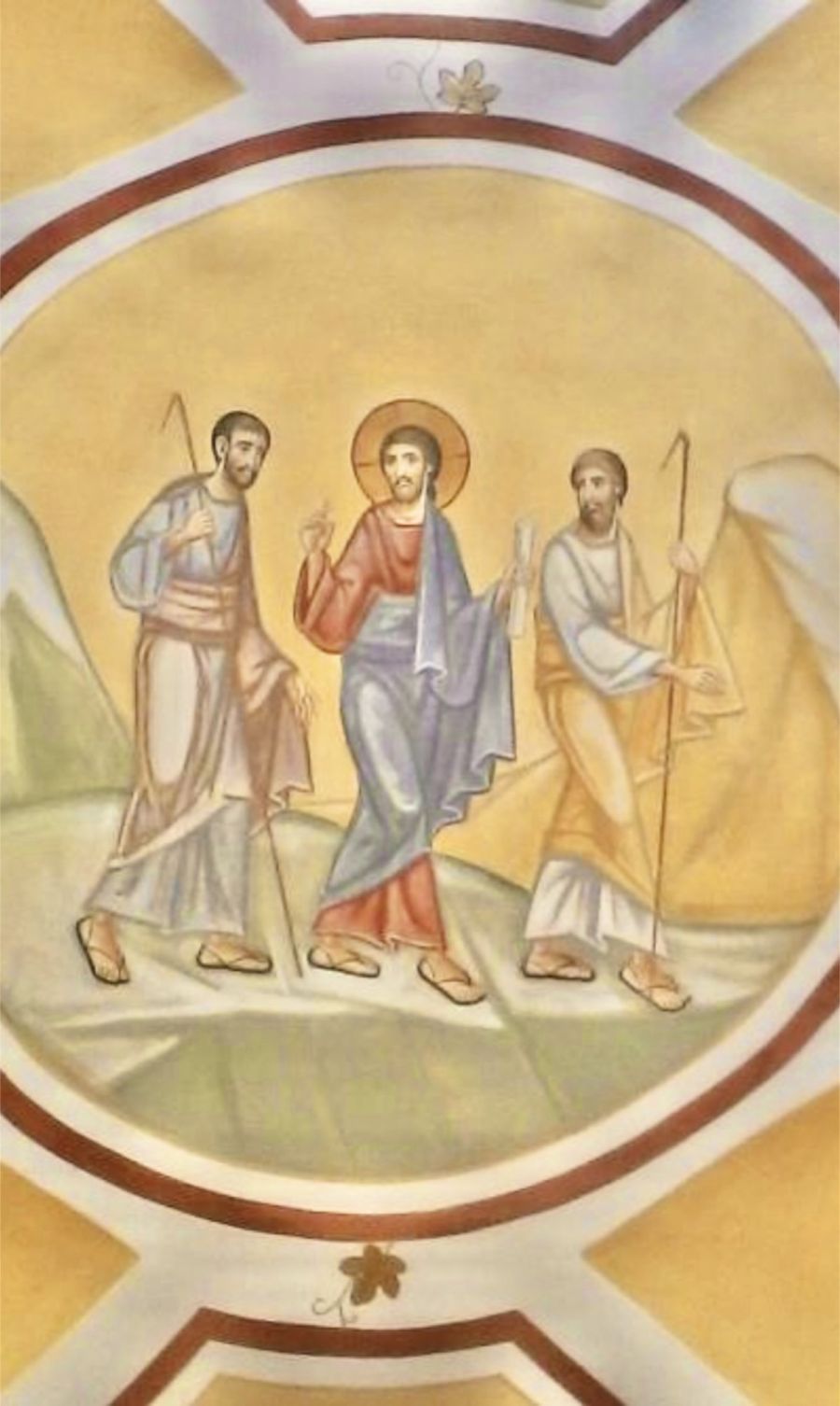
(Lk 24:13-35)


After first persecutions (64), the bloody civil war in Rome (68-69) and the destruction of Jerusalem’s Temple (70), the empire rebels tended to decrease - together with the second generation Christians, direct witnesses of the Apostolic teaching.

In this reality, completely new and threatened by the danger of routine, perhaps more than a dozen years after the fall of Masada (73), Lk draws up a Gospel for converted Hellenists - but educated to the ideal of a ‘Greek man’.

Its purpose was to put a stop to defections, encourage new faithful, allow those who were culturally distant to have a living experience of the Lord.


The Risen One has a Life that is no longer subject to the senses, because Full.

Now it is the community that manifests Him Present [or - unfortunately - useless and absent].

Conditioned by a false vision inoculated by bad teachers and pagan values, the disciples still felt bewildered in the face of “failure”.

The expectations of religion, of philosophies, of life in the empire, made them gloomy and disoriented during the tests of Faith.


Everyone was waiting for the «divine man»: ruler, possessor, revered, avenger, titled and super-affirmed. Able to drag his associates to the same “fortune”.

Lk overturns the banal perspective, because within each of us there is an innate wisdom, sometimes suffocated by external ideas, but different.

Only another intelligence of the Holy Scriptures that still resound full of critical prophecy - warms our hearts and makes us recognizable in Christ.

Wisdom that is combined with the quality of life experienced in a multifaceted and indigent fraternity, but which does not abandon anyone.

In fact, in the authentic church, the synergy of differences and opposite sides configures a ‘new covenant’; opens the eyes to all, intensely manifesting the Son.

And the Risen One does not cling to the latest arrivals in a paternalistic way (vv.28.31) but calls with confidence to reinterpret Him in love, without borders and identified roles.

His Presence in spirit and deed allows anyone a coined-broken life caliber without prior conditions of completion.

Hence the Return (v.33) and personal Announcement (v.35), instead of indifference or flight.


The passage from Lk is one of the most profound testimonies of the Passover of Jesus.

The tragedy of the Cross frightens, so does failure. But we do not frankly meet the Lord as an executioner, or in the fervor of a victorious war.

Christ is not a colonel. Liberator yes.

The new dreamed order will not be artificial, procedural, external; nor achieved with military triumph: it would disown Him.

We meet the Risen One outside the tomb, we grasp Him on a journey and in the authentic meaning of the «living Scriptures»; in the «Bread breaking» that illuminates the sense of ecclesial life.

We personally «see» the ‘Son raised’, building up the new community of disciples that blossom because of the reverses - so that the sisters and brothers can also meet with Easter.

Apostles not lost in history.

In their «incessant beginning» there is a ‘discovery’ and something special, abnormal, irrepressible; that lays continuous foundations.


To internalize and live the message:


When have you experienced a Jesus who gently approaches and takes your step? Is the Cross a catastrophe for you?


[3rd Easter Sunday (year A), April 19, 2026]

106 Last modified on Saturday, 11 April 2026 05:51
don Giuseppe Nespeca

Giuseppe Nespeca è architetto e sacerdote. Cultore della Sacra scrittura è autore della raccolta "Due Fuochi due Vie - Religione e Fede, Vangeli e Tao"; coautore del libro "Dialogo e Solstizio".

The locality of Emmaus has not been identified with certainty. There are various hypotheses and this one is not without an evocativeness of its own for it allows us to think that Emmaus actually represents every place: the road that leads there is the road every Christian, every person, takes. The Risen Jesus makes himself our travelling companion as we go on our way, to rekindle the warmth of faith and hope in our hearts and to break the bread of eternal life (Pope Benedict)
La località di Emmaus non è stata identificata con certezza. Vi sono diverse ipotesi, e questo non è privo di una sua suggestione, perché ci lascia pensare che Emmaus rappresenti in realtà ogni luogo:  la strada che vi conduce è il cammino di ogni cristiano, anzi, di ogni uomo. Sulle nostre strade Gesù risorto si fa compagno di viaggio, per riaccendere nei nostri cuori il calore della fede e della speranza e spezzare il pane della vita eterna (Papa Benedetto)
Romano Guardini wrote that the Lord “is always close, being at the root of our being. Yet we must experience our relationship with God between the poles of distance and closeness. By closeness we are strengthened, by distance we are put to the test” (Pope Benedict)
Romano Guardini scrive che il Signore “è sempre vicino, essendo alla radice del nostro essere. Tuttavia, dobbiamo sperimentare il nostro rapporto con Dio tra i poli della lontananza e della vicinanza. Dalla vicinanza siamo fortificati, dalla lontananza messi alla prova” (Papa Benedetto)
In recounting the "sign" of bread, the Evangelist emphasizes that Christ, before distributing the food, blessed it with a prayer of thanksgiving (cf. v. 11). The Greek term used is eucharistein and it refers directly to the Last Supper, though, in fact, John refers here not to the institution of the Eucharist but to the washing of the feet. The Eucharist is mentioned here in anticipation of the great symbol of the Bread of Life [Pope Benedict]
Narrando il “segno” dei pani, l’Evangelista sottolinea che Cristo, prima di distribuirli, li benedisse con una preghiera di ringraziamento (cfr v. 11). Il verbo è eucharistein, e rimanda direttamente al racconto dell’Ultima Cena, nel quale, in effetti, Giovanni non riferisce l’istituzione dell’Eucaristia, bensì la lavanda dei piedi. L’Eucaristia è qui come anticipata nel grande segno del pane della vita [Papa Benedetto]
First, the world of the Bible presents us with a new image of God. In surrounding cultures, the image of God and of the gods ultimately remained unclear and contradictory (Deus Caritas est n.9)
Vi è anzitutto la nuova immagine di Dio. Nelle culture che circondano il mondo della Bibbia, l'immagine di dio e degli dei rimane, alla fin fine, poco chiara e in sé contraddittoria (Deus Caritas est n.9)
God loves the world and will love it to the end. The Heart of the Son of God pierced on the Cross and opened is a profound and definitive witness to God’s love. Saint Bonaventure writes: “It was a divine decree that permitted one of the soldiers to open his sacred wide with a lance… The blood and water which poured out at that moment was the price of our salvation” (John Paul II)
Il mondo è amato da Dio e sarà amato fino alla fine. Il Cuore del Figlio di Dio trafitto sulla croce e aperto, testimonia in modo profondo e definitivo l’amore di Dio. Scriverà San Bonaventura: “Per divina disposizione è stato permesso che un soldato trafiggesse e aprisse quel sacro costato. Ne uscì sangue ed acqua, prezzo della nostra salvezza” (Giovanni Paolo II)

Due Fuochi due Vie - Vol. 1 Due Fuochi due Vie - Vol. 2 Due Fuochi due Vie - Vol. 3 Due Fuochi due Vie - Vol. 4 Due Fuochi due Vie - Vol. 5 Dialogo e Solstizio I fiammiferi di Maria

duevie.art

don Giuseppe Nespeca

Tel. 333-1329741


Disclaimer

Questo blog non rappresenta una testata giornalistica in quanto viene aggiornato senza alcuna periodicità. Non può pertanto considerarsi un prodotto editoriale ai sensi della legge N°62 del 07/03/2001.
Le immagini sono tratte da internet, ma se il loro uso violasse diritti d'autore, lo si comunichi all'autore del blog che provvederà alla loro pronta rimozione.
L'autore dichiara di non essere responsabile dei commenti lasciati nei post. Eventuali commenti dei lettori, lesivi dell'immagine o dell'onorabilità di persone terze, il cui contenuto fosse ritenuto non idoneo alla pubblicazione verranno insindacabilmente rimossi.






