Feb 26, 2026 Written by 

Homicidal vintners, and the true enemy of God

(Mt 21:33-43.45-46)


Christ introduces everyone to an adventurous, uncomfortable journey, not without pitfalls that throw the situation upside down and destabilize - but it’s the Way for each of us to recognize himself.

Otherwise we would not get closer to the Source of perception, imagination, reality and creativity - virtues that are necessary for rebirth, even from global emergency.

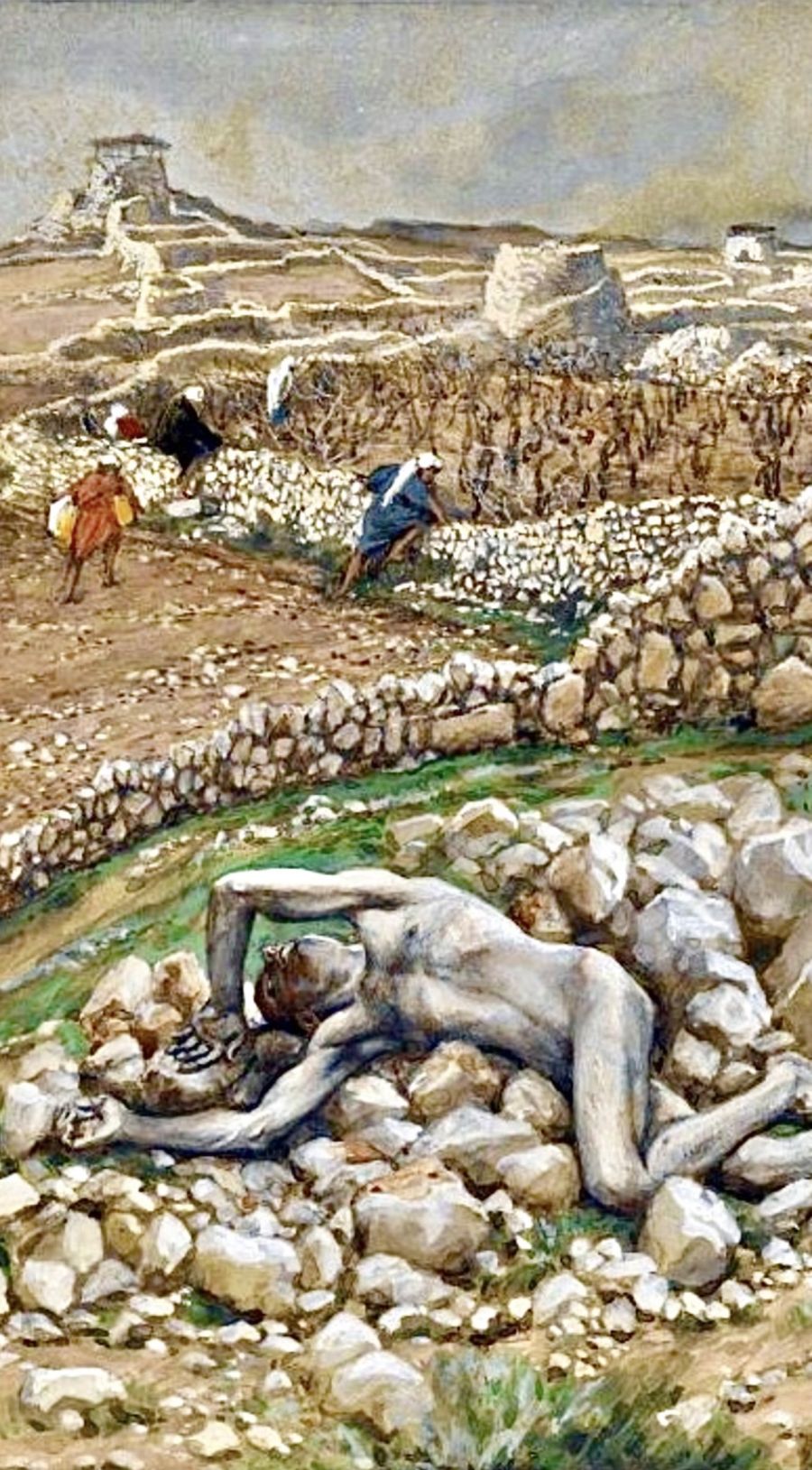
Jesus uses the figure of the Vineyard to describe the work of God and the response of men - first and foremost spiritual leaders (v.23).

Religious leaders were like this: hostile to divine action; equipped to appear, nevertheless violent and sclerotic.

The directors to whom Jesus addresses, follow the entire metaphor step by step - and they seem to find themselves unguarded. They only remain speechless at the end.

Why does He ask them imperatively: «Listen you» [which is not a simple invitation]?

From the beginning speaks with a master tone. Why?

He’s Lord of those to whom he actually addresses: the Christ so much invoked by new caste of "pharisees" back in the communities, where top of the class already claimed to manage the Vineyard in their own way.

In no uncertain terms, the parable denounces the abuse of authority perpetrated in third generation assemblies, especially by their chiefs.

Church elders who were already annoyed at taking care of the little people, who on the other hand came to the threshold of the communities with the hope of being welcomed.

Conversely, it was precisely these «last» the new prophets called by God to awaken the immobility situation (of bosses) - comparable to the same swampy reality of other religions of time.


Everywhere and even today some potentates discriminate and manipulate consciences in order to protect their world - by eliminating Jesus Present, who recurs in the small, innocent and transparent ones.

Veterans accustomed to directing do not notice that they are decreeing their own condemnation (v. 41).

Of course, Christ doesn’t intend to ridicule anyone: He wanted to lead people to ‘tell the truth’ about themselves.

In Gospel the behavior of the titled people doesn’t change. On the contrary, feeling unmasked gets worse it, and only the hesitation of losing face in public can restrain them (vv.45-46).

But now they know who they are - so much so that they are ashamed to openly plot.

Categories that are considered closer to Paradise - those who produce inedible grapes - excluded from the testimony of the Kingdom innervated by tinies’ crowd.

There will inevitably be a new beginning, and the replacement of inept settlers (v.43).

It’s «good news»: the Eternal one achieves his purpose despite the repeated refusals of those who should serve Him, and instead use Him.

In short, for Jesus the great enemy of God is expediency.


Even amidst ungenerous brutality and accusations of being deluded dreamers, new and more faithful Heralds of the Spirit are ready for succession.

An unstoppable course, sprinkled by the stream of blood of the prophets (v.46).

Outcasts, shunned, expelled, and to be crushed - but not locked into mental patterns: capable of giving free rein to regenerative energies.


Consciousness of the world, divorced from compromise.


[Friday 2nd wk. in Lent, March 6, 2026]

408 Last modified on Friday, 06 March 2026 11:59
don Giuseppe Nespeca

Giuseppe Nespeca è architetto e sacerdote. Cultore della Sacra scrittura è autore della raccolta "Due Fuochi due Vie - Religione e Fede, Vangeli e Tao"; coautore del libro "Dialogo e Solstizio".

The Eucharist draws us into Jesus' act of self-oblation. More than just statically receiving the incarnate Logos, we enter into the very dynamic of his self-giving [Pope Benedict]
L'Eucaristia ci attira nell'atto oblativo di Gesù. Noi non riceviamo soltanto in modo statico il Logos incarnato, ma veniamo coinvolti nella dinamica della sua donazione [Papa Benedetto]
Jesus, the true bread of life that satisfies our hunger for meaning and for truth, cannot be “earned” with human work; he comes to us only as a gift of God’s love, as a work of God (Pope Benedict)
Gesù, vero pane di vita che sazia la nostra fame di senso, di verità, non si può «guadagnare» con il lavoro umano; viene a noi soltanto come dono dell’amore di Dio, come opera di Dio (Papa Benedetto)
The locality of Emmaus has not been identified with certainty. There are various hypotheses and this one is not without an evocativeness of its own for it allows us to think that Emmaus actually represents every place: the road that leads there is the road every Christian, every person, takes. The Risen Jesus makes himself our travelling companion as we go on our way, to rekindle the warmth of faith and hope in our hearts and to break the bread of eternal life (Pope Benedict)
La località di Emmaus non è stata identificata con certezza. Vi sono diverse ipotesi, e questo non è privo di una sua suggestione, perché ci lascia pensare che Emmaus rappresenti in realtà ogni luogo:  la strada che vi conduce è il cammino di ogni cristiano, anzi, di ogni uomo. Sulle nostre strade Gesù risorto si fa compagno di viaggio, per riaccendere nei nostri cuori il calore della fede e della speranza e spezzare il pane della vita eterna (Papa Benedetto)
Romano Guardini wrote that the Lord “is always close, being at the root of our being. Yet we must experience our relationship with God between the poles of distance and closeness. By closeness we are strengthened, by distance we are put to the test” (Pope Benedict)
Romano Guardini scrive che il Signore “è sempre vicino, essendo alla radice del nostro essere. Tuttavia, dobbiamo sperimentare il nostro rapporto con Dio tra i poli della lontananza e della vicinanza. Dalla vicinanza siamo fortificati, dalla lontananza messi alla prova” (Papa Benedetto)
In recounting the "sign" of bread, the Evangelist emphasizes that Christ, before distributing the food, blessed it with a prayer of thanksgiving (cf. v. 11). The Greek term used is eucharistein and it refers directly to the Last Supper, though, in fact, John refers here not to the institution of the Eucharist but to the washing of the feet. The Eucharist is mentioned here in anticipation of the great symbol of the Bread of Life [Pope Benedict]
Narrando il “segno” dei pani, l’Evangelista sottolinea che Cristo, prima di distribuirli, li benedisse con una preghiera di ringraziamento (cfr v. 11). Il verbo è eucharistein, e rimanda direttamente al racconto dell’Ultima Cena, nel quale, in effetti, Giovanni non riferisce l’istituzione dell’Eucaristia, bensì la lavanda dei piedi. L’Eucaristia è qui come anticipata nel grande segno del pane della vita [Papa Benedetto]
First, the world of the Bible presents us with a new image of God. In surrounding cultures, the image of God and of the gods ultimately remained unclear and contradictory (Deus Caritas est n.9)
Vi è anzitutto la nuova immagine di Dio. Nelle culture che circondano il mondo della Bibbia, l'immagine di dio e degli dei rimane, alla fin fine, poco chiara e in sé contraddittoria (Deus Caritas est n.9)

Due Fuochi due Vie - Vol. 1 Due Fuochi due Vie - Vol. 2 Due Fuochi due Vie - Vol. 3 Due Fuochi due Vie - Vol. 4 Due Fuochi due Vie - Vol. 5 Dialogo e Solstizio I fiammiferi di Maria

duevie.art

don Giuseppe Nespeca

Tel. 333-1329741


Disclaimer

Questo blog non rappresenta una testata giornalistica in quanto viene aggiornato senza alcuna periodicità. Non può pertanto considerarsi un prodotto editoriale ai sensi della legge N°62 del 07/03/2001.
Le immagini sono tratte da internet, ma se il loro uso violasse diritti d'autore, lo si comunichi all'autore del blog che provvederà alla loro pronta rimozione.
L'autore dichiara di non essere responsabile dei commenti lasciati nei post. Eventuali commenti dei lettori, lesivi dell'immagine o dell'onorabilità di persone terze, il cui contenuto fosse ritenuto non idoneo alla pubblicazione verranno insindacabilmente rimossi.






