Feb 15, 2026 Written by 

Judgment and sentences

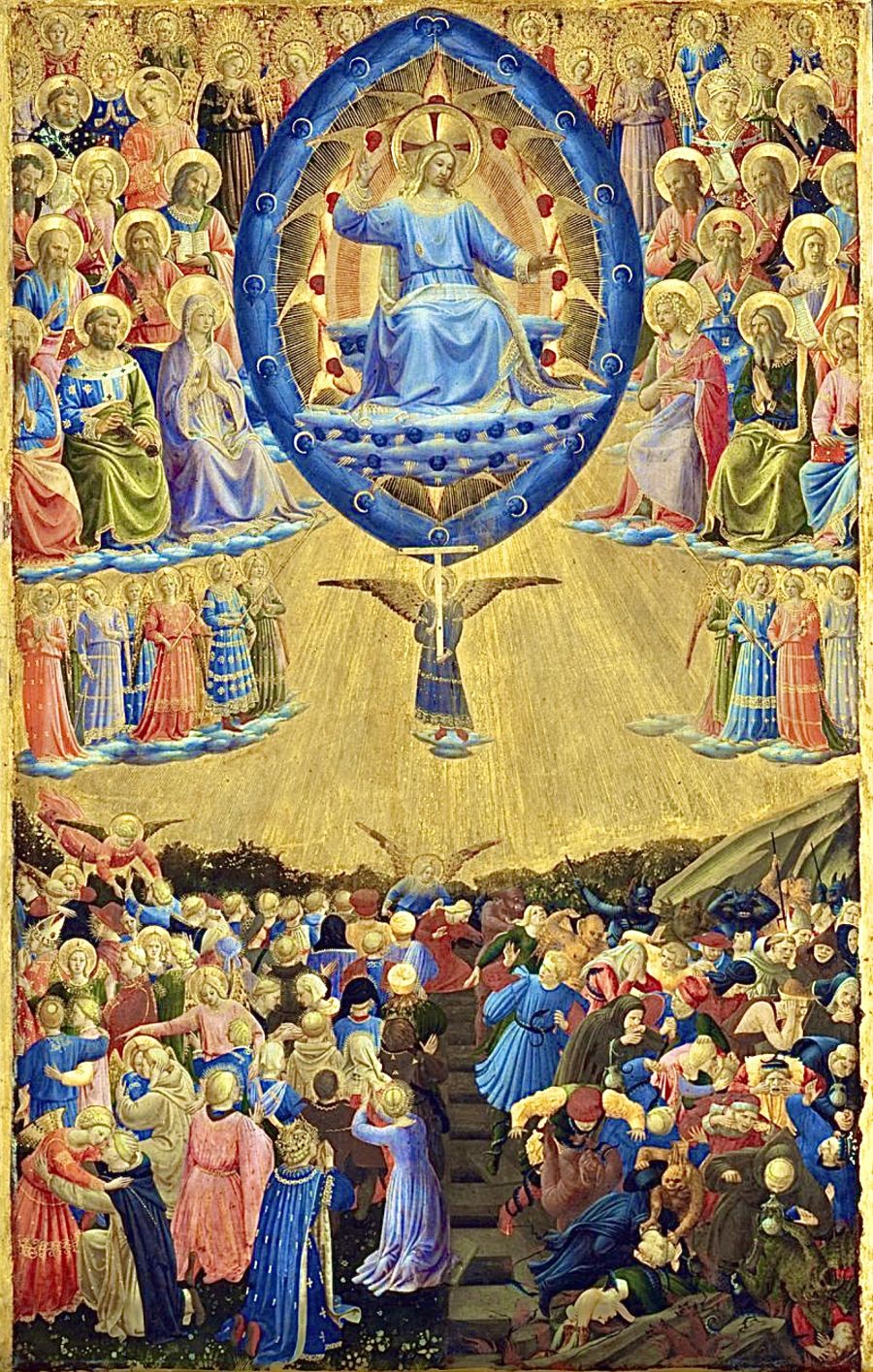
(Mt 25:31-46)


The famous Judgment passage presents the ‘coming’ Risen (v.31) as «Son of man», that is, authentic and complete development of divine plan for humanity: his kind of "verdict" follows.

God embraces the limited condition of his creatures, so the behavior that realizes our life does not concern the religious attitude itself, but what we have had towards our fellow men.


In all ancient beliefs, the soul of the deceased was weighed on a notarial basis and judged according to the positive or negative balance.

In the opinion of the rabbis, Divine Mercy intervened in favor only when the good and bad works were balanced.

Jesus does not speak of a Court that proclaims immutable negative sentences on the whole person, but of his humanizing traits.

«Life of the Eternal» (v.46 Greek text) alludes to a kind of life that is not biological but relational and full of being, which we can already experience.

These are episodes in which our genuine DNA emerged, the Gold that inhabits us: when we knew how to respond to the needs not of God, but of life itself and of our brothers.

These are the moments in which we have been profound listeners to the nature, hope and vocation of all - sensitive to the needs of others. Opportunities that have allowed us to bring the human condition closer to the heavenly one.

Comparing the ‘works’ declared "paradigm" with those of the lists of other religions - even in ancient Egypt - we note the difference in v.36: «I was in prison and you came to me» (vv.39.43).

The difference is remarkable precisely under the criterion of divine Justice: it overlooks forensic considerations, because it creates justice where there is none.

The Father gives life in every case, because He is not “good” [as is believed in all devout persuasions] but exclusively good.

‘Righteous’ - then - did not even realize that they had done who knows what: they spontaneously corresponded to their nature as sons (v.39).

They have had sympathy for our ‘flesh’ in its reality - considering it familiar. They have loved with and like Jesus, in Him.

The others, all taken up by formalisms of no interest to God, are surprised that the Father is not all there where they had imagined Him - locked in the sentences of ordinary justice: «When we saw you [...] in prison and did not we serve you?» (v. 44).

Vocation to meet leads spontaneously to transgress divisions: legalistic, of retribution, or prejudice and kind of cult.

This is the eminent Salvation - which nestles in the direct and genuine aspect, not so much in the organized purposes; nor does it have any consistency on the basis of opinions.

We fulfill ourselves in responding to the instinctive Call that arises from our own essential (altruistic) imprint, even the slightest, ill-considered, or eccentric and shaky - not extraordinary.

Without too external conditions, it recognizes itself disseminated in the soul and in the beneficial divinizing fullness of the «Son of man».

Jesus' ultimate Teaching: eminent, global and all-human Judgement; not verdict by concept and account.

Here the Jesus’ identification with the little ones: his Person has a central meaning, which surpasses the ‘distinction’ between friends and outlaws.

The Person is now a different Subject, far richer - solid in itself, but expanding into the divine and human You, even destitute.


[Monday 1st wk. in Lent, February 23, 2026]

234 Last modified on Monday, 23 February 2026 12:01
don Giuseppe Nespeca

Giuseppe Nespeca è architetto e sacerdote. Cultore della Sacra scrittura è autore della raccolta "Due Fuochi due Vie - Religione e Fede, Vangeli e Tao"; coautore del libro "Dialogo e Solstizio".

It is known that faith is man's response to the word of divine revelation. The miracle takes place in organic connection with this revealing word of God. It is a "sign" of his presence and of his work, a particularly intense sign (John Paul II)
È noto che la fede è una risposta dell’uomo alla parola della rivelazione divina. Il miracolo avviene in legame organico con questa parola di Dio rivelante. È un “segno” della sua presenza e del suo operare, un segno, si può dire, particolarmente intenso (Giovanni Paolo II)
In the rite of Baptism, the presentation of the candle lit from the large Paschal candle, a symbol of the Risen Christ, is a sign that helps us to understand what happens in the Sacrament. When our lives are enlightened by the mystery of Christ, we experience the joy of being liberated from all that threatens the full realization (Pope Benedict)
Nel rito del Battesimo, la consegna della candela, accesa al grande cero pasquale simbolo di Cristo Risorto, è un segno che aiuta a cogliere ciò che avviene nel Sacramento. Quando la nostra vita si lascia illuminare dal mistero di Cristo, sperimenta la gioia di essere liberata da tutto ciò che ne minaccia la piena realizzazione (Papa Benedetto)
Doing a good deed almost instinctively gives rise to the desire to be esteemed and admired for the good action, in other words to gain a reward. And on the one hand this closes us in on ourselves and on the other, it brings us out of ourselves because we live oriented to what others think of us or admire in us (Pope Benedict)
Quando si compie qualcosa di buono, quasi istintivamente nasce il desiderio di essere stimati e ammirati per la buona azione, di avere cioè una soddisfazione. E questo, da una parte rinchiude in se stessi, dall’altra porta fuori da se stessi, perché si vive proiettati verso quello che gli altri pensano di noi e ammirano in noi (Papa Benedetto)
Since God has first loved us (cf. 1 Jn 4:10), love is now no longer a mere “command”; it is the response to the gift of love with which God draws near to us [Pope Benedict]
Siccome Dio ci ha amati per primo (cfr 1 Gv 4, 10), l'amore adesso non è più solo un « comandamento », ma è la risposta al dono dell'amore, col quale Dio ci viene incontro [Papa Benedetto]
Another aspect of Lenten spirituality is what we could describe as "combative" […] where the "weapons" of penance and the "battle" against evil are mentioned. Every day, but particularly in Lent, Christians must face a struggle […] (Pope Benedict)
Un altro aspetto della spiritualità quaresimale è quello che potremmo definire "agonistico" […] là dove si parla di "armi" della penitenza e di "combattimento" contro lo spirito del male. Ogni giorno, ma particolarmente in Quaresima, il cristiano deve affrontare una lotta […] (Papa Benedetto)
Jesus wants to help his listeners take the right approach to the prescriptions of the Commandments given to Moses, urging them to be open to God who teaches  us true freedom and responsibility through the Law. It is a matter of living it as an instrument of freedom (Pope Francis)
Gesù vuole aiutare i suoi ascoltatori ad avere un approccio giusto alle prescrizioni dei Comandamenti dati a Mosè, esortando ad essere disponibili a Dio che ci educa alla vera libertà e responsabilità mediante la Legge. Si tratta di viverla come uno strumento di libertà (Papa Francesco)
In the divine attitude justice is pervaded with mercy, whereas the human attitude is limited to justice. Jesus exhorts us to open ourselves with courage to the strength of forgiveness, because in life not everything can be resolved with justice. We know this (Pope Francis)

Due Fuochi due Vie - Vol. 1 Due Fuochi due Vie - Vol. 2 Due Fuochi due Vie - Vol. 3 Due Fuochi due Vie - Vol. 4 Due Fuochi due Vie - Vol. 5 Dialogo e Solstizio I fiammiferi di Maria

duevie.art

don Giuseppe Nespeca

Tel. 333-1329741


Disclaimer

Questo blog non rappresenta una testata giornalistica in quanto viene aggiornato senza alcuna periodicità. Non può pertanto considerarsi un prodotto editoriale ai sensi della legge N°62 del 07/03/2001.
Le immagini sono tratte da internet, ma se il loro uso violasse diritti d'autore, lo si comunichi all'autore del blog che provvederà alla loro pronta rimozione.
L'autore dichiara di non essere responsabile dei commenti lasciati nei post. Eventuali commenti dei lettori, lesivi dell'immagine o dell'onorabilità di persone terze, il cui contenuto fosse ritenuto non idoneo alla pubblicazione verranno insindacabilmente rimossi.






